Why this works
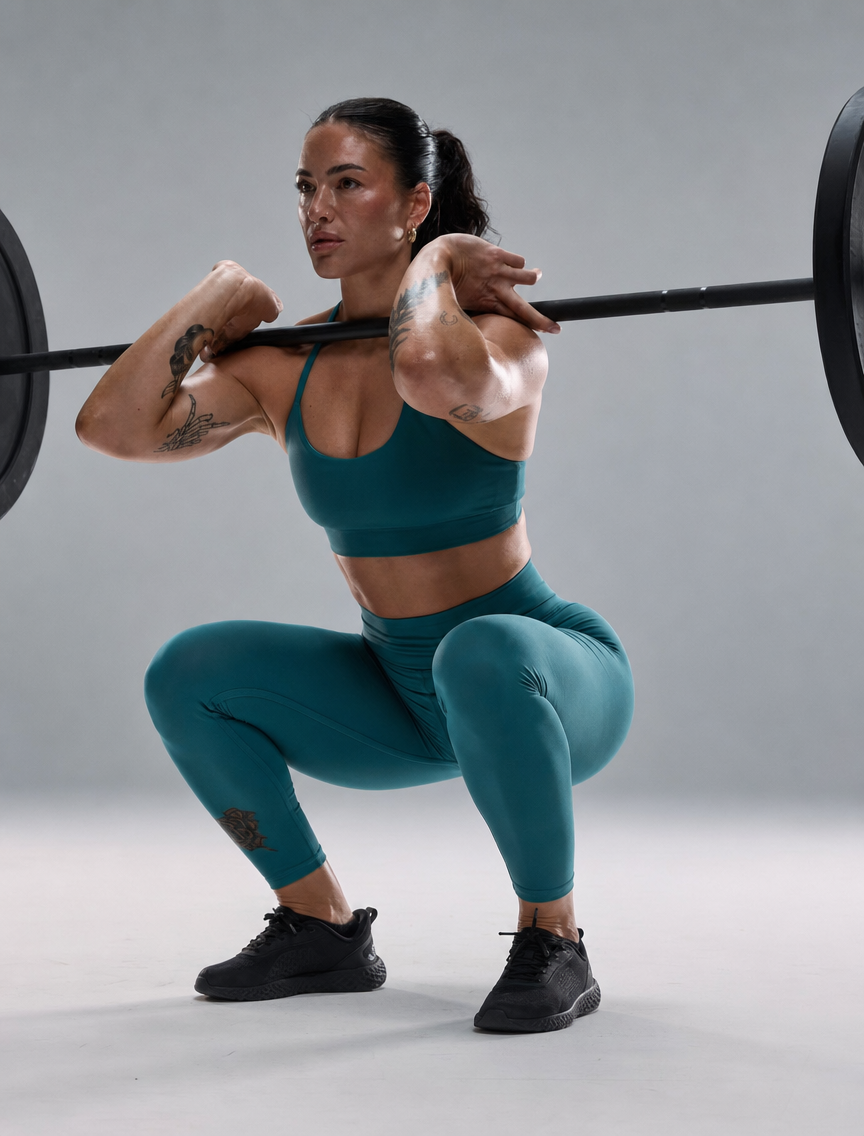
“Centered full-body framing” gives the deep front squat a clear, poster-like vertical composition, while the “minimalist light-gray seamless studio background” removes distractions around the athlete and barbell. The “dramatic side lighting with a bright key light and soft rim highlights” separates her silhouette and emphasizes the “visible muscle definition,” and “cinematic contrast” explains the image’s dominant gray-and-black tonal structure. “Ultra-sharp skin and fabric detail” plus “crisp focus on muscle definition” keep attention on the disciplined expression, teal outfit, and loaded squat position rather than softening the action.
FAQ
→How do I make the athlete and barbell feel more powerful and imposing?
Replace “centered full-body framing” with “low-angle full-body framing, athlete towering in the composition,” and add “barbell prominent in the upper third, imposing perspective.” Keep “cinematic contrast,” but change “focused powerful disciplined mood” to “intense, commanding, high-performance mood.”
→How do I shift this from a controlled studio portrait to a more dramatic training image?
Replace “minimalist light-gray seamless studio background” with “dark industrial gym with weight racks and chalk dust,” and change “dramatic side lighting with a bright key light and soft rim highlights” to “hard overhead gym lighting with sharp shadows and a narrow backlight.” Retain “ultra-sharp skin and fabric detail” so the sweat, barbell texture, and muscle definition remain crisp.
→How do I create a consistent series of variations using this prompt?
Keep “photorealistic editorial sports photography,” “teal sports bra and matching high-waisted leggings,” “minimalist light-gray seamless studio background,” and “centered full-body framing” unchanged, then swap only the action phrase. Use alternatives such as “paused front squat at the bottom position,” “controlled barbell clean,” or “standing barbell overhead press,” while replacing “deep front squat with barbell across shoulders” with the chosen movement.
Learn the technique behind this
- Why can't AI spell, and how do I get readable text in an image? — Older diffusion models had no character-level representation of text, so they produced letterform-shaped texture instead of words.
- How should a prompt be structured, and does word order matter? — A prompt that behaves predictably names one subject first, then what it is doing, then where, then the light, then the lens or medium, then the style.
- Why does the model ignore parts of my prompt? — Ignored instructions are almost always conflicts, counts, or spatial relationships — three things current models handle badly — rather than the model failing to read you.
Related prompts
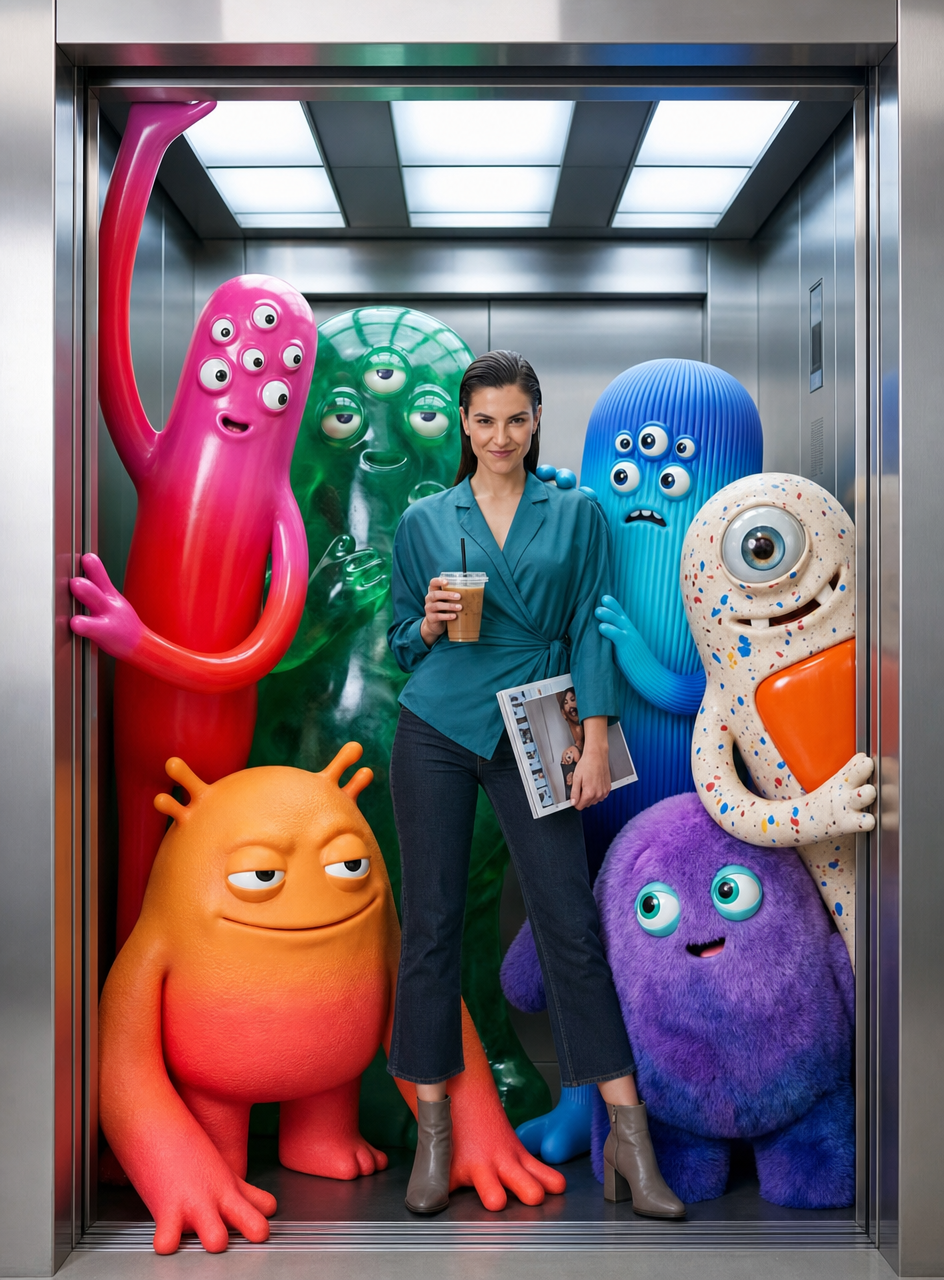
Teal fashion editorial in monster-filled lift
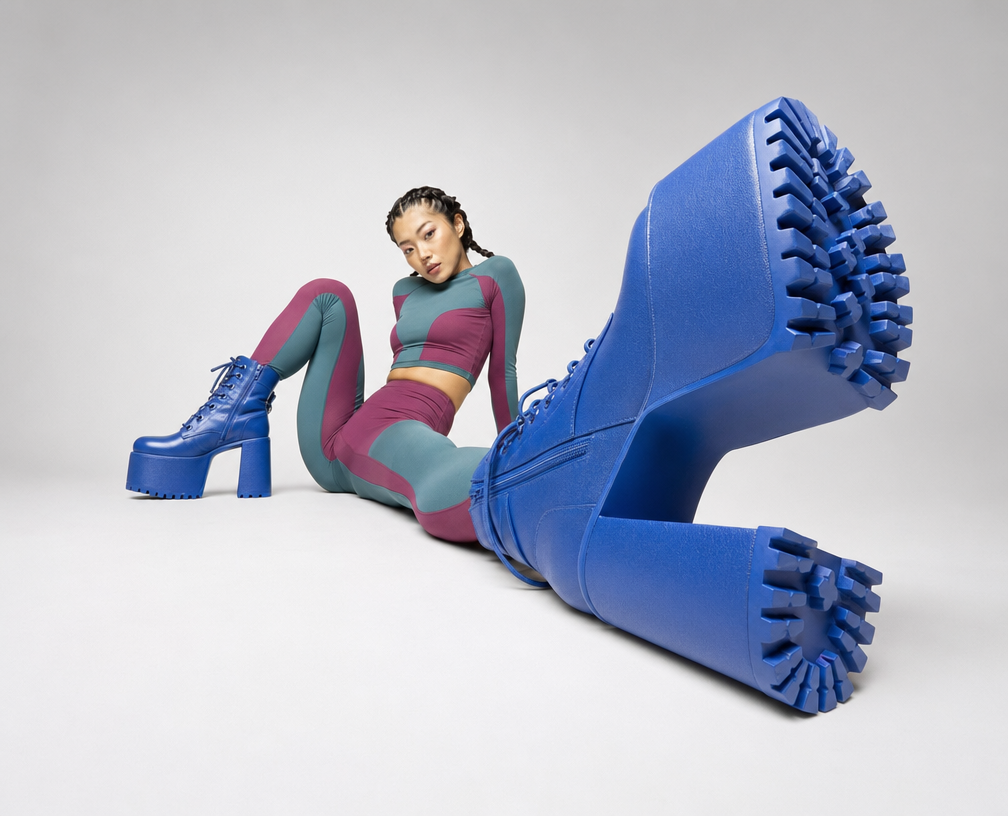
Cobalt Boots in Sleek Studio Edit
Silhouette Influencer by Sunlit Window

Sunlit editorial on striped beach towel