Why this works
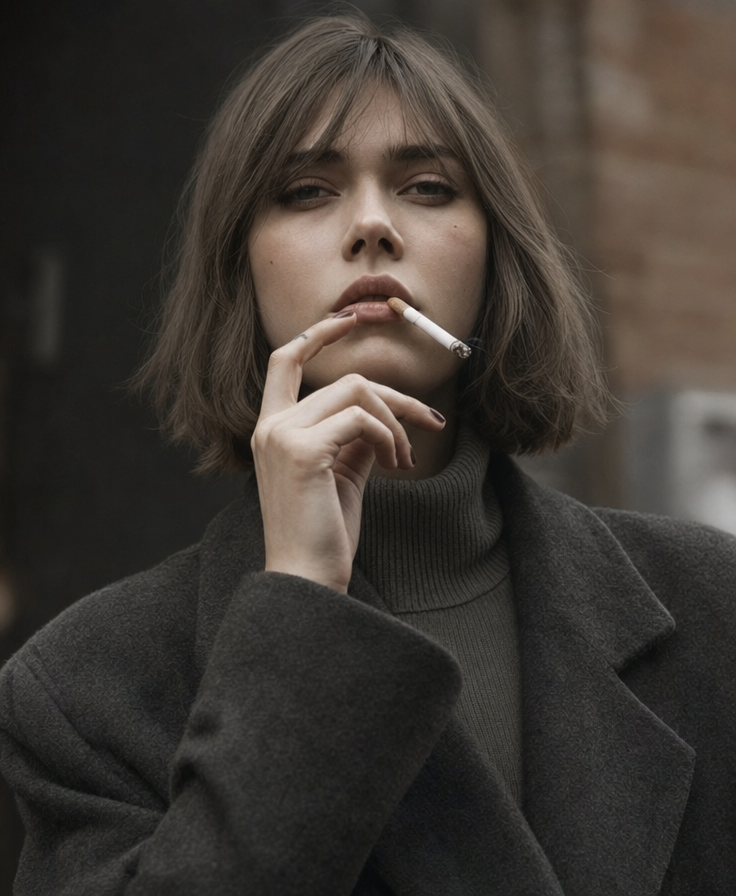
The intimate, portrait-closeup composition comes directly from “cinematic close-up” and “intimate framing,” keeping the ash-brown bob, side-swept bangs, and cigarette near the lips as the visual anchors. “Soft overcast daylight” and “muted earthy color palette” produce the cool, restrained brown-and-black image, while “moody and introspective atmosphere” gives the pose emotional weight. “Shallow depth of field” and the “blurred street background with faint bokeh” separate the face and cigarette from the urban setting without losing its context.
FAQ
→How do I change this prompt for a warmer, more inviting mood?
Replace “moody and introspective atmosphere” with “warm, quietly optimistic atmosphere,” change “soft overcast daylight” to “late-afternoon golden sunlight,” and replace “muted earthy color palette” with “warm amber, cream, and terracotta palette.” Keep “shallow depth of field” if you want the same intimate focus.
→How do I make the cigarette less central and emphasize the eyes and haircut?
Replace “holding a lit cigarette just below their lips” with “one hand lowered out of frame, face unobstructed,” and add “direct eye contact, sharp focus on the eyes and ash-brown bob.” Change “intimate framing” to “tight head-and-shoulders framing” so the facial expression and side-swept bangs occupy more of the image.
→How do I build a series of variations while keeping this editorial identity?
Keep “cinematic fashion editorial portrait,” “realistic skin texture,” “shallow depth of field,” and “muted earthy color palette” unchanged, then swap “blurred street background” for settings such as “rain-streaked café window,” “concrete subway platform,” or “dim hotel corridor.” Vary the wardrobe phrase “charcoal-grey overcoat layered over a light grey turtleneck” with “black leather jacket over a white shirt” or “oversized olive blazer over a cream knit sweater,” while retaining the same “androgynous young person” and close-up framing.
Learn the technique behind this
- Why can't AI spell, and how do I get readable text in an image? — Older diffusion models had no character-level representation of text, so they produced letterform-shaped texture instead of words.
- How should a prompt be structured, and does word order matter? — A prompt that behaves predictably names one subject first, then what it is doing, then where, then the light, then the lens or medium, then the style.
- Why does the model ignore parts of my prompt? — Ignored instructions are almost always conflicts, counts, or spatial relationships — three things current models handle badly — rather than the model failing to read you.
Related prompts
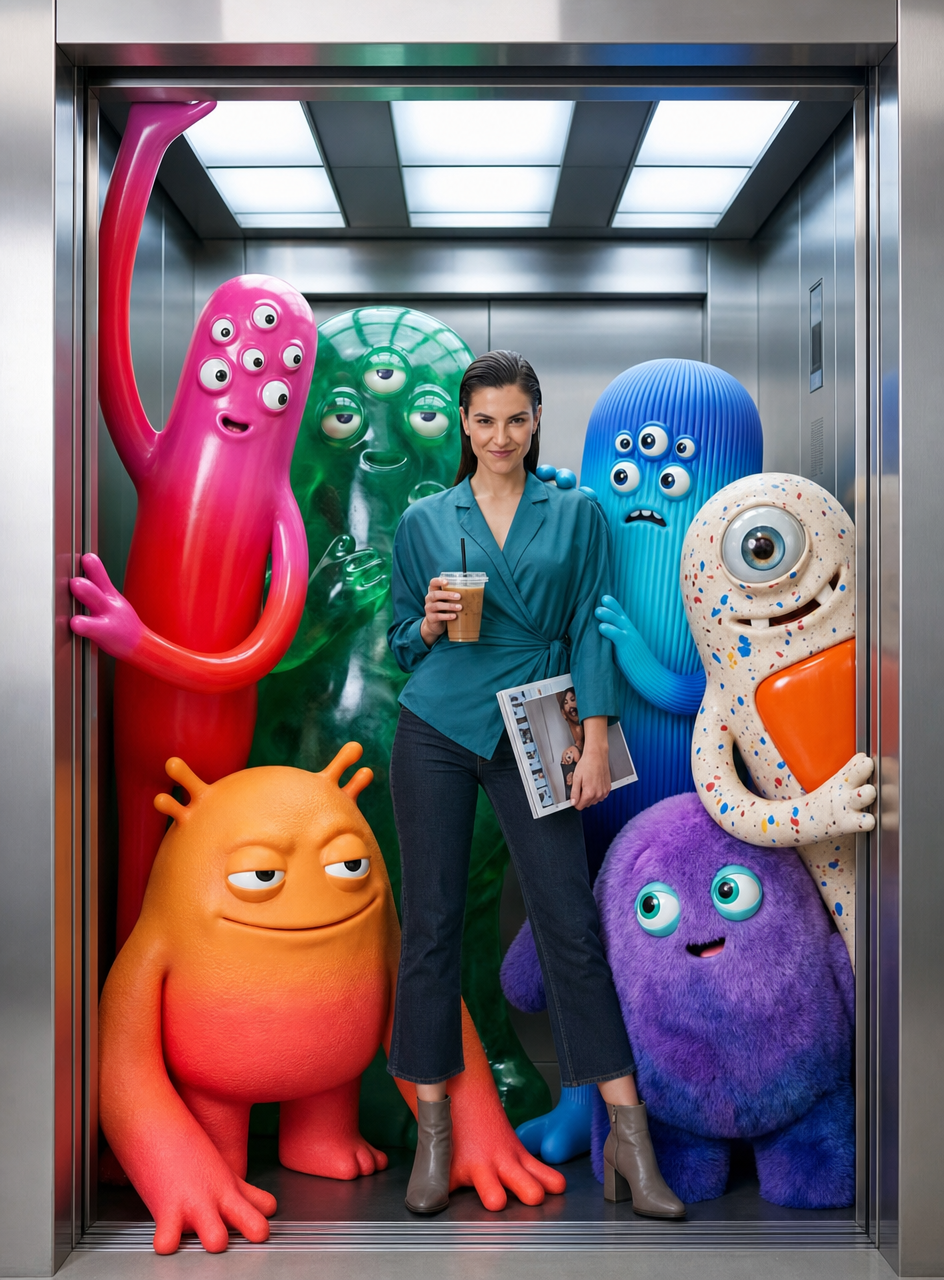
Teal fashion editorial in monster-filled lift
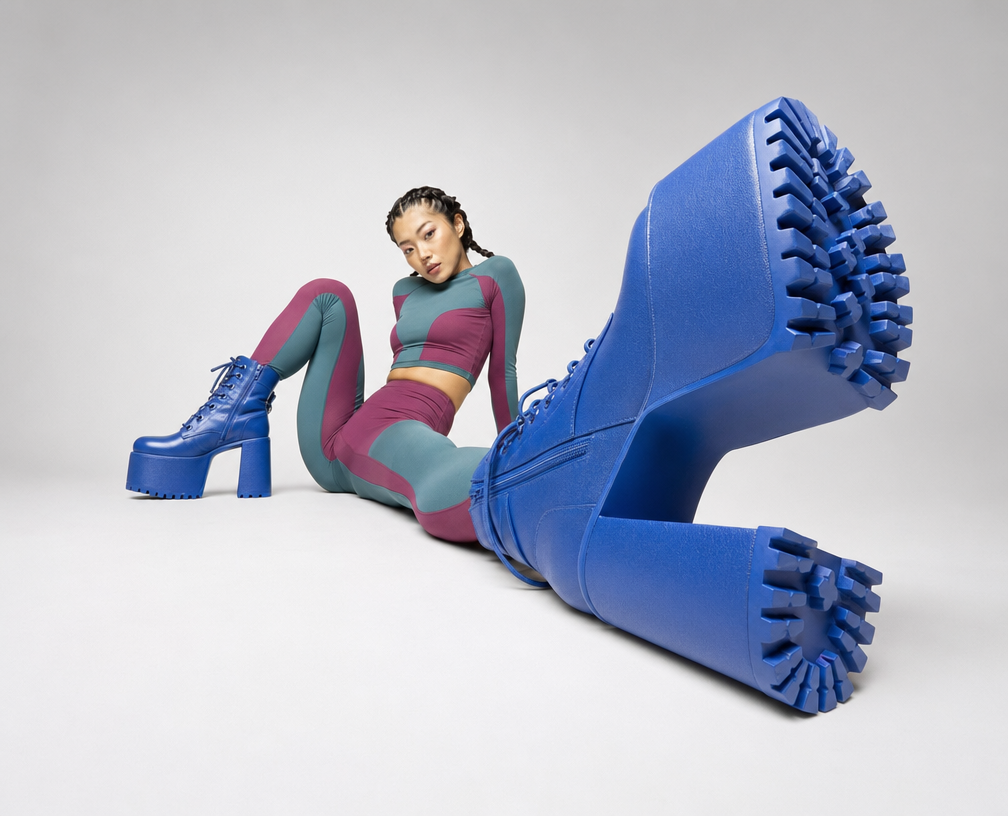
Cobalt Boots in Sleek Studio Edit

Sunlit editorial on striped beach towel
Silhouette Influencer by Sunlit Window