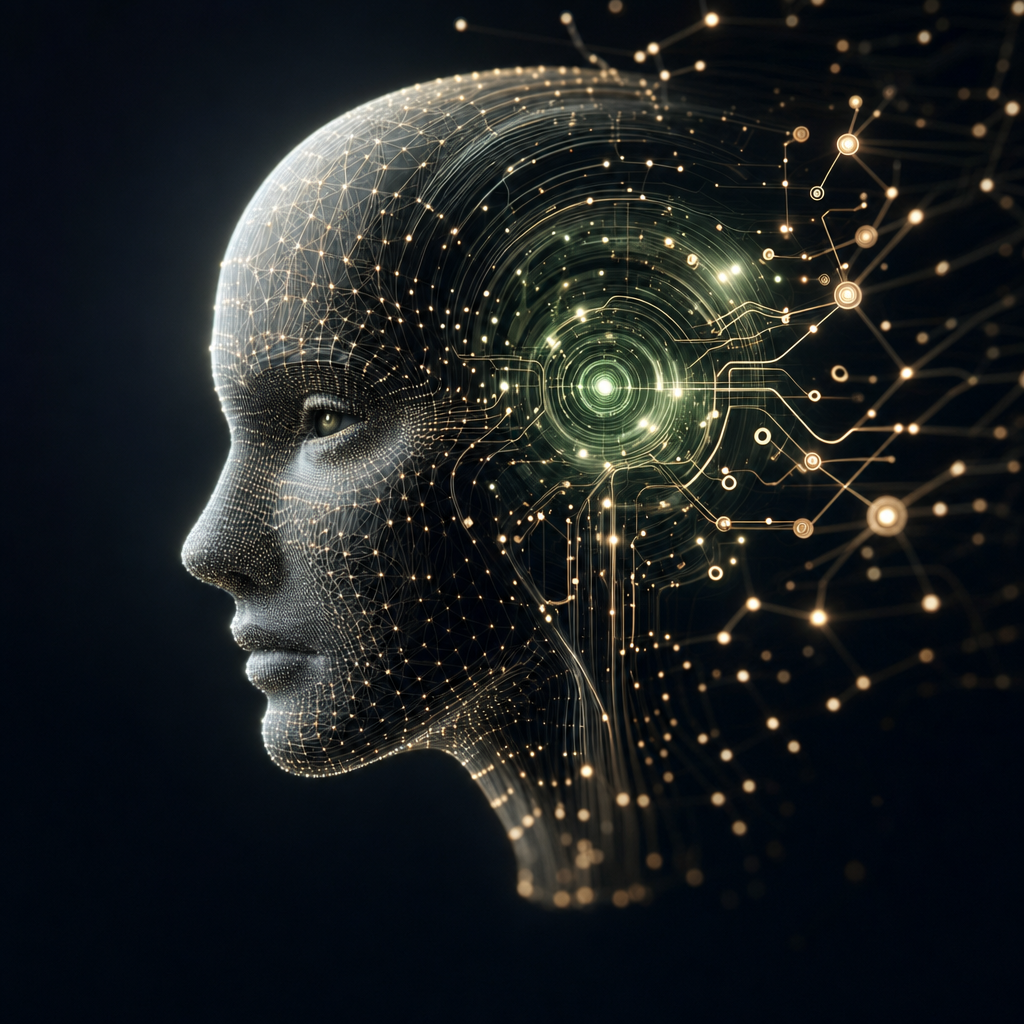
Why this works
The “side-profile close framing” makes the portrait read immediately, while “futuristic human face made of neural network circuitry” gives the silhouette a precise visual identity. “Dark, nearly black background” isolates the beige-and-white facial structure and gold-green glow, and “high-contrast rim lighting” separates the profile from that darkness. The phrase “warm amber/gold highlights” supplies the dominant metallic warmth, while “a softer green halo with subtle particle sparks” adds a restrained secondary accent and keeps the mood sleek and mysterious rather than aggressively cyberpunk.
FAQ
→How do I make the green halo more central than the amber circuitry?
Replace “warm amber/gold highlights” with “soft green illumination spreading through the neural circuitry,” and change “a softer green halo with subtle particle sparks” to “a large luminous green halo centered behind the temple, with clearly visible drifting particles.” Keep “high-contrast rim lighting” but specify “green rim light” so the halo controls the face’s edge and color balance.
→How do I make the face feel more human and less like a circuitry diagram?
Replace “human face made of neural network circuitry” with “photorealistic human skin partially revealing delicate neural circuitry beneath the surface.” Change “fine digital circuitry integrated into the skin” to “sparse translucent circuit traces following the cheekbone, jaw, and temple,” preserving the technology while giving skin texture and anatomy more visual priority.
→How do I turn this into a series of related portraits with different moods?
Keep “side-profile close framing,” “dark, nearly black background,” and “ultra-detailed photorealistic CGI render” fixed as the series anchors. For each variation, replace “sleek and mysterious sci-fi mood” with a specific direction such as “clinical and intelligent,” “ominous and unstable,” or “calm and meditative,” then swap “warm amber/gold highlights” and “a softer green halo” for paired palettes such as “cold cyan highlights and violet aura” or “crimson circuitry and pale blue halo.”
Learn the technique behind this
- Why can't AI spell, and how do I get readable text in an image? — Older diffusion models had no character-level representation of text, so they produced letterform-shaped texture instead of words.
- How do I keep the same character across multiple images? — Text prompts alone won't hold a face across images — a description defines a type, not a person.
- Why does the model ignore parts of my prompt? — Ignored instructions are almost always conflicts, counts, or spatial relationships — three things current models handle badly — rather than the model failing to read you.
Related prompts

Surprised Man Holding Mini Cartoon Self
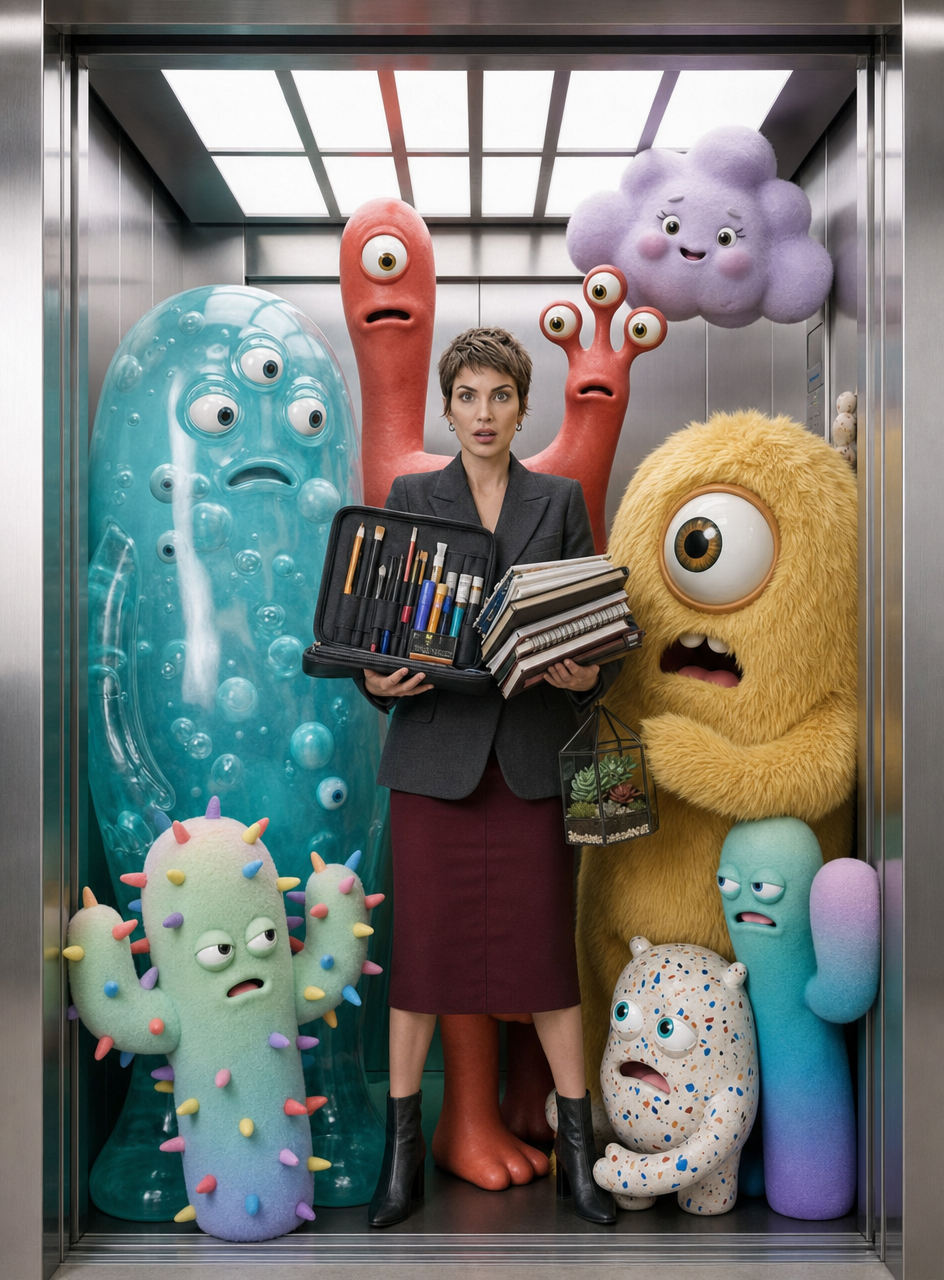
Charcoal-blazer woman with art monsters
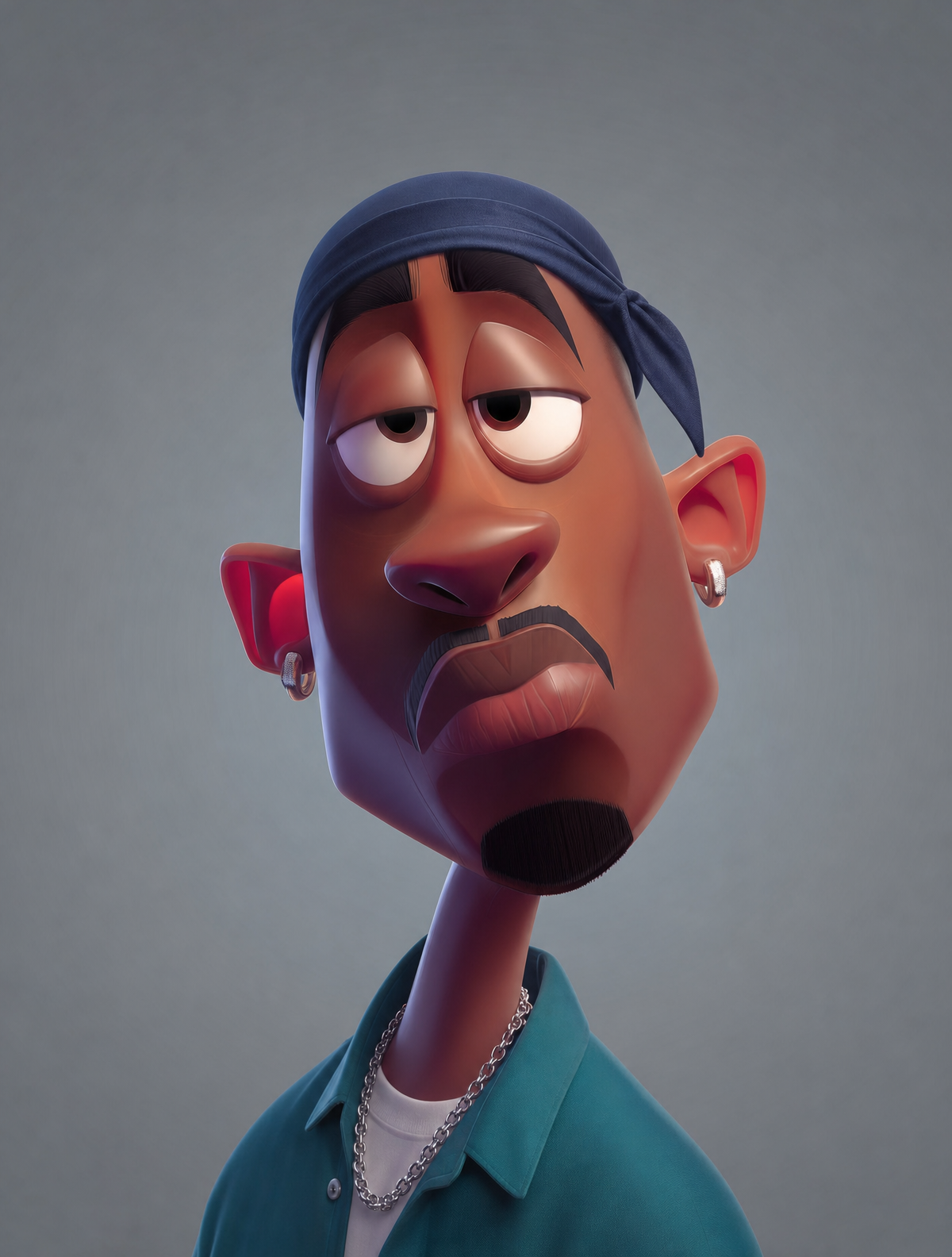
Laid-back 3D Caricature Portrait with Streetwear Style
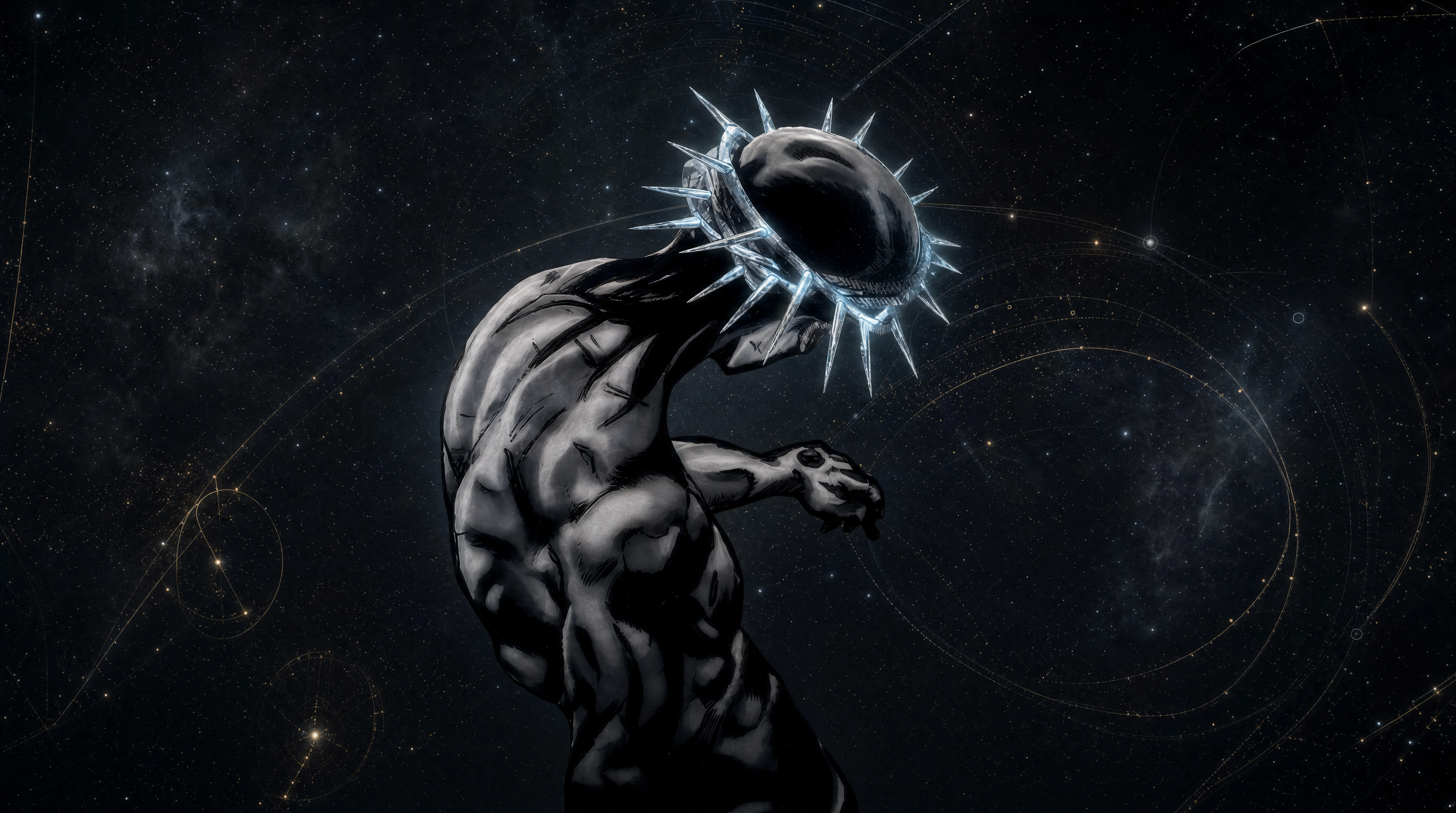
Muscular Figure With Icy Thorn Crown