Why this works
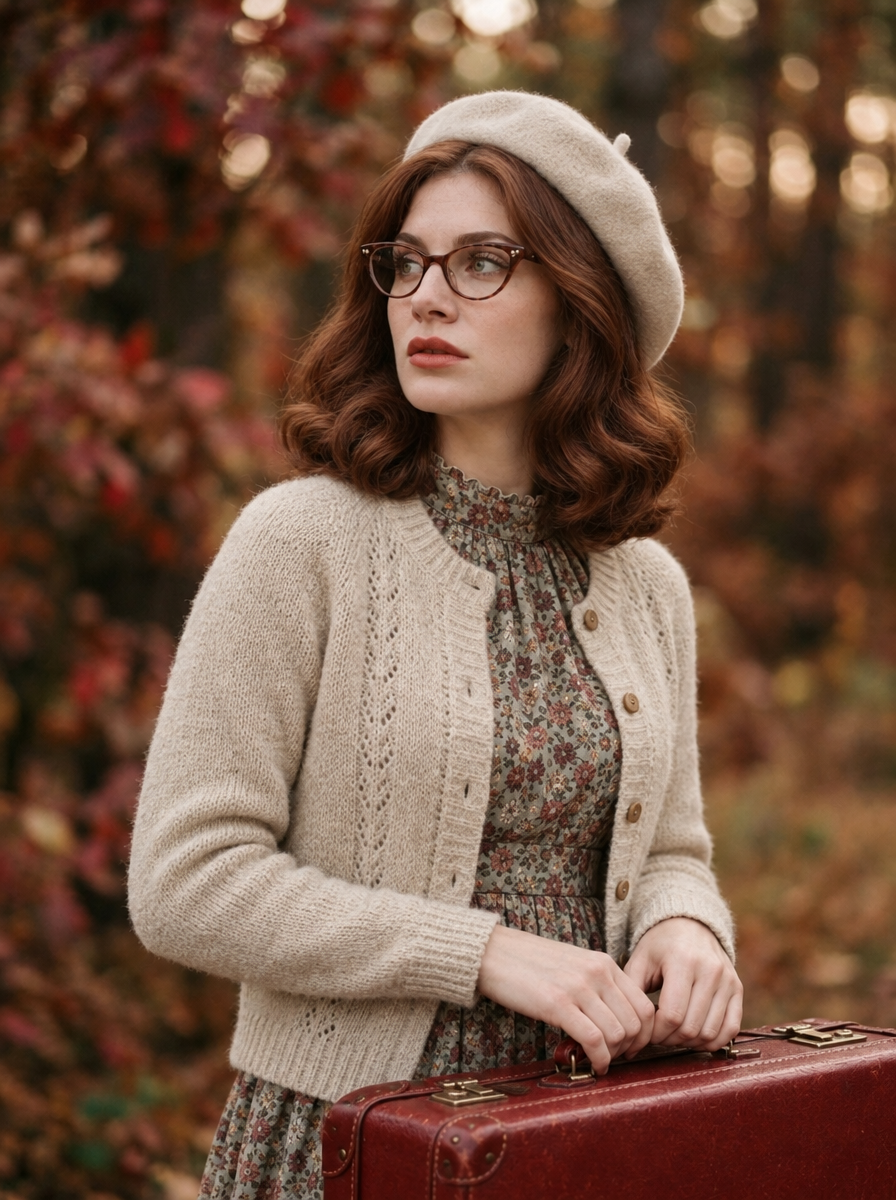
The nostalgic, contemplative mood comes from the exact combination of “vintage-inspired clothing,” “soft natural late-afternoon light,” and “nostalgic calm contemplative mood,” while the autumn forest adds a quiet seasonal context. “Red leather suitcase” provides the strongest visual accent against the beige cardigan, cream beret, and warm foliage, creating a restrained beige-red harmony that matches the image’s dominant colors. “Portrait-full-body,” “cinematic composition,” and “shallow depth of field” keep the woman and suitcase readable while softening the forest into a supporting backdrop.
FAQ
→How do I make the red suitcase and the woman more visually prominent?
Replace “portrait-full-body” with “medium full-body portrait, subject occupying most of the frame,” and change “shallow depth of field” to “very shallow depth of field with the woman and red leather suitcase in crisp focus.” Add “red suitcase held prominently in the foreground” if the suitcase should become the main secondary focal point.
→How do I shift the image from calm nostalgia to a more dramatic autumn mood?
Replace “soft natural late-afternoon light” and “nostalgic calm contemplative mood” with “low, directional sunset light with deep shadows, long rim light, and a wistful dramatic mood.” You can also change “warm fall foliage” to “windblown autumn forest with dark russet and charcoal foliage” to reduce the gentle, evenly warm feeling.
→How do I create a series of variations while keeping this character recognizable?
Keep “young woman,” “cat-eye glasses,” “cream beret,” “shoulder-length auburn hair styled in soft waves (no bangs),” and “red leather suitcase” unchanged. Vary only “autumn forest,” “light beige knit cardigan over a muted floral dress,” and “soft natural late-afternoon light” with sets such as “misty train platform, tailored wool coat, blue-hour light” or “quiet country road, rust cardigan, overcast morning light.”
Learn the technique behind this
- Why can't AI spell, and how do I get readable text in an image? — Older diffusion models had no character-level representation of text, so they produced letterform-shaped texture instead of words.
- How should a prompt be structured, and does word order matter? — A prompt that behaves predictably names one subject first, then what it is doing, then where, then the light, then the lens or medium, then the style.
- Which aspect ratio should I use, and how does it change the image? — Aspect ratio determines what the model composes, not how it's cropped afterwards.
Related prompts
Woman in Teal Light, Shadowed Fashion Portrait
Charcoal turtleneck with red eye-beam
Eerie Elegance Among Marble Busts
Dreamy Macro Portrait in Cool Water