Why this works
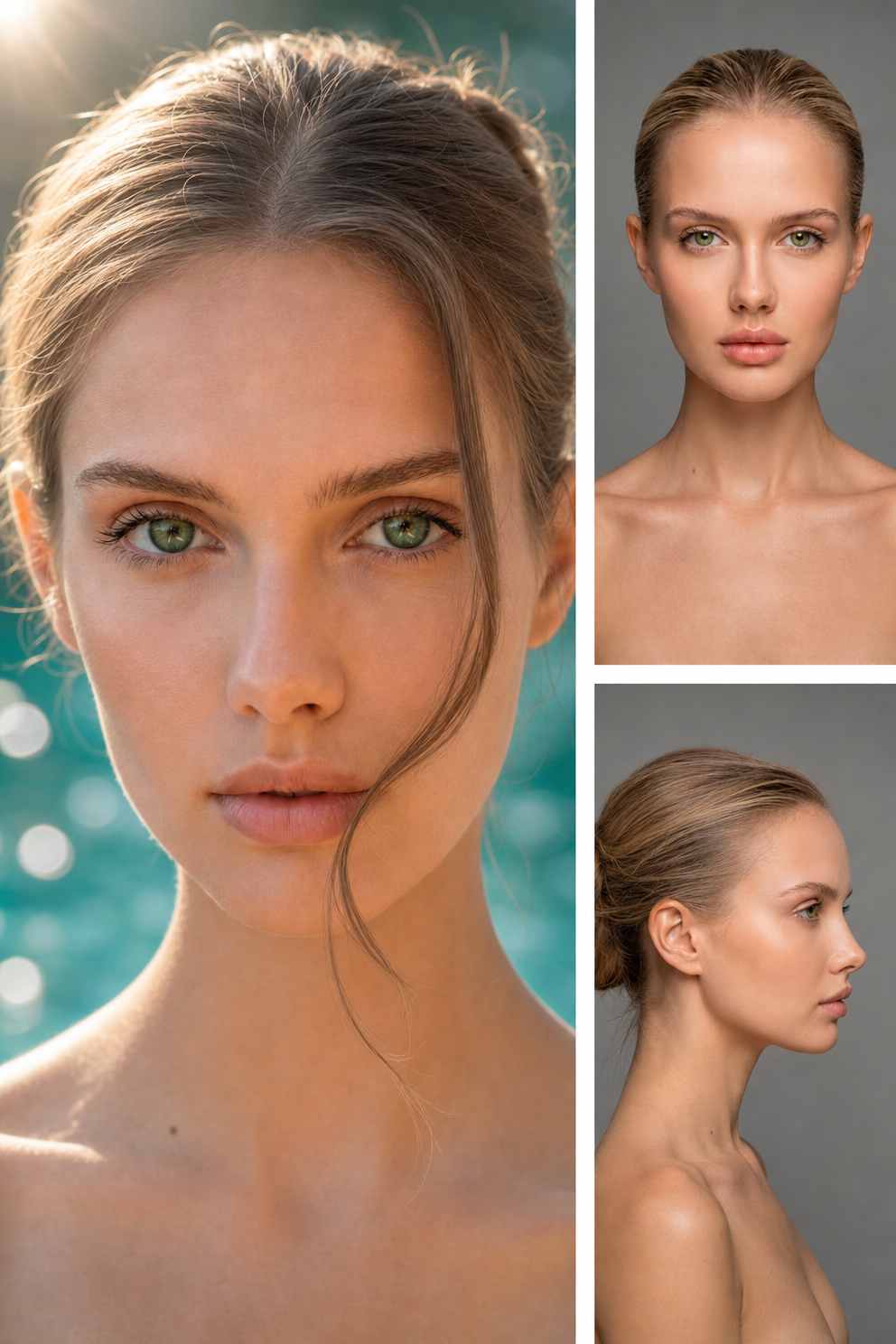
The phrase “extreme macro with a 200mm telephoto look” makes the eyes and skin texture dominate the portrait, while “sharp focus on the eyes” and “shallow depth of field” separate the irises from the softer facial and bokeh areas. “Strong warm rim light from the top left” gives the loose chestnut strand and facial edge a defined highlight, while “gentle studio fill” preserves the calm, polished mood instead of creating harsh contrast. The large frontal close-up against “abstract teal sea bokeh” supplies the dominant teal field, and the two smaller portraits on a “clean light gray backdrop” create a restrained editorial collage with clear visual hierarchy.
FAQ
→How do I make the expression feel more dramatic instead of serene?
Replace “calm neutral expression” and “polished, serene finish” with “intense direct gaze, slightly parted lips, and controlled high-fashion tension.” Change “gentle studio fill” to “harder directional fill with deeper cheekbone shadows” while keeping “strong warm rim light from the top left” for edge definition.
→How do I make the eyes and loose hair strand even more prominent?
Replace “sharp focus on the eyes” with “tack-sharp focus on the irises and eyelashes, with the loose strand equally crisp.” Change “single loose chestnut-brown strand draped across her cheek” to “one prominent chestnut strand crossing the foreground eye,” and replace “shallow depth of field” with “extremely shallow depth of field, face edges and background dissolving into blur.”
→How do I turn this into a coordinated series with different subjects?
Keep the structural phrases “three-part composition,” “one large frontal close-up,” and “two smaller coordinated studio portraits,” then replace “young Eastern European woman” with a new subject such as “older East Asian man” or “freckled Black woman.” Preserve “abstract teal sea bokeh,” “clean light gray backdrop,” “strong warm rim light from the top left,” and “200mm telephoto look” so the subject changes while the palette, framing, and editorial treatment remain consistent.
Learn the technique behind this
- How should a prompt be structured, and does word order matter? — A prompt that behaves predictably names one subject first, then what it is doing, then where, then the light, then the lens or medium, then the style.
- Why can't AI spell, and how do I get readable text in an image? — Older diffusion models had no character-level representation of text, so they produced letterform-shaped texture instead of words.
- Which aspect ratio should I use, and how does it change the image? — Aspect ratio determines what the model composes, not how it's cropped afterwards.
Related prompts
Woman in Teal Light, Shadowed Fashion Portrait
Eerie Elegance Among Marble Busts
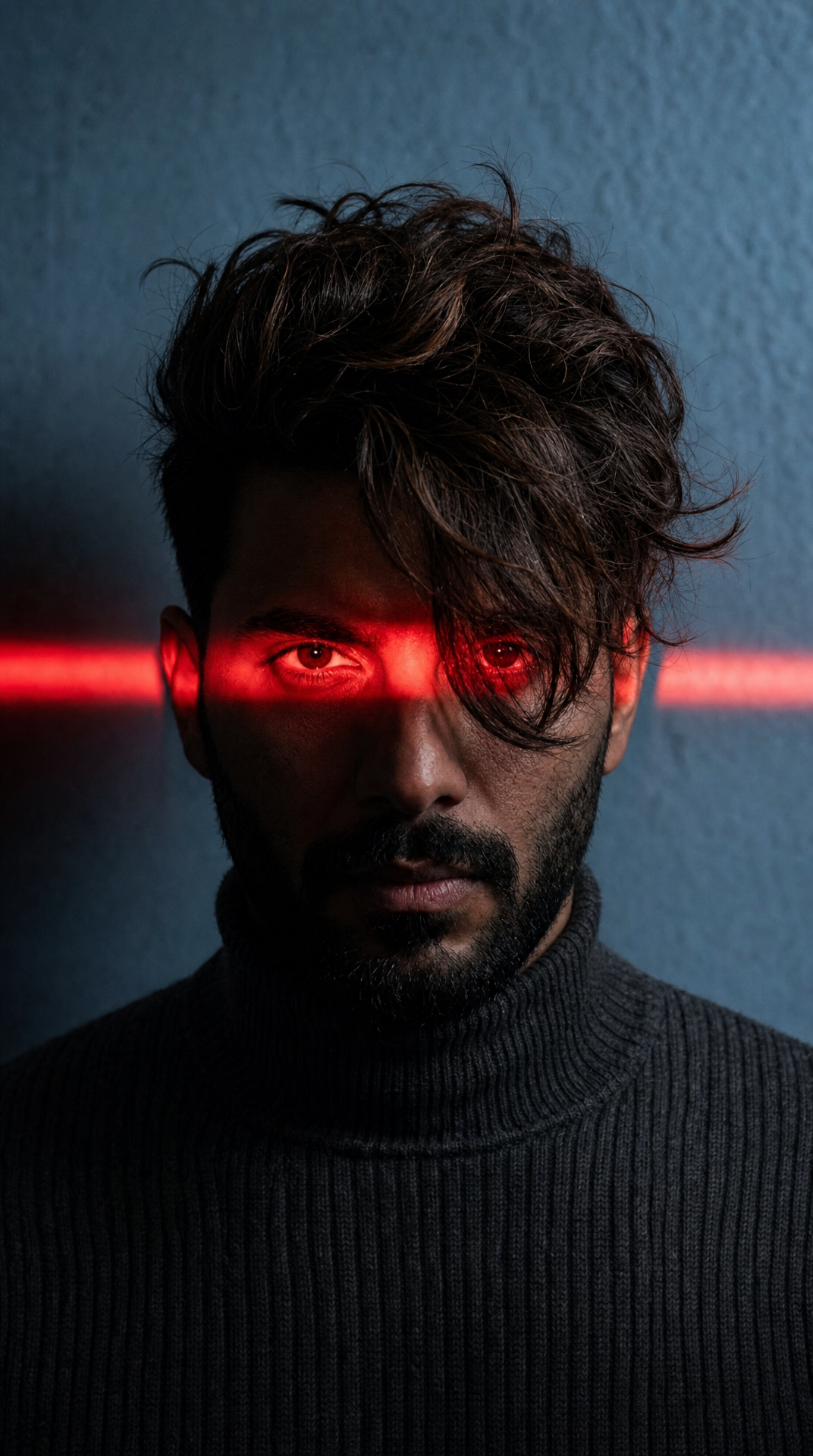
Charcoal turtleneck with red eye-beam
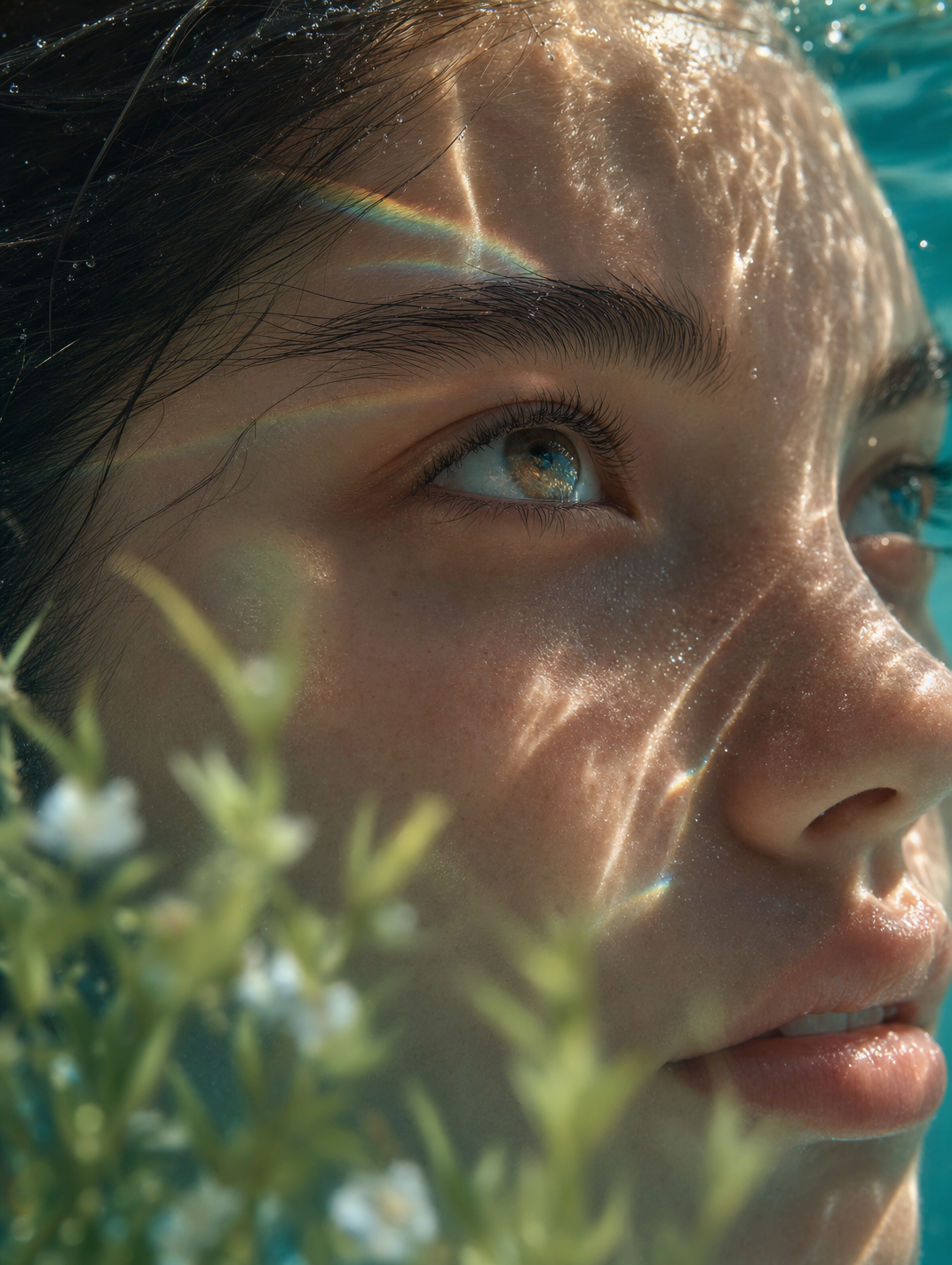
Dreamy Macro Portrait in Cool Water