Why this works
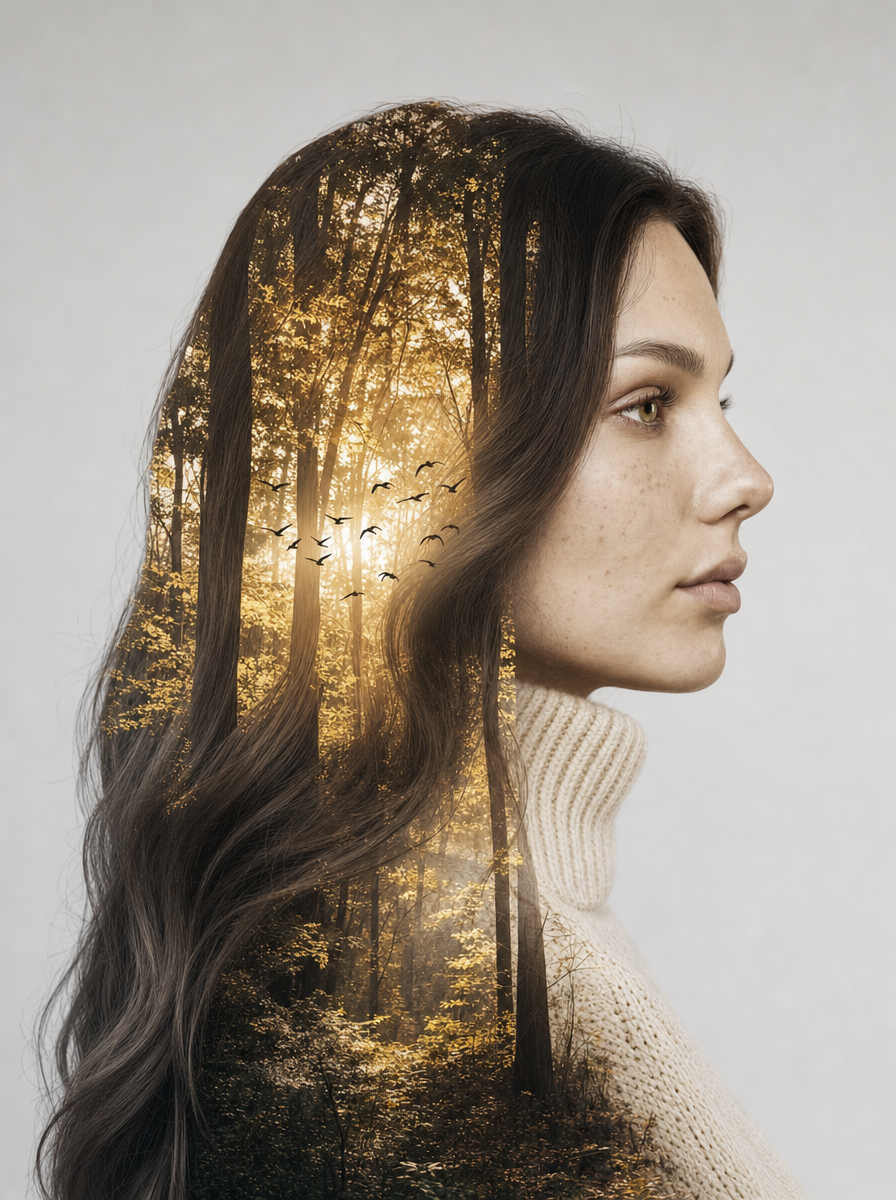
The phrase “photorealistic double-exposure side-profile portrait” establishes the primary silhouette and makes the forest read as an integrated inner landscape rather than a separate backdrop. “Golden-hour sunlight streams through tall trees in warm amber tones” supplies the dominant gold and beige harmony, while the dark hair and distant bird silhouettes introduce the black accents visible in the image. “Clean light-gray background,” “elegant composition,” and “shallow depth of field” keep the portrait spacious and editorial, with “high-detail natural textures for both the face and the forest overlay” preserving definition where the two images meet.
FAQ
→How do I make the woman’s face more prominent than the forest overlay?
Replace “blended with a forest landscape” with “forest landscape confined to the interior of her profile,” and add “opaque, sharply defined facial contour with the eye, nose, and lips clearly dominant.” Keep “shallow depth of field,” but change “high-detail natural textures for both the face and the forest overlay” to “highest detail on the facial features, with the forest texture slightly subdued.”
→How do I change the dreamy golden-hour mood into a cooler, more mysterious portrait?
Replace “golden-hour sunlight streams through tall trees in warm amber tones” with “cool blue-hour light filtering through misty pine trees in desaturated blue-gray tones.” Change “soft natural color grading” to “muted cinematic color grading with deep blue shadows,” and replace “dreamy, serene” with “quiet, enigmatic, nocturnal.”
→How do I build a series of variations while keeping this composition consistent?
Keep “photorealistic double-exposure side-profile portrait,” “clean light-gray background,” “editorial portrait framing,” and “elegant composition” unchanged. Create variants by replacing only “forest landscape” with phrases such as “windswept coastal cliffs,” “autumn birch grove,” or “desert canyon at dusk,” then swap “a few small birds appear as distant silhouettes” for setting-specific accents such as “distant seabirds,” “falling leaves,” or “a lone circling hawk.”
Learn the technique behind this
- Why can't AI spell, and how do I get readable text in an image? — Older diffusion models had no character-level representation of text, so they produced letterform-shaped texture instead of words.
- Which aspect ratio should I use, and how does it change the image? — Aspect ratio determines what the model composes, not how it's cropped afterwards.
- Why does AI get hands and faces wrong, and how do I fix it? — Hands fail because they're small in frame, extremely variable in pose, and self-occluding — the model has less usable signal per pixel than for any other body part.
Related prompts
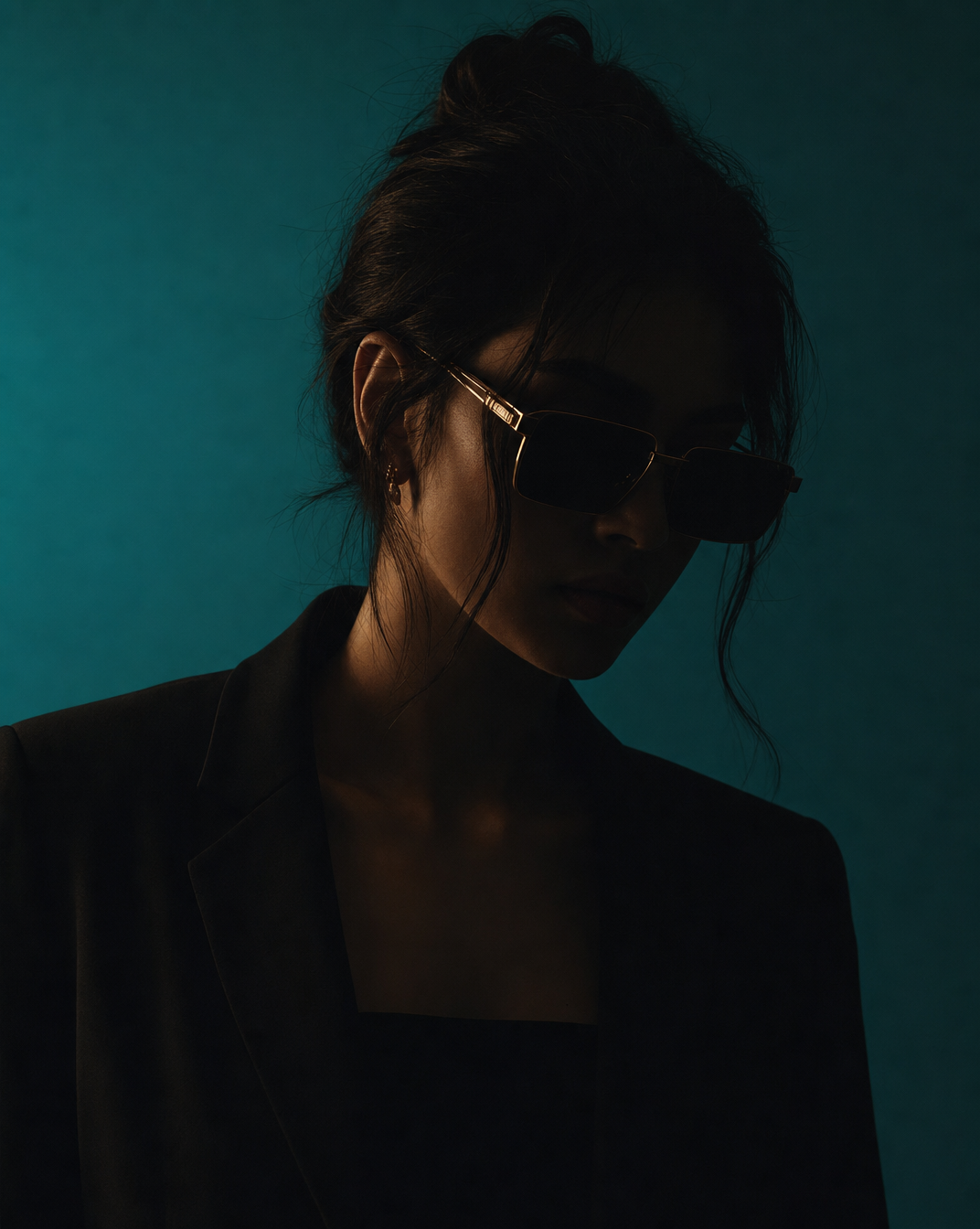
Woman in Teal Light, Shadowed Fashion Portrait
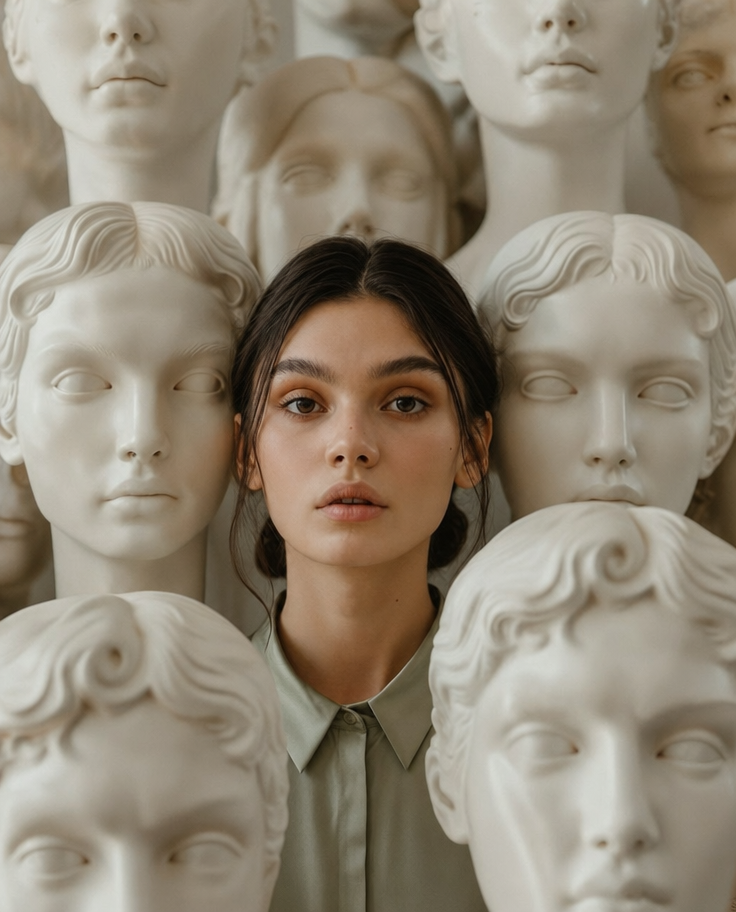
Eerie Elegance Among Marble Busts
Charcoal turtleneck with red eye-beam
Dreamy Macro Portrait in Cool Water