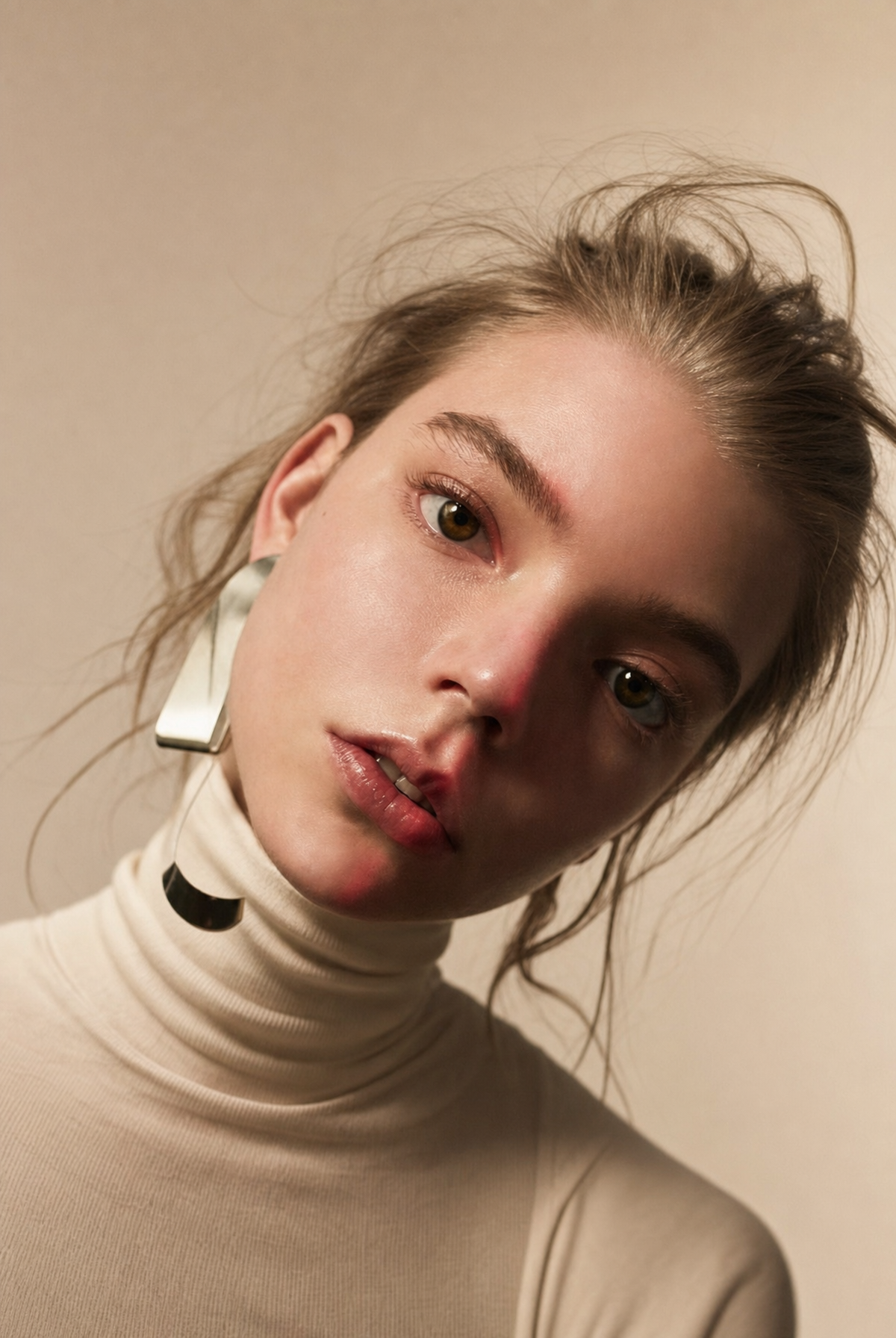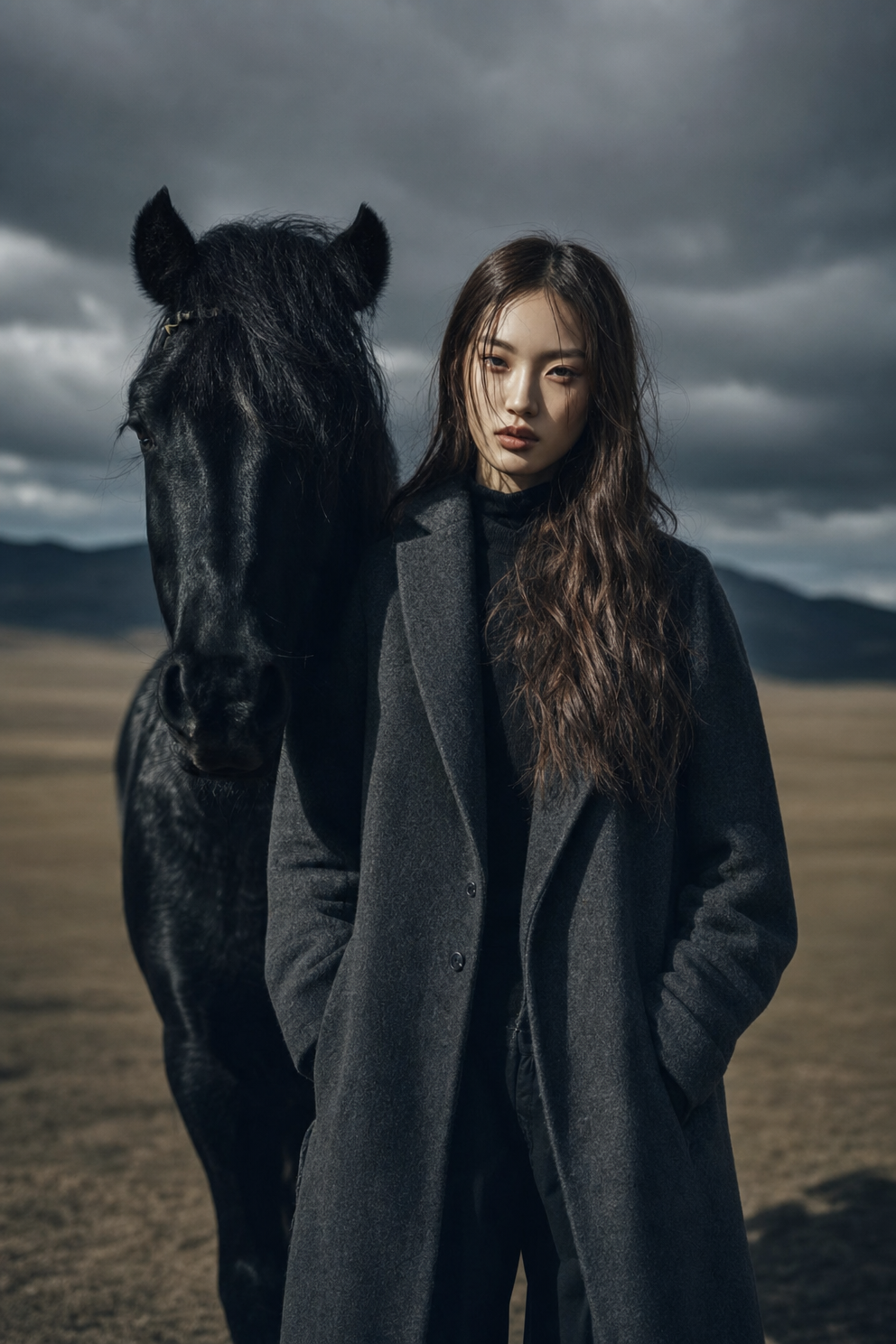
Why this works
The low-angle composition and full-body framing give the woman and black horse a commanding sense of scale against the “vast open steppe,” while “standing closely beside” makes their pairing the visual anchor. “Darker overcast clouds that suggest an approaching storm,” “cooler shadows,” and “moody contrast” establish the dramatic, mysterious tone; the dominant black and brown palette reinforces it through the “black horse,” “chestnut-brown hair,” and “muted earth tones.” “Shallow depth of field” keeps attention on the woman’s “intense gaze” and the horse’s “detailed coat texture,” while “soft diffuse natural light” preserves realistic skin and coat detail without flattening the stormy mood.
FAQ
→How do I make the woman more prominent than the horse?
Replace “standing closely beside a majestic black horse” with “woman positioned in the foreground, horse slightly behind her and partially cropped,” and change “both face forward” to “the woman faces forward while the horse turns subtly into the background.” Keep “low-angle composition” and “intense gaze” to preserve her authority.
→How do I turn the stormy editorial mood into a warmer, more romantic portrait?
Replace “darker overcast clouds that suggest an approaching storm” with “late golden-hour sky with soft glowing clouds,” change “cooler shadows” to “warm amber shadows,” and replace “moody contrast” with “gentle luminous contrast.” Swap “muted earth tones” for “warm ochre, honey, and russet tones” while keeping the chestnut-brown hair and black horse for continuity.
→How can I build a consistent series with different settings and subjects?
Keep the fixed visual language: “cinematic high-fashion editorial photography,” “ultra-realistic photography,” “shallow depth of field,” “low-angle composition,” “soft diffuse natural light,” and “muted earth tones.” Change only “vast open steppe” and “majestic black horse,” replacing them with paired locations and subjects such as “windswept coastal cliffs beside a greyhound” or “snow-covered forest beside a white stag,” while retaining “portrait-full-body” and the same forward-facing pose.
Learn the technique behind this
- Why can't AI spell, and how do I get readable text in an image? — Older diffusion models had no character-level representation of text, so they produced letterform-shaped texture instead of words.
- How should a prompt be structured, and does word order matter? — A prompt that behaves predictably names one subject first, then what it is doing, then where, then the light, then the lens or medium, then the style.
- Why does AI get hands and faces wrong, and how do I fix it? — Hands fail because they're small in frame, extremely variable in pose, and self-occluding — the model has less usable signal per pixel than for any other body part.
Related prompts
Woman in Teal Light, Shadowed Fashion Portrait
Eerie Elegance Among Marble Busts
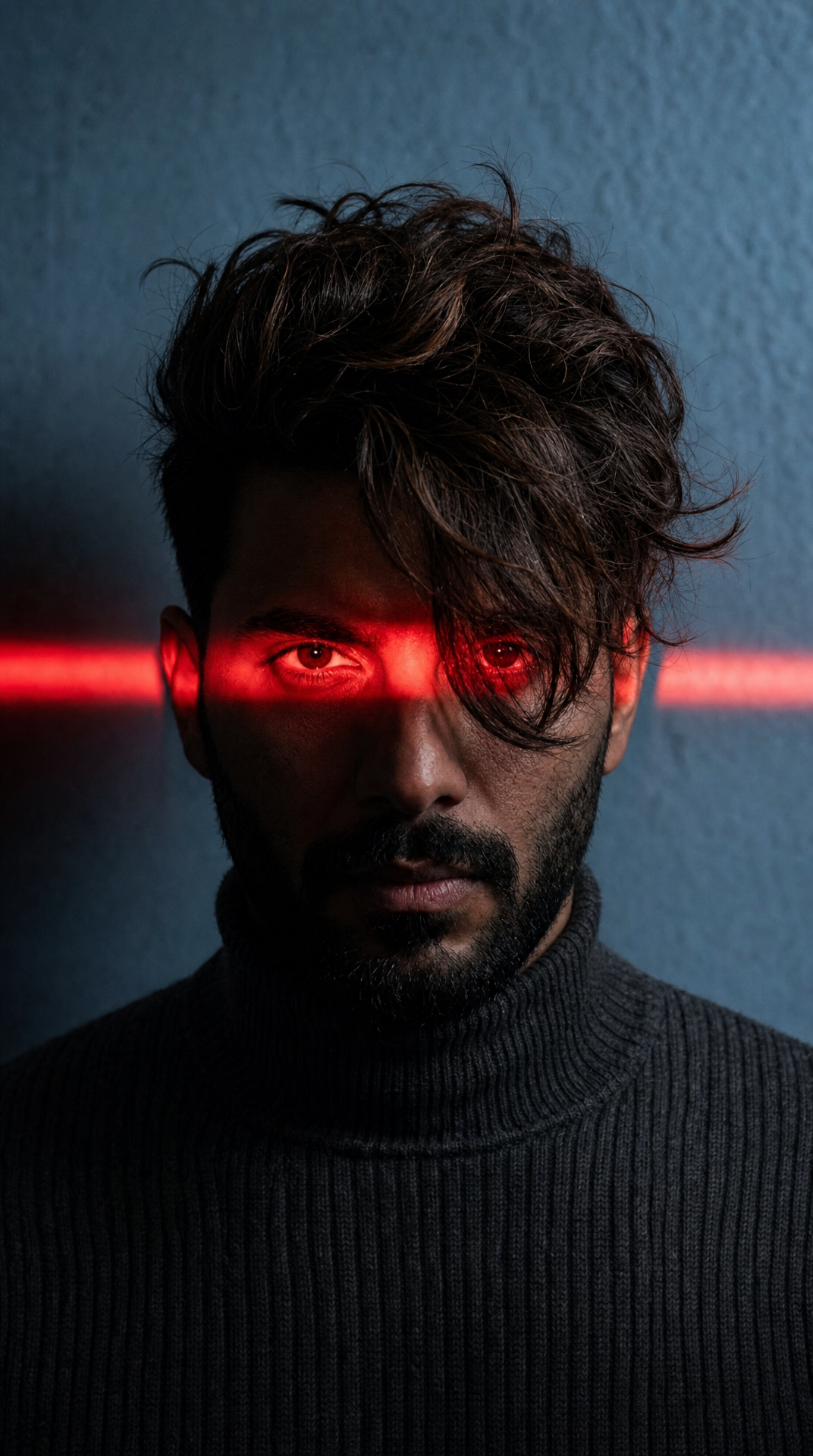
Charcoal turtleneck with red eye-beam
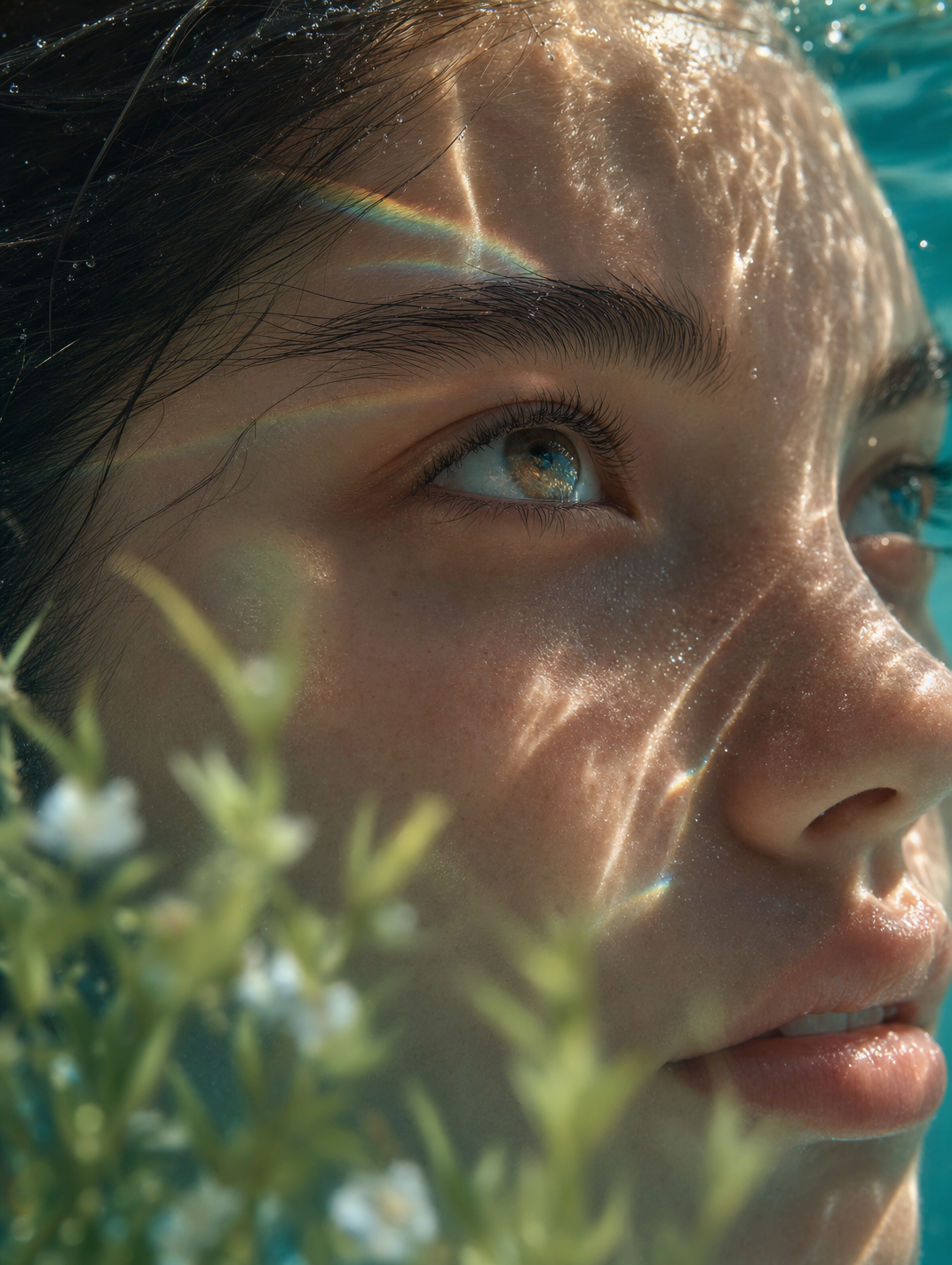
Dreamy Macro Portrait in Cool Water