
Why this works
The intimate framing comes from “eye-level tight crop” and “emphasizing the eyes, nose bridge, and beetle edge,” forcing the viewer into the observer’s line of sight rather than presenting a broad scene. “Eyes sharply focused” against “shallow depth of field” establishes the visual tension, while “partially rendered due to the depth-of-field falloff” keeps the beetle vivid but secondary. “Warm late-afternoon golden light,” “warm earthy tones,” and subtle skin “pores and fine highlights” supply the contemplative warmth, with the image’s black, orange, teal, and gold accents concentrated around the beetle and blurred background.
FAQ
→How do I make the beetle more central and visually dominant?
Replace “a vivid beetle perched on a branch in the foreground” with “a large vivid beetle occupying the central foreground, its shell fully visible,” and change “the beetle’s colors are striking but only partially rendered due to the depth-of-field falloff” to “the beetle rendered in sharp detailed focus with crisp iridescent orange, teal, and black markings.” Replace “emphasizing the eyes, nose bridge, and beetle edge” with “balancing the person’s eyes against the beetle at the center of the frame.”
→How do I shift the scene from contemplative warmth to a tense, mysterious mood?
Replace “intimate contemplative mood” with “quiet suspenseful mood,” and change “warm late-afternoon golden light” to “low dramatic twilight light with cool teal shadows and a narrow warm rim light.” Replace “warm earthy tones” with “deep charcoal, muted teal, and restrained amber tones,” while keeping “eyes sharply focused” to preserve the watchful tension.
→How do I build a variation series without losing the original visual structure?
Keep “eye-level tight crop,” “shallow depth of field,” and “emphasizing the eyes, nose bridge, and beetle edge” unchanged, then vary one controlled element per prompt. Swap “a vivid beetle perched on a branch” for “a jewel-toned moth on a leaf,” “a red ladybug on moss,” or “a pale mantis on a twig,” and replace “warm late-afternoon golden light” with “cool blue dawn light,” “overcast silver light,” or “sunset amber light.”
Learn the technique behind this
- Why can't AI spell, and how do I get readable text in an image? — Older diffusion models had no character-level representation of text, so they produced letterform-shaped texture instead of words.
- How should a prompt be structured, and does word order matter? — A prompt that behaves predictably names one subject first, then what it is doing, then where, then the light, then the lens or medium, then the style.
- Do negative prompts work, and what should go in one? — Negative prompts work on models that support a separate negative conditioning channel — mainly Stable Diffusion and FLUX-family models.
Related prompts
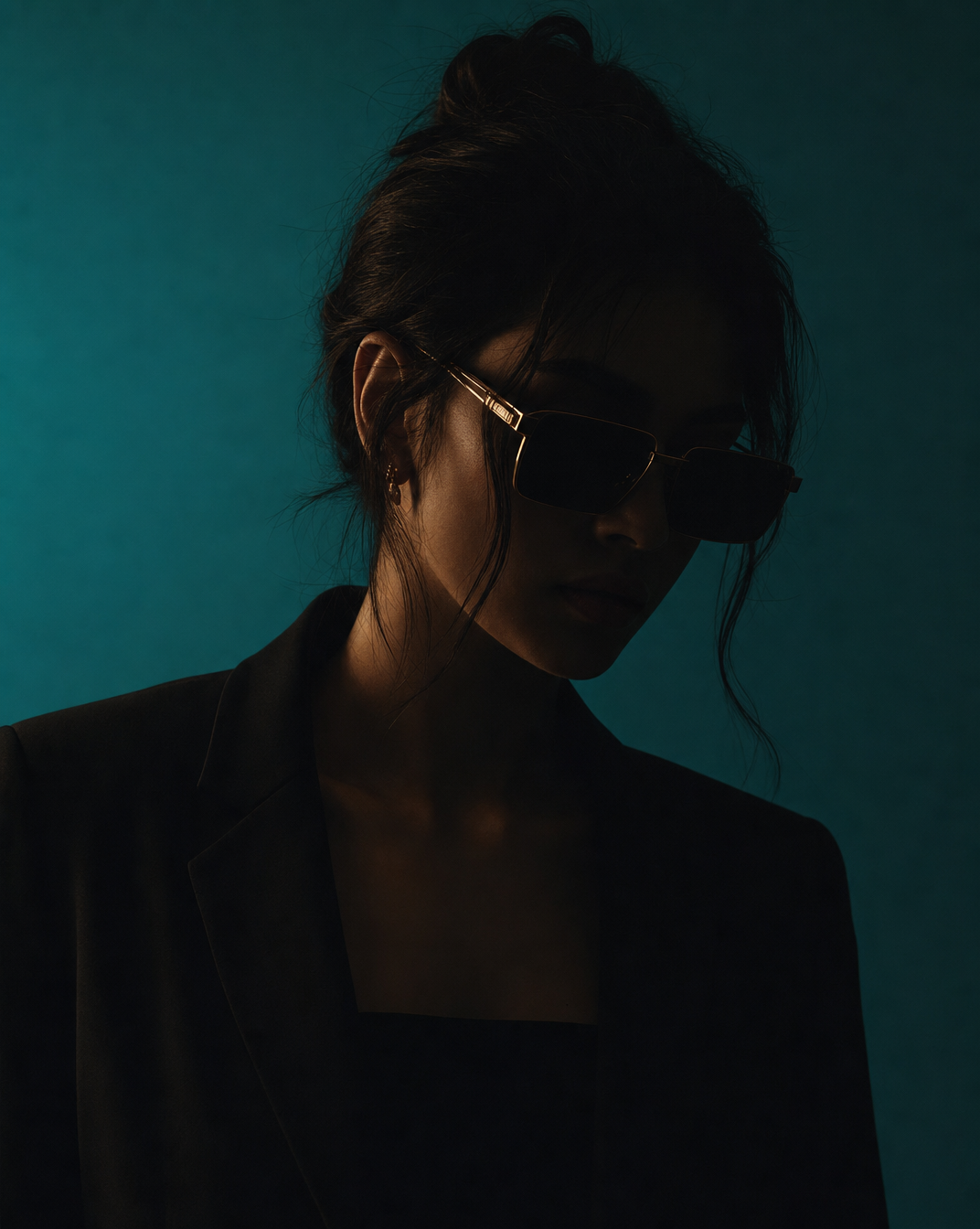
Woman in Teal Light, Shadowed Fashion Portrait

Eerie Elegance Among Marble Busts

Charcoal turtleneck with red eye-beam

Dreamy Macro Portrait in Cool Water