Why this works
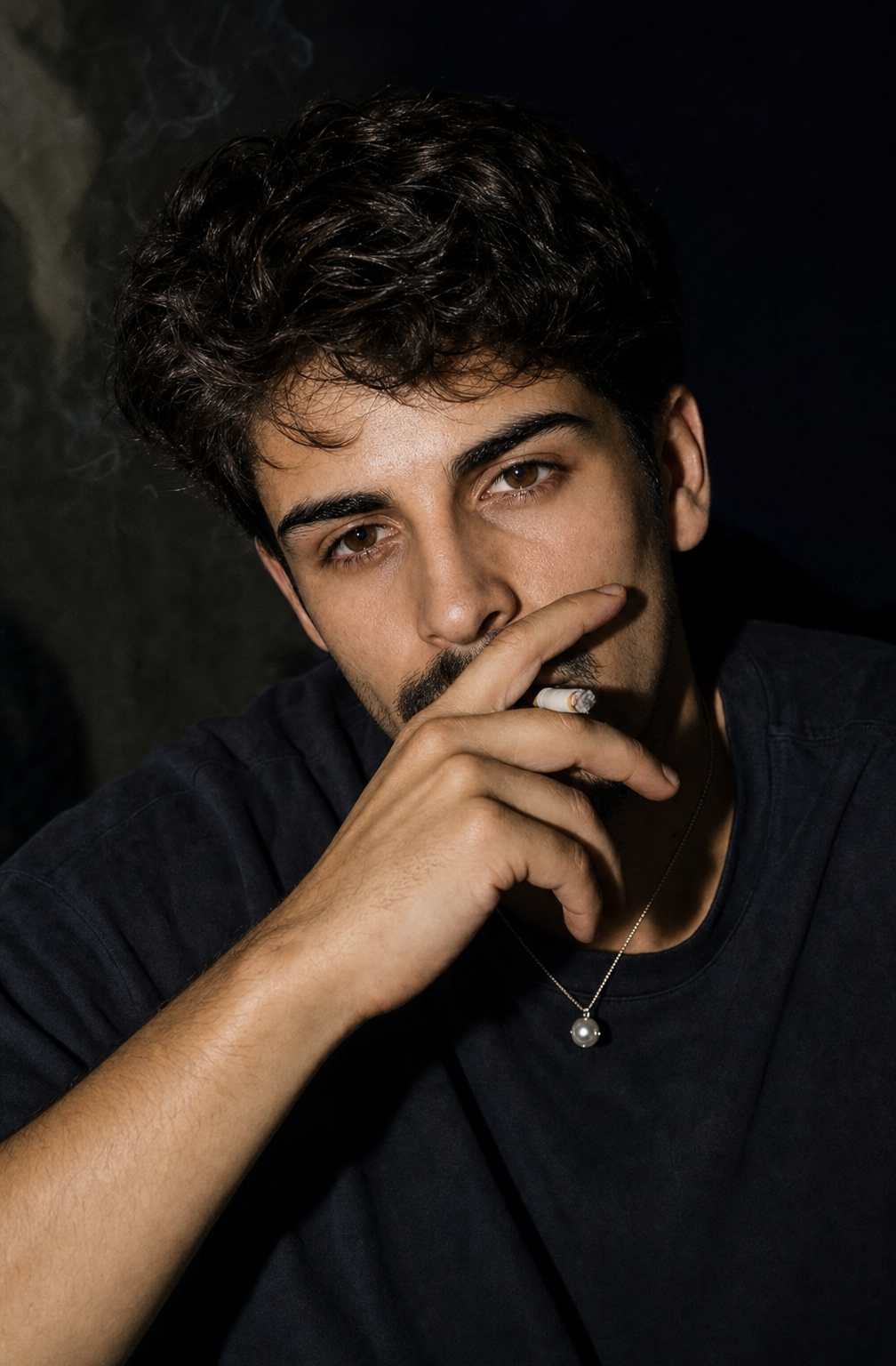
The close-up framing and “sharp focus on the eyes” make the direct stare the compositional anchor, while the hand partially covering one cheek adds tension without hiding the face. “Dramatic low-key lighting” and “deep shadows across his features” produce the raw, moody contrast; the “dark uncluttered background” keeps every edge of the portrait concentrated around his expression. The brown-dominant palette, “faint smoke haze,” and “subtle film-grain realism” reinforce the early-2000s editorial feel with a muted, tactile finish.
FAQ
→How do I make the eyes and direct stare even more dominant?
Keep “sharp focus on the eyes,” but replace “Close-up framing” with “extreme close-up centered on the eyes and upper face.” Change “his hand partially covers one cheek” to “his hand stays below the cheekbone, leaving both eyes and the full gaze unobstructed,” and add “catchlights clearly visible in both eyes.”
→How do I change the raw, moody portrait into a colder and more controlled fashion image?
Replace “tense, raw expression” with “controlled, distant expression,” and change “dramatic low-key lighting creates deep shadows” to “cool, even studio lighting with restrained shadows.” Replace the brown-dominant treatment implied by the current image with “desaturated blue-gray and charcoal palette,” while keeping “dark uncluttered background” for the same concentrated composition.
→How do I build a variation series without losing this portrait’s identity?
Preserve the fixed elements “close-up editorial portrait,” “sharp focus on the eyes,” “dark uncluttered background,” and “subtle film-grain realism.” Vary one phrase per image: replace “cigarette held near his mouth” with “matchbook near his mouth,” “silver lighter under his chin,” or “folded sunglasses in one hand”; alternate “early 2000s fashion editorial styling” with “late-1990s club editorial styling” or “minimalist 2000s tailoring.”
Learn the technique behind this
- Why can't AI spell, and how do I get readable text in an image? — Older diffusion models had no character-level representation of text, so they produced letterform-shaped texture instead of words.
- How should a prompt be structured, and does word order matter? — A prompt that behaves predictably names one subject first, then what it is doing, then where, then the light, then the lens or medium, then the style.
- Why does AI get hands and faces wrong, and how do I fix it? — Hands fail because they're small in frame, extremely variable in pose, and self-occluding — the model has less usable signal per pixel than for any other body part.
Related prompts
Woman in Teal Light, Shadowed Fashion Portrait
Eerie Elegance Among Marble Busts
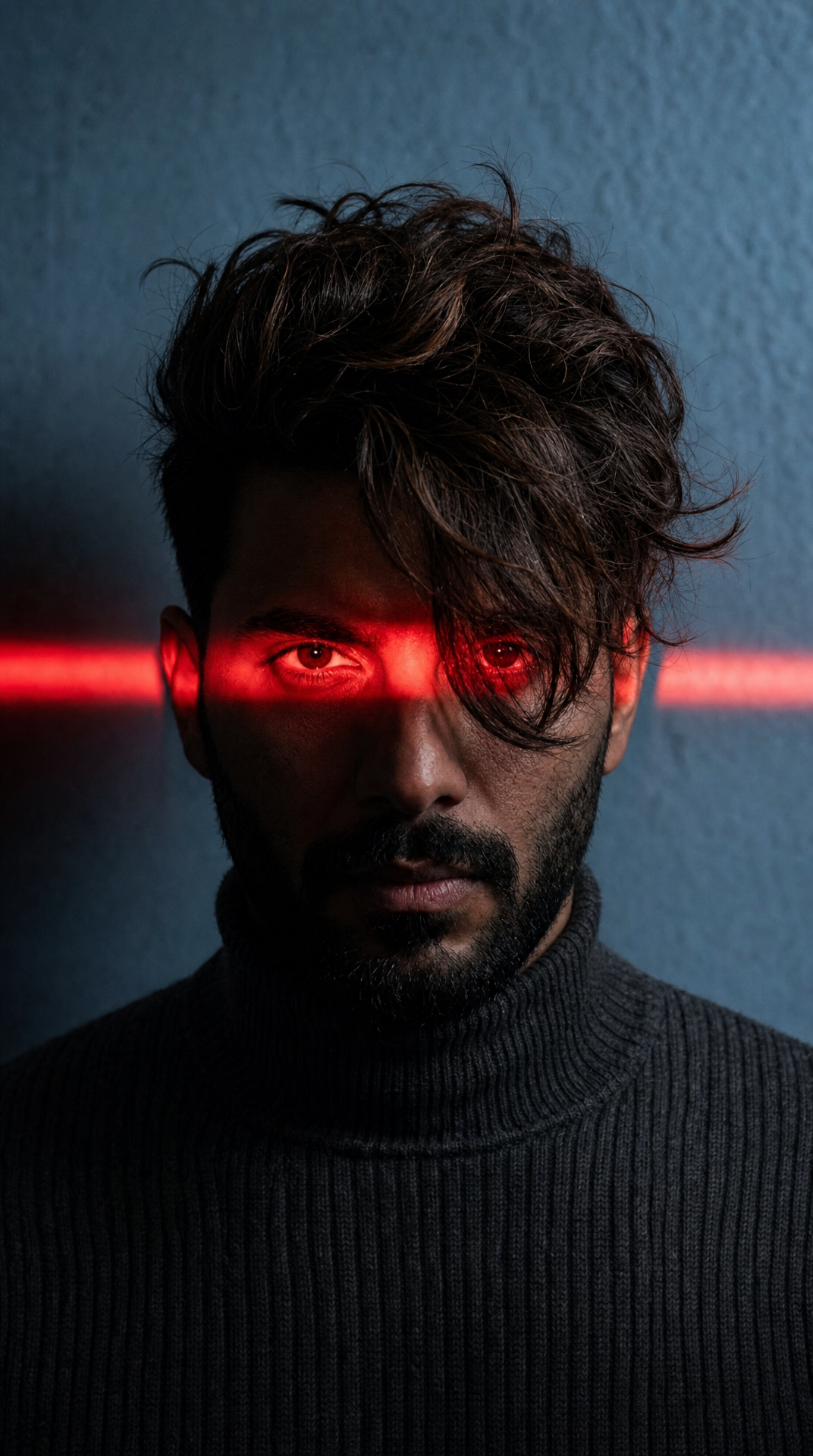
Charcoal turtleneck with red eye-beam
Dreamy Macro Portrait in Cool Water