Why this works
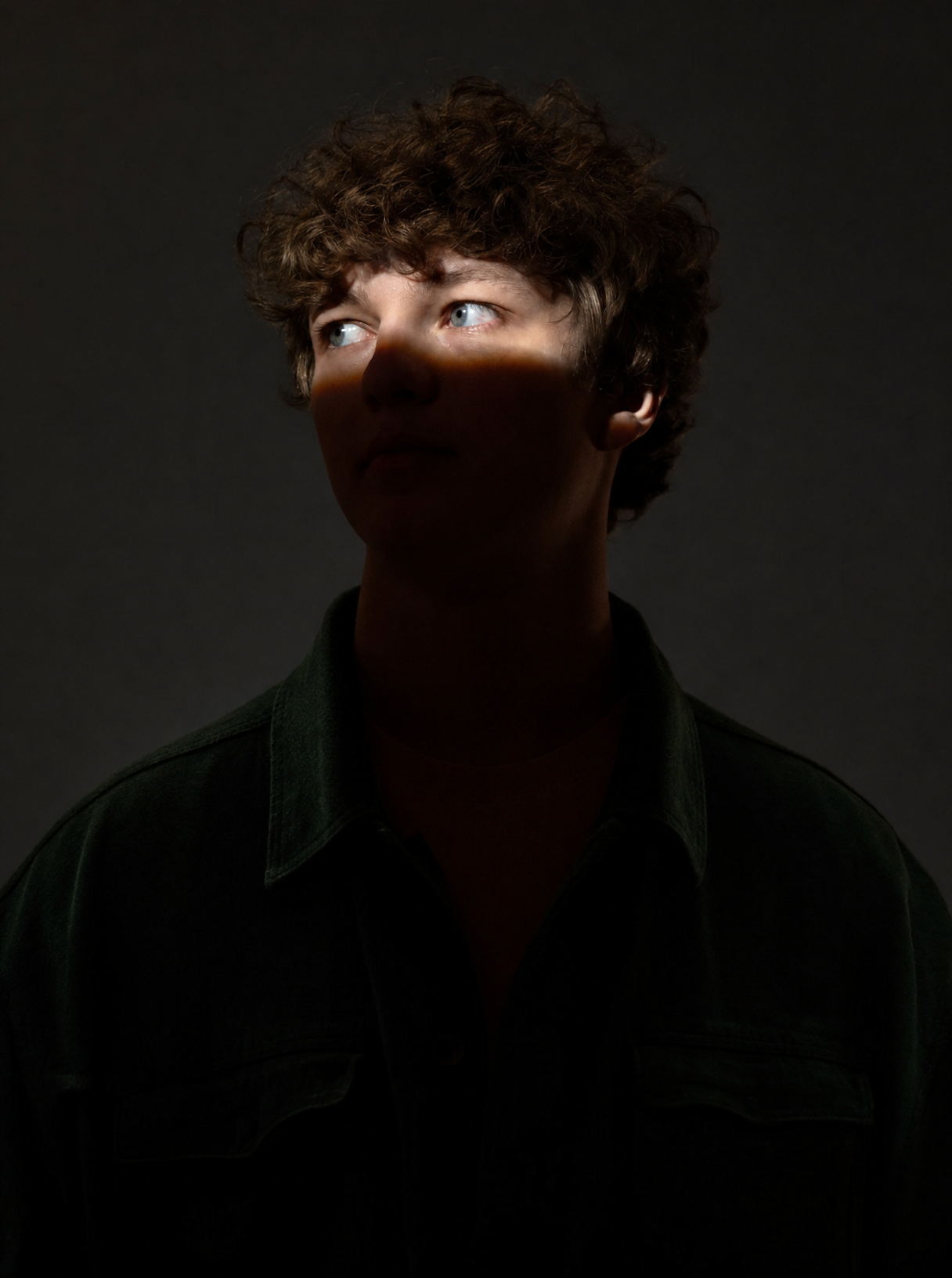
The centered, close portrait crop and “minimal composition” keep attention on the young man’s face, while “high-contrast gobo-style lighting” and the “strong horizontal shadow crossing the face” create the tense, divided expression. The dark charcoal-gray background gives the image a restrained gray palette, and the “cool white highlight illuminating one eye” supplies the focal point without disturbing the subdued fashion-editorial mood. “Deep green shirt” adds the only notable color accent against the neutral studio setting.
FAQ
→How do I make the illuminated eye and facial tension more prominent?
Replace “centered framing” with “tight extreme close-up focused on the eyes,” and change “illuminate one eye with a cool white highlight” to “a sharply defined cool-white spotlight isolating one eye.” Keep “strong horizontal shadow crossing the face,” or replace it with “a narrow horizontal shadow cutting directly across the eyes” for a more confrontational result.
→How do I turn this into a softer, less intimidating fashion portrait?
Replace “high-contrast gobo-style lighting” with “large softbox lighting with gentle falloff,” and change “strong horizontal shadow crossing the face” to “a faint diffused shadow along the cheekbones.” Swap “tense, moody look” for “quiet, contemplative look,” while keeping “dark charcoal-gray” to preserve the restrained studio palette.
→How do I build a consistent series with different subjects or backgrounds?
Keep the fixed structure “centered, minimal composition,” “dramatic studio portrait crop,” and “cool white highlight illuminating one eye,” then replace “young man with curly light-brown hair wearing a deep green shirt” with a new subject and wardrobe. For controlled background variations, replace “dark charcoal-gray” with options such as “deep navy,” “muted olive-gray,” or “warm black,” while retaining “strong horizontal shadow crossing the face” across every prompt.
Learn the technique behind this
- Why can't AI spell, and how do I get readable text in an image? — Older diffusion models had no character-level representation of text, so they produced letterform-shaped texture instead of words.
- How should a prompt be structured, and does word order matter? — A prompt that behaves predictably names one subject first, then what it is doing, then where, then the light, then the lens or medium, then the style.
- Which aspect ratio should I use, and how does it change the image? — Aspect ratio determines what the model composes, not how it's cropped afterwards.
Related prompts
Woman in Teal Light, Shadowed Fashion Portrait
Eerie Elegance Among Marble Busts
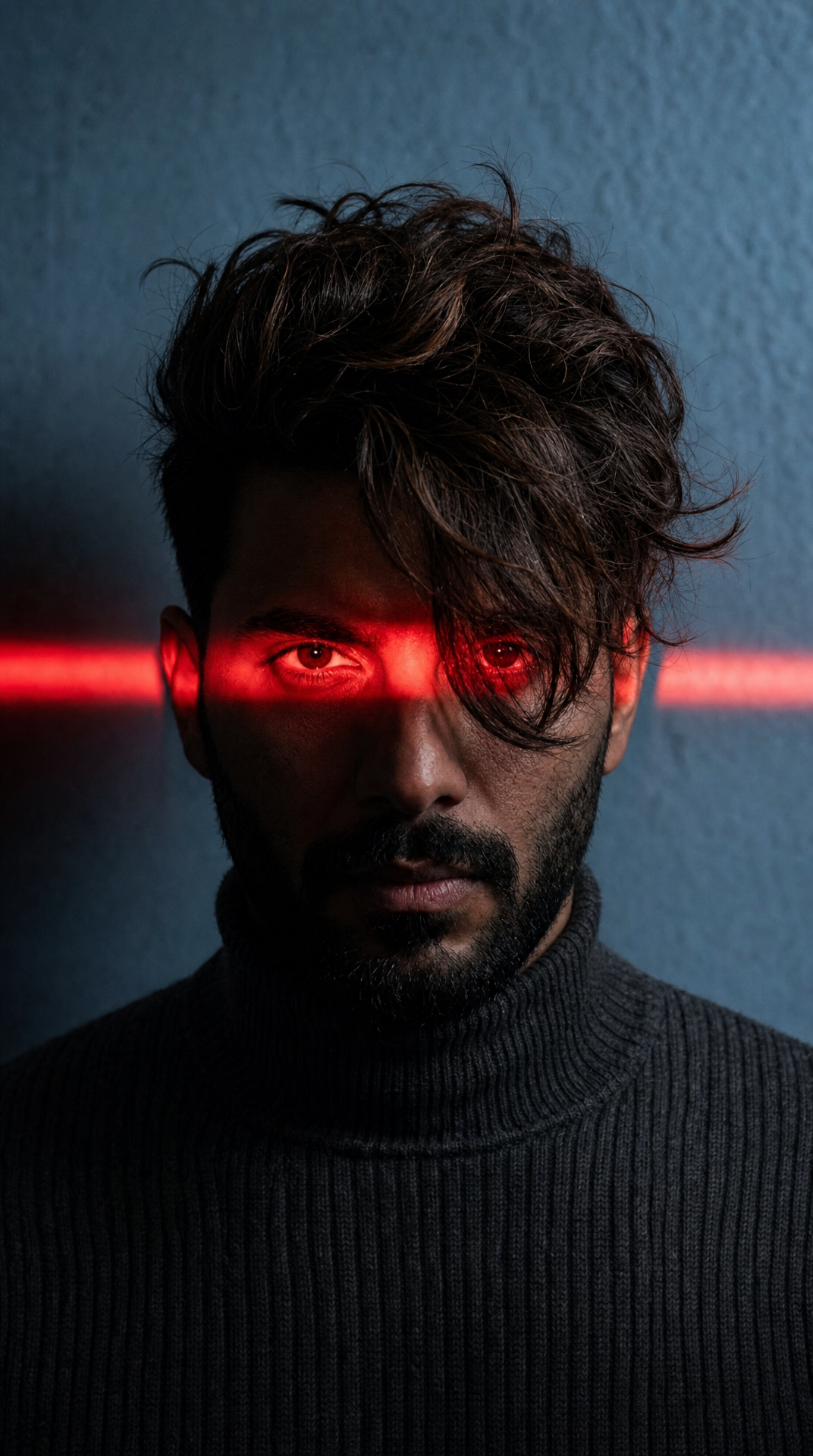
Charcoal turtleneck with red eye-beam
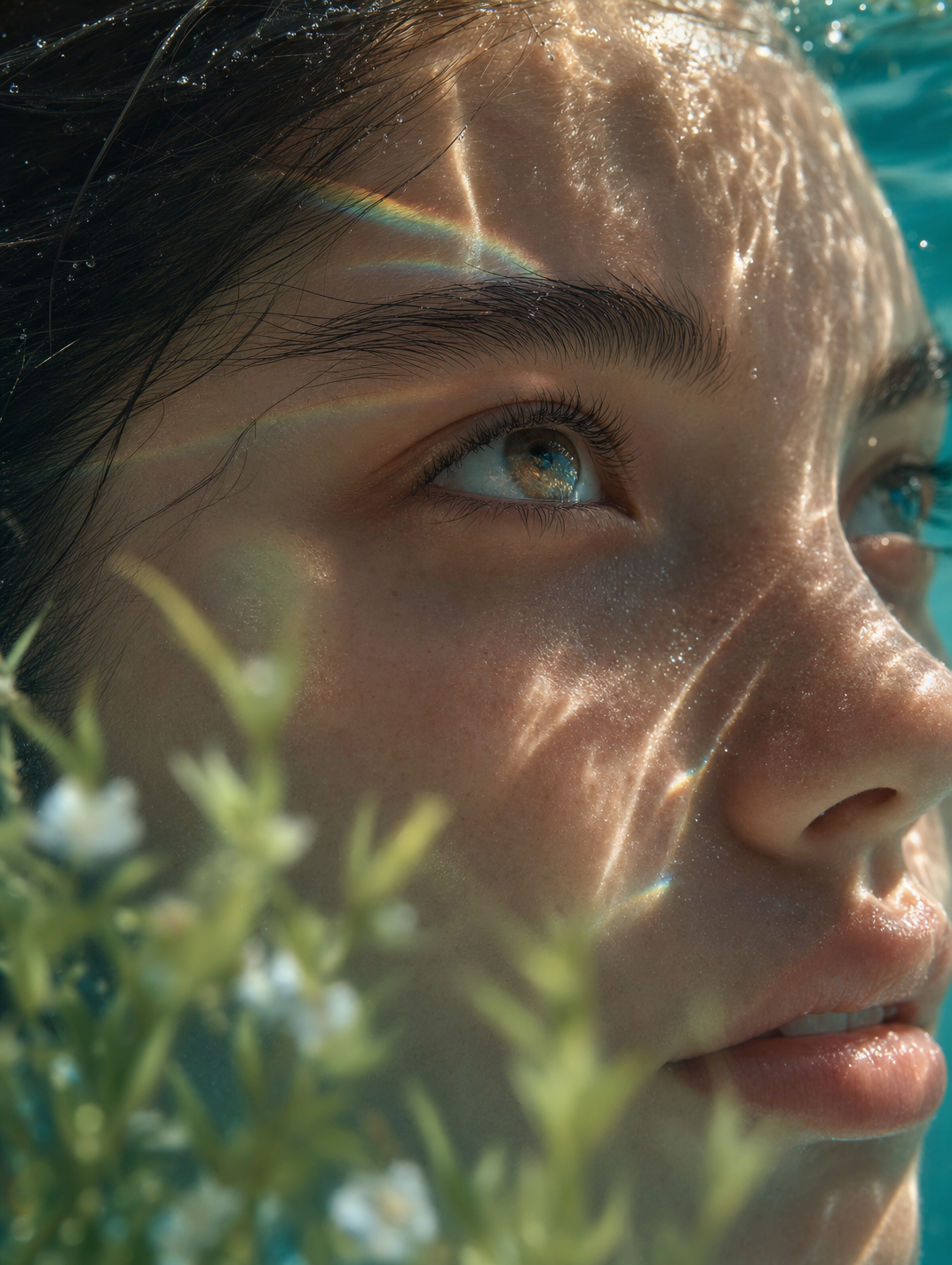
Dreamy Macro Portrait in Cool Water