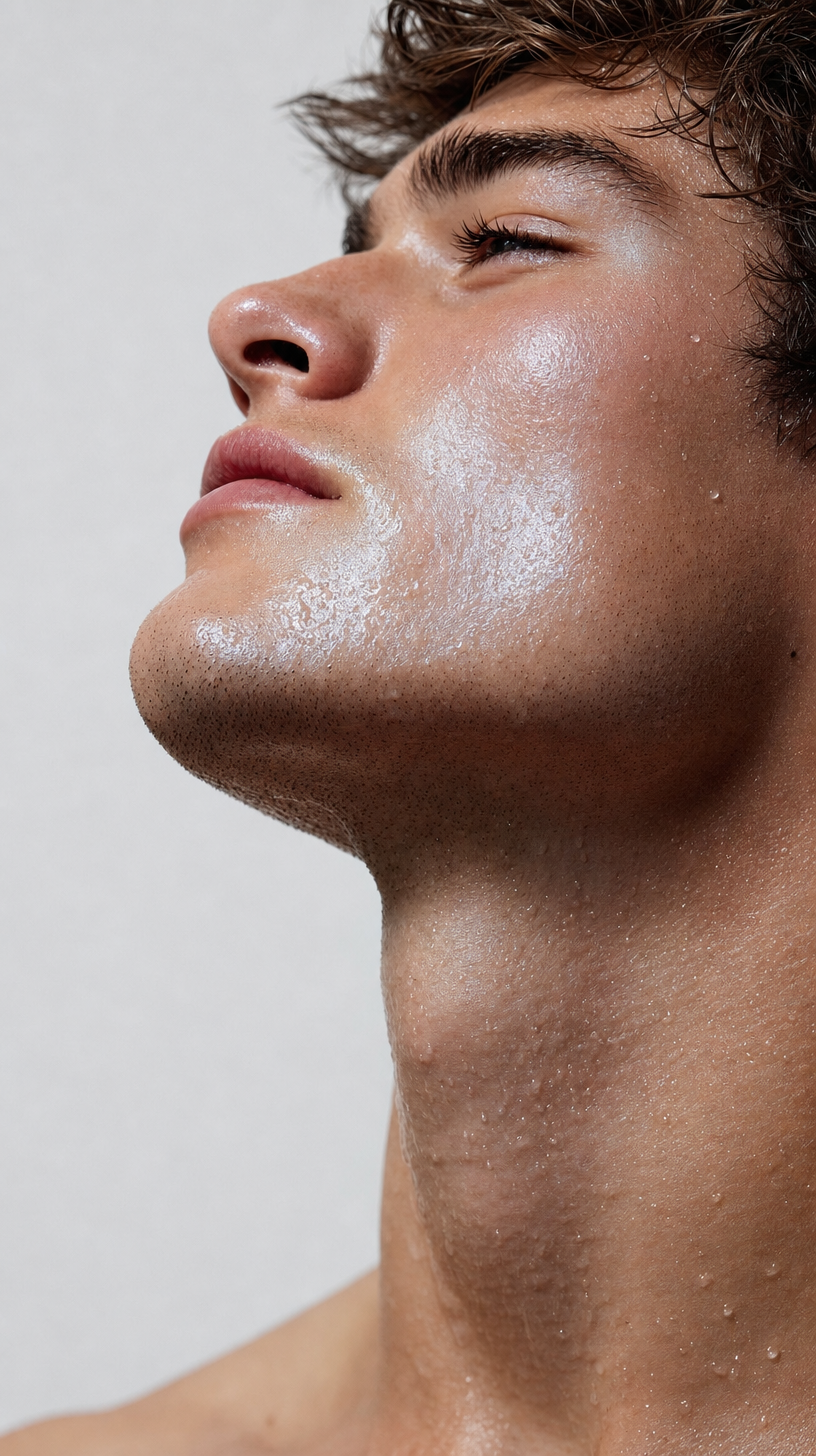
Why this works
The phrase “close-up side profile framing emphasizing facial skin texture” makes the portrait-closeup composition and pore-level focus dominant, while “very high skin detail with realistic pores and fine surface texture” gives the image its tactile realism. “Clean, light-colored background” and “minimal, polished composition” create the white negative space around the brown hair and skin tones, producing a restrained color harmony rather than a busy beauty editorial. “Soft studio lighting with dramatic but natural highlights” preserves the clean, sensual mood, and “subtle cool-toned color cast to the skin” adds controlled tonal contrast without overriding the warm brown elements.
FAQ
→How do I make the eyes and expression more prominent than the skin texture?
Replace “emphasizing facial skin texture” with “emphasizing the visible eye, eyelashes, and subtle facial expression,” and change “very high skin detail with realistic pores and fine surface texture” to “natural skin detail with gentle pore visibility.” Keep “close-up side profile” if you want the profile silhouette, or replace it with “three-quarter close-up portrait” to reveal more of the eyes.
→How do I shift this from a clean sensual beauty image to a colder, more dramatic editorial portrait?
Replace “soft studio lighting” with “hard directional side-lighting with controlled deep shadows,” and change “subtle cool-toned color cast” to “cool blue-gray color grading with desaturated skin tones.” Swap “clean, light-colored background” for “dark charcoal studio background” to make the highlights and profile edge more pronounced.
→How do I build a coordinated series with different subjects while preserving this visual identity?
Keep the fixed style phrases “photorealistic beauty campaign photography,” “glossy hydrated skin,” “minimal, polished composition,” and “soft studio lighting,” then replace “young man” with consistent variants such as “young woman,” “older man,” or “androgynous model.” Change only the hair and skin descriptors, such as “slightly fuller, natural hair texture,” to series-specific phrases like “short tightly curled hair” or “sleek shoulder-length hair,” while retaining “close-up side profile framing” for matching compositions.
Learn the technique behind this
- Why can't AI spell, and how do I get readable text in an image? — Older diffusion models had no character-level representation of text, so they produced letterform-shaped texture instead of words.
- How should a prompt be structured, and does word order matter? — A prompt that behaves predictably names one subject first, then what it is doing, then where, then the light, then the lens or medium, then the style.
- Which aspect ratio should I use, and how does it change the image? — Aspect ratio determines what the model composes, not how it's cropped afterwards.
Related prompts
Woman in Teal Light, Shadowed Fashion Portrait
Eerie Elegance Among Marble Busts
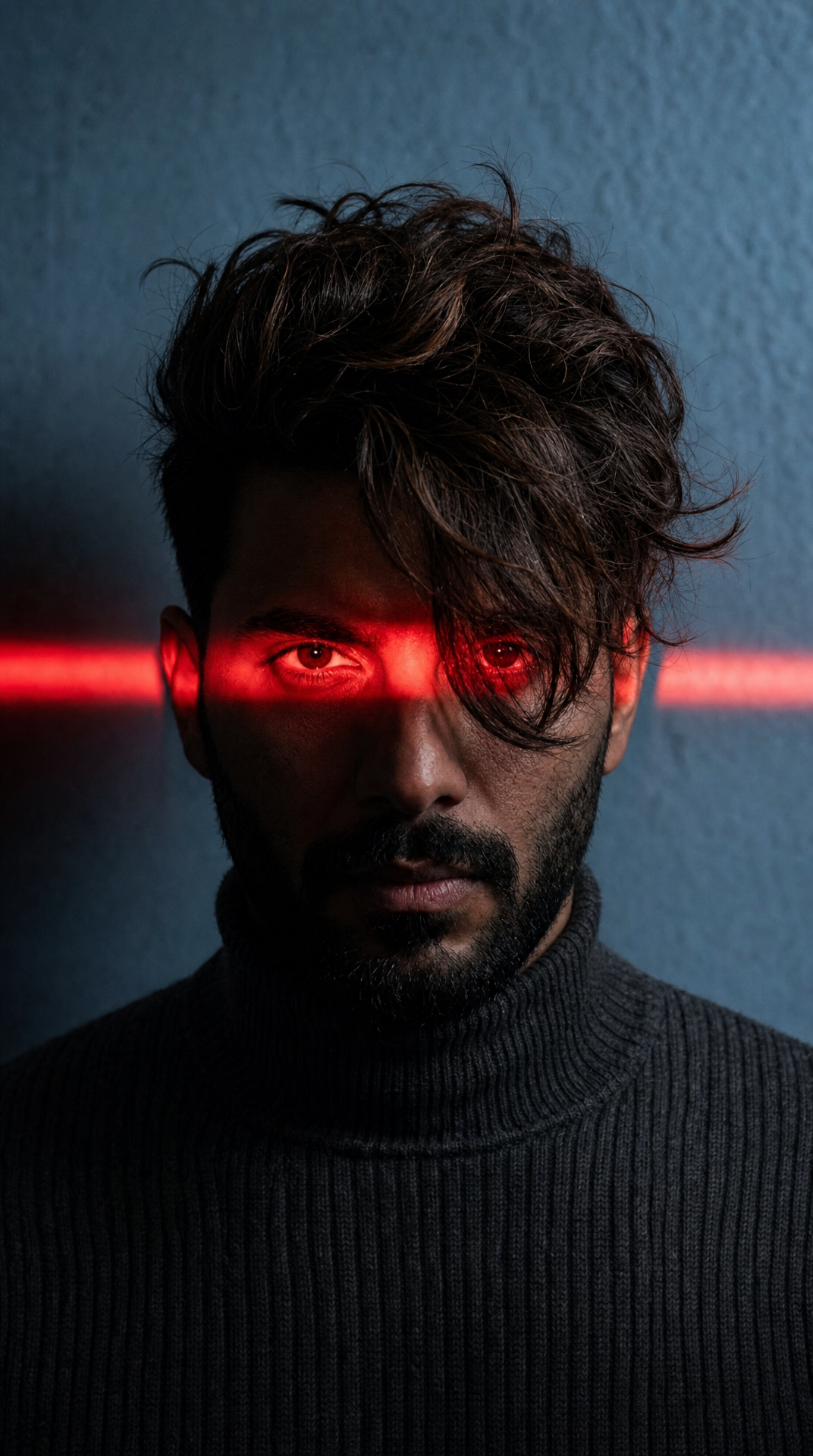
Charcoal turtleneck with red eye-beam
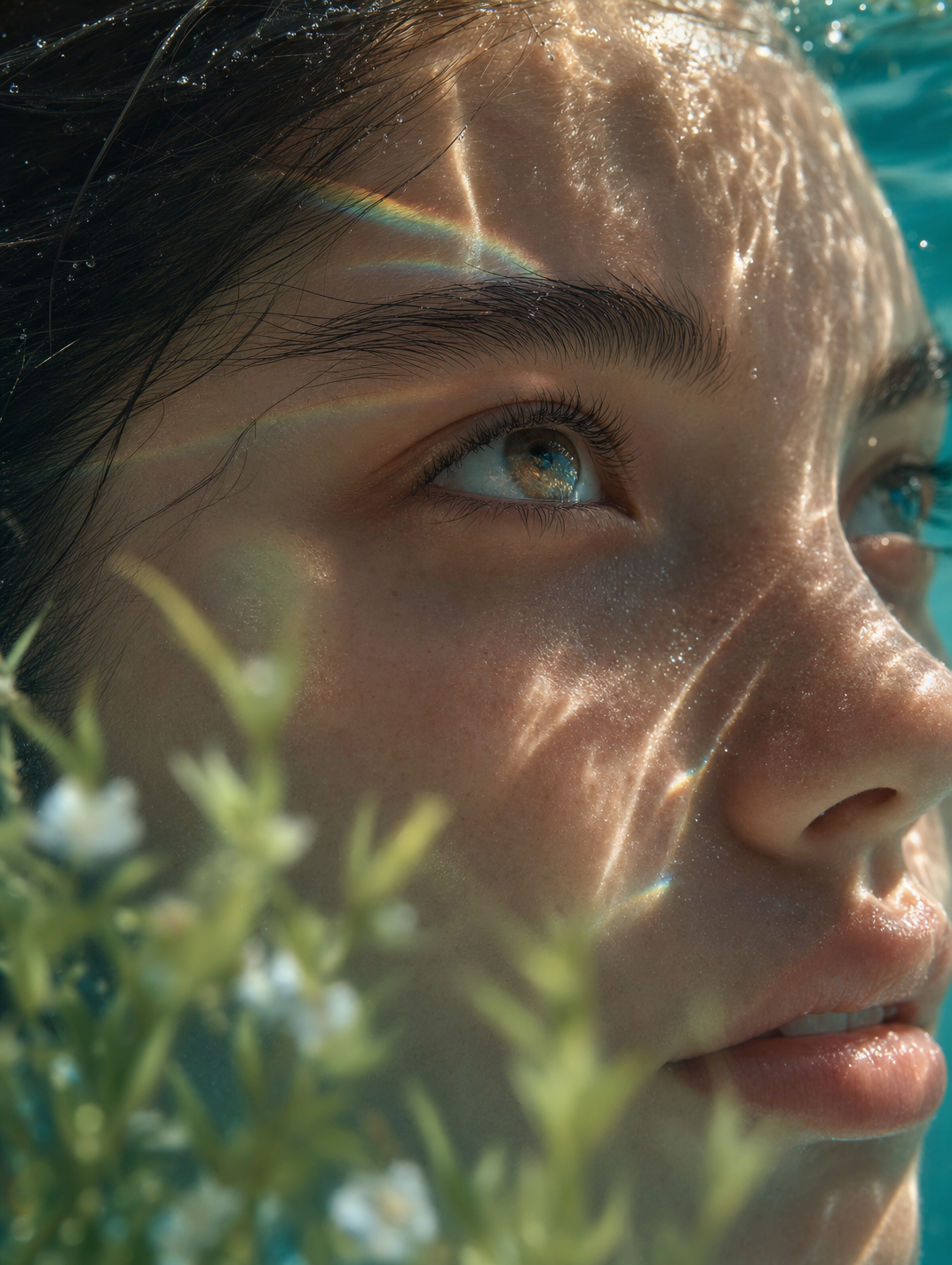
Dreamy Macro Portrait in Cool Water