Why this works
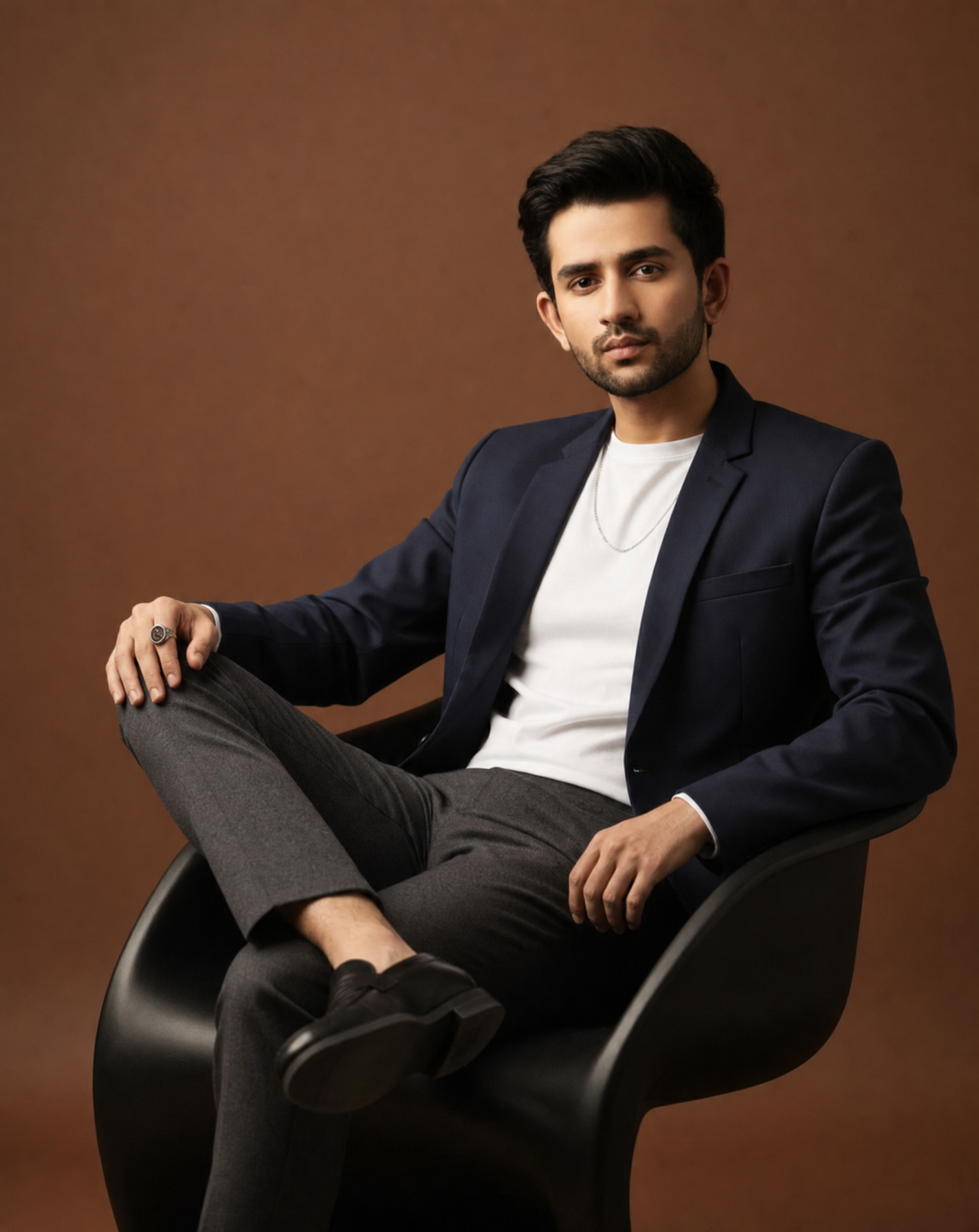
The relaxed ankle-over-knee pose, navy blazer, white dress shirt, and minimal silver accessories establish a composed fashion-editorial mood, while the sculptural black chair gives the full-body portrait a strong geometric anchor. The plain cool-gray seamless background and “clean minimal composition” keep attention on the subject, with the black, gray, and white palette creating restrained color harmony. “Soft diffused studio lighting,” “natural skin texture,” and “subtle cinematic contrast” preserve polished detail without making the portrait look harsh.
FAQ
→How do I change this prompt to make the portrait feel more dramatic and cinematic?
Replace “soft diffused studio lighting” with “hard directional side-lighting with deep shadows,” and change “subtle cinematic contrast” to “high cinematic contrast with controlled rim light.” Keep “plain cool-gray seamless background” if you want the stronger shadows and chair silhouette to remain the main visual changes.
→How do I make the man’s face and jewelry more prominent than the full outfit and chair?
Replace “portrait-full-body” and “fashion editorial portrait framing” with “tight waist-up portrait, face and upper torso dominant.” Change “minimal silver chain necklace and a single signet-style ring” to “prominent layered silver necklaces and a clearly visible signet ring,” and replace “relaxed ankle-over-knee pose” with “hands resting near the collar and chest.”
→How do I turn this into a coordinated series of fashion portraits?
Keep the fixed phrases “plain cool-gray seamless background,” “soft diffused studio lighting,” “clean minimal composition,” and “fashion editorial look” across every image. Vary only the outfit, seated pose, and accessory language, such as replacing “navy blazer over a crisp white dress shirt” with “camel overcoat over a black turtleneck,” then “ankle-over-knee pose” with “standing three-quarter pose,” while retaining “natural skin texture” and “sharp focus” for visual consistency.
Learn the technique behind this
- Why can't AI spell, and how do I get readable text in an image? — Older diffusion models had no character-level representation of text, so they produced letterform-shaped texture instead of words.
- How should a prompt be structured, and does word order matter? — A prompt that behaves predictably names one subject first, then what it is doing, then where, then the light, then the lens or medium, then the style.
- Which aspect ratio should I use, and how does it change the image? — Aspect ratio determines what the model composes, not how it's cropped afterwards.
Related prompts
Woman in Teal Light, Shadowed Fashion Portrait
Eerie Elegance Among Marble Busts
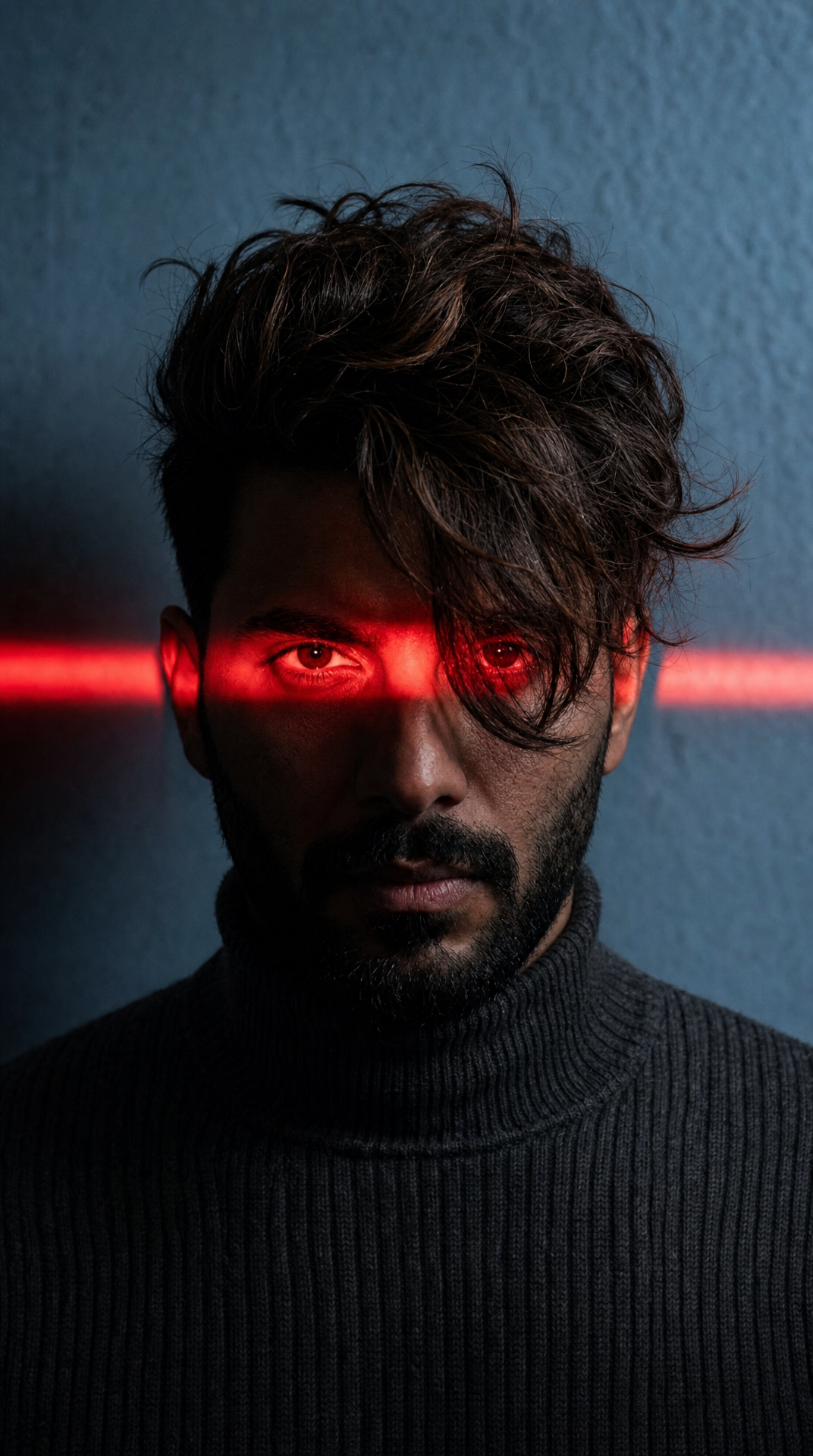
Charcoal turtleneck with red eye-beam
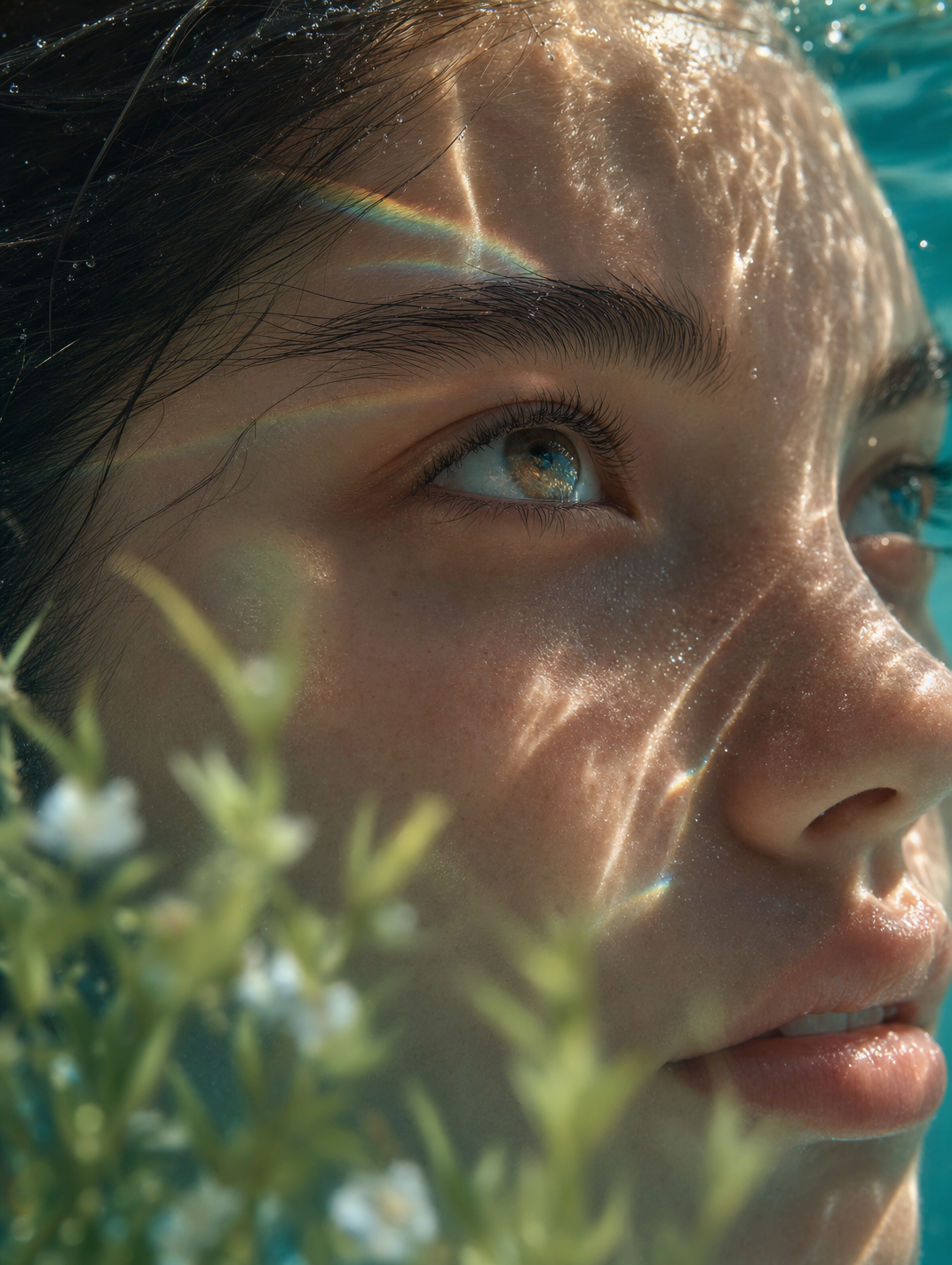
Dreamy Macro Portrait in Cool Water