Why this works
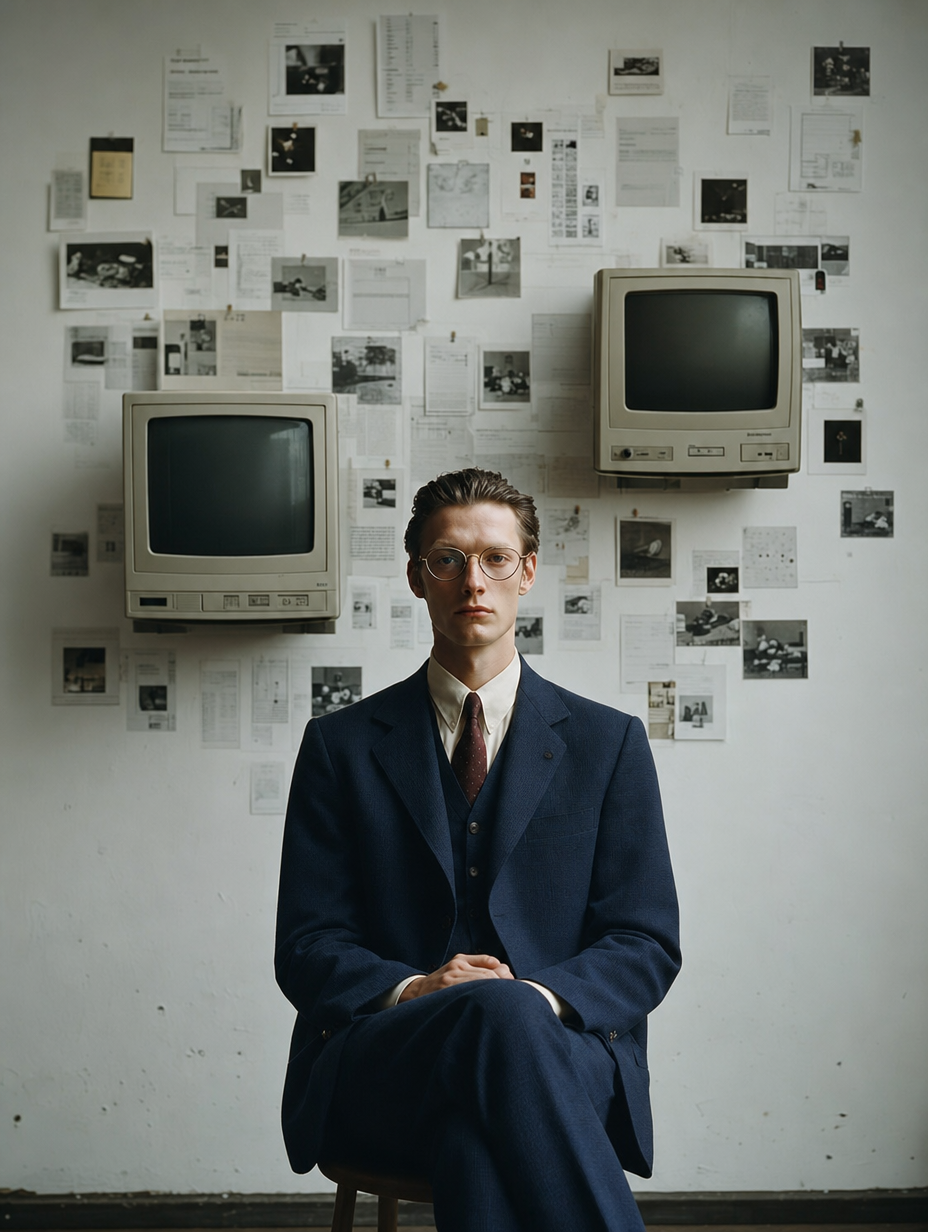
The centered symmetrical composition and “85mm lens look” give the seated figure a formal, full-body editorial presence, while “legs crossed” supplies a quiet, controlled gesture. “Soft, moody studio lighting” and “gentle shadows across his face and hands” establish the contemplative mood through localized contrast, not through the palette alone. Deep navy, cream, and burgundy clothing anchors the blue, white, and black dominant colors, while “pinned papers and photographs” plus “two vintage CRT monitors suspended at different heights” provide the archival retro-futurist tension behind him.
FAQ
→How do I change this prompt to make the CRT monitors more visually prominent?
Replace “their screens darkened” with “both CRT screens glowing with pale blue scanlines and faint interface graphics,” and change “shallow depth of field” to “moderate depth of field keeping the man and monitors sharply defined.” Add “monitors occupying the upper left and upper right thirds” to make their placement read as a deliberate framing device.
→How do I change this prompt for a warmer, less somber portrait?
Replace “Soft, moody studio lighting creates gentle shadows” with “warm amber window light with soft golden fill and minimal facial shadow,” and change “muted cool neutrals with subtle archival warmth” to “sepia, cream, tobacco brown, and muted burgundy.” Keep the navy suit if you want a controlled blue accent against the warmer room.
→How do I build a series of variations while preserving this composition?
Keep “centered in a symmetrical composition,” “young man seated with his legs crossed,” and “85mm lens look” unchanged, then swap the wardrobe and wall materials in separate versions. For example, replace “deep navy textured suit with a matching vest, a cream dress shirt, and a burgundy tie” with “charcoal three-piece suit, pale blue shirt, and ochre tie,” or replace “pinned papers and photographs” with “technical diagrams, contact sheets, and handwritten notes,” while retaining the two suspended CRT monitors as the recurring series motif.
Learn the technique behind this
- Why does AI get hands and faces wrong, and how do I fix it? — Hands fail because they're small in frame, extremely variable in pose, and self-occluding — the model has less usable signal per pixel than for any other body part.
- Why can't AI spell, and how do I get readable text in an image? — Older diffusion models had no character-level representation of text, so they produced letterform-shaped texture instead of words.
- How should a prompt be structured, and does word order matter? — A prompt that behaves predictably names one subject first, then what it is doing, then where, then the light, then the lens or medium, then the style.
Related prompts
Woman in Teal Light, Shadowed Fashion Portrait
Eerie Elegance Among Marble Busts
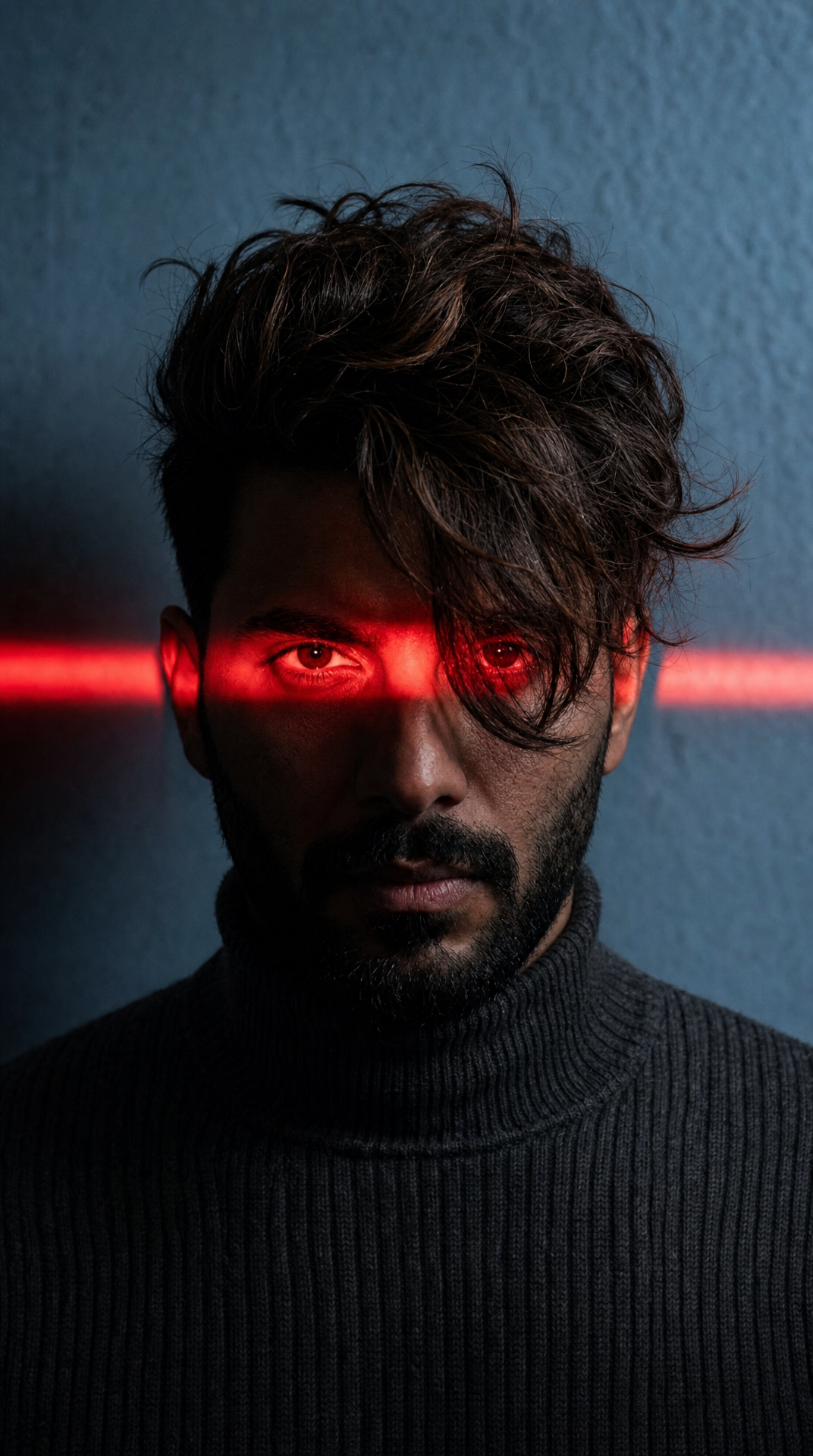
Charcoal turtleneck with red eye-beam
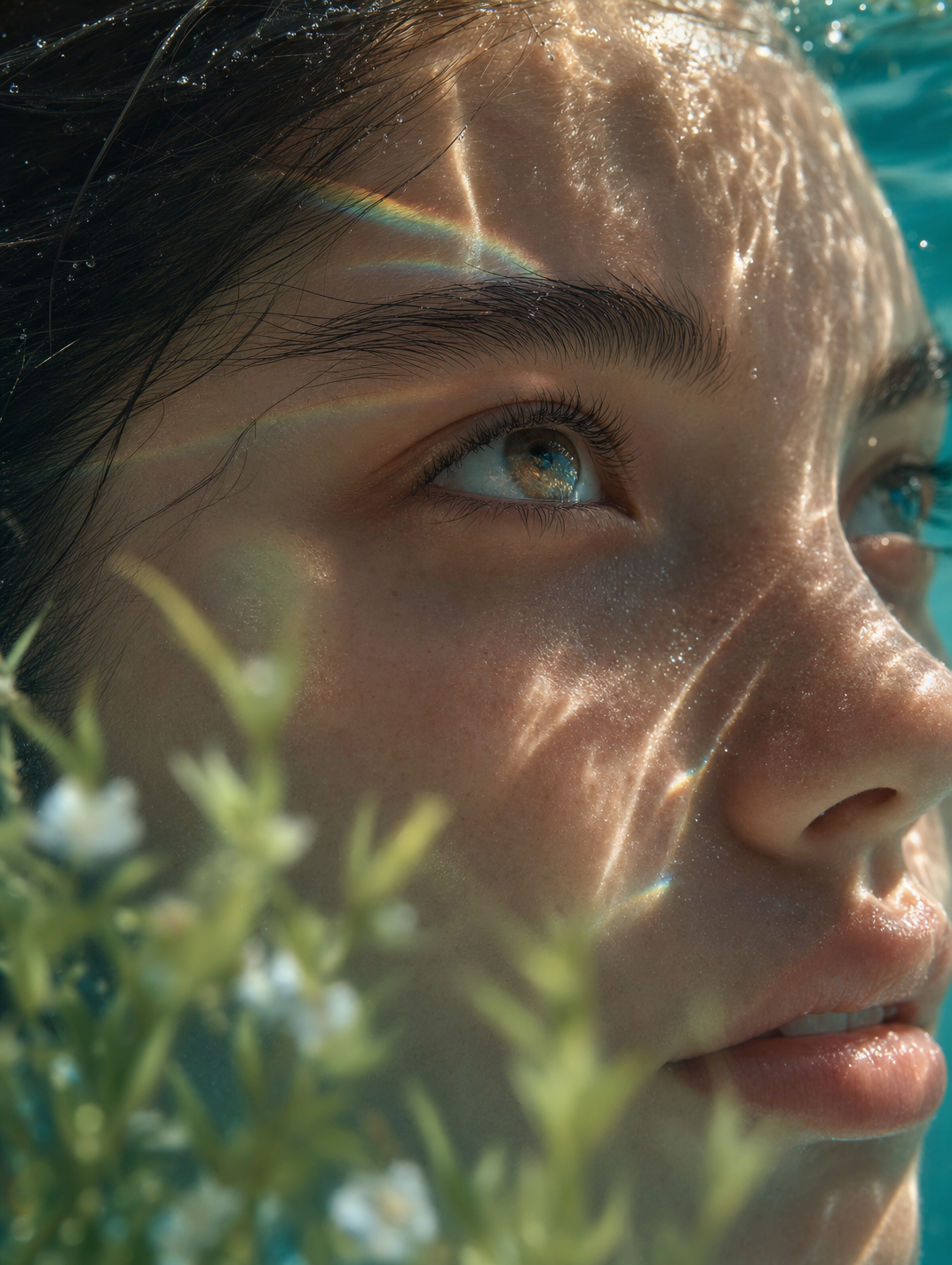
Dreamy Macro Portrait in Cool Water