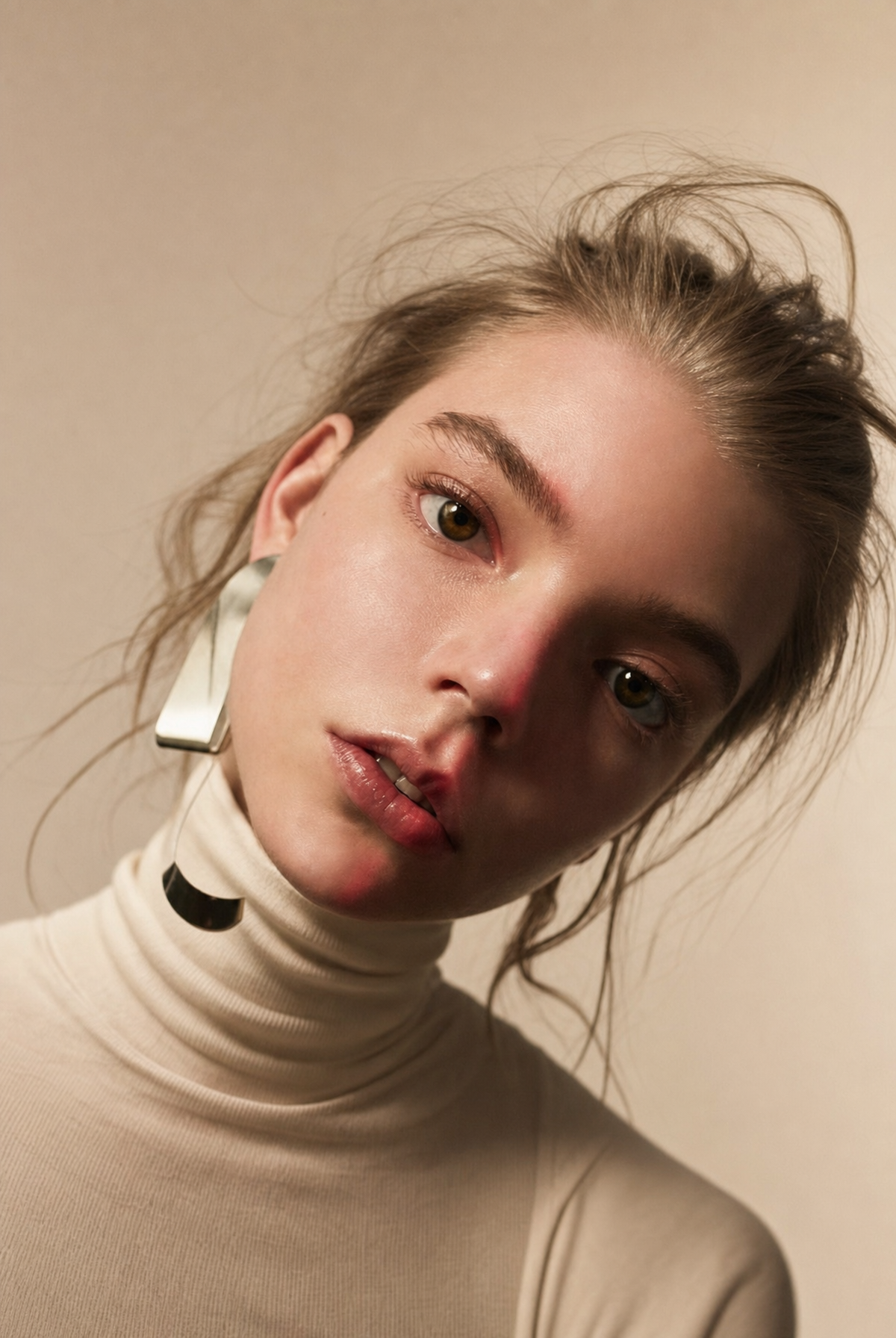
Same prompt, generated with each model separately — click one to see how it holds up.
Why this works
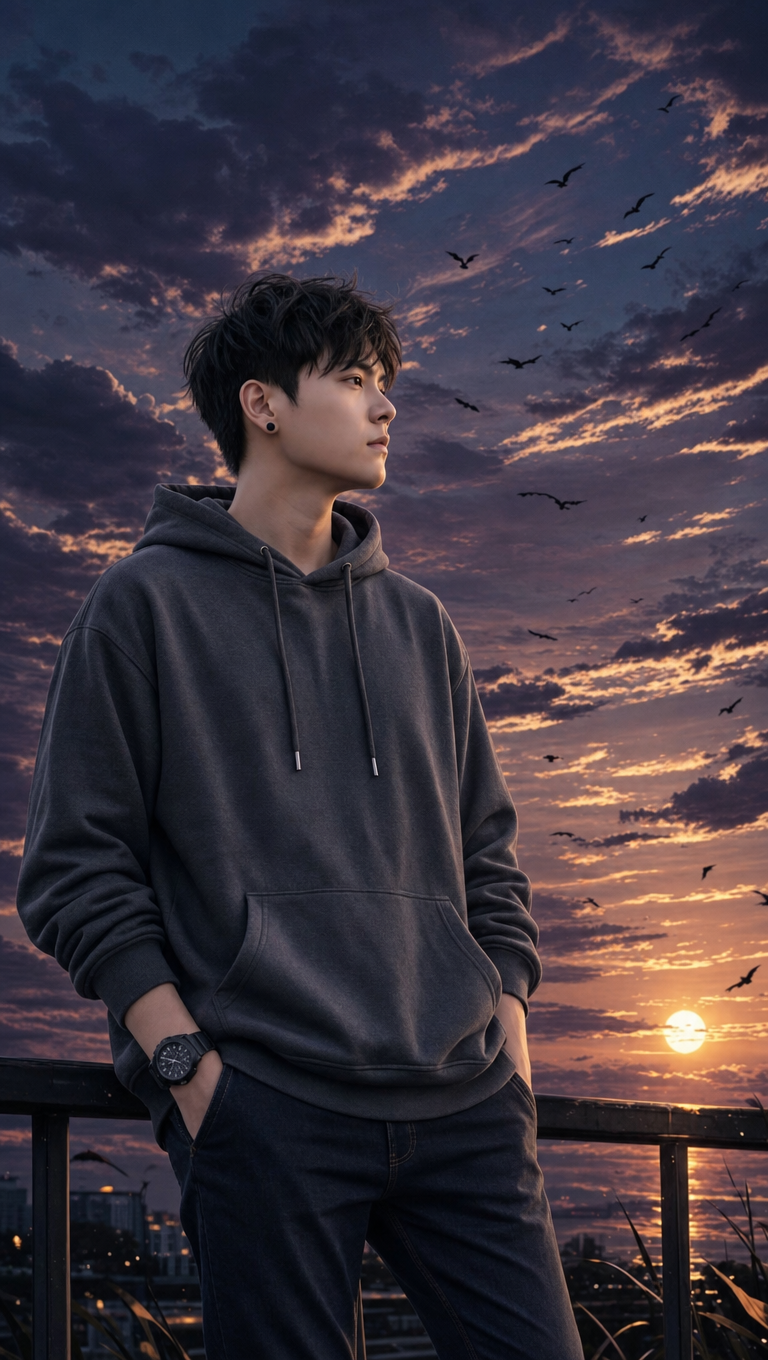
The phrase “side profile with both hands resting in his hoodie pockets, looking into the distance” gives the full-body portrait a quiet, inward focus, while “cinematic framing with shallow depth of field” separates him from the urban overlook and keeps attention on his silhouette. “Dusk rim light highlights the outline of his face and hoodie folds” supplies the edge definition, and “deep purple and muted orange clouds” creates the dramatic color contrast visible against the predominantly purple-and-black palette. The “few birds as a dark silhouette crossing overhead” adds scale and reinforces the contemplative distance without competing with the subject.
FAQ
→How do I make the man feel more central and visually dominant?
Replace “standing by a railing at dusk in an urban overlook” with “standing prominently in the foreground at a high urban overlook,” and change “cinematic framing with shallow depth of field” to “tight full-body framing with the subject occupying most of the vertical frame.” Keep “side profile” if you want the same introspective pose, or replace it with “three-quarter view facing camera” for more facial presence.
→How do I shift this from contemplative to warmer and more hopeful?
Replace “moody and contemplative” with “warm, hopeful, quietly optimistic,” and change “deep purple and muted orange clouds” to “soft rose, peach, and golden clouds.” Swap “subtle rim light” for “gentle golden-hour backlight with warm facial fill” to brighten the face while preserving the dusk setting.
→How do I create a series of variations without losing the character’s identity?
Keep “young man wearing a charcoal-grey oversized hoodie and dark jeans,” “side profile,” and “both hands resting in his hoodie pockets” unchanged, then vary only “urban overlook by a railing.” Replace it with settings such as “rainy rooftop overlooking neon streets,” “quiet coastal pier at blue hour,” or “snow-covered pedestrian bridge at dawn.” Match each version with a new sky and light phrase while retaining “photorealistic cinematic portrait” and “shallow depth of field” for visual consistency.
Learn the technique behind this
- Why does AI get hands and faces wrong, and how do I fix it? — Hands fail because they're small in frame, extremely variable in pose, and self-occluding — the model has less usable signal per pixel than for any other body part.
- Why can't AI spell, and how do I get readable text in an image? — Older diffusion models had no character-level representation of text, so they produced letterform-shaped texture instead of words.
- How should a prompt be structured, and does word order matter? — A prompt that behaves predictably names one subject first, then what it is doing, then where, then the light, then the lens or medium, then the style.
Related prompts
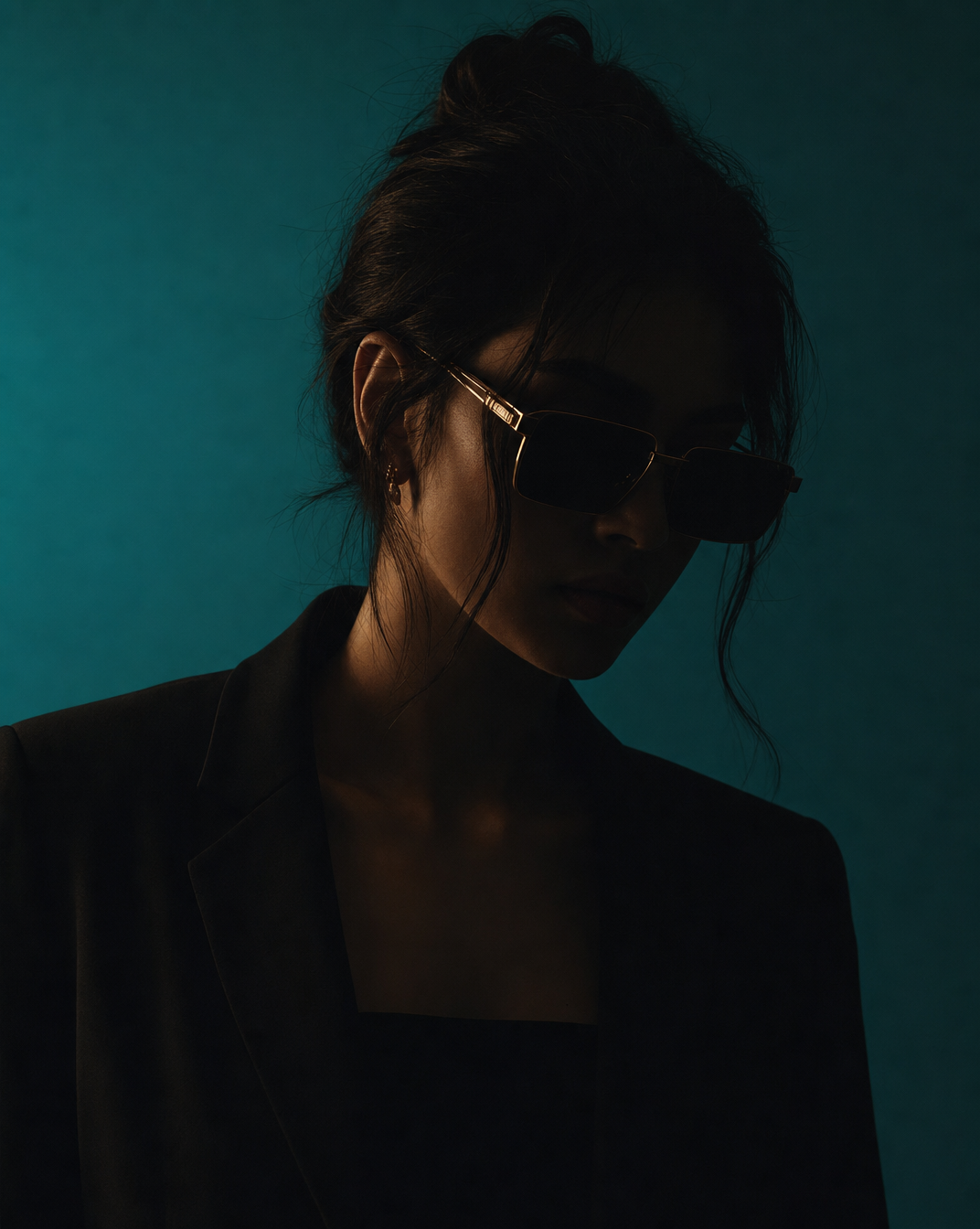
Woman in Teal Light, Shadowed Fashion Portrait
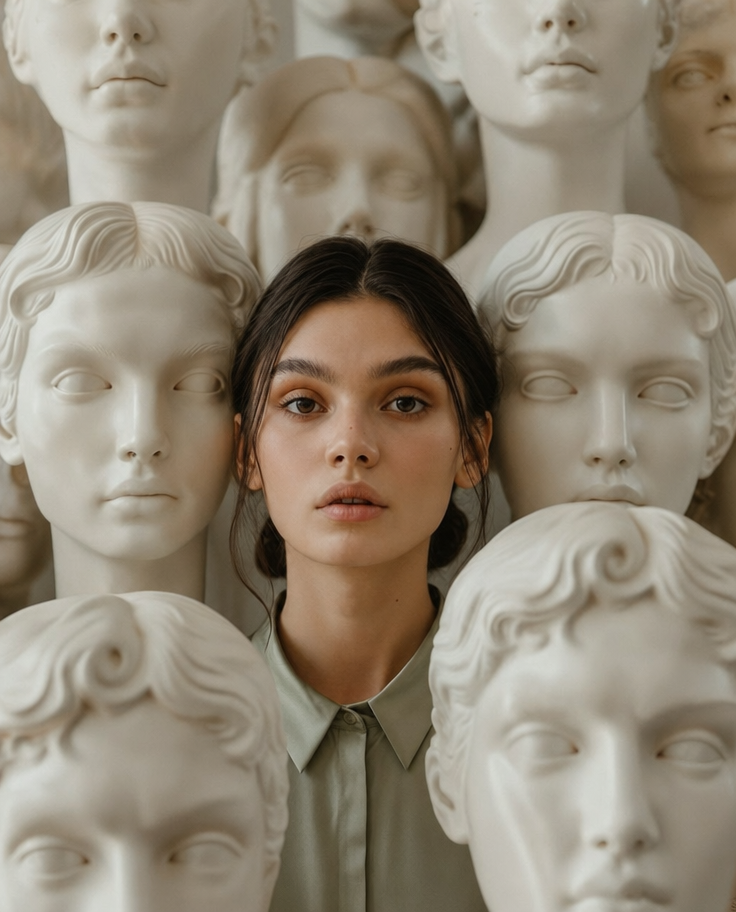
Eerie Elegance Among Marble Busts
Charcoal turtleneck with red eye-beam
Dreamy Macro Portrait in Cool Water