Why this works
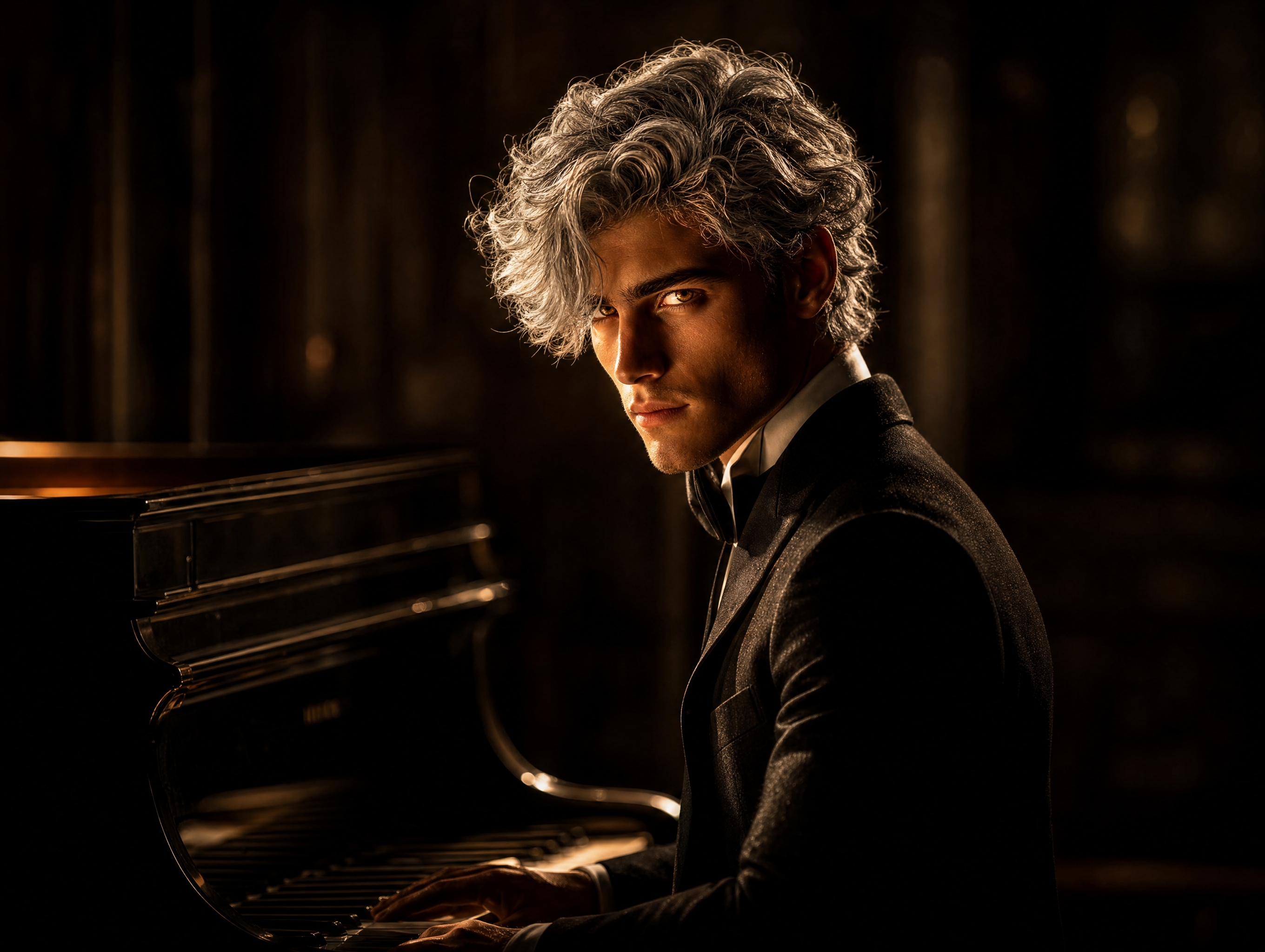
The phrase “tight, centered 1:1 framing focused on the man, piano, and mirror reflection” makes the portrait-closeup composition feel deliberate, while “sits sideways to the camera” adds a controlled diagonal against the centered layout. “Dramatic chiaroscuro,” “deep shadowed background,” and “strong contrast of light and darkness” supply the moody, mysterious intensity; the near-black and oxblood palette is punctuated by “warm amber highlights” and “softly glowing amber eyes,” creating the dominant brown-and-gold harmony. The mirror is a strong narrative focal point because “clearly showing his amber eye glow catching the light” turns the reflection into a second visual anchor rather than background decoration.
FAQ
→How do I make the glowing eyes and mirror reflection more prominent?
Replace “focused on the man, piano, and mirror reflection” with “extreme close-up centered on the man’s face and mirror reflection,” and change “clearly showing his amber eye glow catching the light” to “the mirror reflection occupies half the frame, with the amber eyes as the brightest focal point.” Reduce the piano wording to “only the piano edge visible at the bottom” so it supports rather than competes with the eyes.
→How do I shift this from mysterious and intense to mournful and restrained?
Replace “dramatic chiaroscuro” and “intense moody atmosphere” with “soft low-key overcast lighting” and “quiet, mournful atmosphere.” Change “warm amber highlights” and “softly glowing amber eyes” to “muted candle-gold highlights” and “faint, fading amber eyes,” then replace “strong contrast of light and darkness” with “gentle tonal transitions and subdued contrast.”
→How do I build a variation series while keeping the same album-cover identity?
Keep “Art nouveau symbolist dark album-cover painting,” “tight, centered 1:1 framing,” and “rich near-black and oxblood tones,” then vary one load-bearing element per version. Swap “grand piano” for “ornate harp,” “antique record player,” or “black violin,” and replace “a mirror in front of him” with “a framed stained-glass panel,” “a polished piano lid,” or “a dark window reflection.” Preserve “warm amber highlights” and “no text or markings” so the series retains its color signature and clean cover format.
Learn the technique behind this
- How should a prompt be structured, and does word order matter? — A prompt that behaves predictably names one subject first, then what it is doing, then where, then the light, then the lens or medium, then the style.
- Why can't AI spell, and how do I get readable text in an image? — Older diffusion models had no character-level representation of text, so they produced letterform-shaped texture instead of words.
- Which aspect ratio should I use, and how does it change the image? — Aspect ratio determines what the model composes, not how it's cropped afterwards.
Related prompts
Woman in Teal Light, Shadowed Fashion Portrait
Eerie Elegance Among Marble Busts
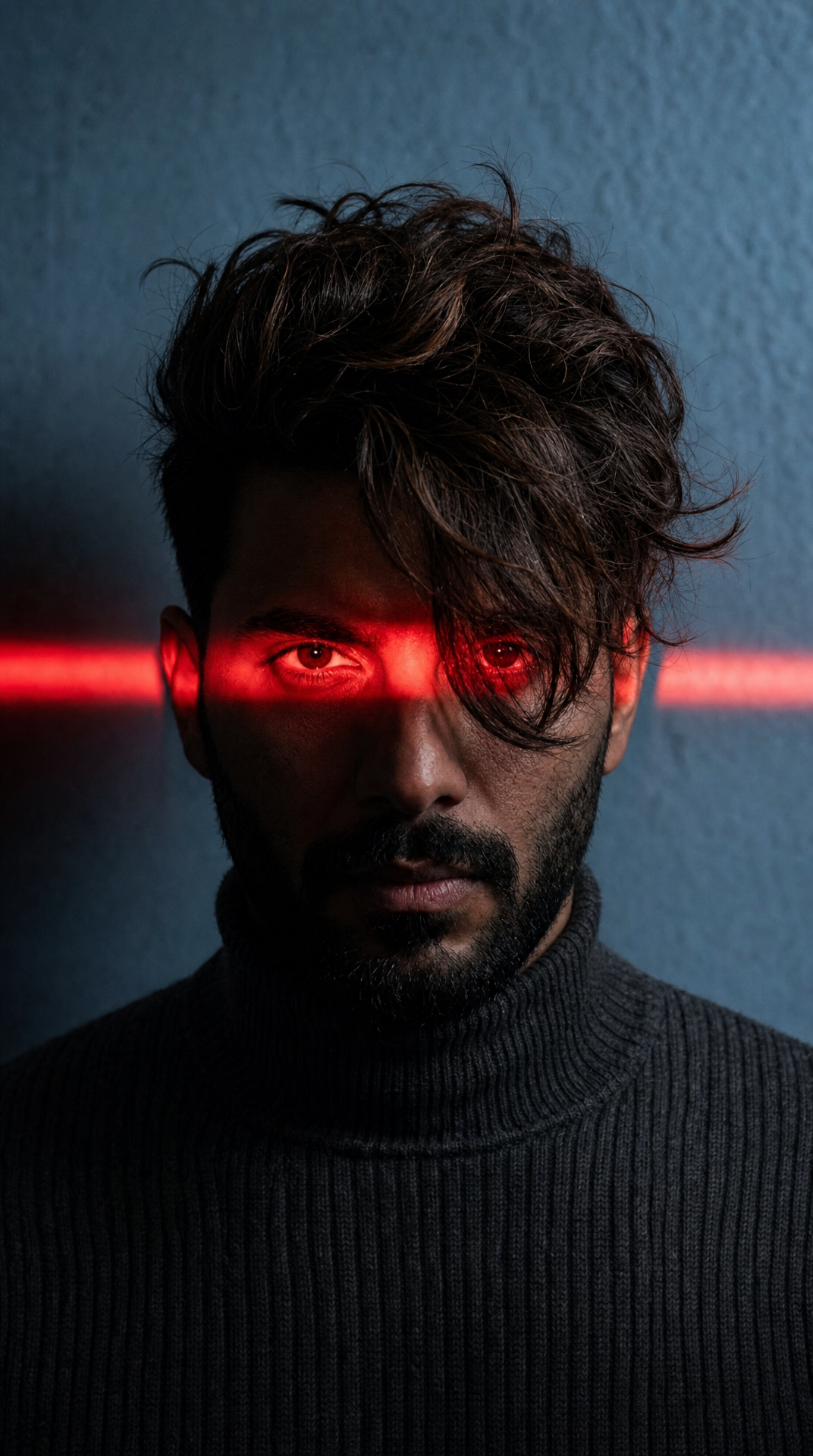
Charcoal turtleneck with red eye-beam

Dreamy Macro Portrait in Cool Water