Why this works
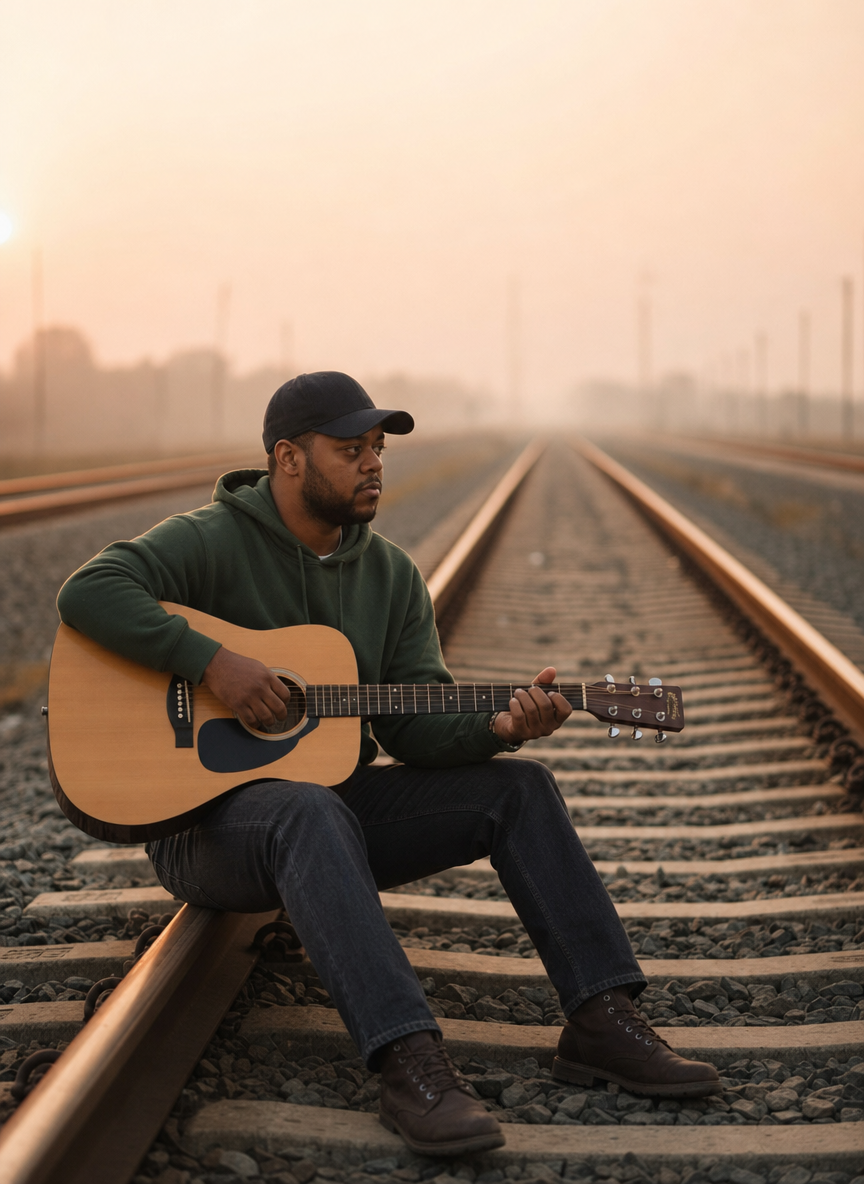
“Long converging railroad lines lead toward the horizon” supplies the full-body portrait with strong perspective and a quiet sense of scale, while “seated on railway tracks” keeps the guitar player anchored at the visual center. The reflective mood comes from the “contemplative, relaxed pose” and “warm amber-gold golden-hour lighting with light atmospheric haze,” which also explain the image’s warm brown highlights against gray rails and black clothing. “Shallow depth of field” plus “crisp focus on the subject’s face and hands” makes the playing gesture readable while softening the distant tracks, and “detailed natural guitar wood and strings” adds tactile detail to the central foreground object.
FAQ
→How do I make the guitar player feel more dominant in the frame?
Replace “portrait-full-body” and “long converging railroad lines lead toward the horizon” with “medium portrait from the waist up, guitar filling the lower foreground, tracks reduced to a narrow background accent.” Keep “crisp focus on the subject’s face and hands,” but add “face and fretting hand as the primary focal points.”
→How do I turn the reflective sunset scene into a cooler, more melancholy variation?
Replace “warm amber-gold golden-hour lighting” with “cool blue-hour light with muted slate shadows,” and replace “subtle film-like color grading” with “desaturated cinematic grading with restrained blue-gray tones.” Change “warm, serene” to “quiet, introspective, slightly melancholic,” while retaining “light atmospheric haze” for separation around the figure.
→How do I build a new series using the same visual treatment in another setting?
Replace “seated on railway tracks” and “railway tracks with long converging lines stretching toward the horizon” with a setting that preserves directional perspective, such as “seated on a quiet boardwalk with converging planks leading toward the sunset.” Keep “photorealistic cinematic portrait,” “shallow depth of field,” “realistic skin texture,” and “crisp focus on the subject’s face and hands,” then vary the subject’s clothing or instrument between images.
Learn the technique behind this
- Why does AI get hands and faces wrong, and how do I fix it? — Hands fail because they're small in frame, extremely variable in pose, and self-occluding — the model has less usable signal per pixel than for any other body part.
- Why can't AI spell, and how do I get readable text in an image? — Older diffusion models had no character-level representation of text, so they produced letterform-shaped texture instead of words.
- How should a prompt be structured, and does word order matter? — A prompt that behaves predictably names one subject first, then what it is doing, then where, then the light, then the lens or medium, then the style.
Related prompts
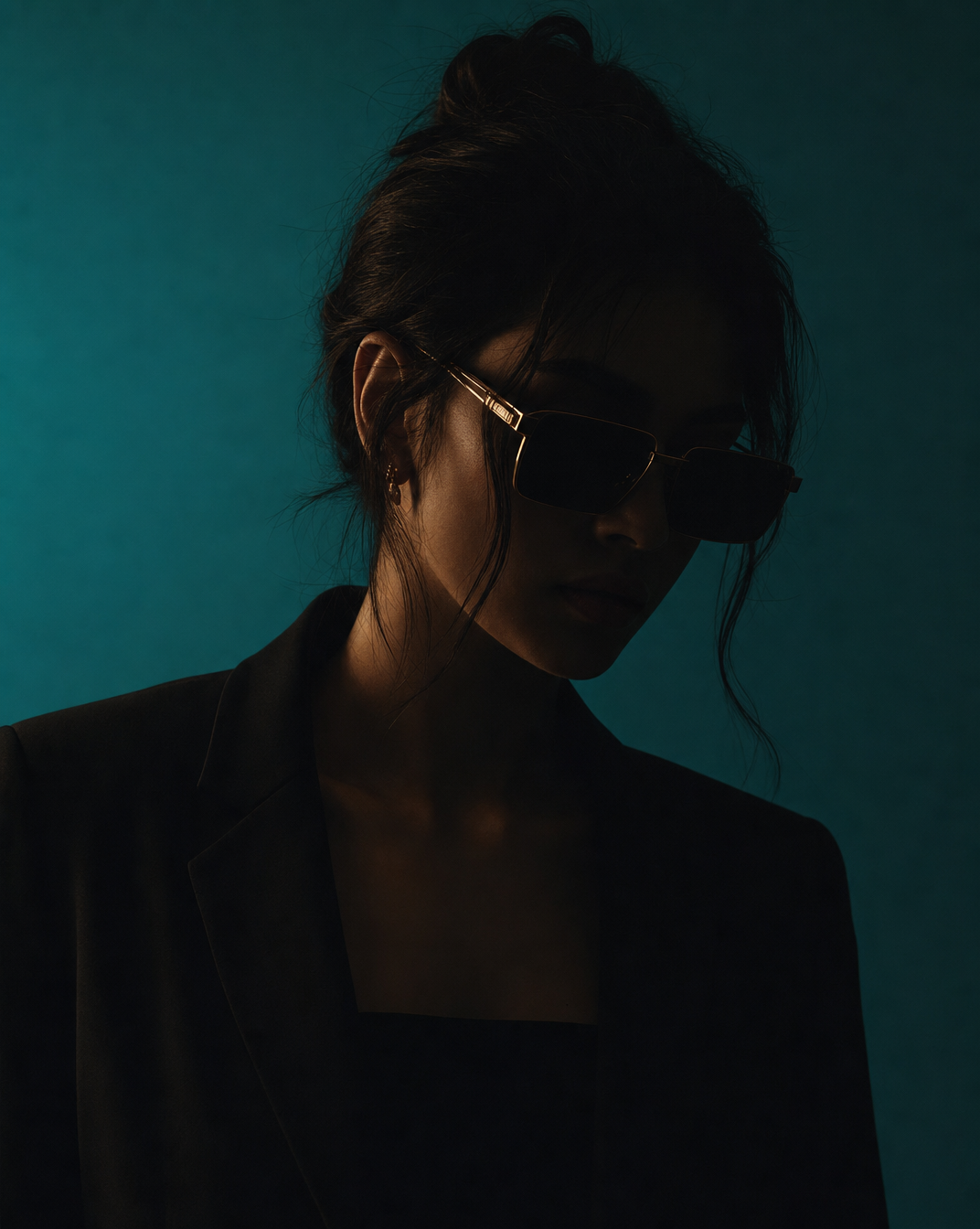
Woman in Teal Light, Shadowed Fashion Portrait
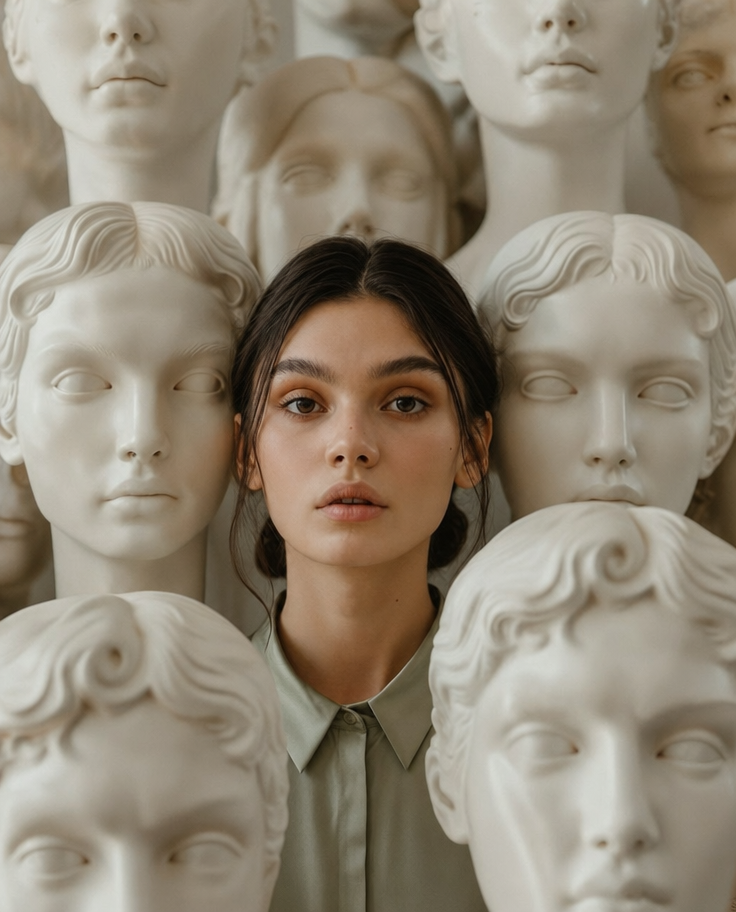
Eerie Elegance Among Marble Busts
Charcoal turtleneck with red eye-beam
Dreamy Macro Portrait in Cool Water