Why this works
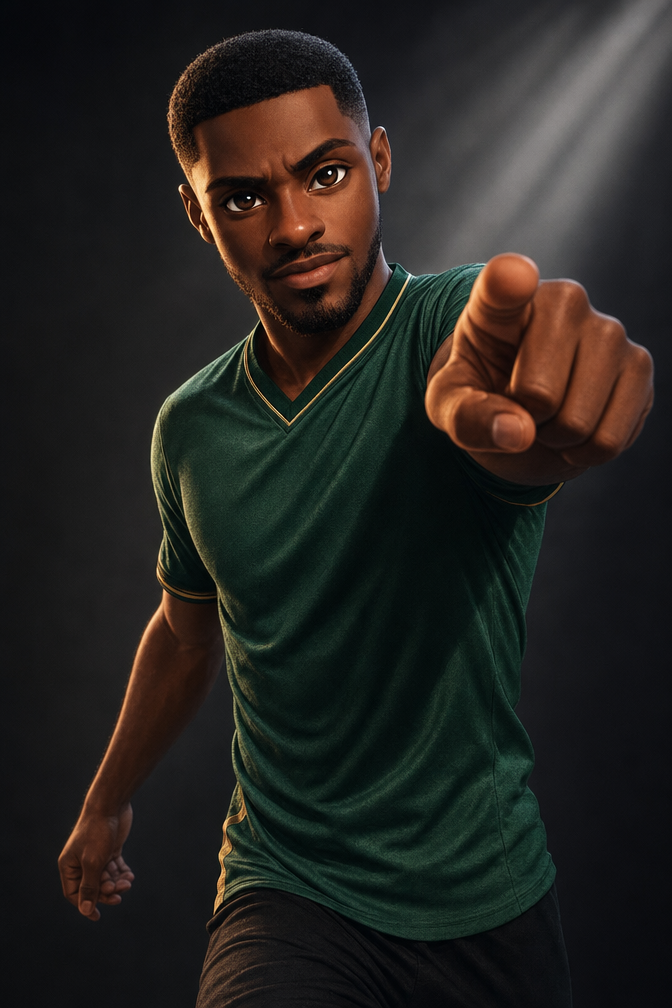
“Leaning forward and pointing at the camera” creates the confrontational, energetic focus, while “framed from mid-torso up” keeps the gesture and expression dominant. “Dramatic cinematic studio lighting with sharp highlights and controlled shadows” supplies the intense poster mood, and “charcoal-gray studio backdrop with faint, angled light rays” separates the figure without the visual clutter of smoky haze. The deep green kit with “subtle gold trim” adds controlled color contrast against the image’s dominant black and brown tones, while “shallow depth of field” concentrates detail on the high-detail skin and fabric texture.
FAQ
→How do I make the player’s pointing gesture and face even more central?
Replace “framed from mid-torso up” with “tight chest-up crop, face and pointing hand filling the frame,” and change “sports poster composition” to “direct-to-camera hero composition with the pointing finger in the foreground.” Keep “leaning forward and pointing at the camera” unchanged so the gesture remains the visual anchor.
→How do I change the intense sports-poster mood into a calmer, more refined portrait?
Replace “intense, energetic expression” with “calm, composed expression,” and change “dramatic cinematic studio lighting with sharp highlights and controlled shadows” to “soft, even studio lighting with gentle shadows.” Swap “faint, angled light rays” for “a clean charcoal-gray backdrop with no light rays” to remove the theatrical emphasis.
→How do I build a matching series with different national-team kits and backgrounds?
Keep the fixed structure “young Ghanaian football player,” “mid-torso up,” “shallow depth of field,” and “sports poster composition,” then replace “deep green national team kit with subtle gold trim” with each new kit’s exact colors and trim, such as “deep red kit with white trim.” Replace “charcoal-gray studio backdrop with faint, angled light rays” with a consistent alternate setting, such as “deep navy studio backdrop with vertical light shafts,” while preserving “dramatic cinematic studio lighting” across the series.
Learn the technique behind this
- Why can't AI spell, and how do I get readable text in an image? — Older diffusion models had no character-level representation of text, so they produced letterform-shaped texture instead of words.
- How should a prompt be structured, and does word order matter? — A prompt that behaves predictably names one subject first, then what it is doing, then where, then the light, then the lens or medium, then the style.
- Which aspect ratio should I use, and how does it change the image? — Aspect ratio determines what the model composes, not how it's cropped afterwards.
Related prompts
Woman in Teal Light, Shadowed Fashion Portrait
Eerie Elegance Among Marble Busts
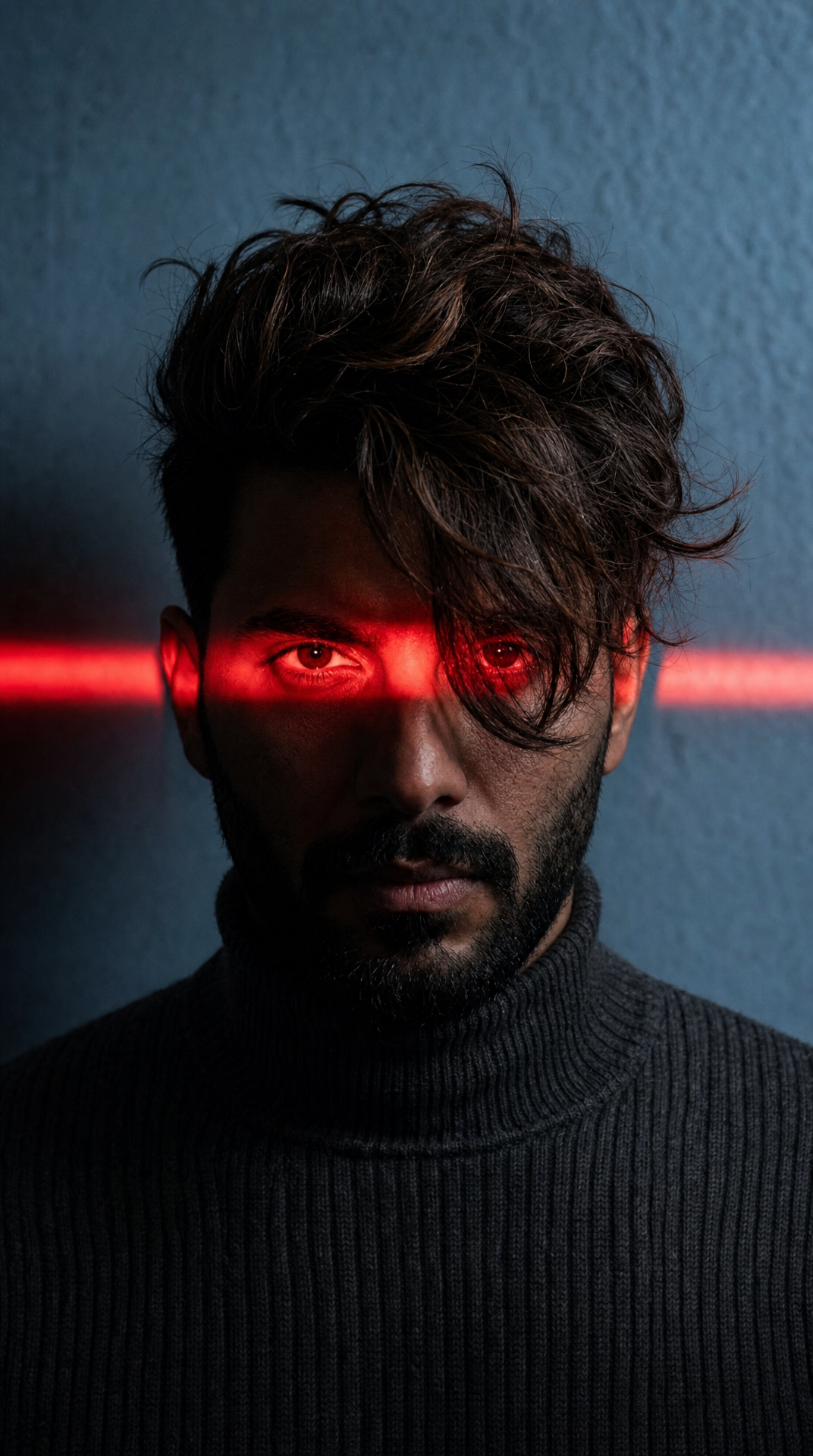
Charcoal turtleneck with red eye-beam
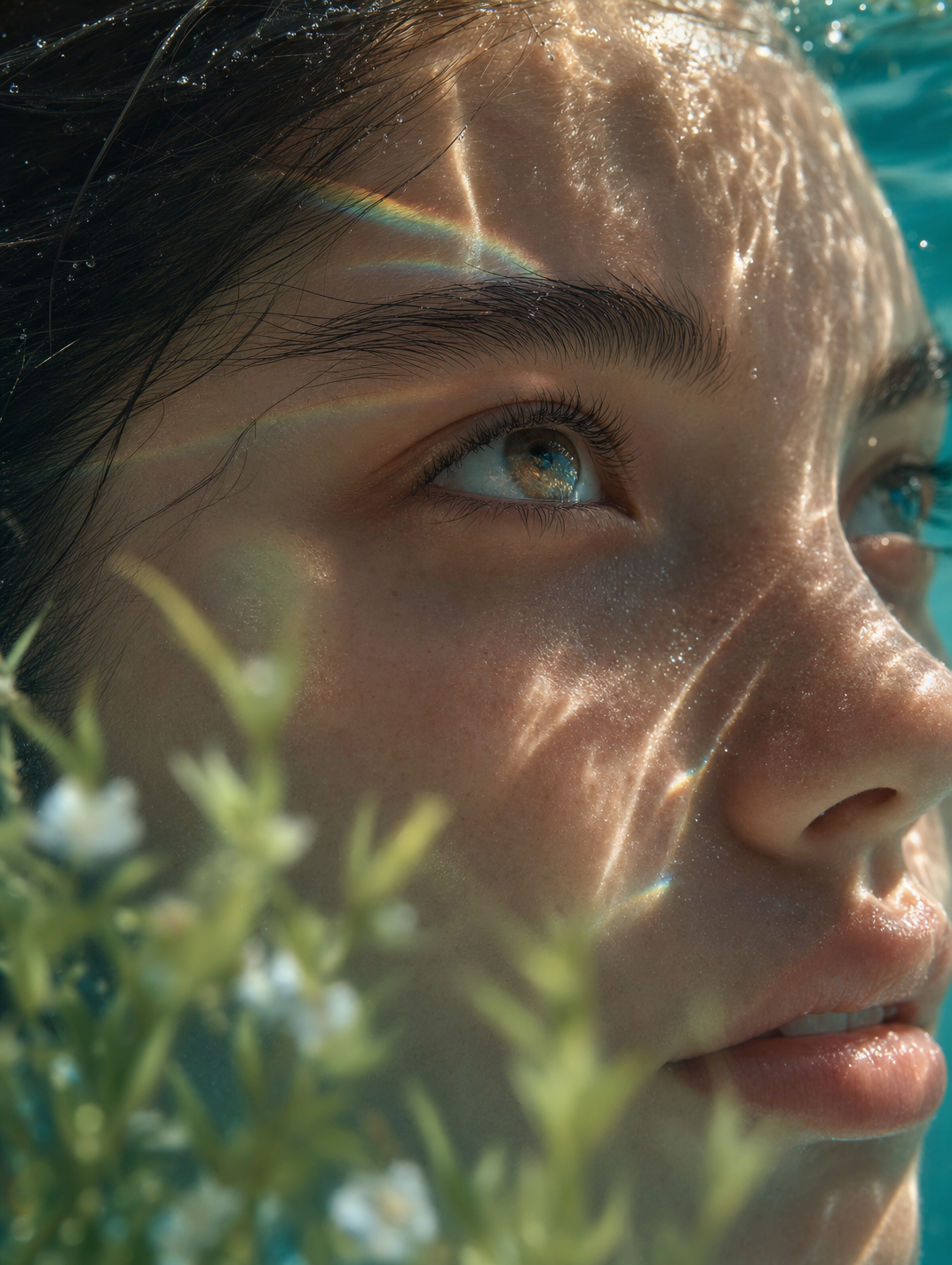
Dreamy Macro Portrait in Cool Water