Why this works
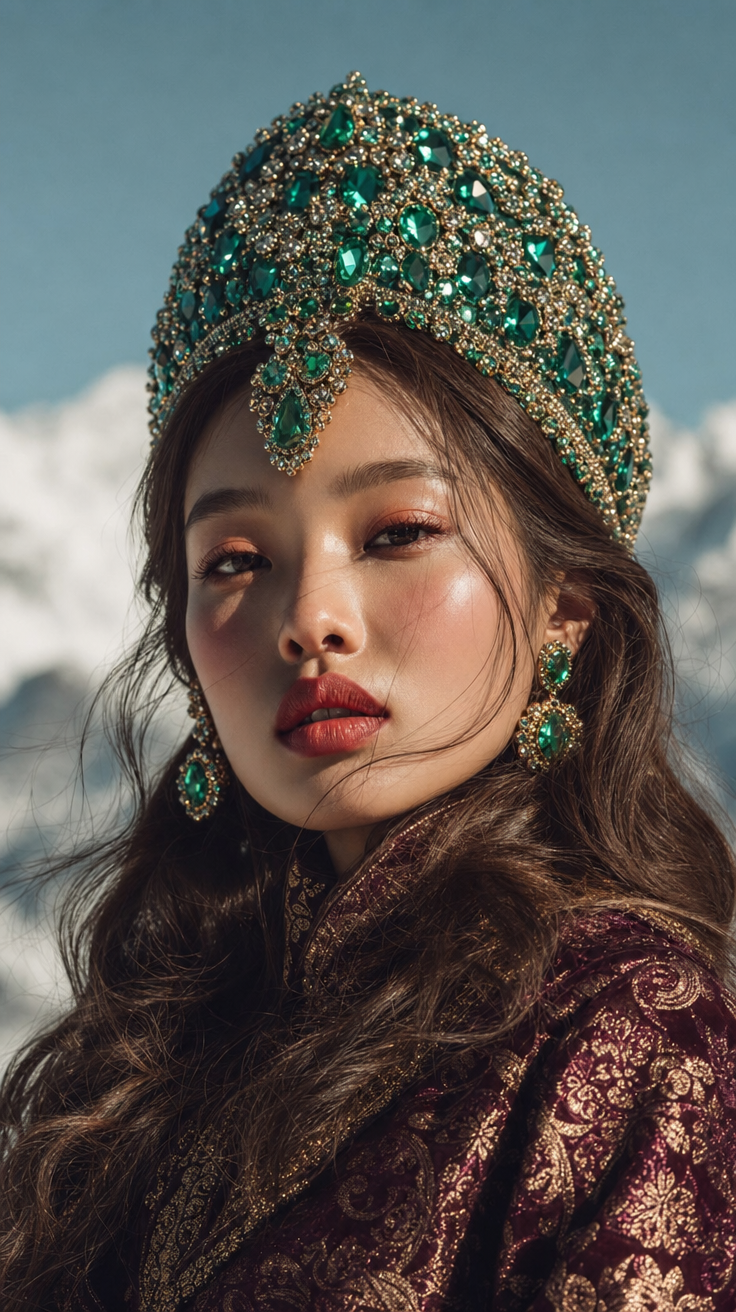
The “full-face close-up” and “tight editorial framing” make the face, headpiece, and earrings carry the composition, while “shallow depth of field” pushes the white mountains into a soft atmospheric backdrop. “Deep burgundy silk coat,” “chestnut-brown hair,” and the “gold-and-emerald” jewelry create a warm luxury palette, with the “open pale sky” supplying the cool blue contrast visible around the portrait. “Dramatic natural daylight with crisp skin texture” preserves facial detail and gives the glamorous styling a sharper, high-fashion edge rather than a soft beauty look.
FAQ
→How do I make the jeweled headpiece more central and visually dominant?
Replace “full-face close-up” with “tight three-quarter portrait centered on the headpiece,” and change “ornate gold-and-emerald jeweled headpiece” to “oversized sculptural gold-and-emerald crown-like headpiece extending above the forehead.” Add “jewelry in sharpest focus, face slightly secondary” after “shallow depth of field.”
→How do I make the portrait mood darker and more mysterious?
Replace “open pale sky” with “stormy blue-gray sky” and “dramatic natural daylight” with “low-key side lighting with deep sculpted shadows.” Change “glamorous, dramatic lighting” to “moody chiaroscuro lighting,” while keeping “crisp skin texture” if you still want the facial detail to remain precise.
→How do I build a matching series with different subjects or locations?
Keep the fixed visual structure, including “high-fashion editorial photography,” “tight editorial framing,” “shallow depth of field,” “photorealistic,” and “ultra-detailed.” Swap the subject phrase “young Asian woman wearing an emerald-and-gold jeweled crystal headpiece” for a consistent alternative such as “older Black woman wearing a silver-and-sapphire jeweled headpiece,” and replace “open pale sky with softly blurred white mountains” with “misty alpine lake with softly blurred evergreens,” preserving “deep burgundy silk brocade coat” to unify the series.
Learn the technique behind this
- Why can't AI spell, and how do I get readable text in an image? — Older diffusion models had no character-level representation of text, so they produced letterform-shaped texture instead of words.
- Why does AI get hands and faces wrong, and how do I fix it? — Hands fail because they're small in frame, extremely variable in pose, and self-occluding — the model has less usable signal per pixel than for any other body part.
- How do I keep the same character across multiple images? — Text prompts alone won't hold a face across images — a description defines a type, not a person.
Related prompts
Woman in Teal Light, Shadowed Fashion Portrait
Eerie Elegance Among Marble Busts
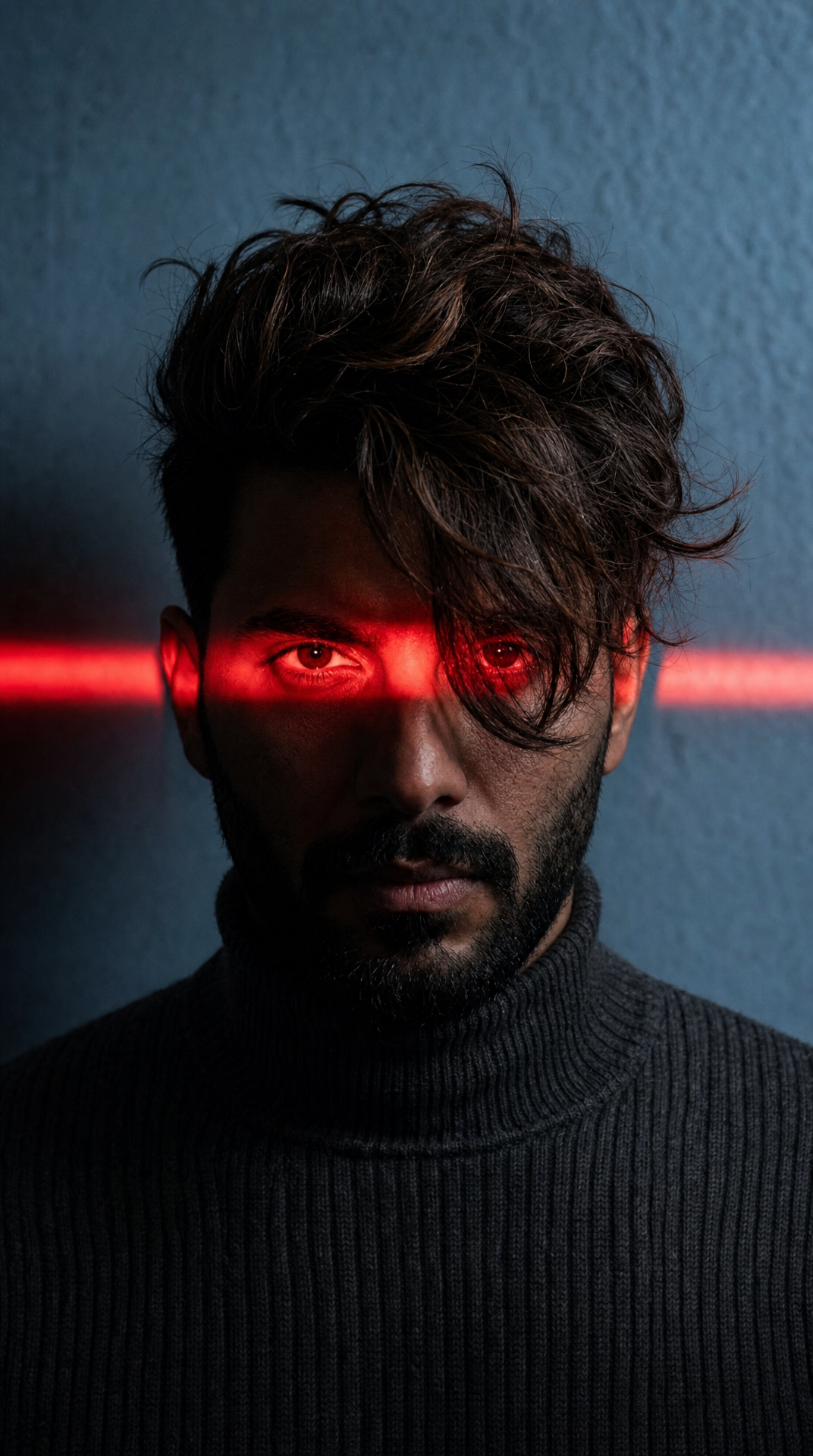
Charcoal turtleneck with red eye-beam
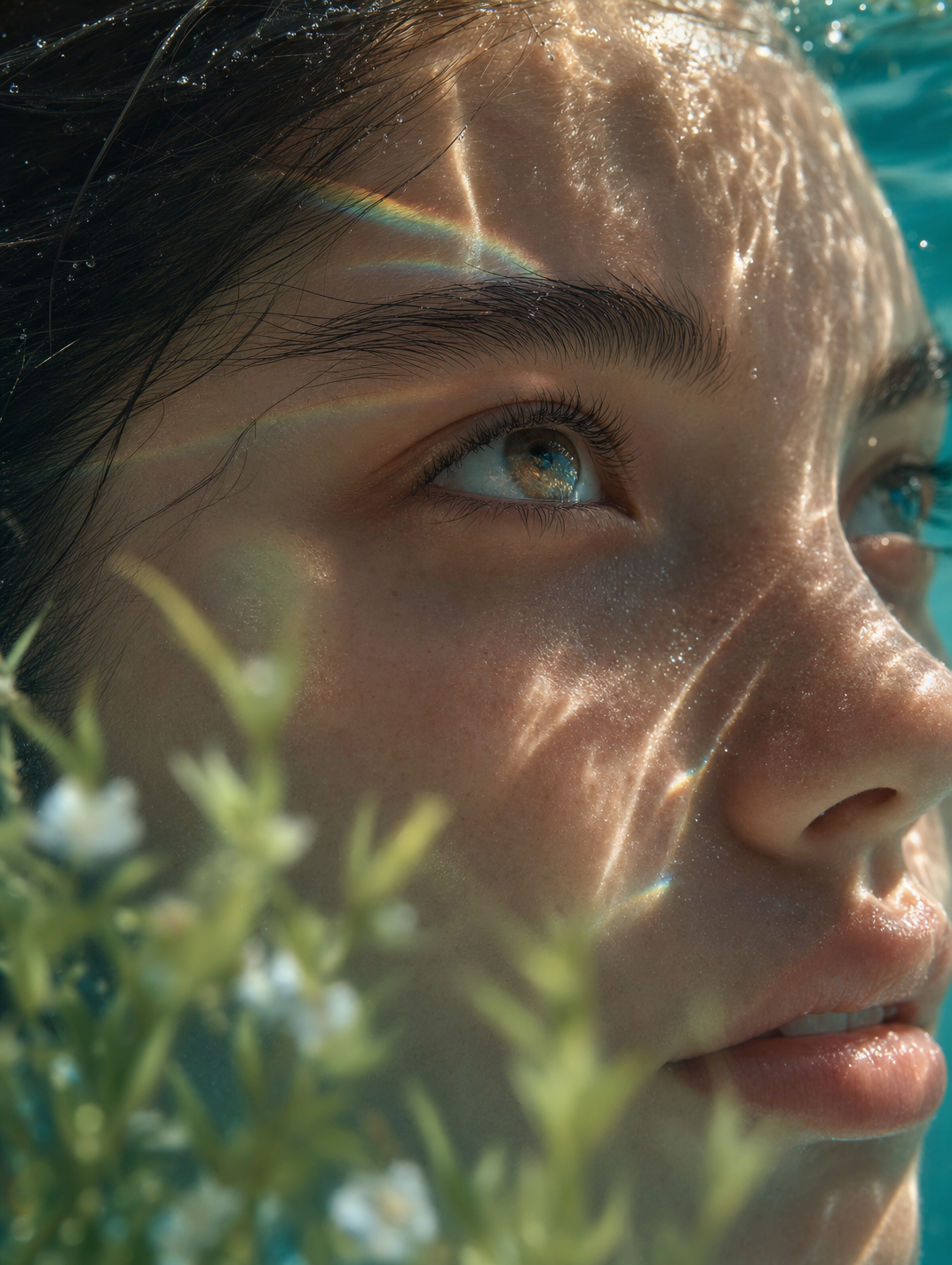
Dreamy Macro Portrait in Cool Water