Why this works
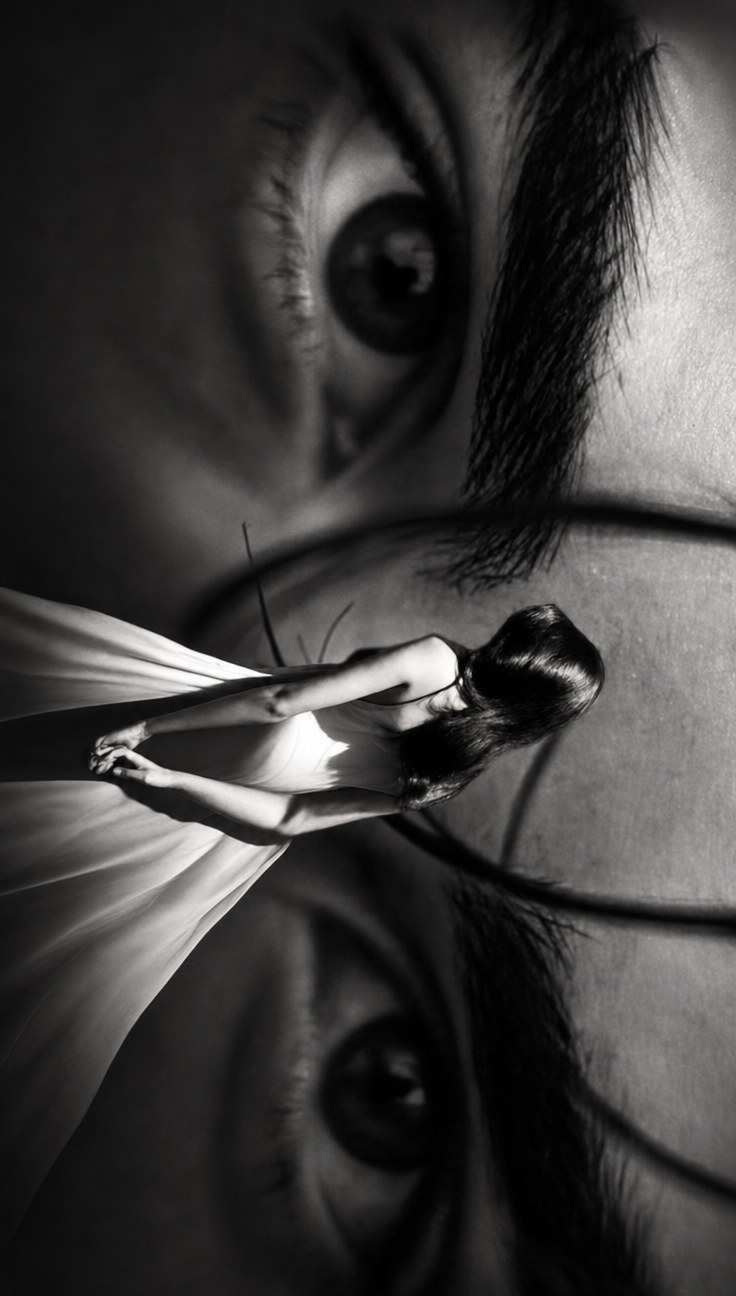
The phrase “a close-up woman’s face with intense eyes fills the background” creates the dominant centered anchor, while “a small full-body woman in a long flowing white dress stands in the foreground” establishes a strong scale contrast and layered depth. “Black-and-white,” “high contrast,” and “dramatic side lighting” produce the restrained white-and-gray palette and carve detail into the face and dress against the “mostly minimal dark background.” “Moody and introspective surreal atmosphere” reinforces the psychological tone, while “sharp fine-art photographic detail” keeps both the enlarged face and the small figure legible.
FAQ
→How do I make the small standing woman the main focal point instead of the background face?
Replace “a small full-body woman” with “a prominent full-body woman occupying the center of the frame,” and change “a close-up woman’s face with intense eyes fills the background” to “a faint, oversized face recedes into the background.” Keep “long flowing white dress” and add “sharpest focus on the standing figure” to prioritize her.
→How do I change the introspective mood into something ominous and unsettling?
Replace “moody and introspective surreal atmosphere” with “ominous, unsettling psychological horror atmosphere,” and change “dramatic side lighting” to “hard underlighting with deep eye sockets and stark shadows.” Replace “mostly minimal dark background” with “claustrophobic black background with faint distorted facial fragments.”
→How do I create a series of variations without losing the double-exposure structure?
Keep “surreal double-exposure scene,” “close-up face in the background,” and “small full-body figure in the foreground” unchanged, then swap the subject and costume as a controlled variable: use “an elderly man with piercing eyes” and “a small figure in a tailored black suit,” or “a child with curious eyes” and “a small figure in a translucent red coat.” For setting variations, replace “mostly minimal dark background” with “foggy abandoned theater” or “empty moonlit corridor,” while retaining “black-and-white” for visual continuity.
Learn the technique behind this
- Why can't AI spell, and how do I get readable text in an image? — Older diffusion models had no character-level representation of text, so they produced letterform-shaped texture instead of words.
- How should a prompt be structured, and does word order matter? — A prompt that behaves predictably names one subject first, then what it is doing, then where, then the light, then the lens or medium, then the style.
- Why does AI get hands and faces wrong, and how do I fix it? — Hands fail because they're small in frame, extremely variable in pose, and self-occluding — the model has less usable signal per pixel than for any other body part.
Related prompts
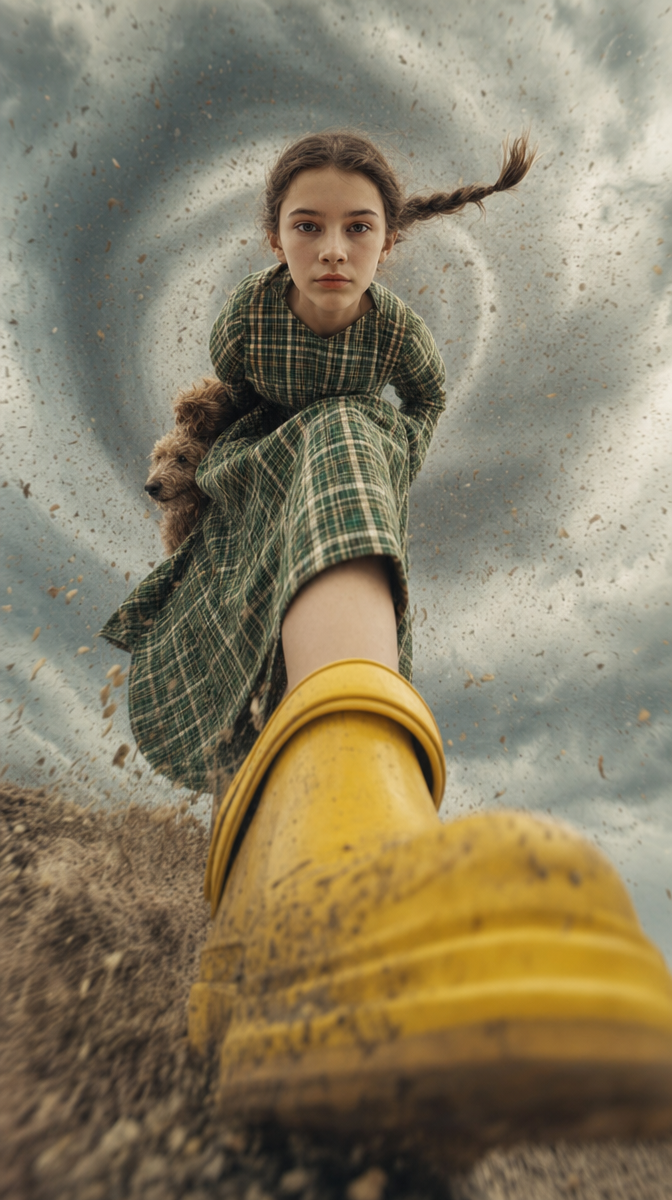
Young girl with dog in tornado
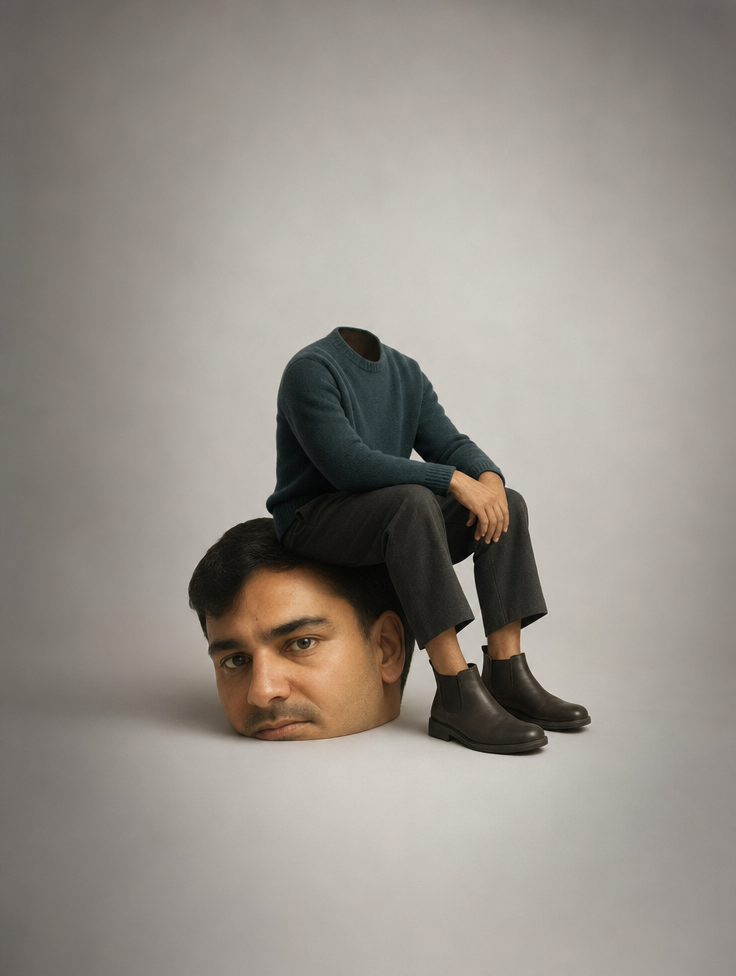
Headless sitter atop a giant head
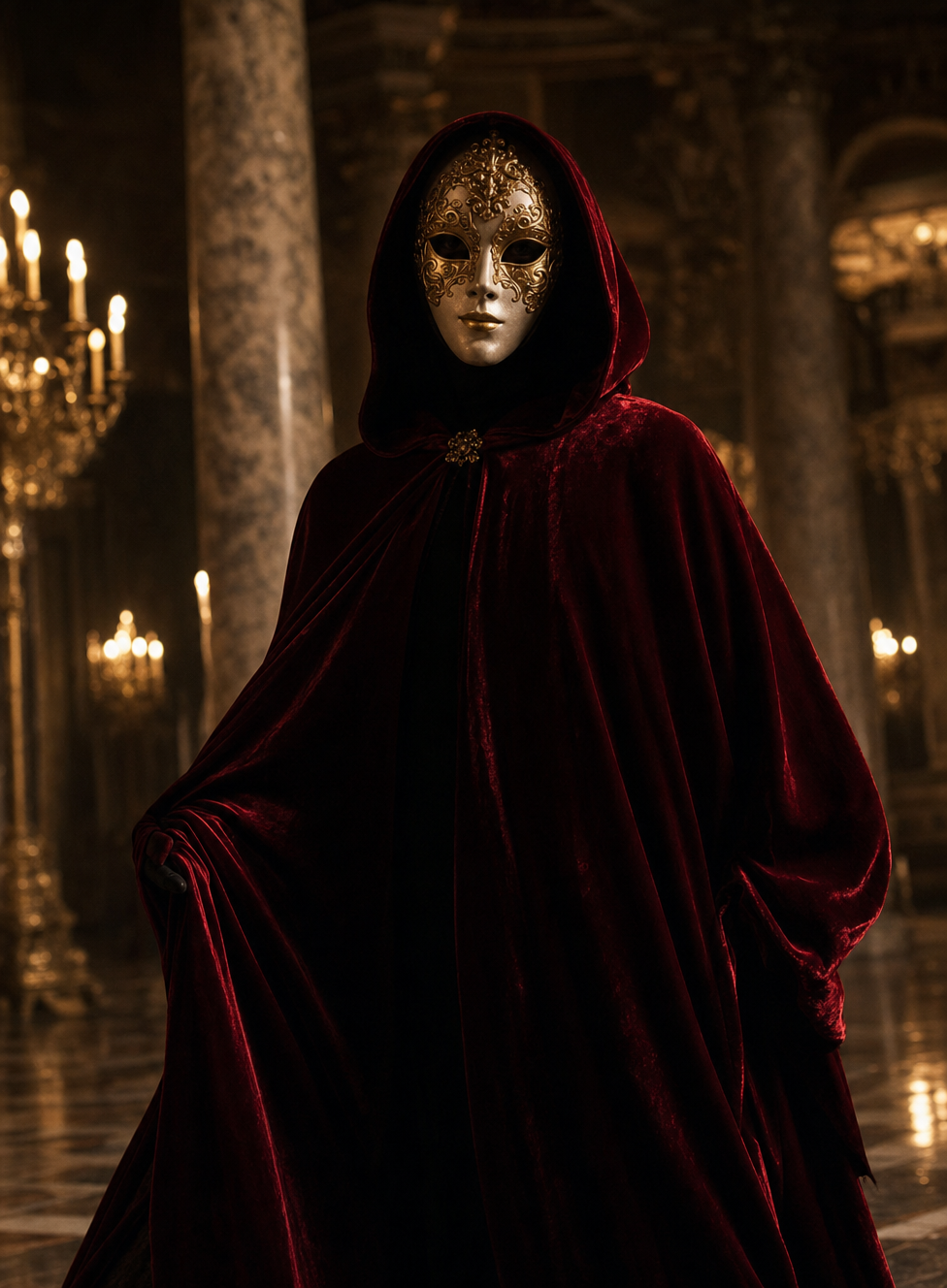
Crimson-Cloaked Specter in Candlelit Ballroom

Violet Holographic Hands Almost Touching