Why this works
The phrase “symmetrical composition” gives the full-body portrait a poised, centered structure, while “chin on one hand in a refined pose” supplies the editorial calm. “Dramatic overhead spotlighting with subtle rim light” separates the woman from the gray-beige library, and “glowing teal butterflies” adds the strongest chromatic contrast against the image’s dominant beige, gray, and gold palette. “Shallow depth of field” keeps attention on the woman, satin, and nearby book spines while the “thin low mist” and “dreamy magical atmosphere” soften the grand setting.
FAQ
→How do I make the woman more visually dominant than the library and butterflies?
Keep “symmetrical composition” and “portrait-full-body,” but replace “glowing teal butterflies float through the air around her” with “three small glowing teal butterflies confined to the background.” Change “shallow depth of field” to “razor-sharp focus on her face, auburn curls, and blush satin gown, softly blurred library,” and replace “dramatic overhead spotlighting” with “focused key light centered on the woman.”
→How do I turn this into a darker, more mysterious variation?
Replace “dreamy magical atmosphere” with “dark gothic fairytale atmosphere,” and change “soft blush-satin” to “deep burgundy velvet with black satin accents.” Replace “dramatic overhead spotlighting with subtle rim light” with “single cold moonbeam through tall library windows, deep shadows, and faint silver rim light,” while changing “thin low mist” to “dense blue-gray floor fog.”
→How do I create a coordinated series without losing the editorial identity?
Keep the fixed phrases “photorealistic cinematic fashion editorial,” “symmetrical composition,” “shallow depth of field,” and “ultra-detailed textures,” then vary only the setting and accent color. For example, replace “grand old library” with “ornate winter conservatory,” “vintage books” with “frosted botanical specimens,” and “glowing teal butterflies” with “glowing amber moths,” while retaining “auburn hair,” “flowing satin gown,” and the refined seated pose.
Learn the technique behind this
- Why can't AI spell, and how do I get readable text in an image? — Older diffusion models had no character-level representation of text, so they produced letterform-shaped texture instead of words.
- Why does AI get hands and faces wrong, and how do I fix it? — Hands fail because they're small in frame, extremely variable in pose, and self-occluding — the model has less usable signal per pixel than for any other body part.
- How should a prompt be structured, and does word order matter? — A prompt that behaves predictably names one subject first, then what it is doing, then where, then the light, then the lens or medium, then the style.
Related prompts
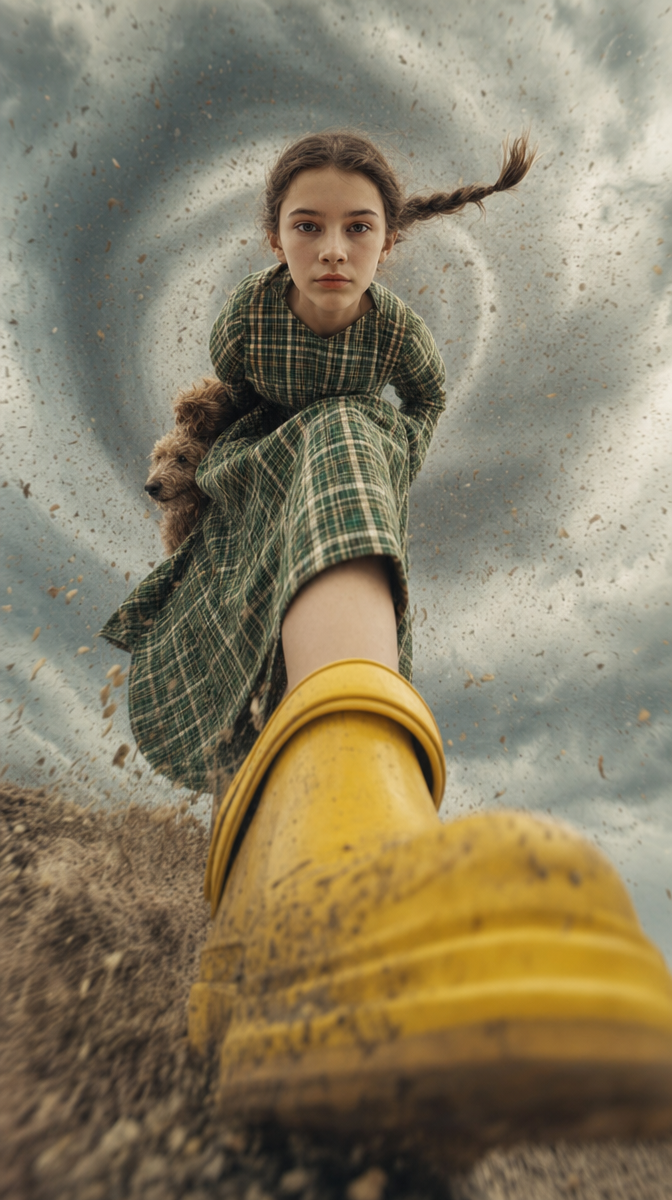
Young girl with dog in tornado
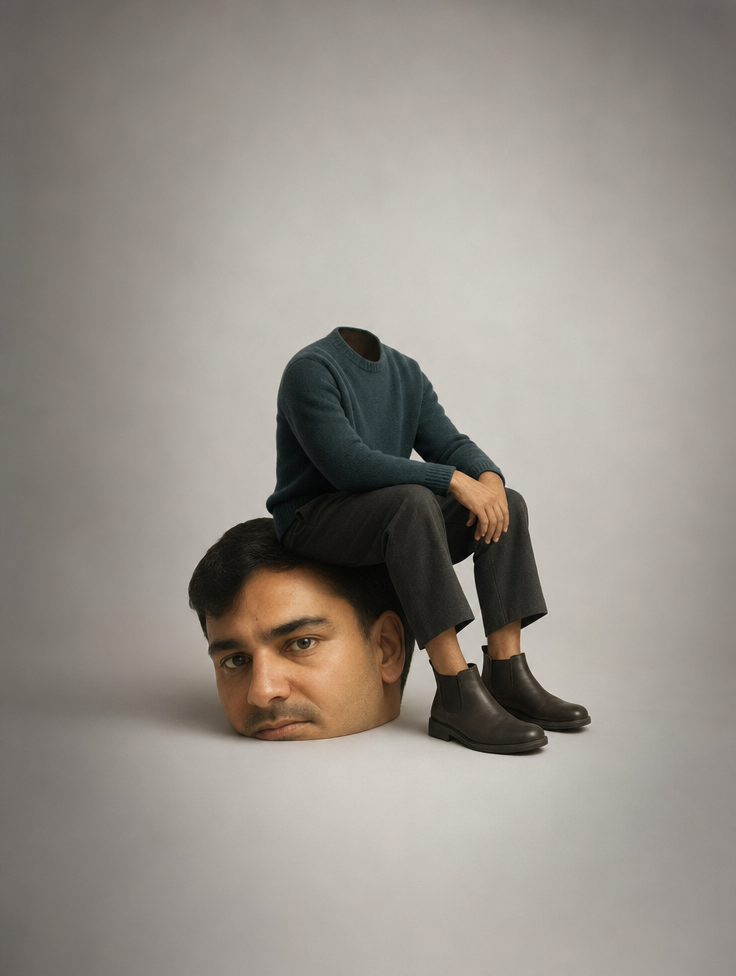
Headless sitter atop a giant head
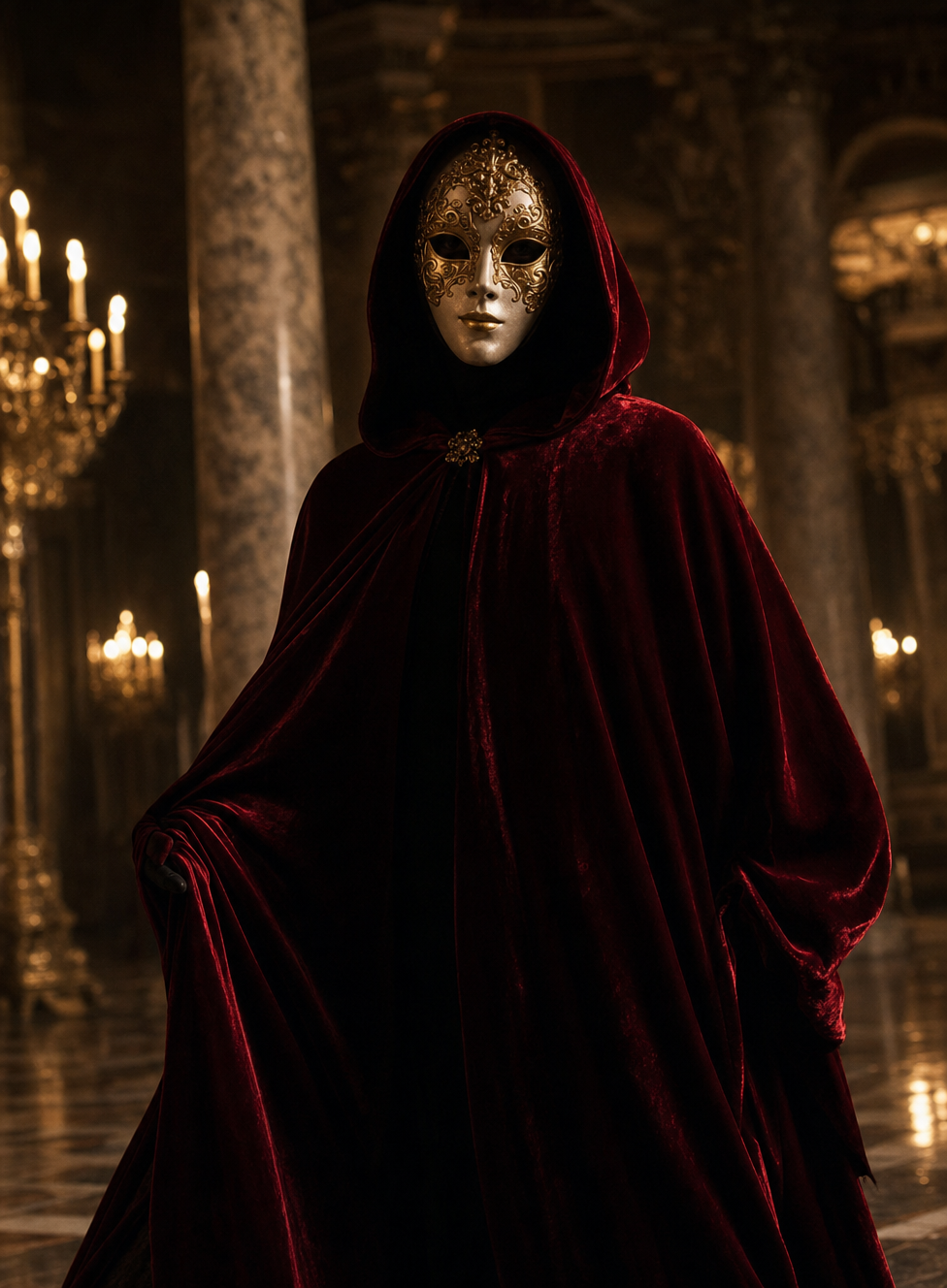
Crimson-Cloaked Specter in Candlelit Ballroom

Violet Holographic Hands Almost Touching