Why this works
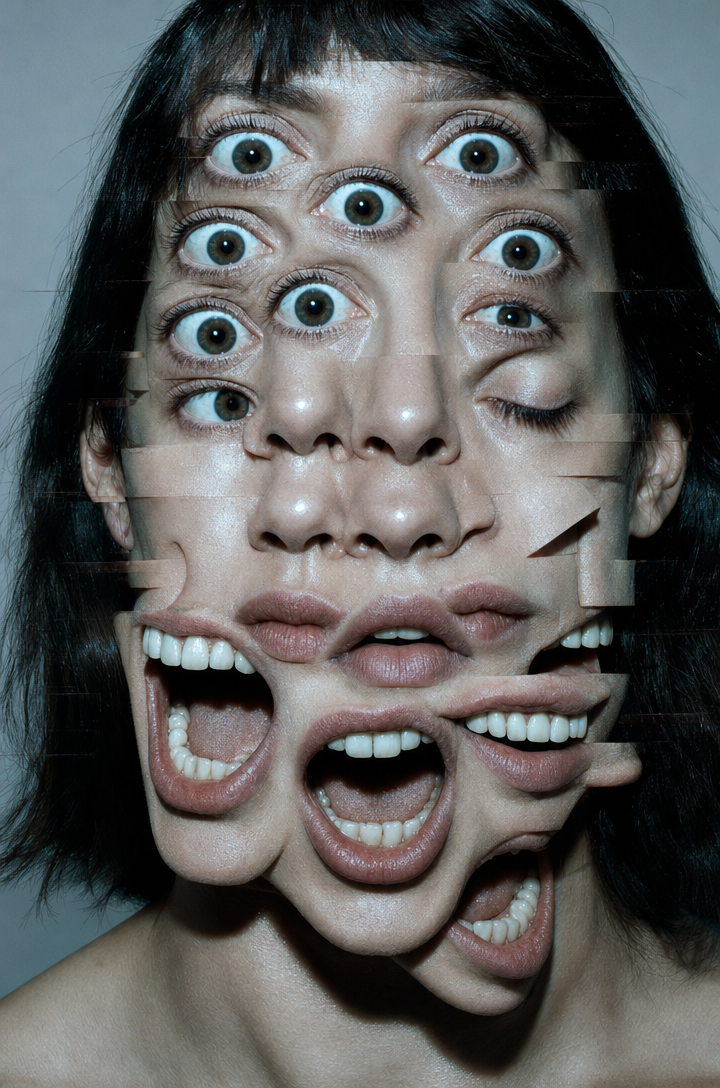
“A woman’s face fragmented into multiple eyes and mouths,” with eyes weighted left and mouths clustered across the lower half, makes the portrait-closeup feel deliberately unstable rather than symmetrically surreal. “Hard collage cuts,” “visible digital seams,” “scan-like grain,” and “slight misregistration” supply the physical magazine-scan damage, while “harsh high-contrast lighting with a cool cyan cast” pushes the black, white, and tan palette toward an icy, unsettling edge. The “flat pale gray backdrop” isolates the head, so the asymmetrical facial fragments remain the dominant visual structure.
FAQ
→How do I make the image feel more sinister and less editorial?
Replace “slightly glossy plastic-skin texture” with “wet, bruised skin texture,” and change “cool cyan cast” to “sickly green and deep red lighting.” Keep “harsh high-contrast lighting” and “visible digital seams” so the altered palette intensifies the existing glitch distortion.
→How do I make one eye the clear focal point?
Replace “overlapping eyes concentrated more toward the left side” with “one oversized central eye sharply in focus, with smaller distorted eyes receding around it.” Add “strongest contrast and brightest catchlight on the central eye” while keeping the “portrait-closeup” framing.
→How do I build a series with different fragmented subjects?
Keep “Surreal glitch photomontage,” “Magazine scan look,” “hard collage cuts,” and “slight misregistration” fixed, then replace “woman’s head fragmented into multiple eyes and mouths” with a subject such as “a porcelain mannequin fragmented into clock faces and fingers” or “a crow’s head fragmented into feathers and human teeth.” Preserve the “flat pale gray backdrop” and “harsh high-contrast lighting with a cool cyan cast” for visual continuity.
Learn the technique behind this
- Why can't AI spell, and how do I get readable text in an image? — Older diffusion models had no character-level representation of text, so they produced letterform-shaped texture instead of words.
- Why does AI get hands and faces wrong, and how do I fix it? — Hands fail because they're small in frame, extremely variable in pose, and self-occluding — the model has less usable signal per pixel than for any other body part.
- How do I keep the same character across multiple images? — Text prompts alone won't hold a face across images — a description defines a type, not a person.
Related prompts
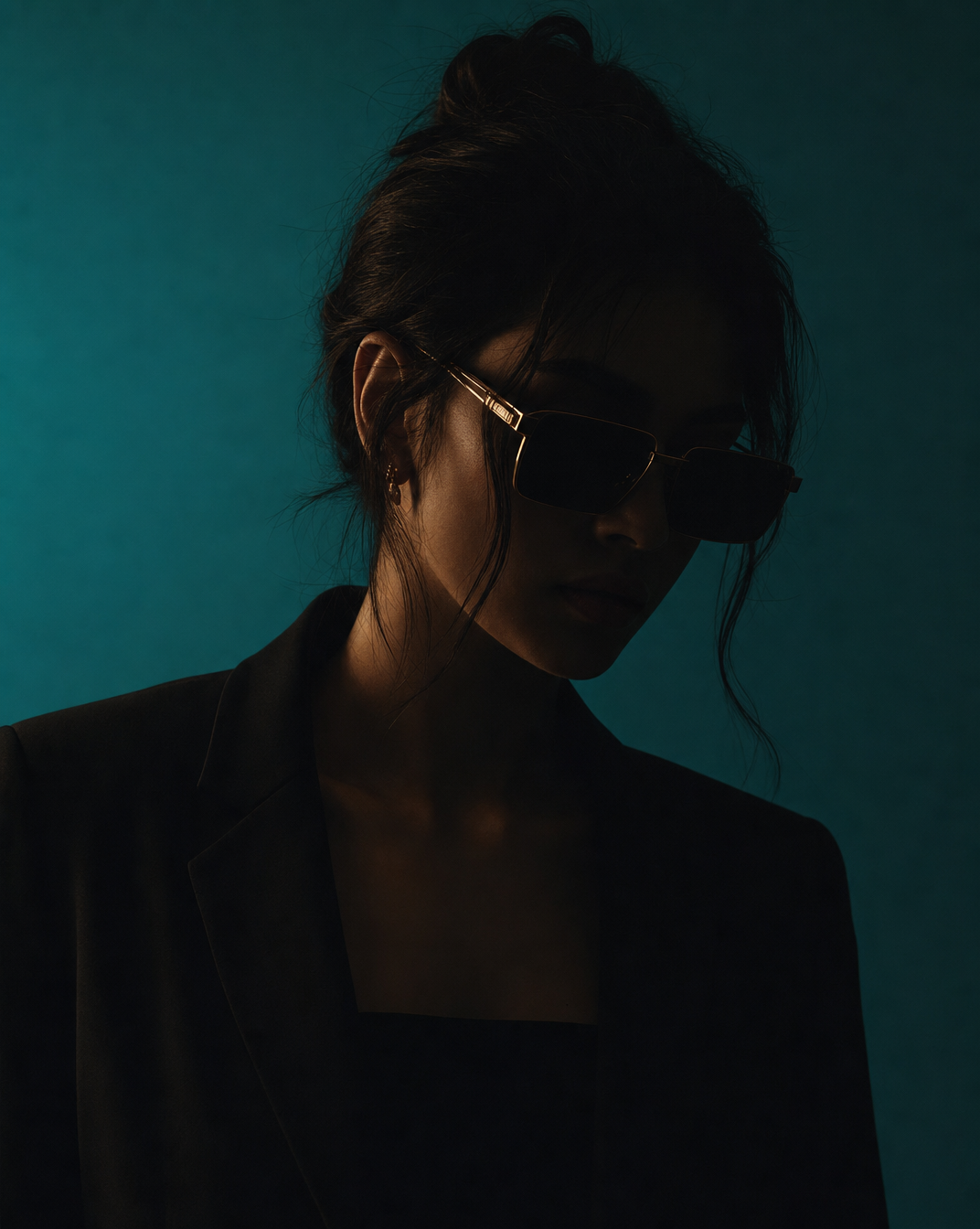
Woman in Teal Light, Shadowed Fashion Portrait
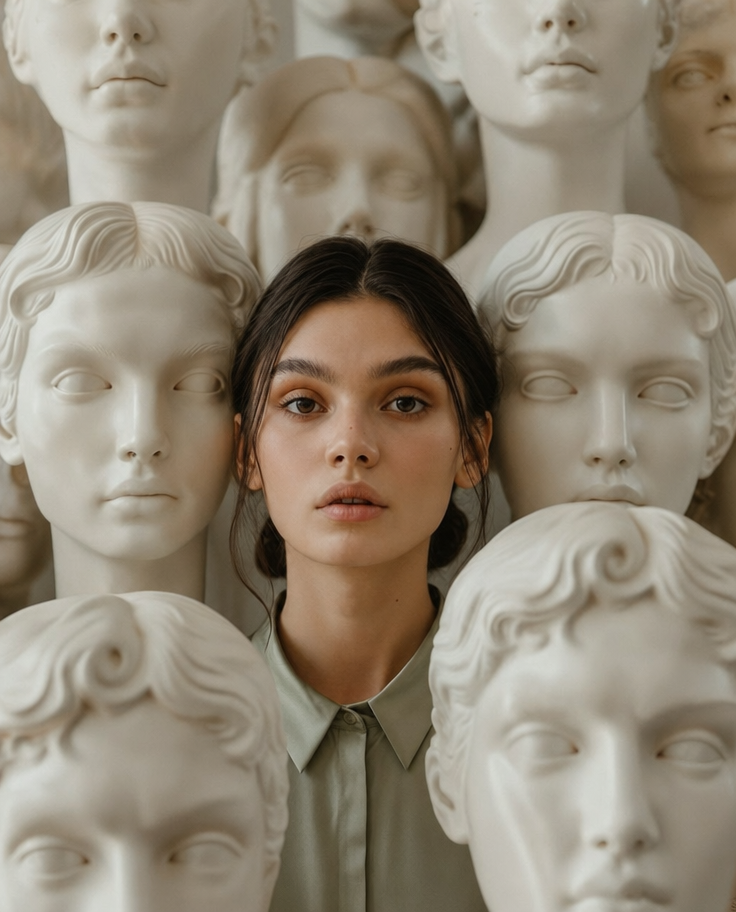
Eerie Elegance Among Marble Busts
Charcoal turtleneck with red eye-beam
Dreamy Macro Portrait in Cool Water