Why this works
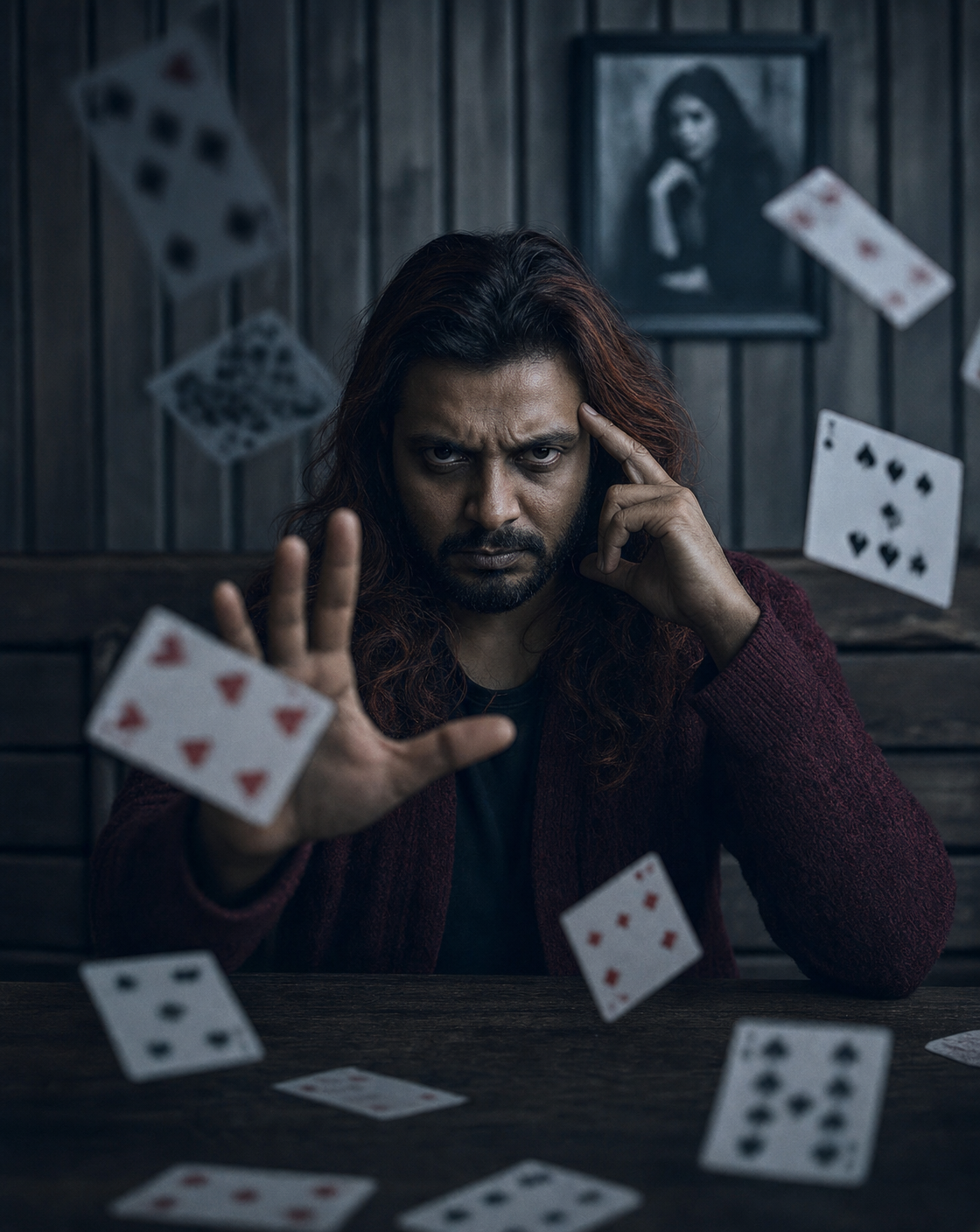
The portrait-closeup framing keeps the woman’s pensive gaze, temple gesture, and auburn hair dominant, while “dozens of playing cards swirl around her” supplies a circular frame of motion around her face and hands. “Dynamic slow-motion capture with motion blur effect” separates the frozen subject from the moving cards, and “cool, moody cinematic lighting with deep shadows and silver-blue tones” gives the black-and-white-dominant image its stark, mysterious contrast. The “rustic wooden booth,” “vertical wood paneling,” and “framed photograph of a woman playing cards” add repeating lines and a specific occult-cardroom context behind the psychic action.
FAQ
→How do I make the psychic energy and playing cards more prominent than the woman’s portrait?
Replace “portrait-closeup” with “medium shot, full upper body and surrounding air visible,” and change “dozens of playing cards swirl around her” to “a dense vortex of playing cards fills most of the frame, partially encircling her body.” Keep “one hand near her temple and the other gesturing outward” to preserve the source of the telekinetic action.
→How do I shift this from mysterious and cool to warm, threatening occult drama?
Replace “cool, moody cinematic lighting with deep shadows and silver-blue tones” with “low-key candlelit lighting, deep crimson shadows, and flickering amber highlights,” and change “cool color grading” to “warm desaturated red-and-amber color grading.” Replacing “intimate atmospheric mood” with “ominous occult mood” will push the expression and booth toward menace.
→How do I create a series of variations without losing the core composition?
Keep “young woman with long auburn hair,” “one hand near her temple and the other gesturing outward,” “dynamic slow-motion capture with motion blur effect,” and “dramatic cinematic portrait photography” unchanged. Swap only the setting phrase “rustic wooden booth with vertical wood paneling and framed photograph on wall” for locations such as “candlelit fortune-teller tent,” “rain-streaked train compartment,” or “abandoned theater dressing room,” then replace the cards with a consistent object family such as “tarot cards,” “photographs,” or “dried leaves.”
Learn the technique behind this
- Why can't AI spell, and how do I get readable text in an image? — Older diffusion models had no character-level representation of text, so they produced letterform-shaped texture instead of words.
- How should a prompt be structured, and does word order matter? — A prompt that behaves predictably names one subject first, then what it is doing, then where, then the light, then the lens or medium, then the style.
- Why does AI get hands and faces wrong, and how do I fix it? — Hands fail because they're small in frame, extremely variable in pose, and self-occluding — the model has less usable signal per pixel than for any other body part.
Related prompts
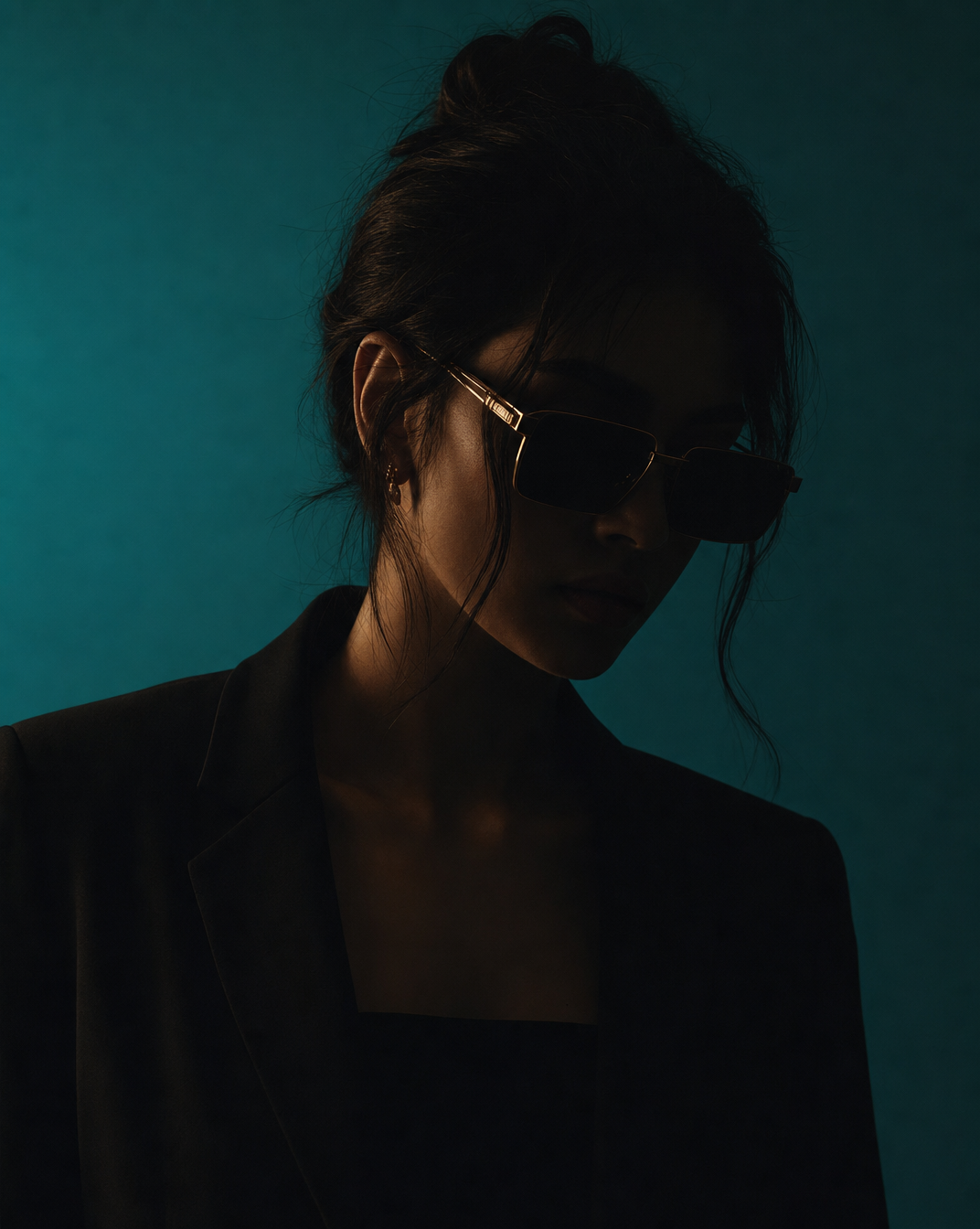
Woman in Teal Light, Shadowed Fashion Portrait
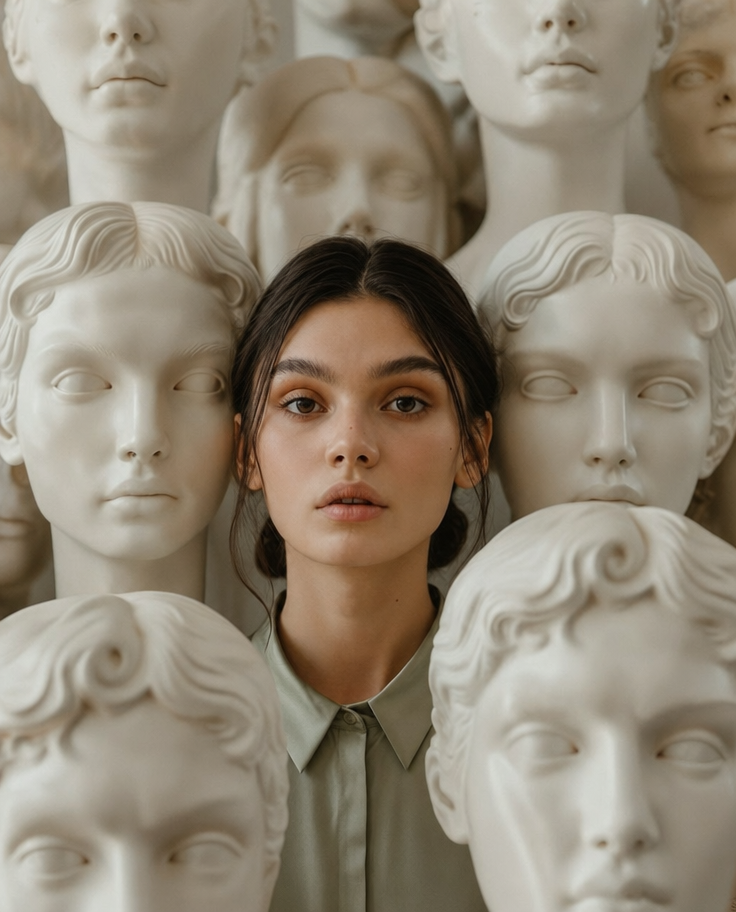
Eerie Elegance Among Marble Busts
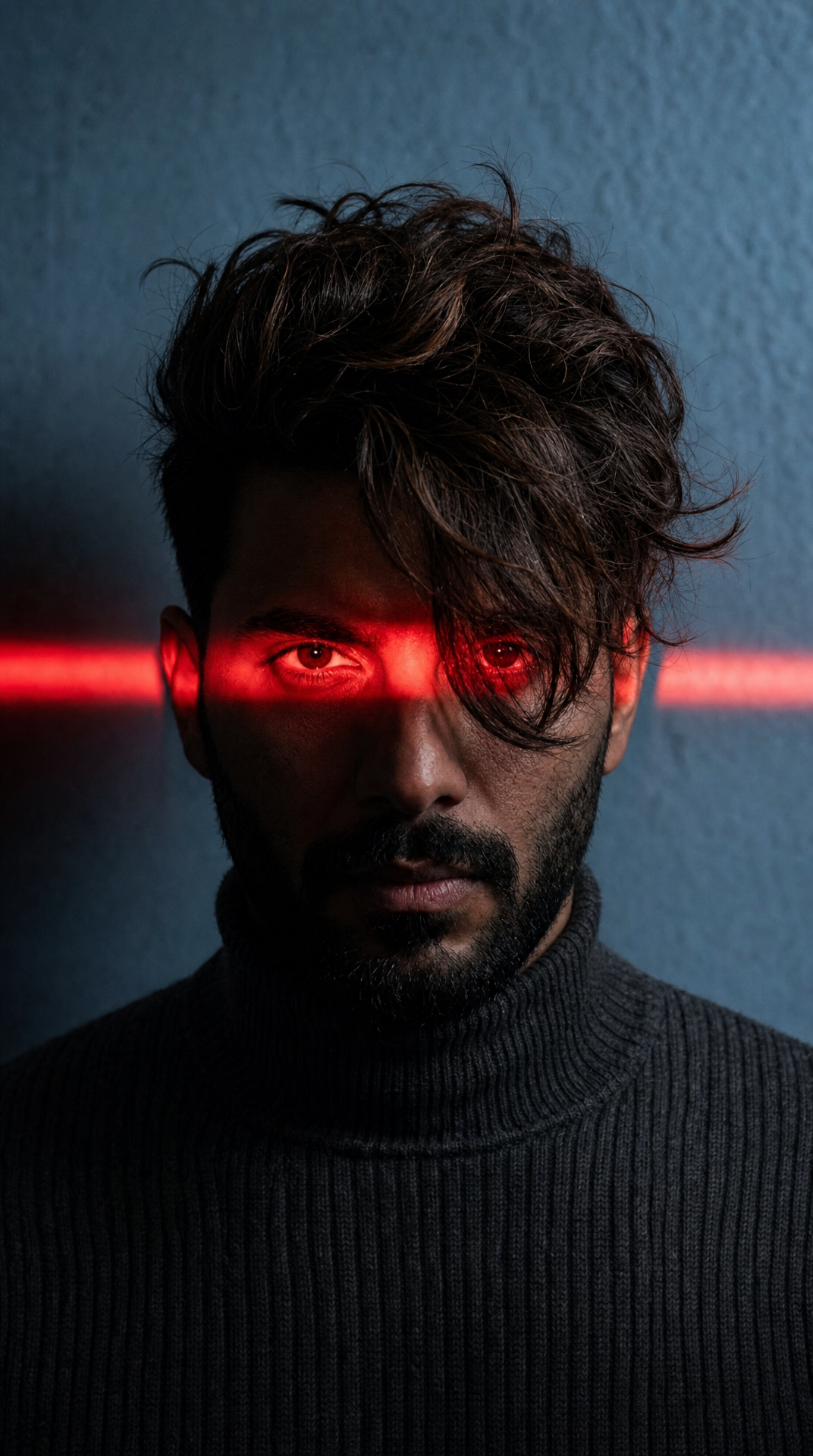
Charcoal turtleneck with red eye-beam

Dreamy Macro Portrait in Cool Water