Why this works
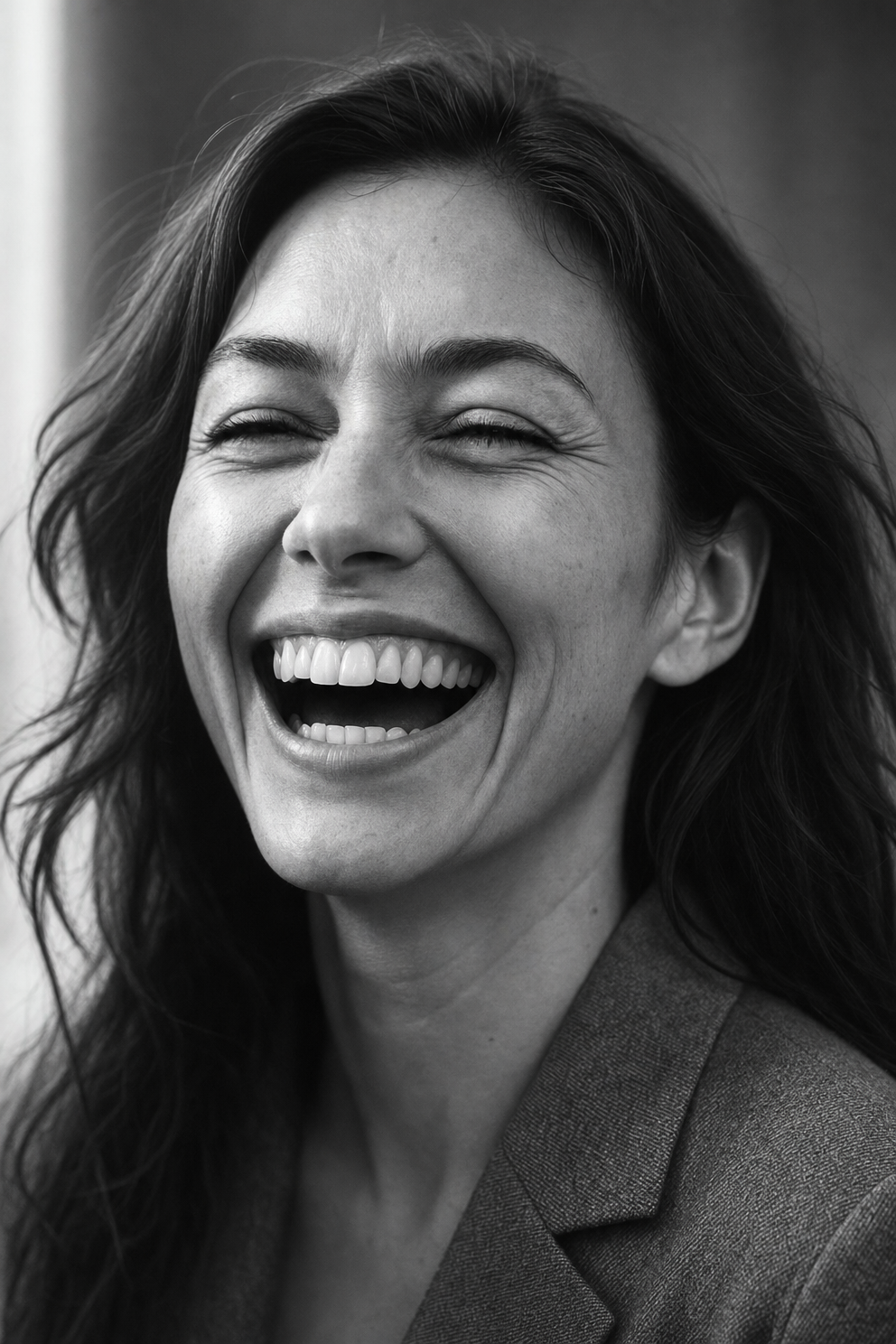
“Close-up framing with shallow depth of field” makes the face fill the portrait while pushing the distraction-free background into blur, so the expression remains central. “Candid mid-laughter facial motion,” “subtle smile crinkles,” and “fine wrinkle lines around the eyes” give the joy a specific, unposed character rather than a generic smile. “Window-lit side illumination” with “higher-contrast soft daylight” creates directional cheek shadows, while “natural film-like grayscale tonality” and the black-and-white palette unify the image in restrained tones without losing pore and wrinkle detail.
FAQ
→How do I make the portrait feel quieter and more intimate instead of exuberant?
Replace “laughing joyfully” and “candid mid-laughter expression” with “quiet, restrained smile” and “soft contemplative expression.” Keep “close-up framing” and “window-lit side illumination,” but change “higher-contrast” to “low-contrast” and “gentle directional shadow transitions” to “very soft shadow transitions.”
→How do I make the eyes the strongest focal point?
Change “crisp focus on facial features” to “tack-sharp focus on the eyes and eyelashes, with the mouth and cheeks subtly softer.” Replace “close-up framing” with “extreme close-up framing from the eyes to the chin,” and add “catchlights clearly visible in both eyes” while retaining “shallow depth of field.”
→How do I build a varied portrait series from this prompt?
Keep the fixed visual anchors “ultra-realistic black-and-white photography,” “film-like grayscale tonality,” “visible skin pores,” and “close-up framing,” then vary one phrase per image. Swap “laughing joyfully” for “whispering a secret,” “eyes closed in relief,” or “surprised mid-sentence,” and replace “window-lit side illumination” with “soft frontal window light,” “backlit window rim light,” or “overcast light from above.”
Learn the technique behind this
- How should a prompt be structured, and does word order matter? — A prompt that behaves predictably names one subject first, then what it is doing, then where, then the light, then the lens or medium, then the style.
- Why can't AI spell, and how do I get readable text in an image? — Older diffusion models had no character-level representation of text, so they produced letterform-shaped texture instead of words.
- Why does AI get hands and faces wrong, and how do I fix it? — Hands fail because they're small in frame, extremely variable in pose, and self-occluding — the model has less usable signal per pixel than for any other body part.
Related prompts
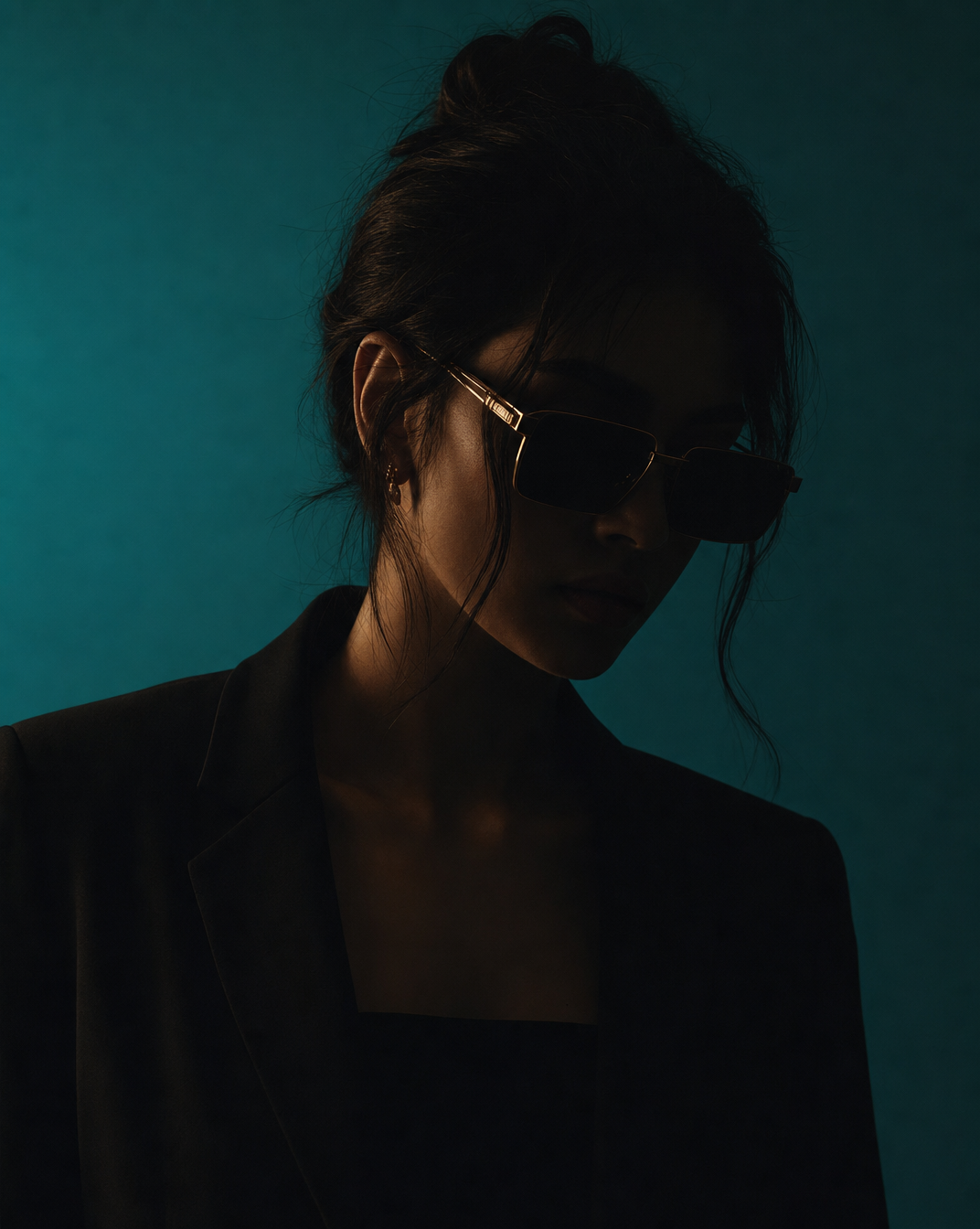
Woman in Teal Light, Shadowed Fashion Portrait
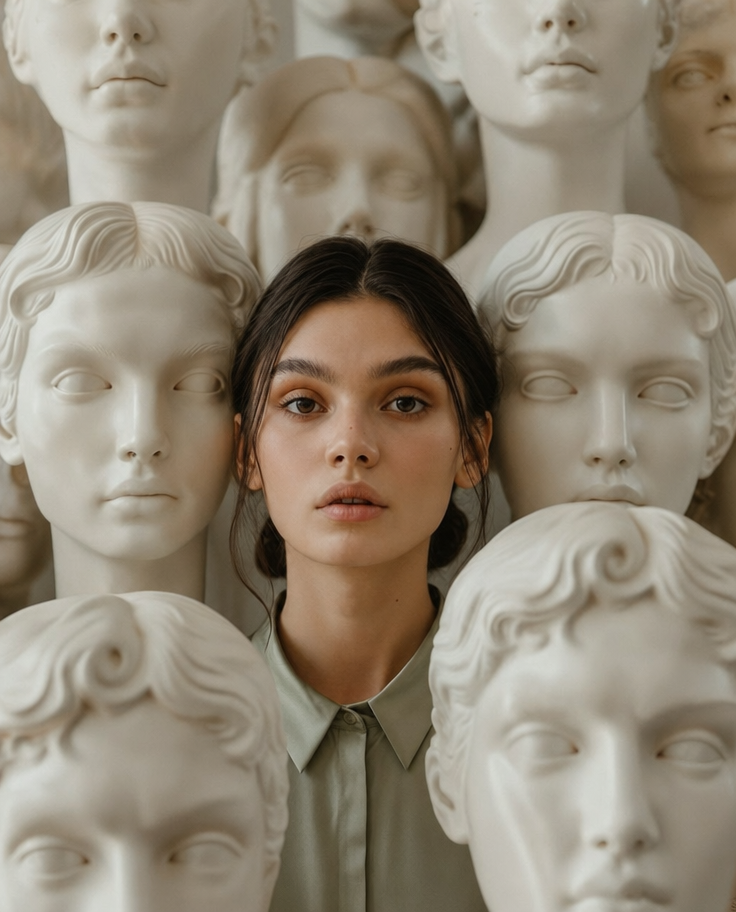
Eerie Elegance Among Marble Busts
Charcoal turtleneck with red eye-beam
Dreamy Macro Portrait in Cool Water