Why this works
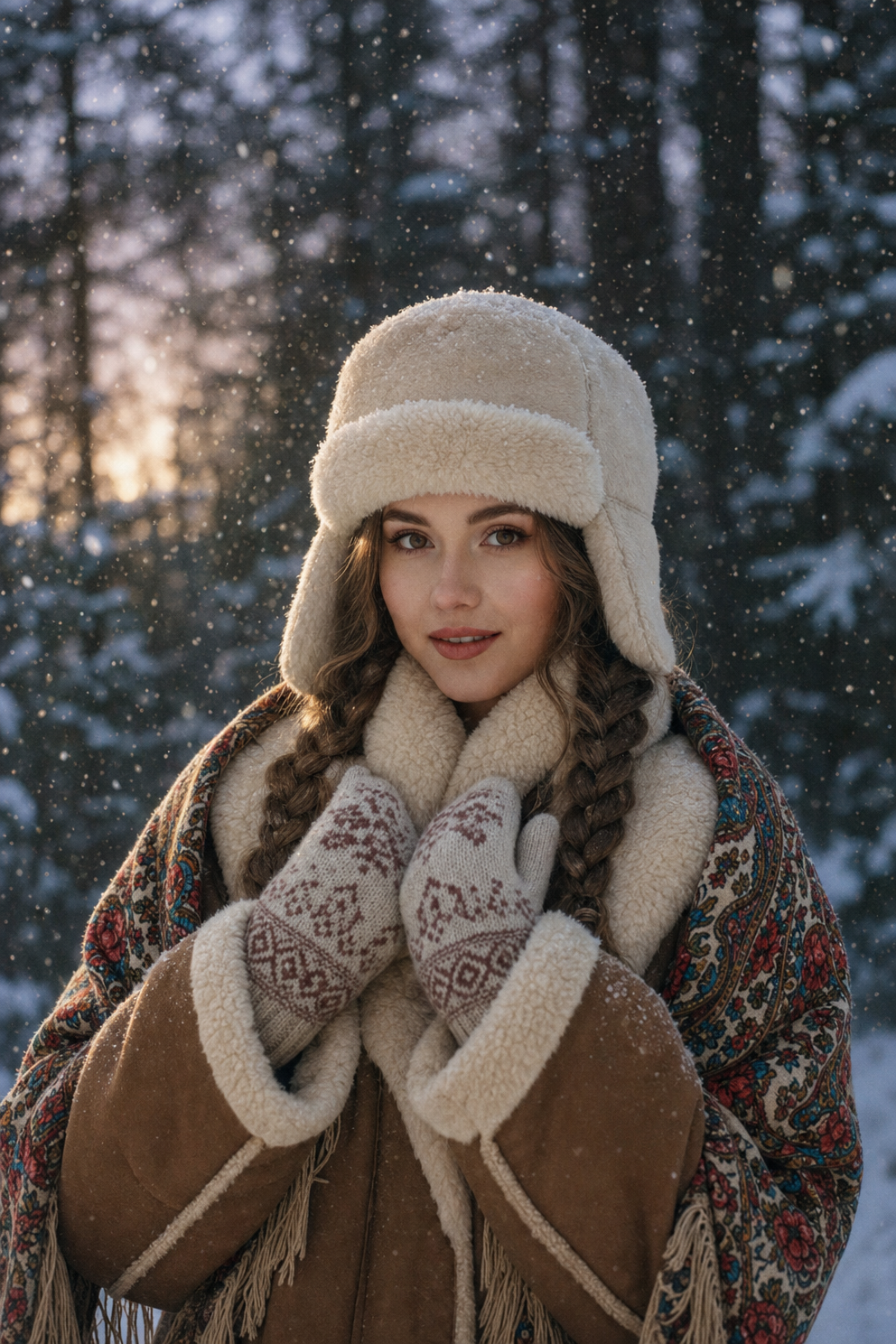
The close framing is anchored by “photorealistic cinematic close-up” and “shallow depth of field,” keeping the young woman’s braided hair, cream trapper hat, shearling coat, mittens, and embroidered shawl more prominent than the snowy fir forest. “Cool twilight backlight” supplies the wintry gray atmosphere, while “soft glowing bokeh” turns the falling snow and background lights into a dreamy veil rather than competing detail. The warm beige and camel-brown clothing, reinforced by “Kodak Portra–style color rendering” and “film-inspired nostalgic look,” creates the image’s nostalgic warmth against the cool gray forest; “subtle film grain” adds the final analog texture.
FAQ
→How do I make the portrait feel darker and more dramatic?
Replace “soft glowing bokeh” with “hard directional side-lighting and deep shadows,” and change “cool twilight backlight” to “cold blue moonlight from one side.” Keep “shallow depth of field,” but add “high-contrast chiaroscuro” to preserve the close-up while making the face and coat more sculptural.
→How do I make the embroidered shawl the central visual element?
Change “photorealistic cinematic close-up” to “cinematic medium close-up framed from the chest upward,” and add “the richly colored embroidered shawl centered in the foreground, intricate stitching in sharp focus.” Replace “shallow depth of field” with “selective focus on the shawl and lower face” so the patterned textile carries more visual weight than the hat and hair.
→How do I turn this into a matching seasonal portrait series?
Keep the fixed phrases “film-inspired nostalgic look,” “Kodak Portra–style color rendering,” and “subtle film grain” for consistency, then swap “light falling snow” and “snowy fir forest background” for settings such as “autumn mist among golden birch trees,” “spring rain beside flowering apple trees,” or “sunlit coastal dunes.” Change the clothing palette from “cream wool trapper hat” and “camel-brown shearling coat” to season-specific pieces while retaining “photorealistic cinematic close-up” and the same “cool twilight backlight” structure.
Learn the technique behind this
- Why can't AI spell, and how do I get readable text in an image? — Older diffusion models had no character-level representation of text, so they produced letterform-shaped texture instead of words.
- How should a prompt be structured, and does word order matter? — A prompt that behaves predictably names one subject first, then what it is doing, then where, then the light, then the lens or medium, then the style.
- Why does AI get hands and faces wrong, and how do I fix it? — Hands fail because they're small in frame, extremely variable in pose, and self-occluding — the model has less usable signal per pixel than for any other body part.
Related prompts
Woman in Teal Light, Shadowed Fashion Portrait
Eerie Elegance Among Marble Busts
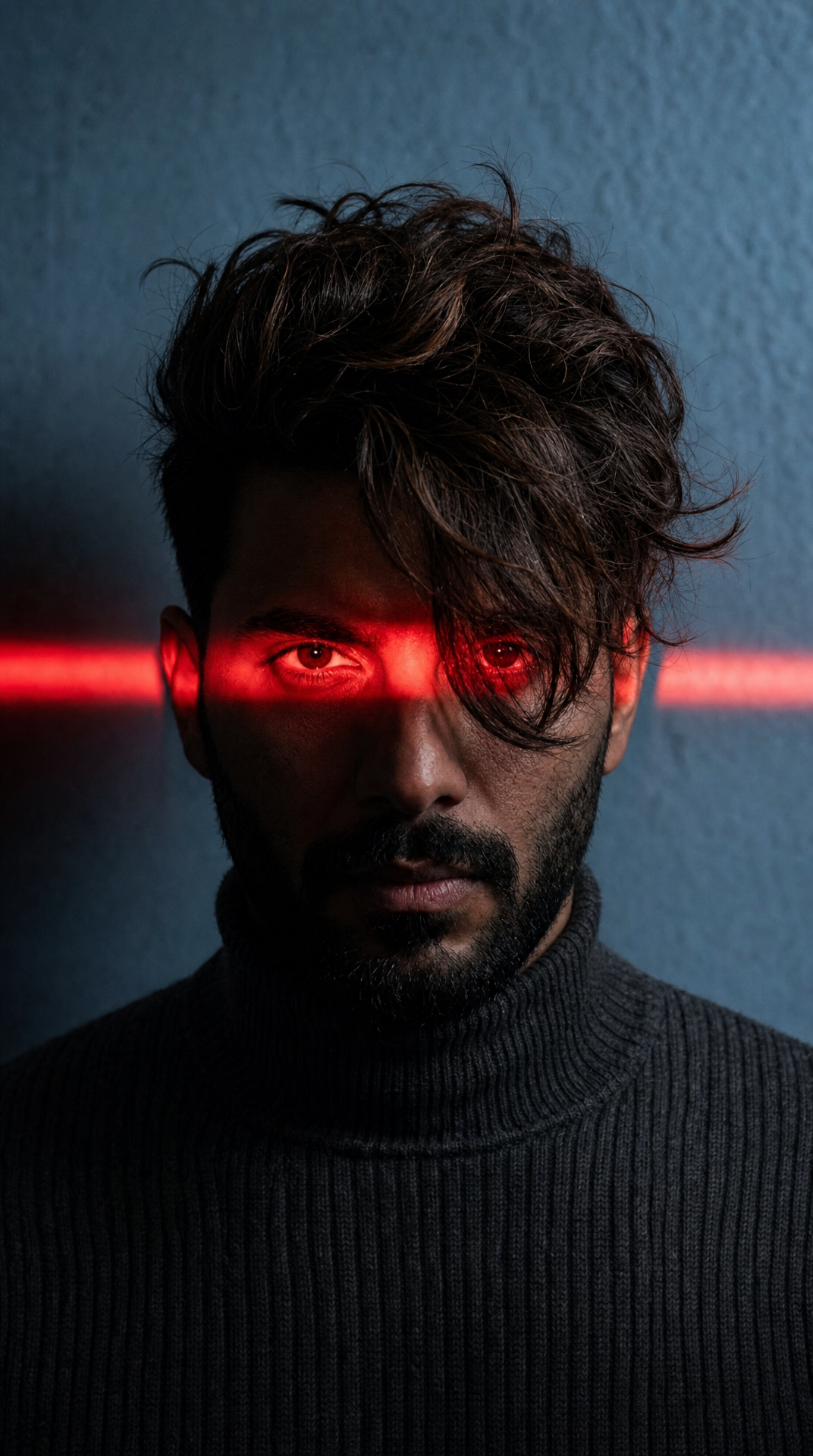
Charcoal turtleneck with red eye-beam
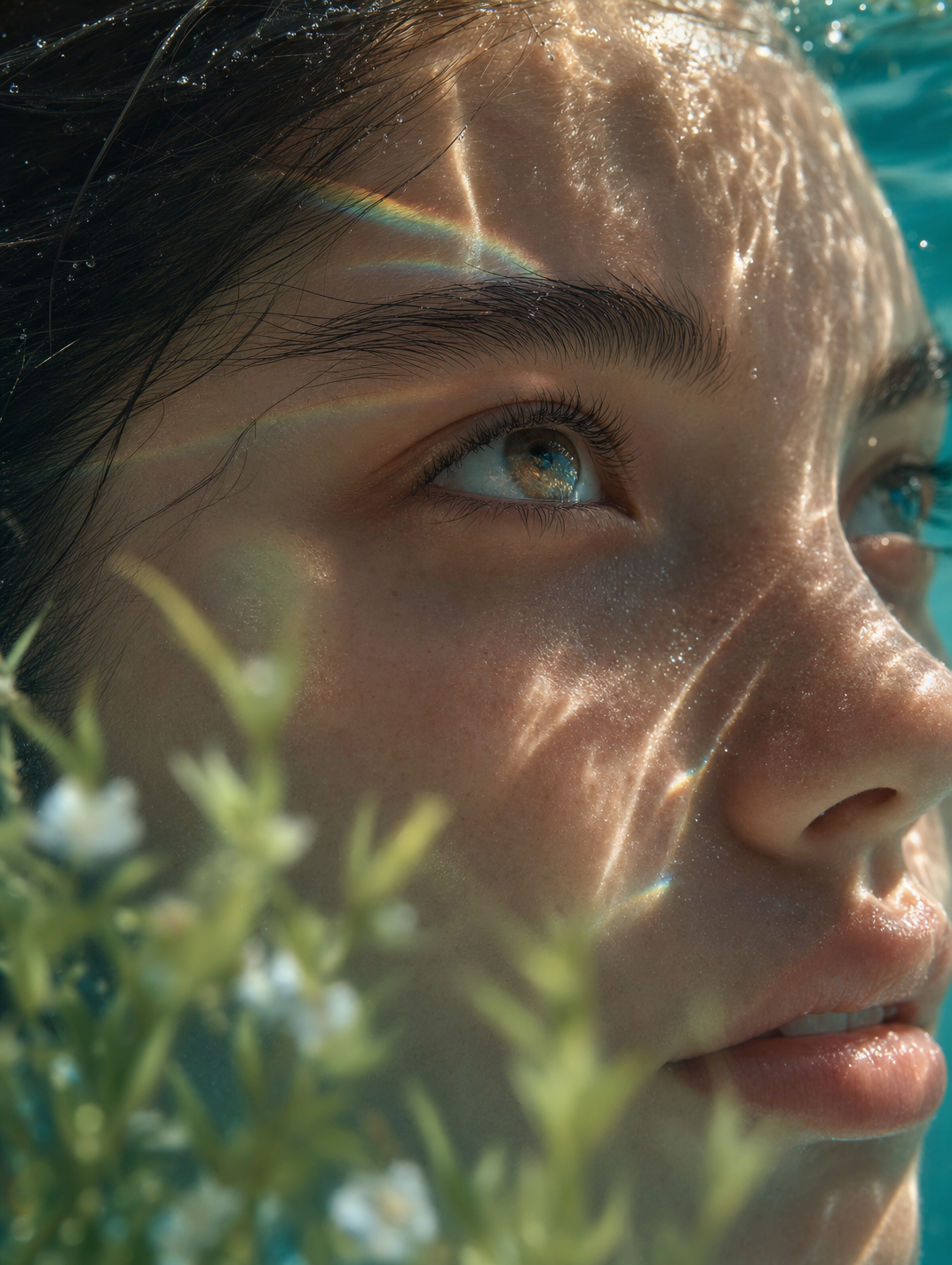
Dreamy Macro Portrait in Cool Water