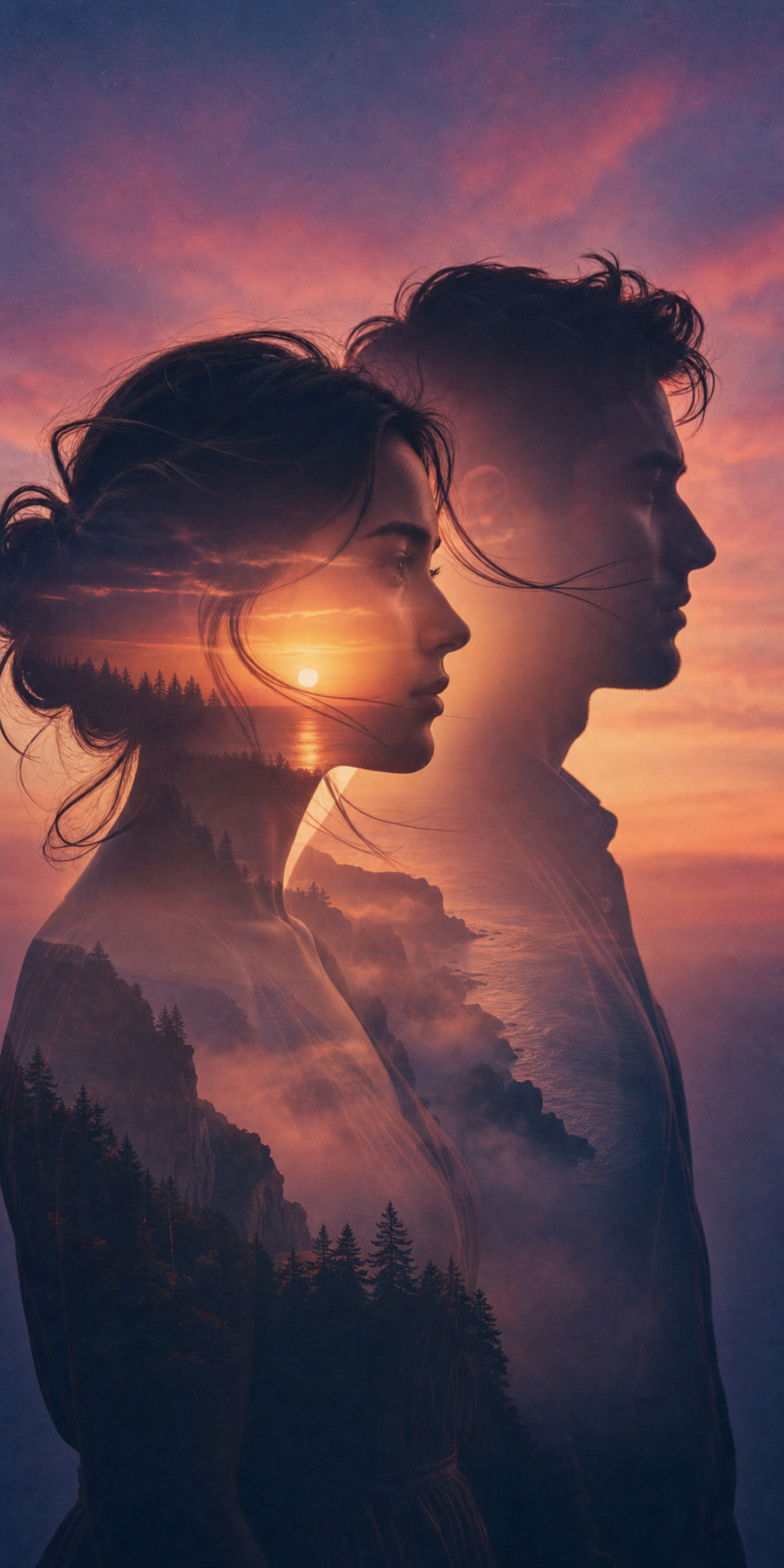
Why this works
The paired side profiles and “faces gently blended with jagged cliff and forest silhouettes” create the image’s central double-exposure structure, while “portrait-full-body” gives that intimate subject room to read against the landscape. “Twilight sky with a cool magenta-blue glow” supplies the dreamy cool field, and “warm highlights remain in the skin tones” introduces the orange contrast visible against the pink, indigo, and black silhouettes. “Soft directional backlighting,” “fine atmospheric haze,” “subtle film-grain,” and “shallow depth of field” specifically combine to soften edges and preserve the serene, cinematic mood without losing high-detail facial contours.
FAQ
→How do I make the two people more prominent than the cliffs and forest?
Replace “faces gently blended with jagged cliff and forest silhouettes” with “large, sharply defined woman and man side profiles occupying most of the frame, with faint cliff and forest textures confined inside the facial contours.” Change “portrait-full-body” to “tight upper-body portrait framing” and keep “shallow depth of field” to push the landscape further back.
→How do I shift this from serene romance to a darker, more dramatic tone?
Replace “dreamy, romantic, serene mood” with “tense, melancholic, nocturnal mood,” and change “soft directional backlighting” to “hard rim lighting with deep facial shadows.” Replace “cool magenta-blue glow” with “deep violet and charcoal storm light,” reduce “warm highlight accents” to “thin amber highlights,” and change “soft atmospheric haze” to “dense drifting mist.”
→How do I build a matching variation series without losing the double-exposure identity?
Keep “double exposure cinematic portrait” and “woman and man in side profile” unchanged, then swap only the internal landscape phrase: use “windswept desert dunes,” “coastal waves and sea cliffs,” or “bare winter branches.” Preserve “twilight sky,” “soft directional backlighting,” “subtle film-grain,” and “rose, indigo, and soft gold accents” so the subjects and palette remain consistent across each variation.
Learn the technique behind this
- Why can't AI spell, and how do I get readable text in an image? — Older diffusion models had no character-level representation of text, so they produced letterform-shaped texture instead of words.
- Why does AI get hands and faces wrong, and how do I fix it? — Hands fail because they're small in frame, extremely variable in pose, and self-occluding — the model has less usable signal per pixel than for any other body part.
- How do I keep the same character across multiple images? — Text prompts alone won't hold a face across images — a description defines a type, not a person.
Related prompts
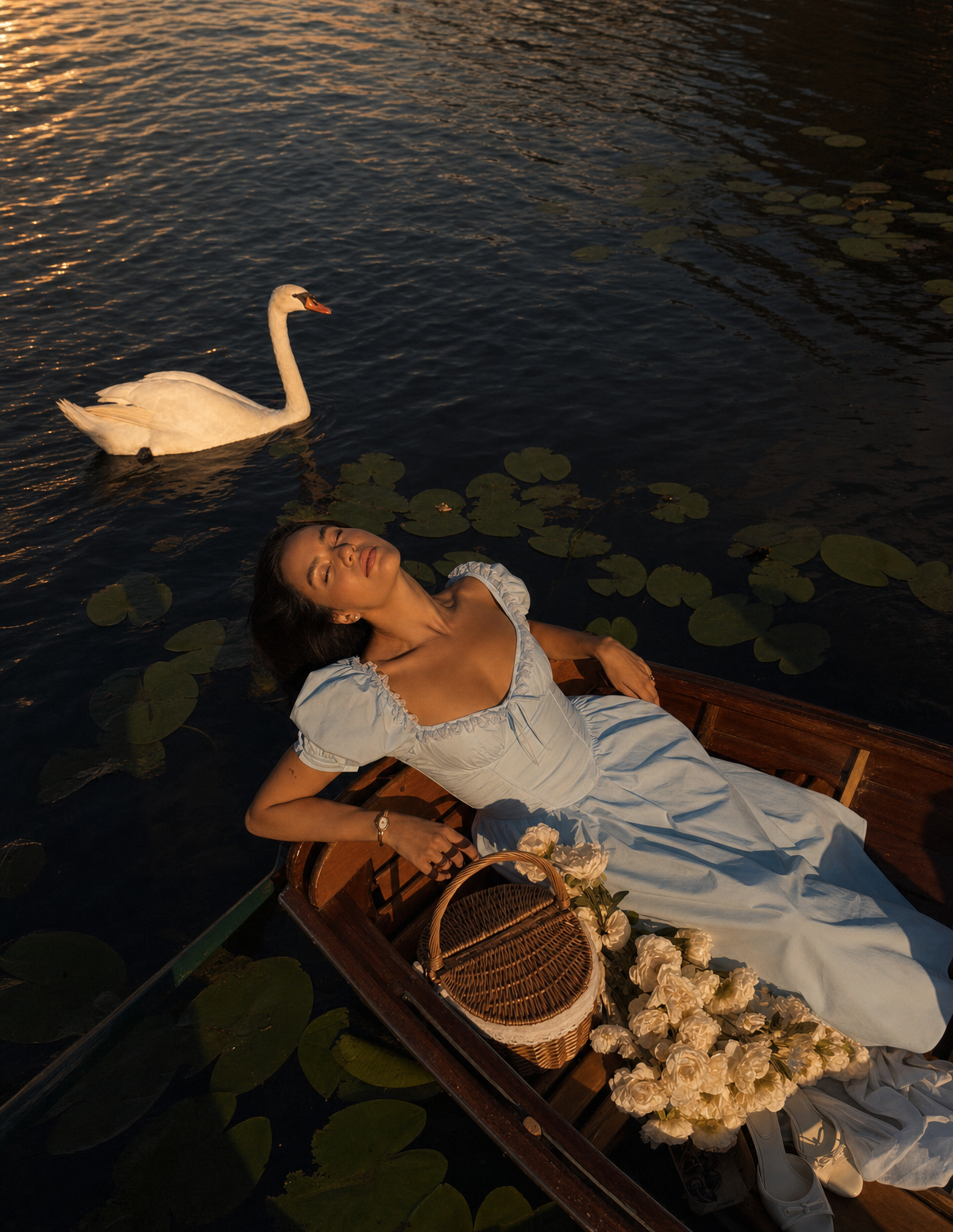
Woman in pale blue dress in lily boat

Woman and Man in Intimate Studio Portrait
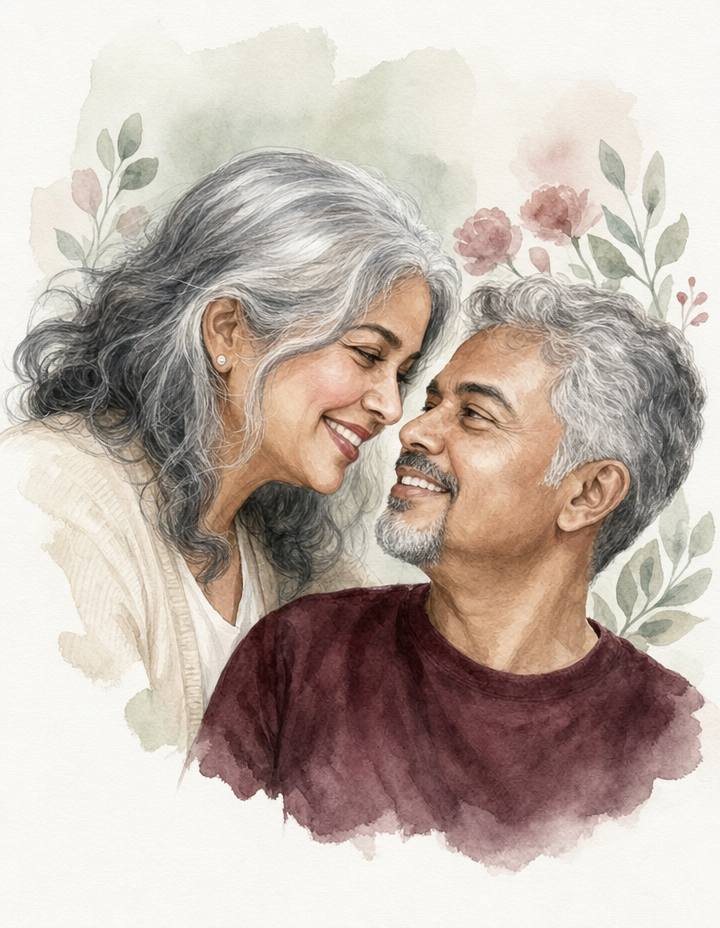
Older Couple in Tender Watercolor Embrace
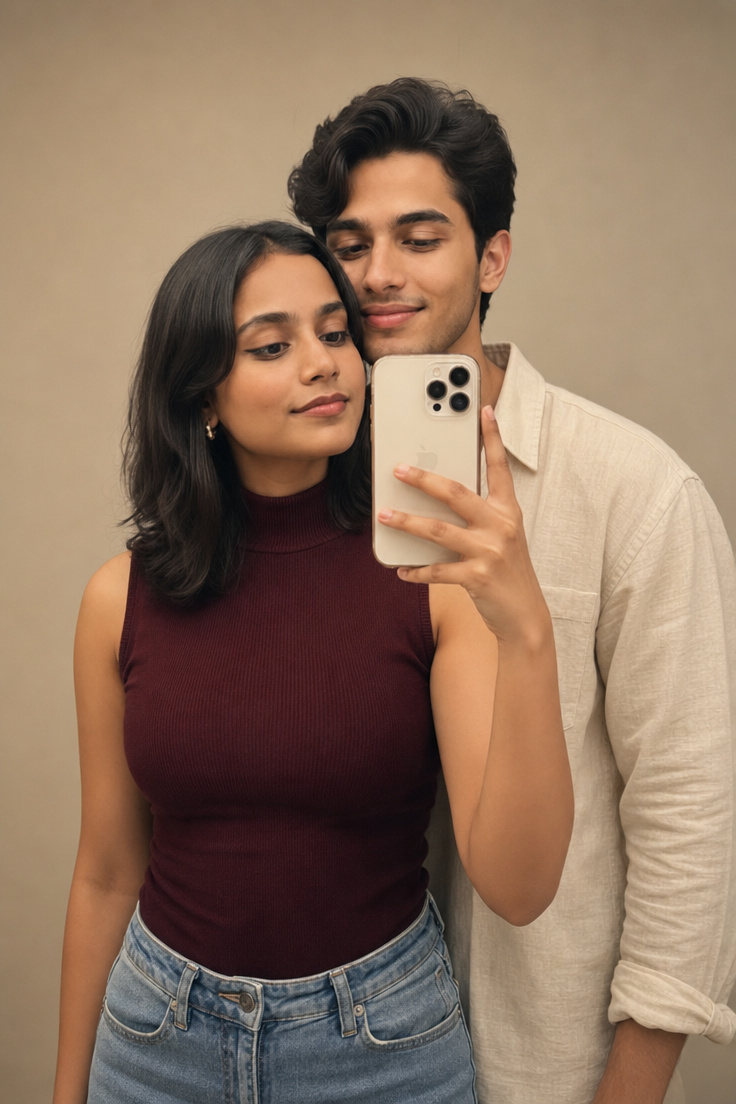
Couple's Warm Burgundy Turtleneck Mirror Selfie