Why this works
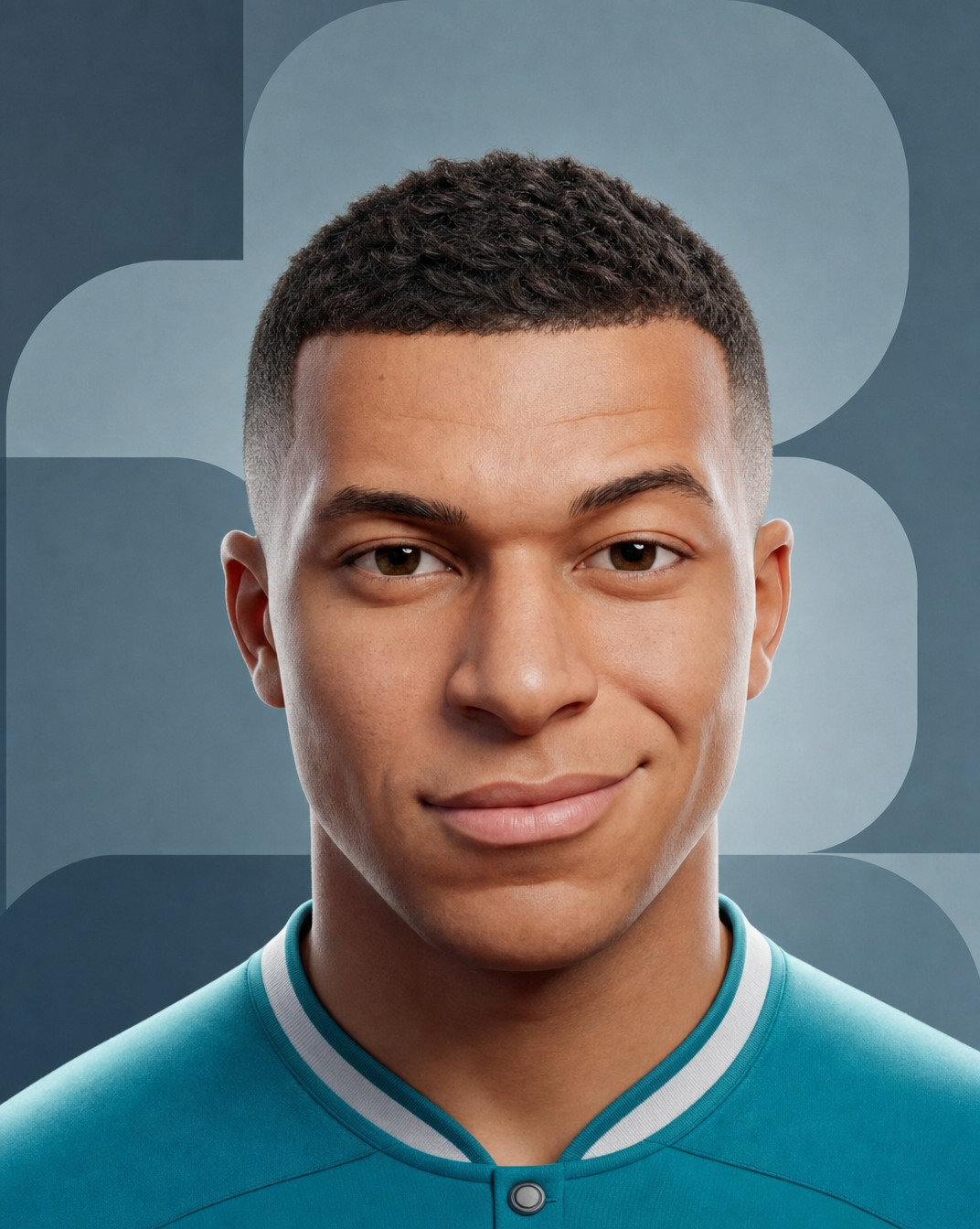
The centered face and “close-up portrait framing” make the footballer immediately dominant, while the “subtle confident smile” supplies the controlled, assured mood. “Clean studio lighting with smooth skin detail and crisp focus” gives the face a polished editorial finish, and the “dark charcoal background” plus “muted slate and teal” rounded shapes creates graphic contrast around the head. The “teal athletic jersey with a white collar trim” anchors the palette, with the generated blue-gray field and warmer brown skin tones adding natural separation from the cool backdrop.
FAQ
→How do I make the footballer look more intense and competitive?
Replace “subtle confident smile” with “focused stern expression, narrowed eyes, jaw set” and change “clean studio lighting” to “dramatic directional side-lighting with deeper facial shadows.” Keep “crisp focus” so the expression remains the visual priority.
→How do I make the jersey and team colors more prominent?
Replace “close-up portrait framing centered on the face” with “tight chest-up portrait with the face in the upper third and jersey clearly visible,” and change “teal athletic jersey with a white collar trim” to a more explicit phrase such as “bold royal-blue jersey with bright white collar trim and visible team crest.” Reduce “large abstract rounded geometric shapes framing the head” to “smaller background shapes” so they do not compete with the kit.
→How do I create a matching series with different players or colorways?
Keep the fixed structure, including “photorealistic sports poster,” “close-up portrait framing,” “clean studio lighting,” and “dark charcoal background,” then swap “young male footballer” for each player description and replace “teal athletic jersey with a white collar trim” plus “muted slate and teal tones” with a new coordinated jersey and background palette. For consistent layouts, retain “centered face” and “large abstract rounded geometric shapes framing the head” in every variation.
Learn the technique behind this
- Why can't AI spell, and how do I get readable text in an image? — Older diffusion models had no character-level representation of text, so they produced letterform-shaped texture instead of words.
- How should a prompt be structured, and does word order matter? — A prompt that behaves predictably names one subject first, then what it is doing, then where, then the light, then the lens or medium, then the style.
- Which aspect ratio should I use, and how does it change the image? — Aspect ratio determines what the model composes, not how it's cropped afterwards.
Related prompts
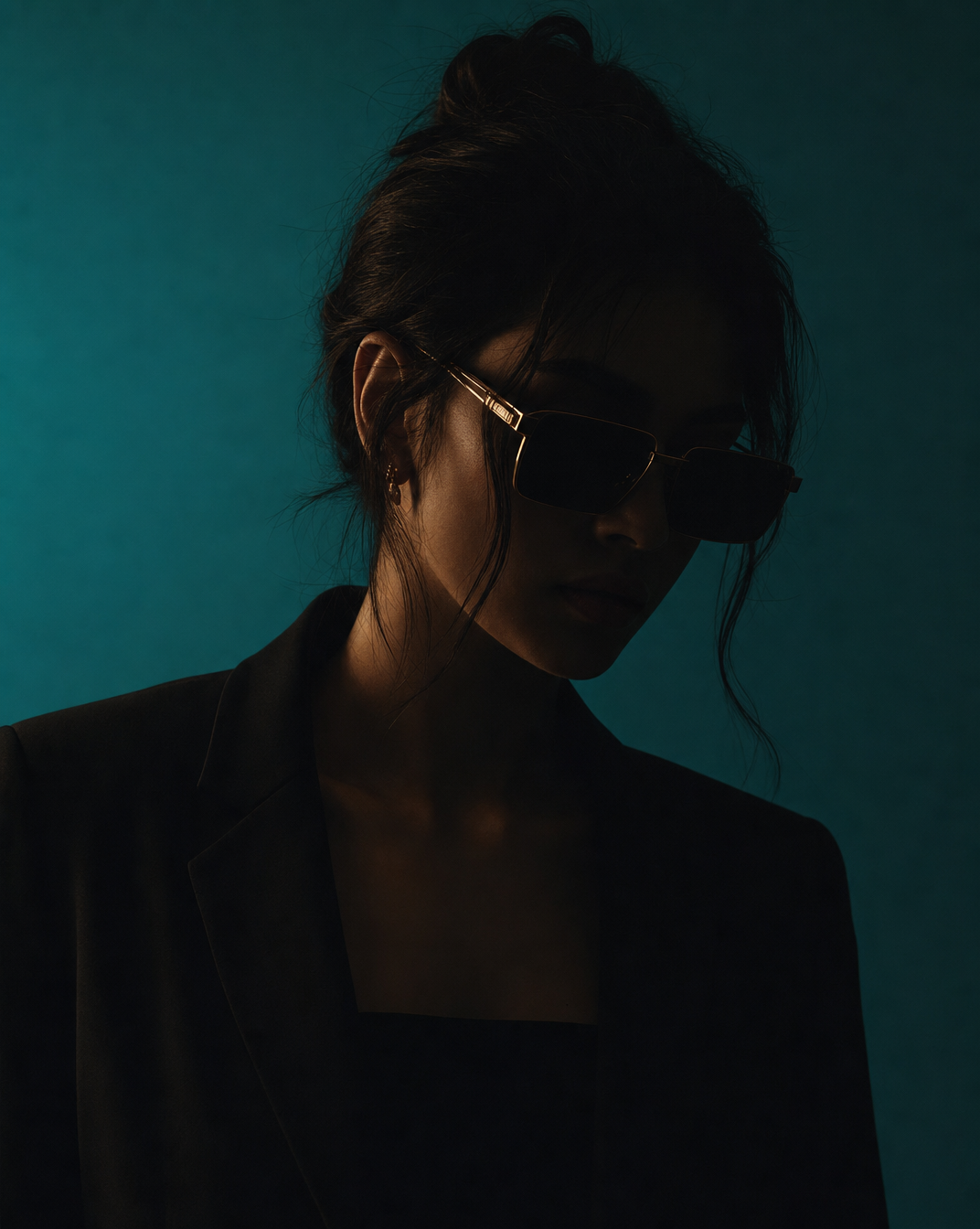
Woman in Teal Light, Shadowed Fashion Portrait
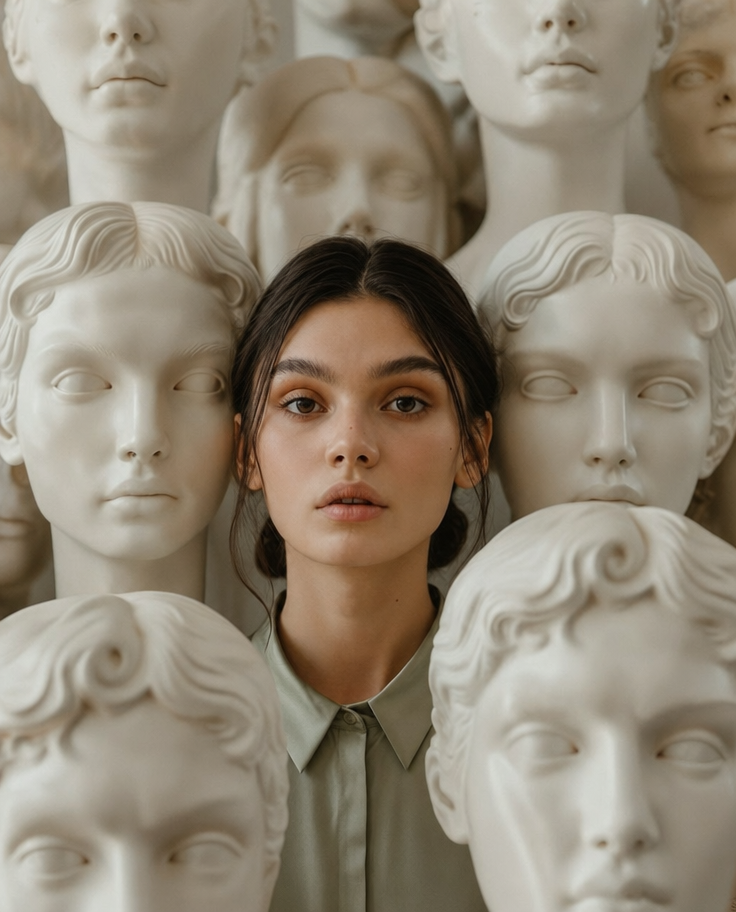
Eerie Elegance Among Marble Busts
Charcoal turtleneck with red eye-beam
Dreamy Macro Portrait in Cool Water