Why this works
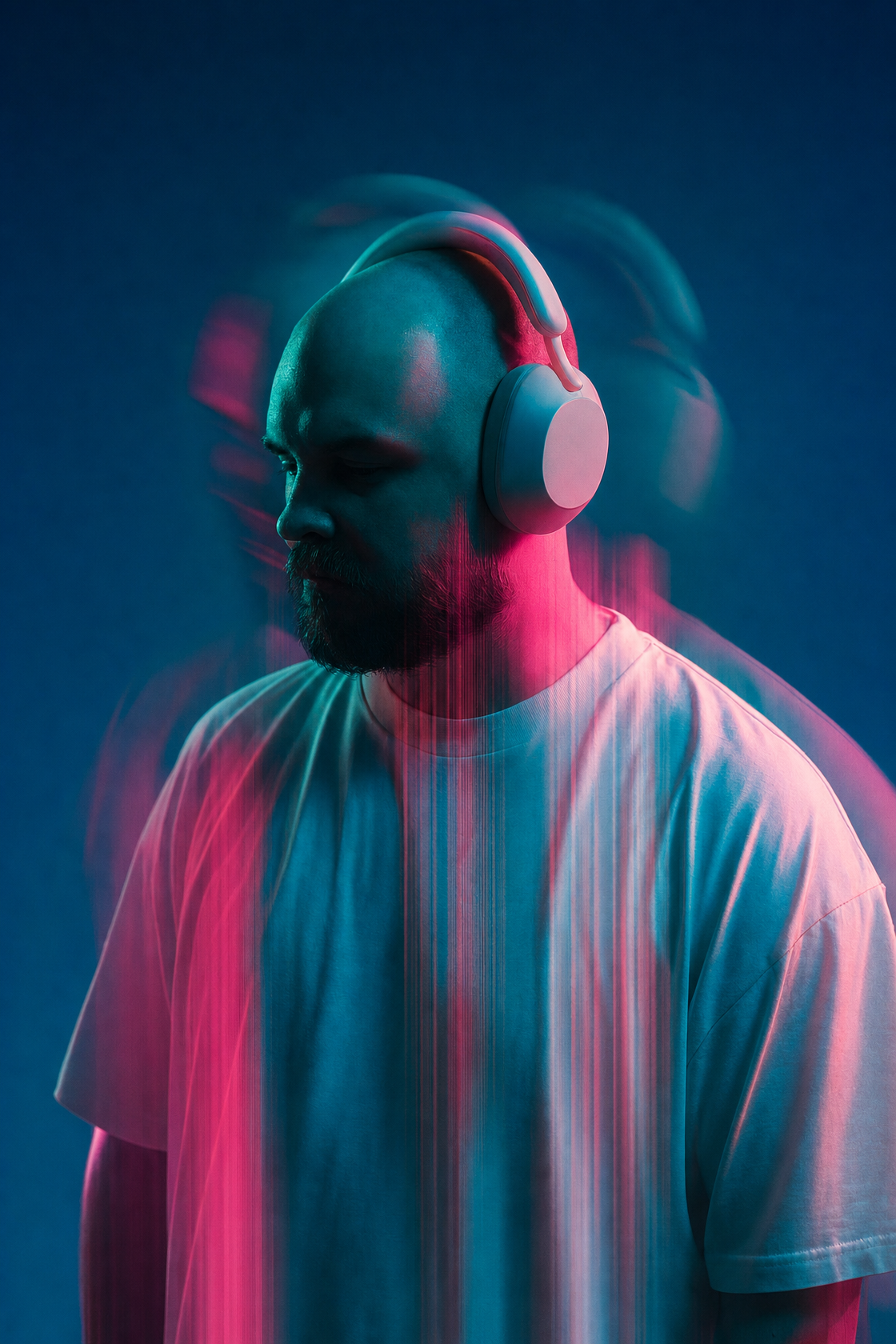
The centered half-length framing and “smooth gradient background” isolate the bald man and his oversized headphones, while “sharp facial structure” keeps the face as the visual anchor. “Cold teal and magenta studio lighting with a subtle rim light” produces the dominant teal, pink, and white palette and gives the silhouette a polished futuristic edge. “Glitchy motion blur with faint ghosted duplicate streaks around the head and shoulders” adds controlled movement without losing the “clean modern editorial finish” or realistic clothing texture.
FAQ
→How do I make the headphones more central and visually prominent?
Replace “wearing large over-ear headphones” with “wearing oversized sculptural over-ear headphones as the primary focal point, covering the ears and framing the face,” and change “centered composition” to “centered close portrait with headphones occupying the outer thirds.” Keep “sharp facial structure” if you still want the face readable beneath the stronger accessory emphasis.
→How do I make this portrait darker and more dramatic?
Replace “cold teal and magenta studio lighting with a subtle rim light” with “deep teal key light, restrained magenta edge light, and hard directional shadows,” and change “smooth gradient background” to “near-black gradient background with a faint teal falloff.” Keep “high contrast cinematic look,” since it reinforces the deeper tonal separation.
→How do I create a series of variations while preserving the same visual identity?
Keep “half-length cinematic editorial portrait,” “centered composition,” “smooth gradient background,” and “cold teal and magenta studio lighting,” then vary one controlled phrase at a time: replace “bald man” with “androgynous woman,” “older man,” or “robotic humanoid,” and replace “glitchy motion blur” with “chromatic aberration,” “scanline distortion,” or “digital particle trails.” Retain “clean modern editorial finish” and “realistic clothing textures” across every version for consistency.
Learn the technique behind this
- Why can't AI spell, and how do I get readable text in an image? — Older diffusion models had no character-level representation of text, so they produced letterform-shaped texture instead of words.
- How should a prompt be structured, and does word order matter? — A prompt that behaves predictably names one subject first, then what it is doing, then where, then the light, then the lens or medium, then the style.
- Do negative prompts work, and what should go in one? — Negative prompts work on models that support a separate negative conditioning channel — mainly Stable Diffusion and FLUX-family models.
Related prompts
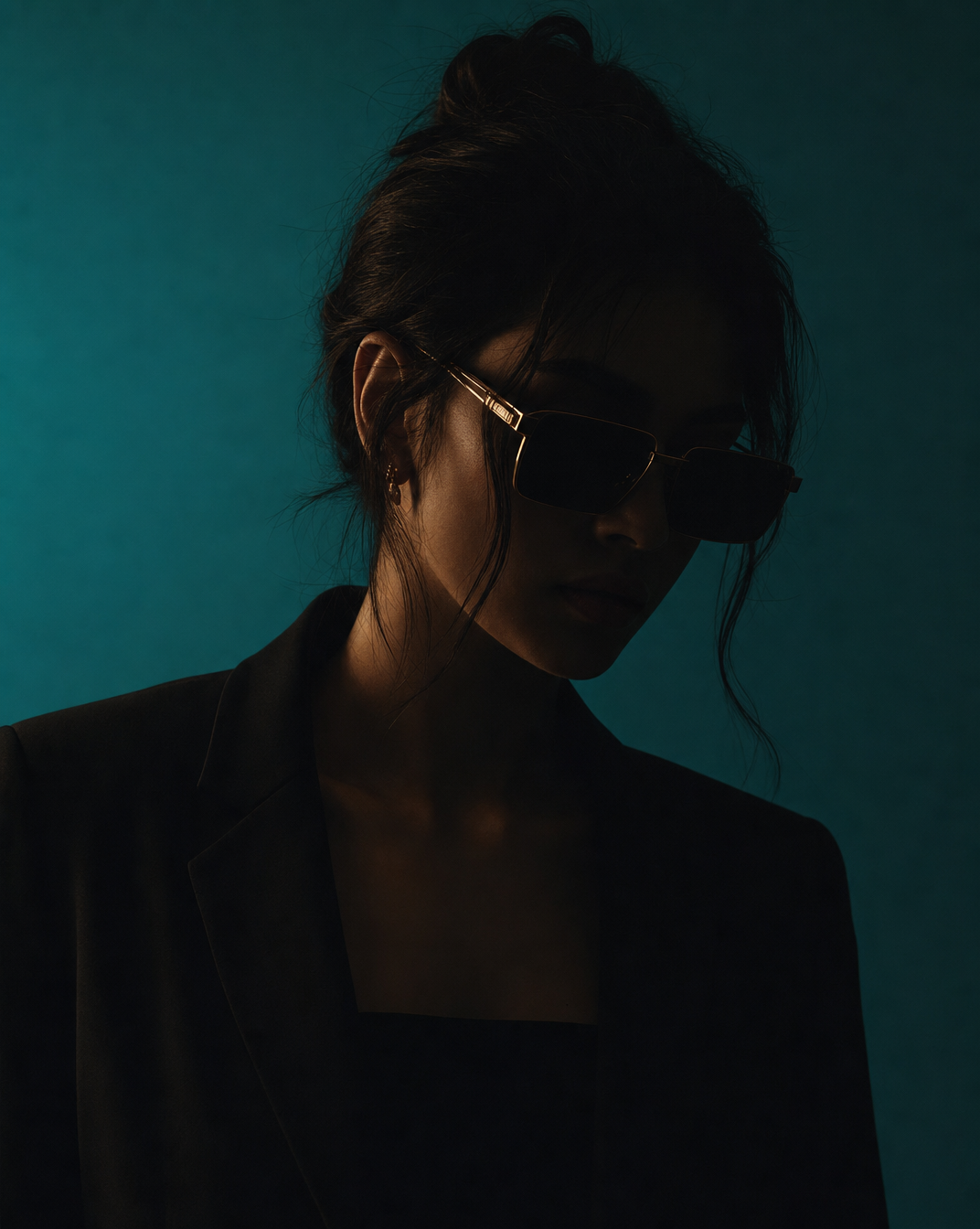
Woman in Teal Light, Shadowed Fashion Portrait
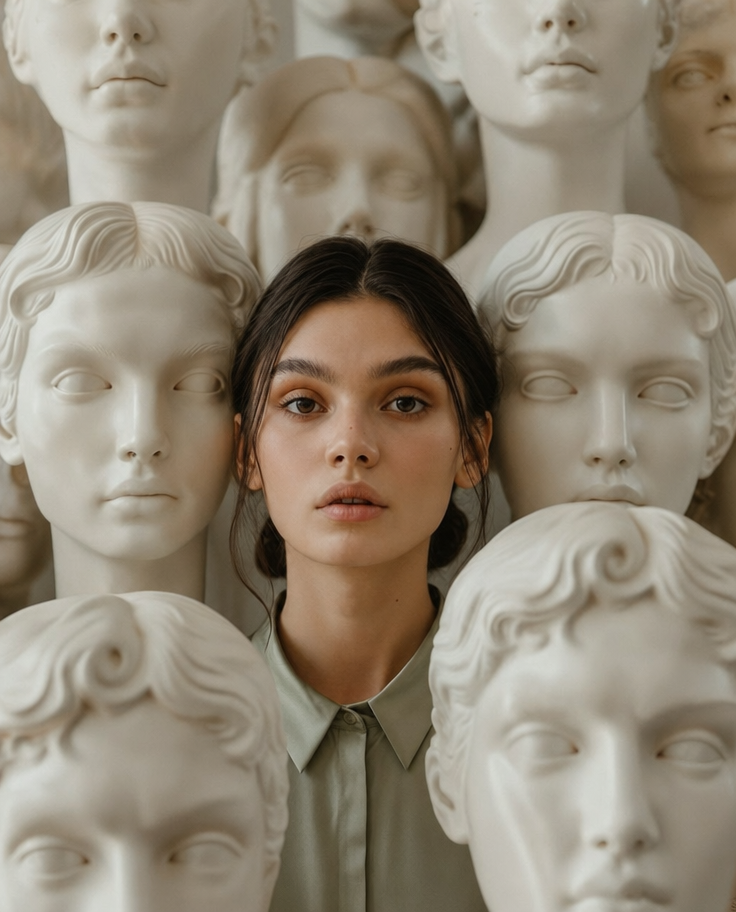
Eerie Elegance Among Marble Busts
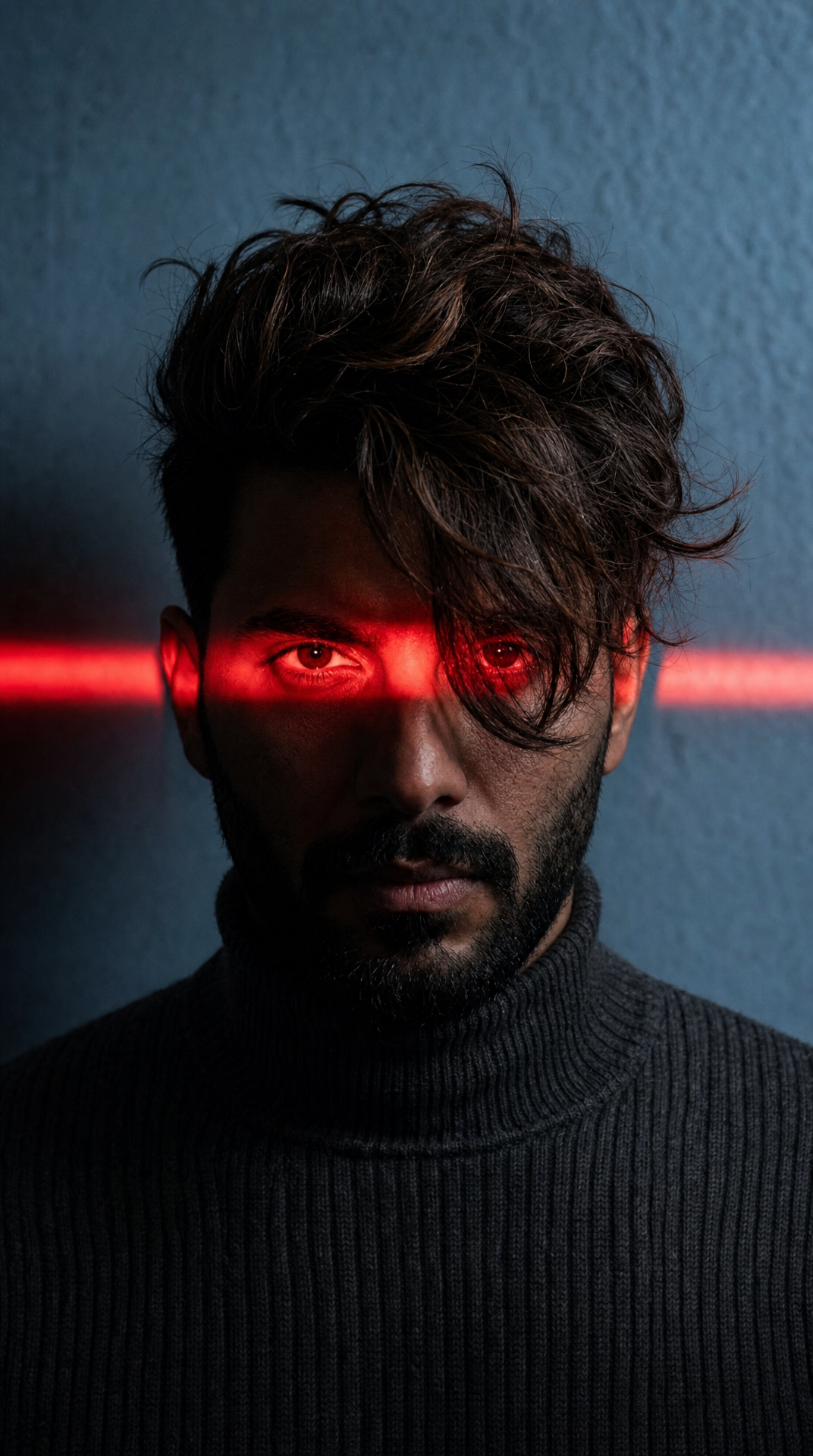
Charcoal turtleneck with red eye-beam
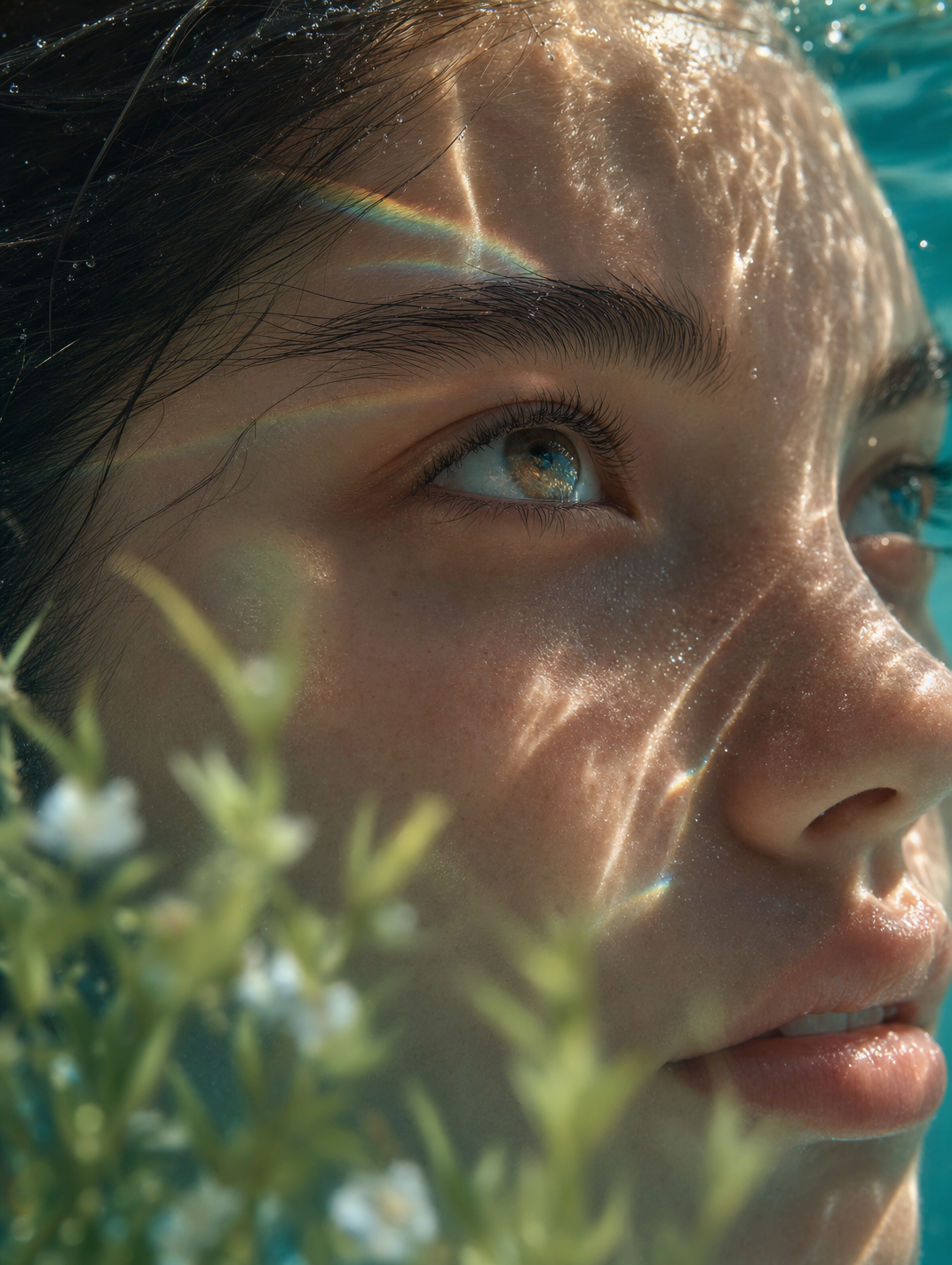
Dreamy Macro Portrait in Cool Water