Why this works
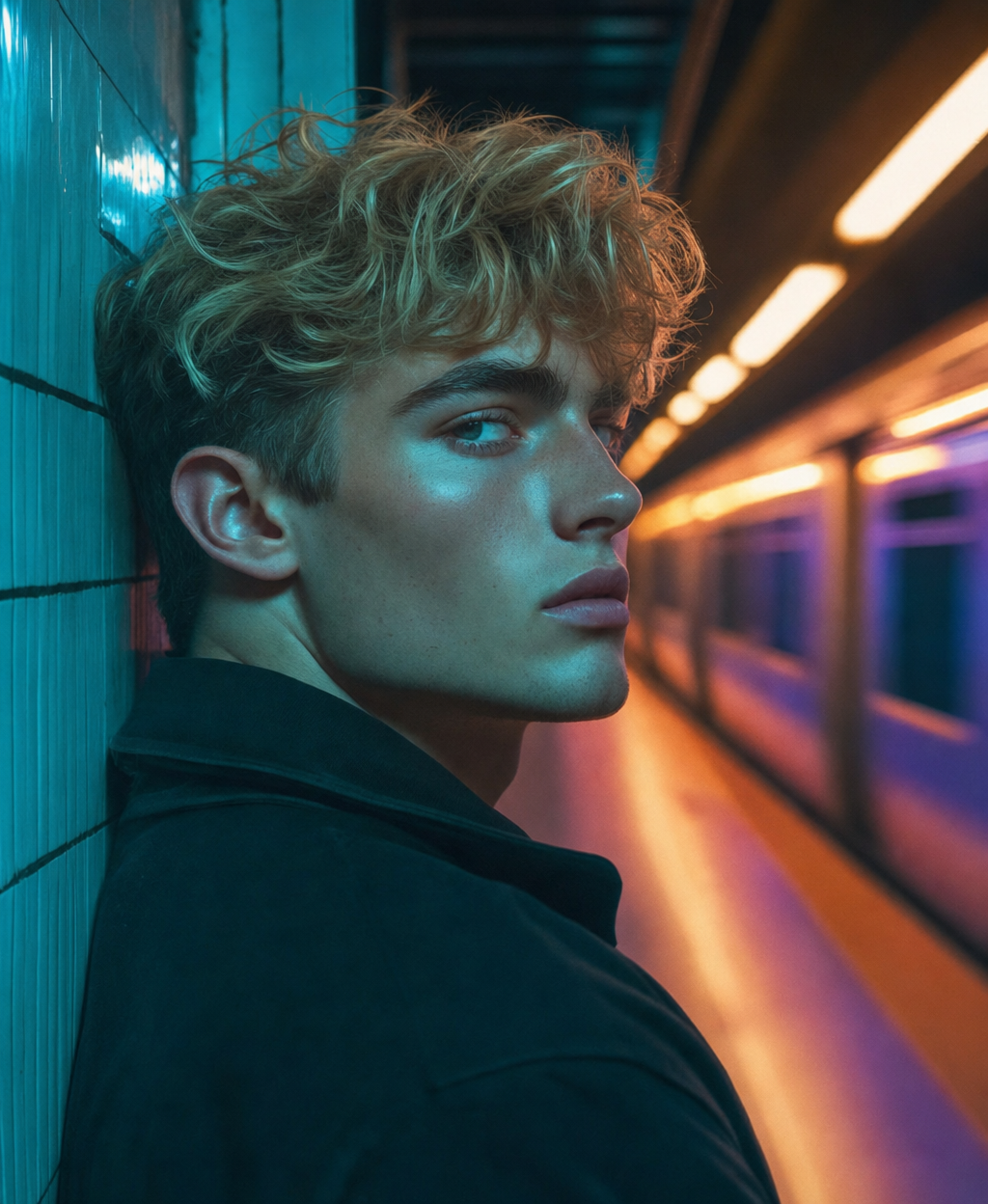
“Chest-up framing” and “profile view” make the face the immediate subject, while “shallow depth of field” and “sharp focus on face and eyes” separate it from the train platform. The mood comes from the contrast between “cool teal and azure rim light” on the left and “soft amber and violet neon reflections from a passing train” on the right, with the image’s dominant orange and black reinforcing the warm glow against deep station shadows. “Gritty yet smooth skin texture,” “high-contrast dramatic lighting,” and “cyberpunk color grading” combine polished facial detail with a tense, futuristic finish.
FAQ
→How do I change this prompt to make the passing train and station more prominent?
Replace “viewed from the chest up” with “three-quarter body shot” or “medium-wide portrait,” and replace “shallow depth of field” with “moderate depth of field, train platform and passing train clearly readable in the background.” Change “sharp focus on face and eyes” to “sharp focus shared between the subject and the illuminated train behind him.”
→How do I make the portrait feel warmer and less ominous?
Replace “cool teal and azure rim light” with “soft golden-orange rim light,” and change “high-contrast dramatic lighting” to “gentle cinematic lighting with lifted shadows.” Replace “moody futuristic atmosphere” and “cyberpunk color grading” with “warm romantic nighttime atmosphere” and “amber and rose color grading.”
→How do I build a series of variations while keeping this visual identity?
Keep “cinematic profile portrait,” “sharp focus on face and eyes,” and “high-contrast dramatic lighting” fixed, then swap the setting phrase “train platform in a moody futuristic station” for locations such as “rain-soaked elevated walkway,” “neon-lit underground market,” or “rooftop above a futuristic city.” Retain the two-sided lighting structure, changing only the reflection source from “a passing train” to “hovering vehicles,” “animated billboards,” or “street-level signage.”
Learn the technique behind this
- Why can't AI spell, and how do I get readable text in an image? — Older diffusion models had no character-level representation of text, so they produced letterform-shaped texture instead of words.
- How should a prompt be structured, and does word order matter? — A prompt that behaves predictably names one subject first, then what it is doing, then where, then the light, then the lens or medium, then the style.
- Why does AI get hands and faces wrong, and how do I fix it? — Hands fail because they're small in frame, extremely variable in pose, and self-occluding — the model has less usable signal per pixel than for any other body part.
Related prompts
Woman in Teal Light, Shadowed Fashion Portrait
Eerie Elegance Among Marble Busts
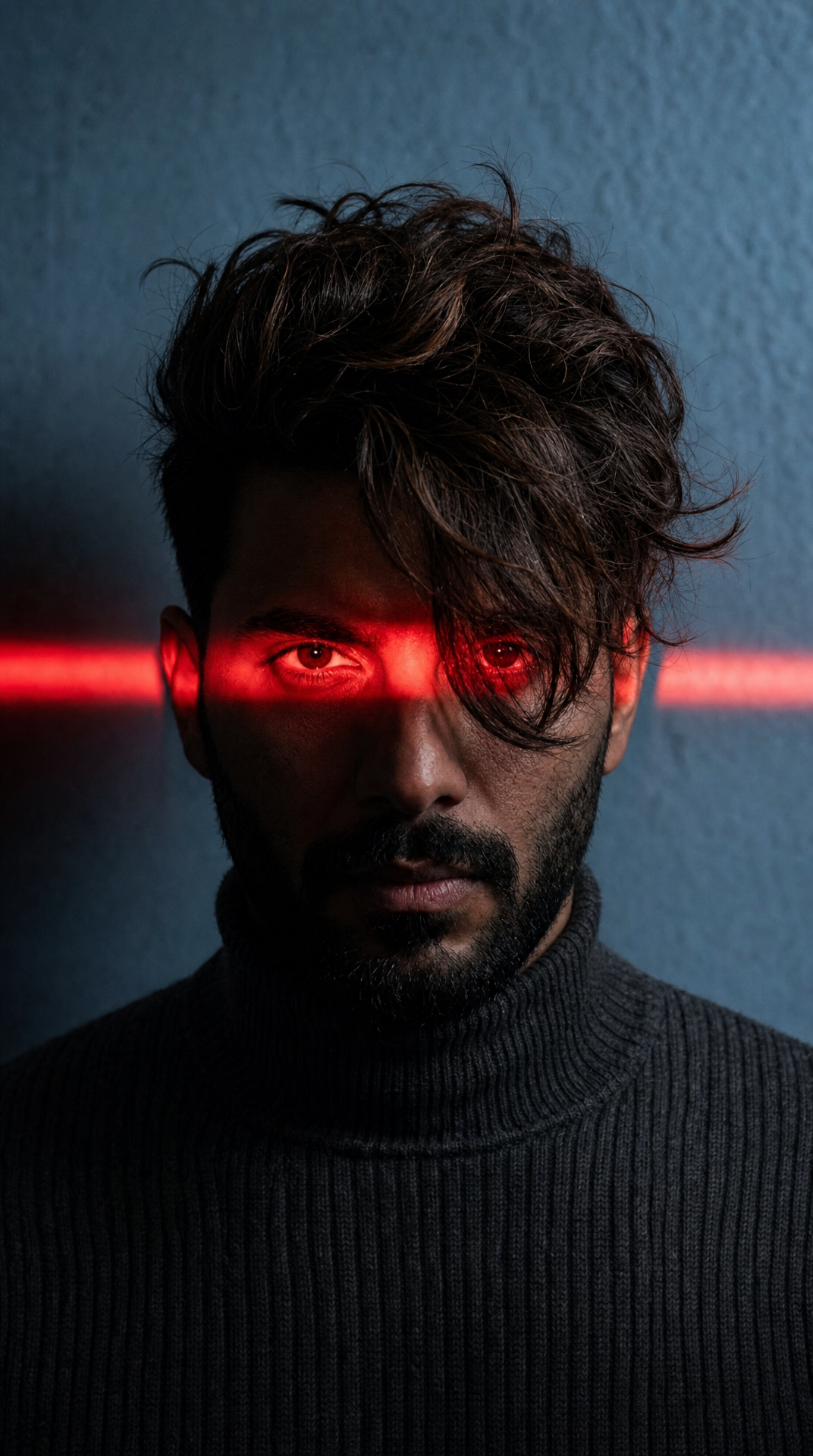
Charcoal turtleneck with red eye-beam
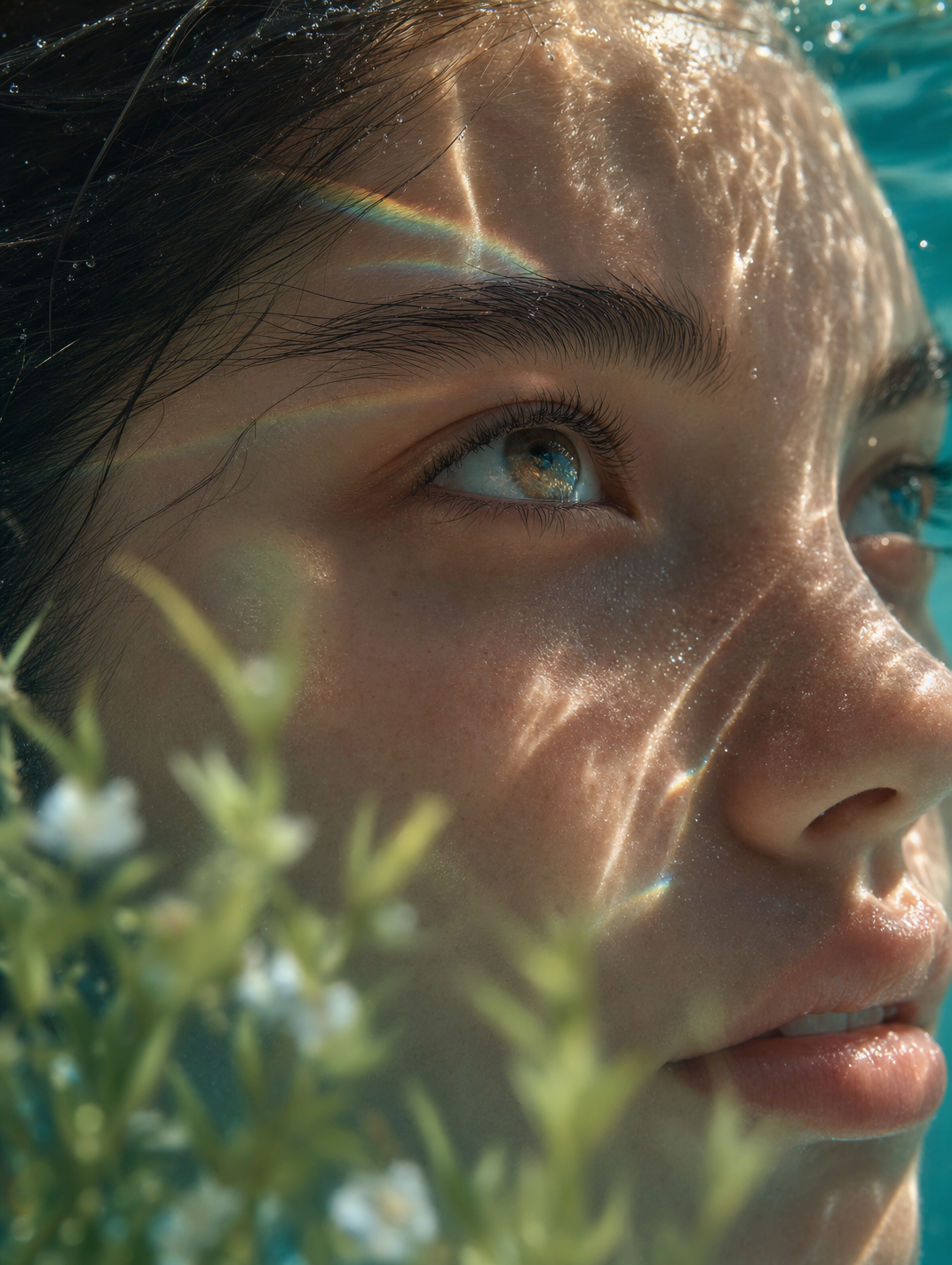
Dreamy Macro Portrait in Cool Water