Why this works
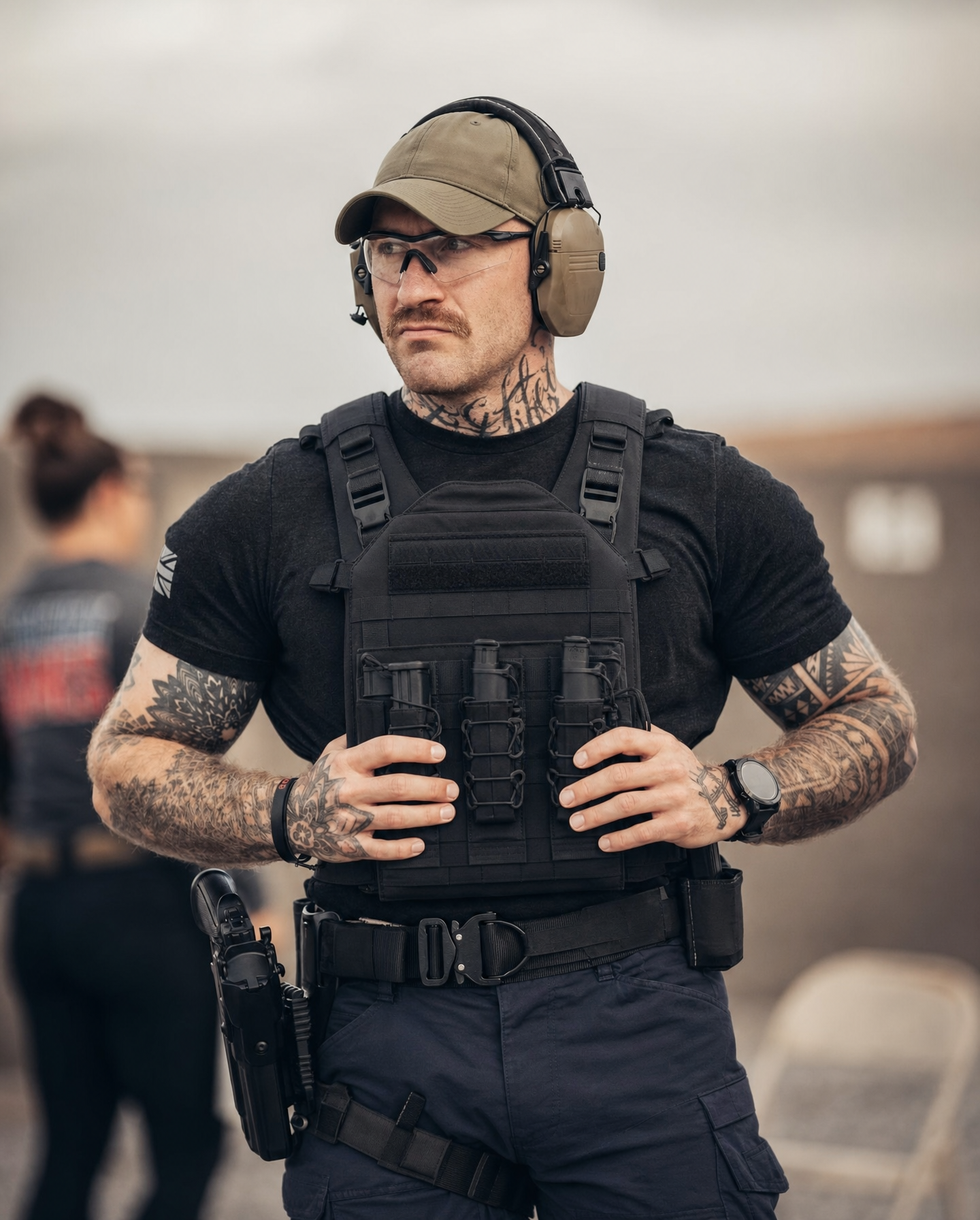
“Photorealistic documentary portrait” and “realistic skin texture” keep the tattooed man grounded in an observational, non-glamorous register, while “gritty, serious, focused mood” gives the full-body portrait its stern emotional read. “Cinematic framing,” “sharp subject,” and “shallow depth of field” establish a clear figure-ground hierarchy, isolating the olive cap, matte black chest rig, dark navy pants, and holstered sidearm against the blurred outdoor background. The dominant beige, brown, and gray tones reinforce the restrained tactical palette, while “natural overcast light” softens contrast without removing the gear’s fine detail.
FAQ
→How do I make the portrait feel more tense and cinematic?
Replace “natural overcast light” with “hard directional side-light with deep shadows,” and change “gritty, serious, focused mood” to “tense, guarded, high-stakes mood.” Keep “cinematic framing” and “atmospheric bokeh behind” so the stronger contrast changes the mood without losing the documentary portrait structure.
→How do I make the man’s gear and holstered sidearm more visually prominent?
Replace “portrait-full-body” with “three-quarter portrait from mid-thigh up,” and change “sharp subject with atmospheric bokeh behind” to “razor-sharp chest rig, wristwatch, and visible holstered sidearm with subtle background blur.” Retain “highly detailed gear,” but add “gear centered in the composition” to direct attention toward the equipment.
→How do I create a series of variations without losing the visual identity?
Keep the fixed phrases “photorealistic documentary portrait,” “realistic skin texture,” “matte black chest rig,” and “shallow depth of field,” then swap the setting and light in controlled pairs: use “wooded training range at dawn with cool mist” or “concrete urban perimeter at late afternoon with warm side-light.” Change the subject descriptor only when needed, such as replacing “tattooed man” with “tattooed woman” or “older bearded man,” while preserving “olive baseball cap,” “clear safety glasses,” and “dark navy tactical pants” as recurring series markers.
Learn the technique behind this
- Why can't AI spell, and how do I get readable text in an image? — Older diffusion models had no character-level representation of text, so they produced letterform-shaped texture instead of words.
- How should a prompt be structured, and does word order matter? — A prompt that behaves predictably names one subject first, then what it is doing, then where, then the light, then the lens or medium, then the style.
- Which aspect ratio should I use, and how does it change the image? — Aspect ratio determines what the model composes, not how it's cropped afterwards.
Related prompts
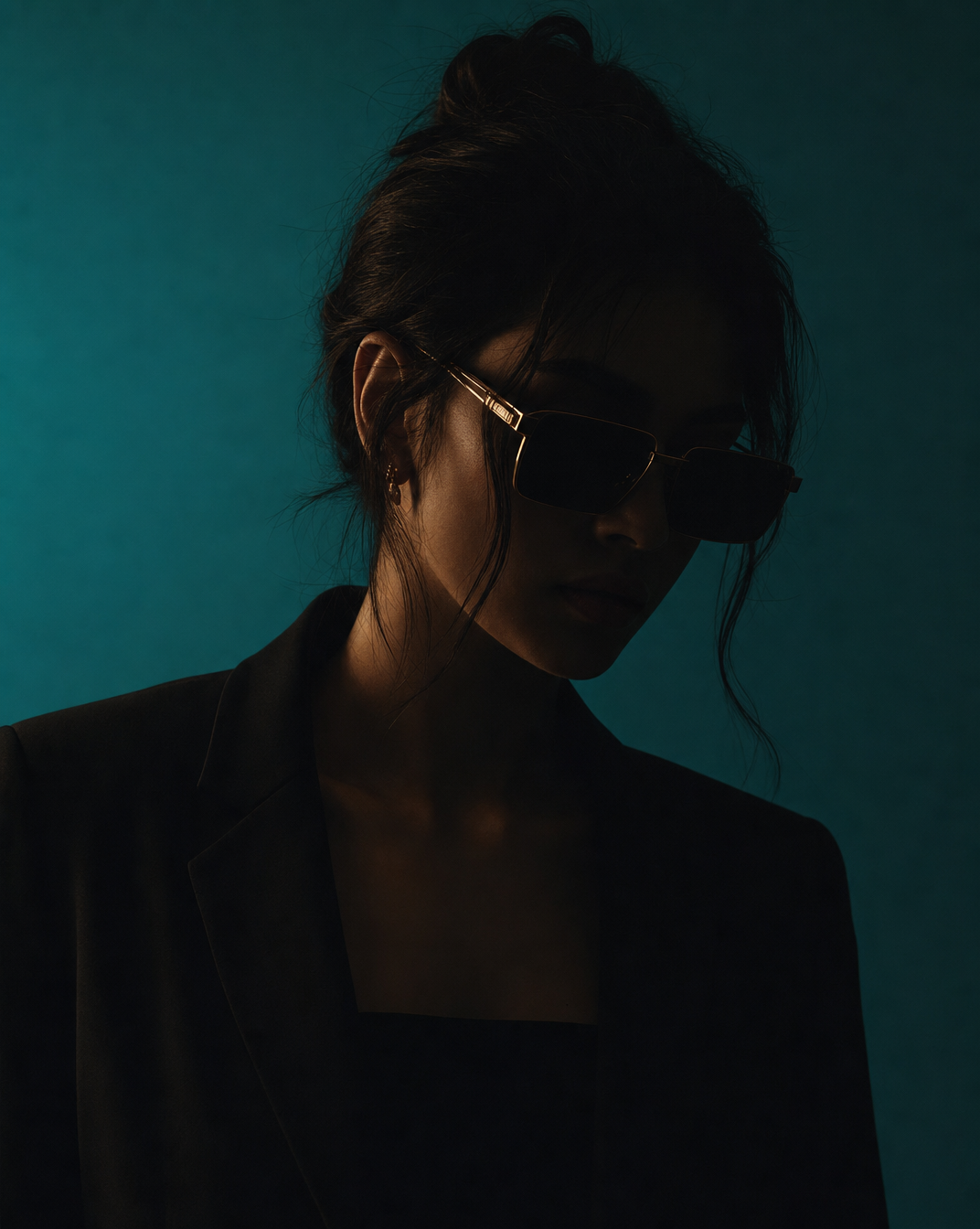
Woman in Teal Light, Shadowed Fashion Portrait
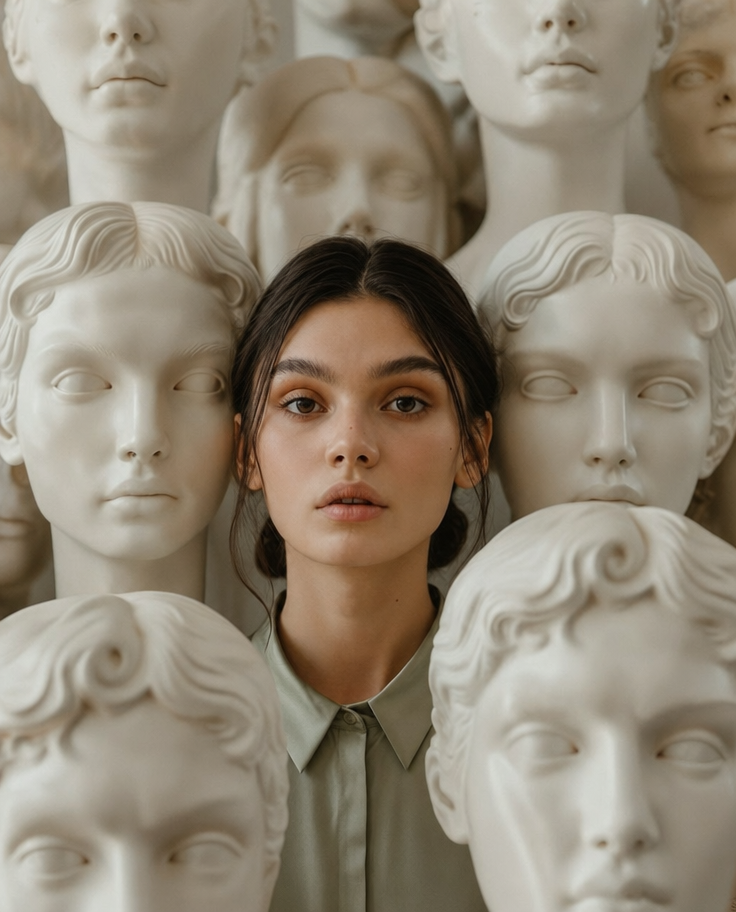
Eerie Elegance Among Marble Busts
Charcoal turtleneck with red eye-beam
Dreamy Macro Portrait in Cool Water