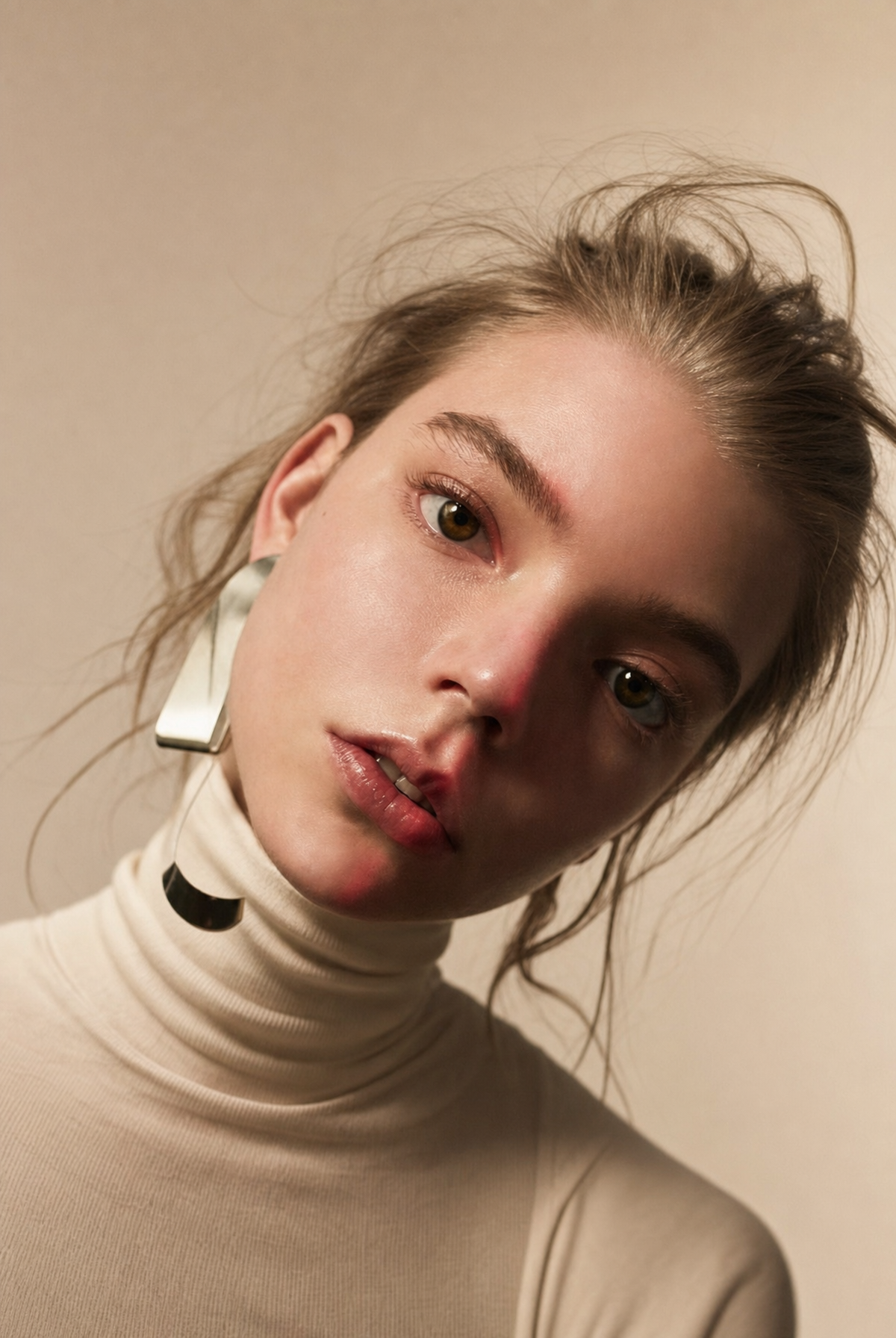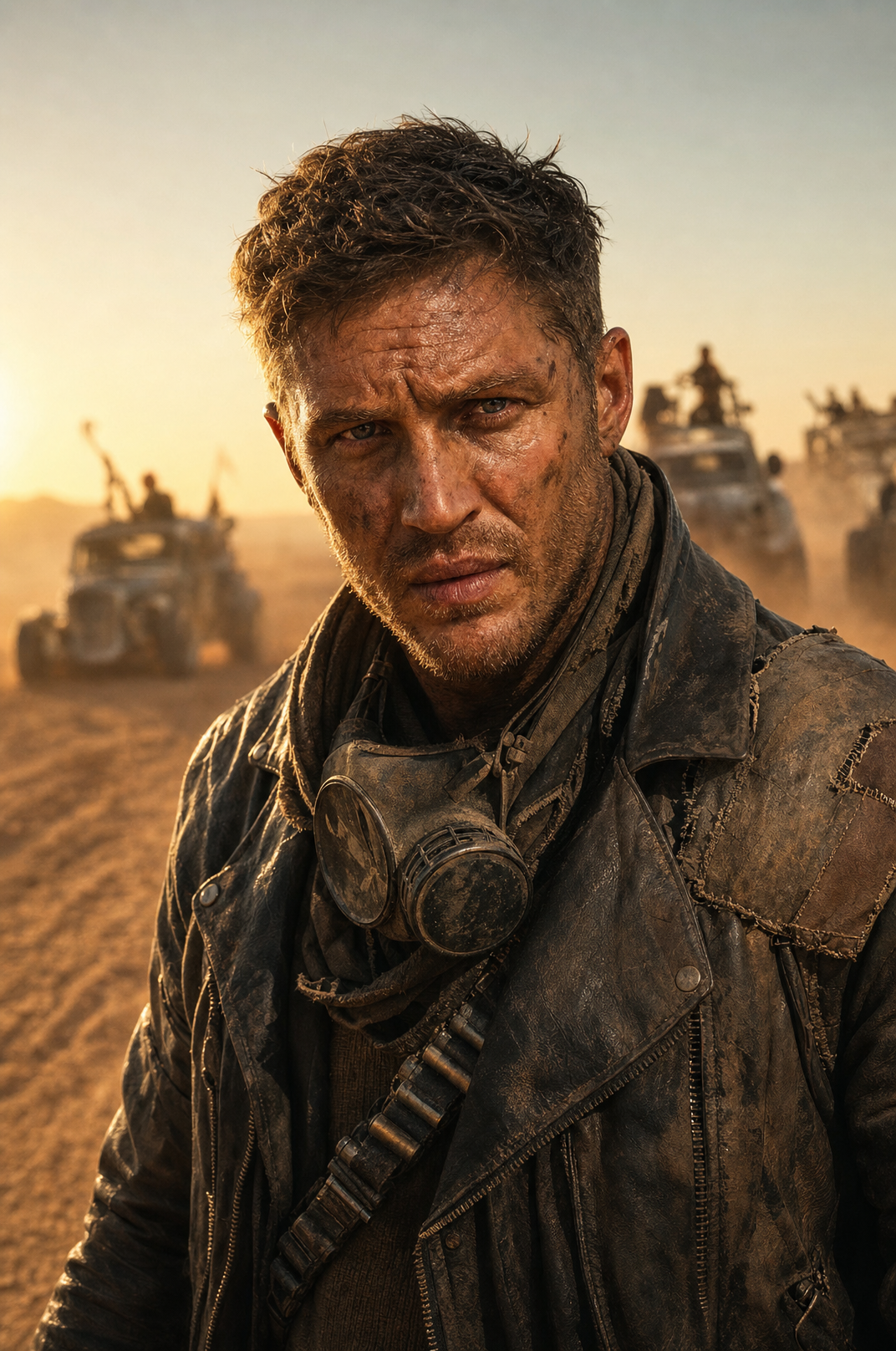
Same prompt, generated with each model separately — click one to see how it holds up.
Why this works
The tight frame and “three-quarter view” make the dirt-smeared face and “intense stare” the visual anchor, while “shallow depth of field” pushes the derelict armored vehicles into atmospheric context rather than competing with him. “Harsh late-afternoon sunlight (lower angle)” supplies the severe survivalist mood through “long shadows” and “stronger rim light along his shoulders,” and the “warm ochres and desaturated browns” produce the tan, gray, and orange harmony visible across the desert and clothing. “Faint heat haze and drifting sand swirl through the foreground” add depth and scale without weakening the portrait’s close composition.
FAQ
→How do I make the respirator mask and bandolier more central in the portrait?
Replace “tight frame” with “medium close-up from chest to head” and add “respirator mask and dusty bandolier prominently centered in the composition.” Keep “three-quarter view,” but change “intense stare” to “eyes directed just past the camera, mask and chest gear equally emphasized” so the equipment receives comparable visual priority.
→How do I change this into a colder, bleak winter-survival scene?
Replace “dusty desert wasteland” with “snow-covered post-apocalyptic industrial wasteland,” “drifting sand” with “windblown snow,” and “warm ochres and desaturated browns” with “desaturated blue-gray and steel-white palette.” Change “harsh late-afternoon sunlight (lower angle)” to “flat overcast winter light with cold rim lighting” while retaining “shallow depth of field” for the same portrait emphasis.
→How do I create a wider cinematic variation that shows more of the ruined convoy?
Replace “tight frame” with “medium-wide environmental portrait” and change “scattered derelict armored vehicles sit far behind him” to “a large derelict armored convoy stretches across the visible desert behind him.” Reduce “shallow depth of field” to “moderate depth of field” so the vehicles remain recognizable, while keeping “three-quarter view” and “low-angle sun” to preserve the original character and rim-light structure.
Learn the technique behind this
- Why can't AI spell, and how do I get readable text in an image? — Older diffusion models had no character-level representation of text, so they produced letterform-shaped texture instead of words.
- How do I keep the same character across multiple images? — Text prompts alone won't hold a face across images — a description defines a type, not a person.
- How should a prompt be structured, and does word order matter? — A prompt that behaves predictably names one subject first, then what it is doing, then where, then the light, then the lens or medium, then the style.
Related prompts
Woman in Teal Light, Shadowed Fashion Portrait
Eerie Elegance Among Marble Busts
Charcoal turtleneck with red eye-beam
Dreamy Macro Portrait in Cool Water