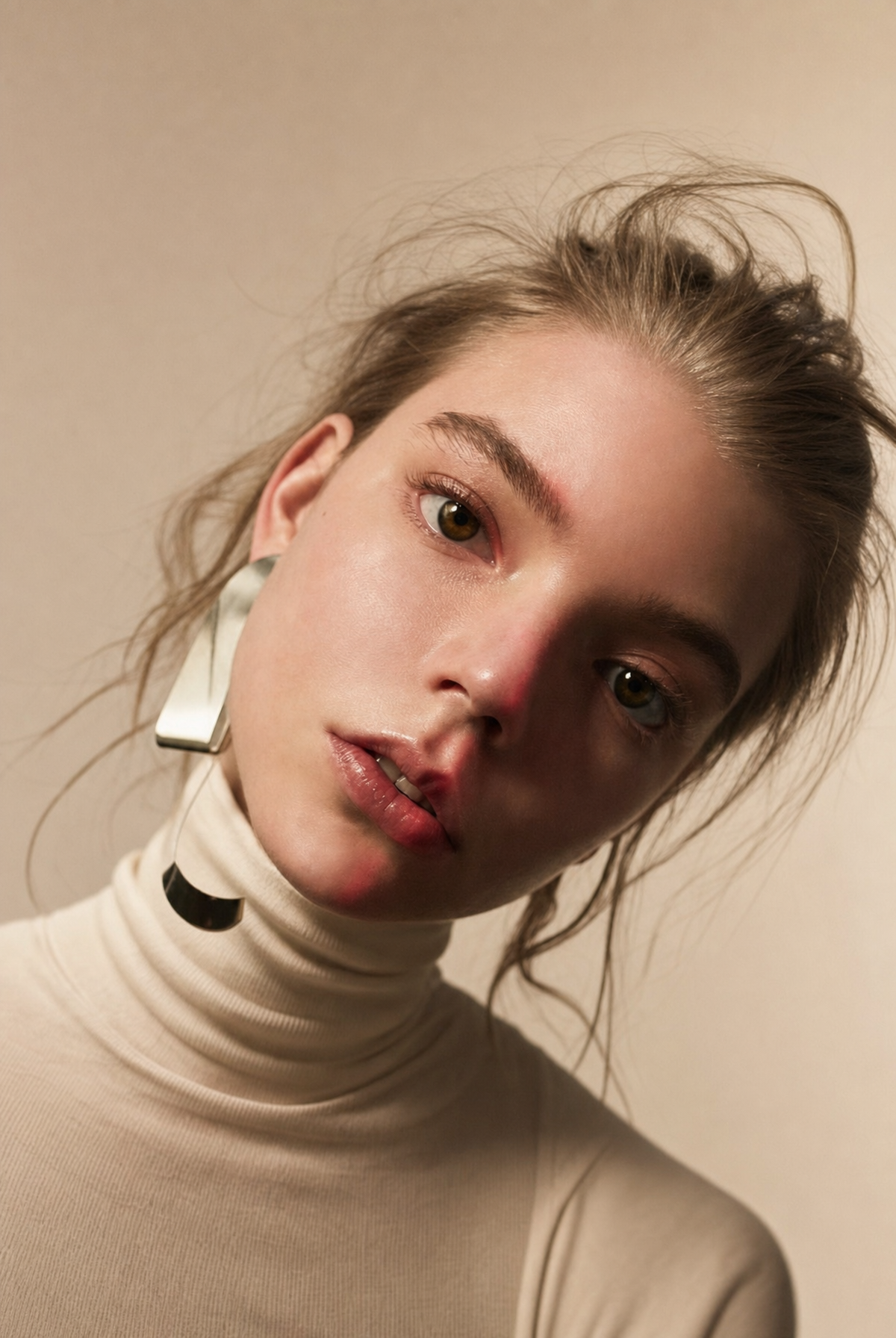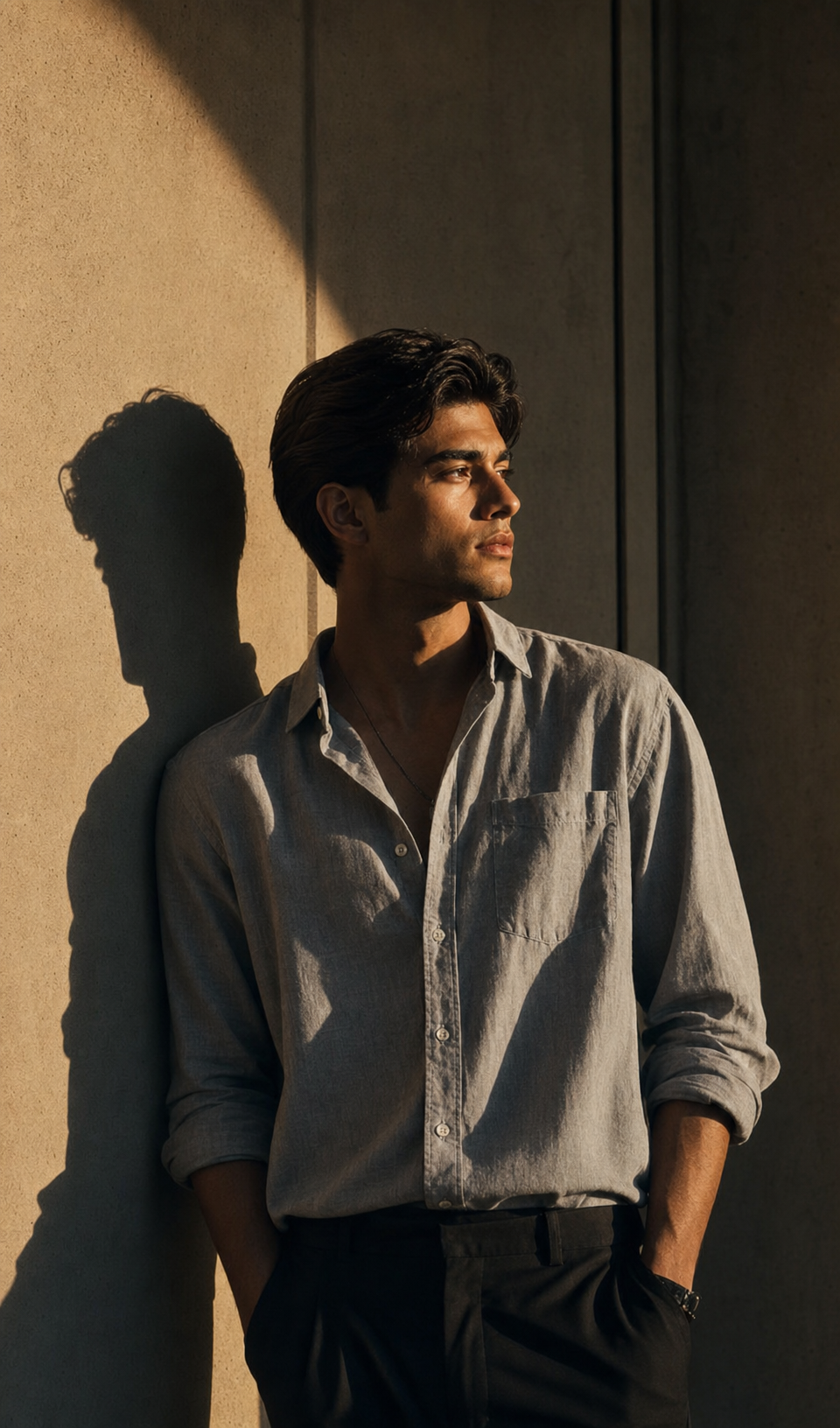
Same prompt, generated with each model separately — click one to see how it holds up.
Why this works
“Vertical framing” and “close framing on the subject and wall texture” give the full-body portrait a narrow editorial structure, while “leaning against a textured wall” supplies a strong vertical plane and tactile background. “Warm late-afternoon sunlight,” combined with “sharper side shadows,” creates the dramatic black-and-tan contrast visible in the image and keeps the mood contemplative rather than bright or casual. “Shallow depth of field” isolates the man from the interior, while “soft film grain” and “cinematic luxury editorial photography” temper the ultra-real detail with a polished analog finish.
FAQ
→How do I make the portrait feel brighter and less brooding?
Replace “moody, contemplative atmosphere” with “optimistic, airy editorial atmosphere,” and change “sharper side shadows” to “soft, diffused window light with gentle fill.” Keep “warm late-afternoon sunlight” if you want to preserve the tan warmth, but add “bright cream and pale gold tones” to reduce the dominant black areas.
→How do I make the textured wall less prominent and the man more central?
Replace “close framing on the subject and wall texture” with “medium close-up framing centered on the man’s face and torso,” and change “leaning against a textured wall” to “standing slightly away from a softly blurred wall.” Add “sharp focus on the eyes and shirt collar” while keeping “shallow depth of field” so the background recedes.
→How do I build a coordinated series from this portrait?
Keep “cinematic luxury editorial photography,” “ultra realistic,” “soft film grain,” “vertical framing,” and “subtle warm color palette” unchanged across every image. Swap only “textured wall interior background” for controlled locations such as “marble hotel corridor,” “dark wood-paneled lounge,” or “sunlit plaster studio,” and replace “light gray button-up shirt” with consistent wardrobe variants such as “cream knit polo” or “black silk shirt.”
Learn the technique behind this
- Why can't AI spell, and how do I get readable text in an image? — Older diffusion models had no character-level representation of text, so they produced letterform-shaped texture instead of words.
- Which aspect ratio should I use, and how does it change the image? — Aspect ratio determines what the model composes, not how it's cropped afterwards.
- How do I keep one consistent style across a whole set of images? — Style consistency is more achievable than character consistency because style lives in describable attributes.
Related prompts
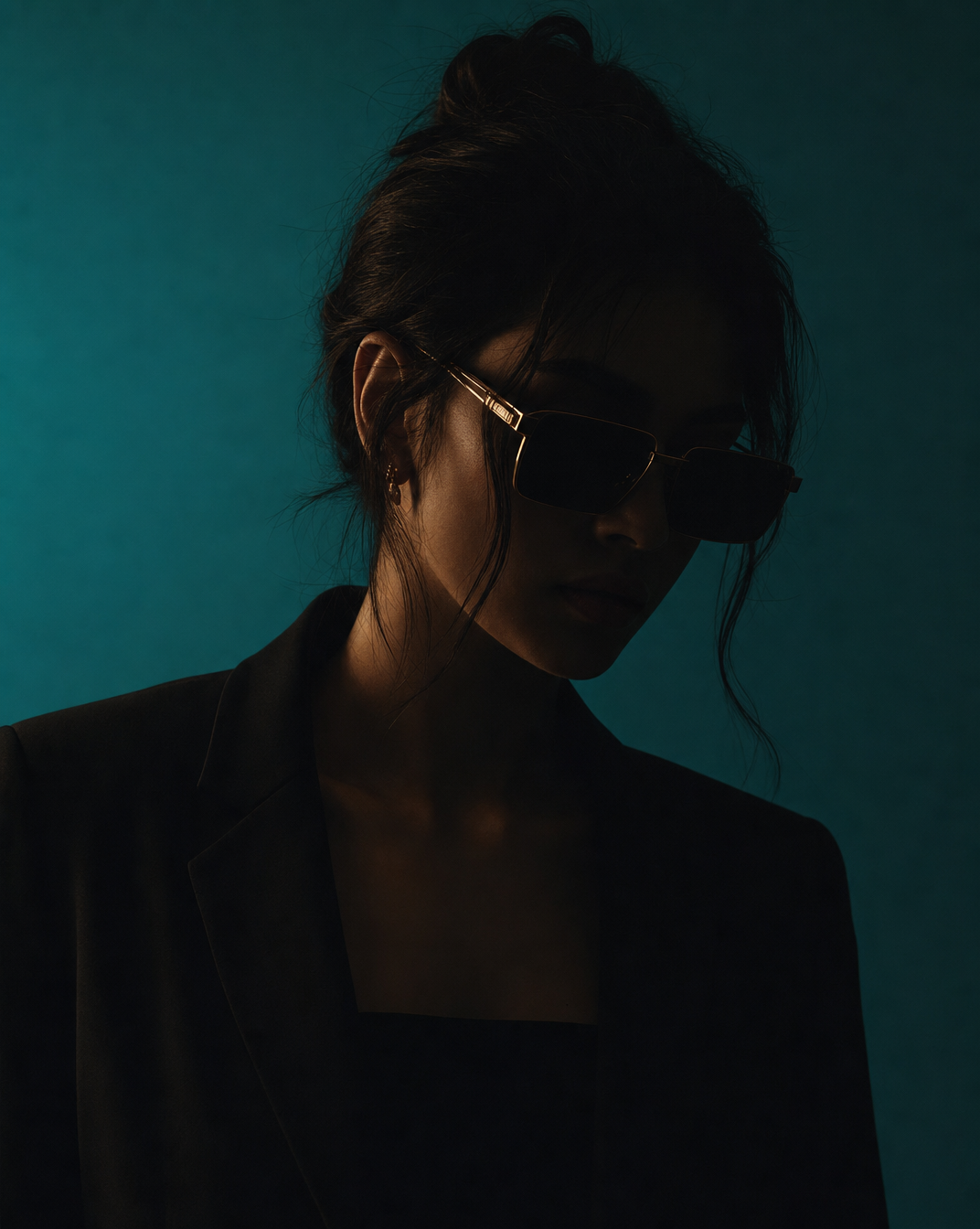
Woman in Teal Light, Shadowed Fashion Portrait
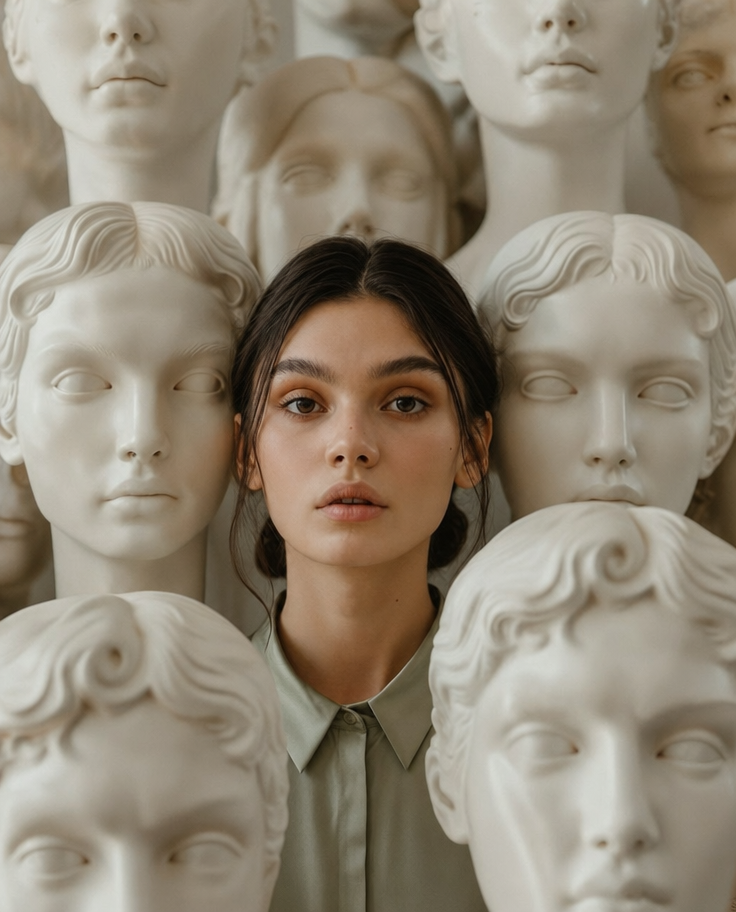
Eerie Elegance Among Marble Busts
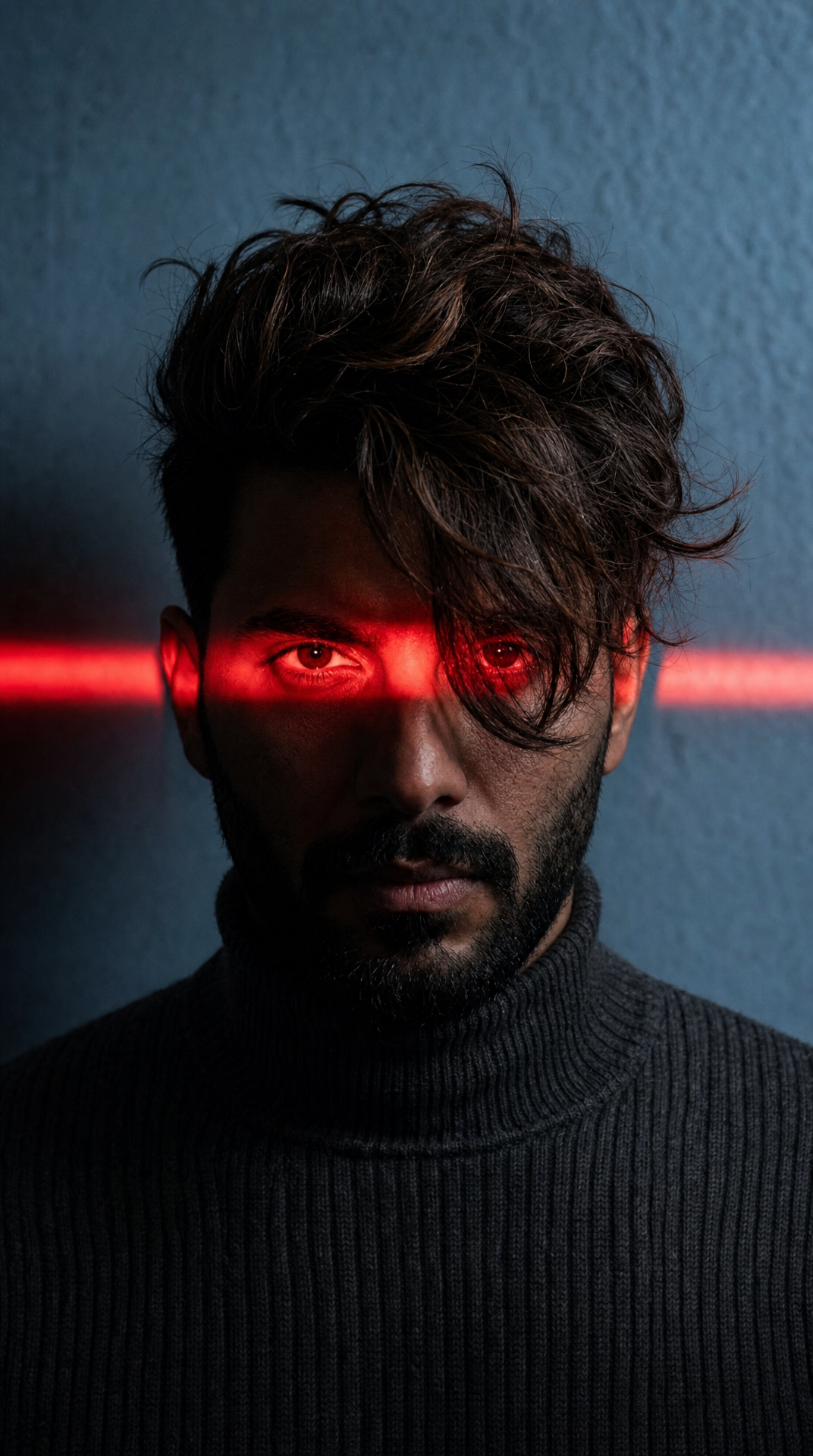
Charcoal turtleneck with red eye-beam
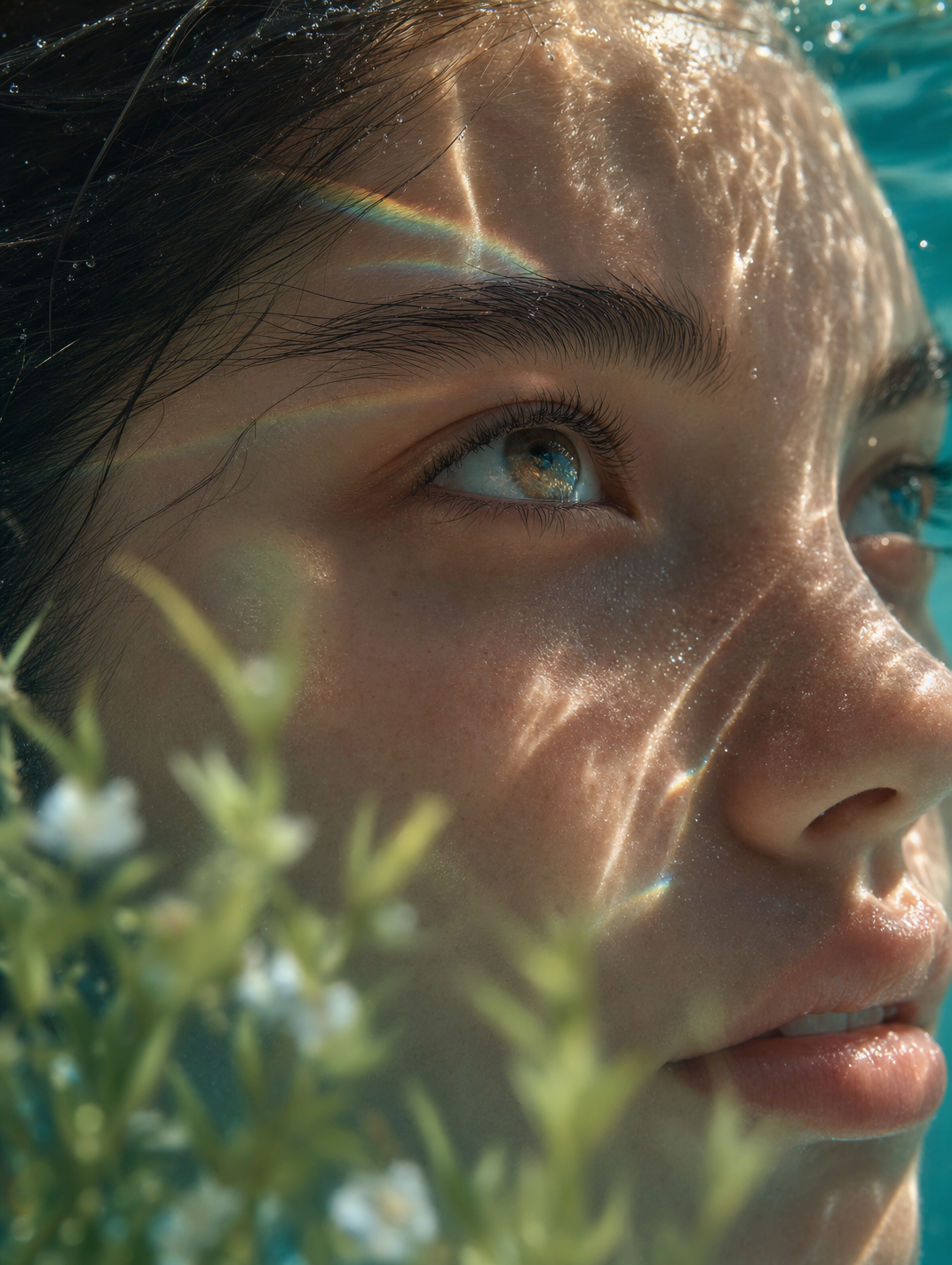
Dreamy Macro Portrait in Cool Water