Why this works
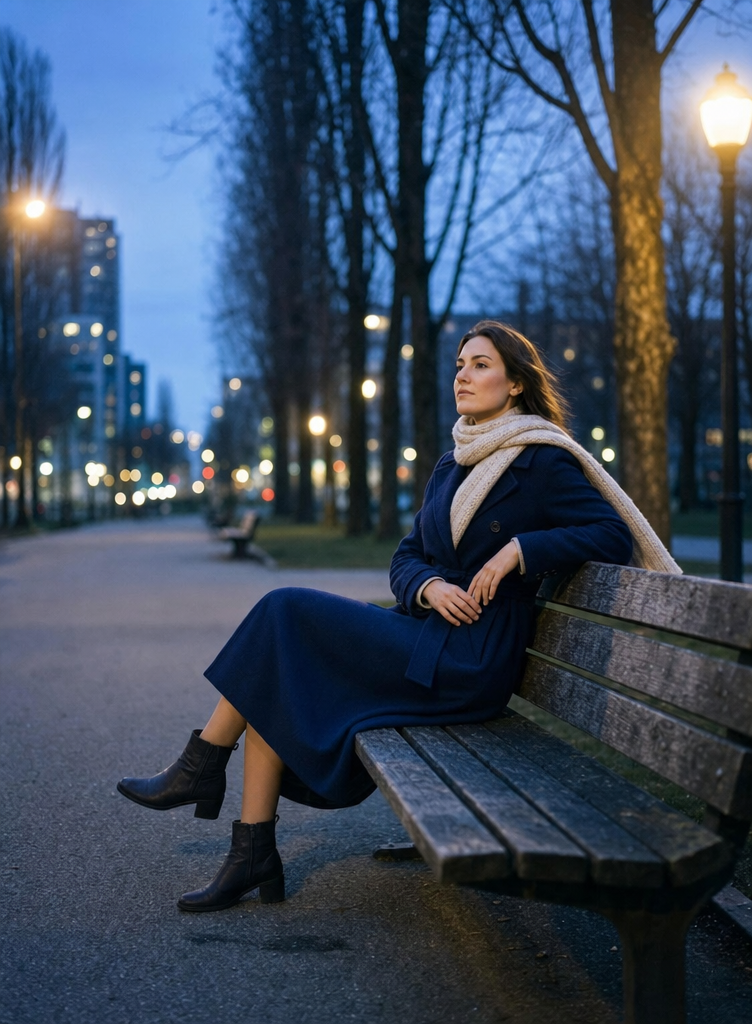
The phrase “stylish woman seated on a weathered wooden park bench” gives the full-body portrait a grounded focal point, while “shallow depth of field” and “blurred city buildings behind her” keep the urban background subordinate. “Deep blue sky transitioning to indigo” paired with “cool ambient dusk light” establishes the calm, moody tone; the “warm streetlamp bokeh” supplies restrained contrast against the dominant black and gray clothing and surroundings. “Calm reflective expression and relaxed elegant pose” carries the emotional read, while “natural skin texture” prevents the cinematic treatment from becoming overly polished or artificial.
FAQ
→How do I make the woman more prominent and visually commanding?
Replace “relaxed elegant pose” with “upright, confident pose with shoulders turned toward camera,” and change “shallow depth of field” to “very shallow depth of field with the woman sharply isolated.” You can also replace “portrait-full-body” with “three-quarter portrait” if you want her expression and coat to occupy more of the frame.
→How do I shift this from moody twilight to a warmer, more hopeful tone?
Replace “deep blue sky transitioning to indigo” and “cool ambient dusk light” with “soft rose-gold sunset sky and warm late-evening light.” Change “moody yet balanced color contrast” to “warm, luminous color harmony,” while keeping “gentle light scatter” to preserve the distant urban glow.
→How do I create a series with different city-park variations?
Keep the subject, wardrobe, and camera phrases unchanged, then swap “tree-lined city park” for settings such as “rain-darkened riverside promenade,” “quiet botanical garden beside glass office towers,” or “snow-dusted plaza with bare trees.” Match each variation with a lighting replacement such as “soft overcast morning light,” “golden-hour backlight,” or “cool blue-hour light with reflected window glow.”
Learn the technique behind this
- Why can't AI spell, and how do I get readable text in an image? — Older diffusion models had no character-level representation of text, so they produced letterform-shaped texture instead of words.
- How should a prompt be structured, and does word order matter? — A prompt that behaves predictably names one subject first, then what it is doing, then where, then the light, then the lens or medium, then the style.
- Why does AI get hands and faces wrong, and how do I fix it? — Hands fail because they're small in frame, extremely variable in pose, and self-occluding — the model has less usable signal per pixel than for any other body part.
Related prompts
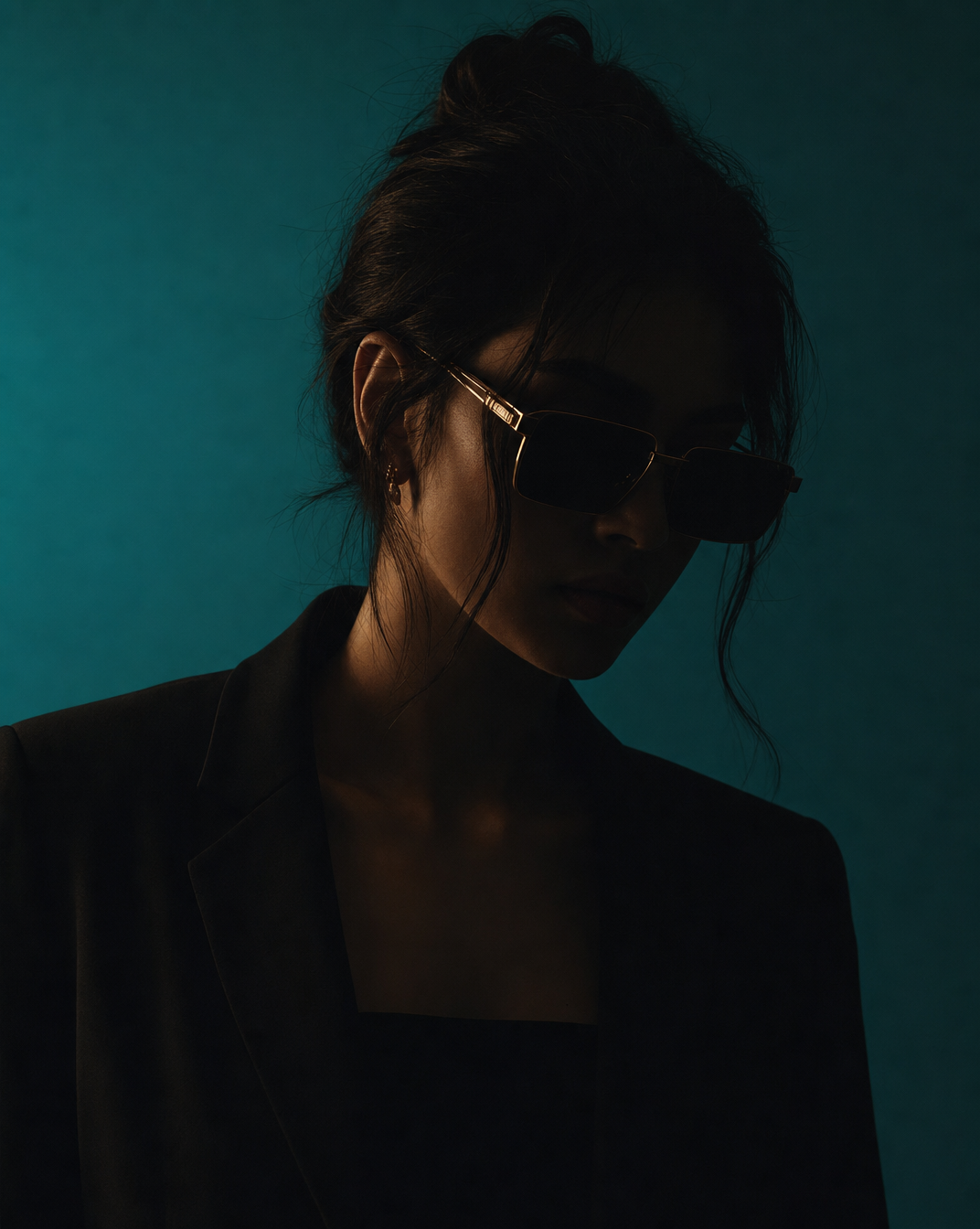
Woman in Teal Light, Shadowed Fashion Portrait
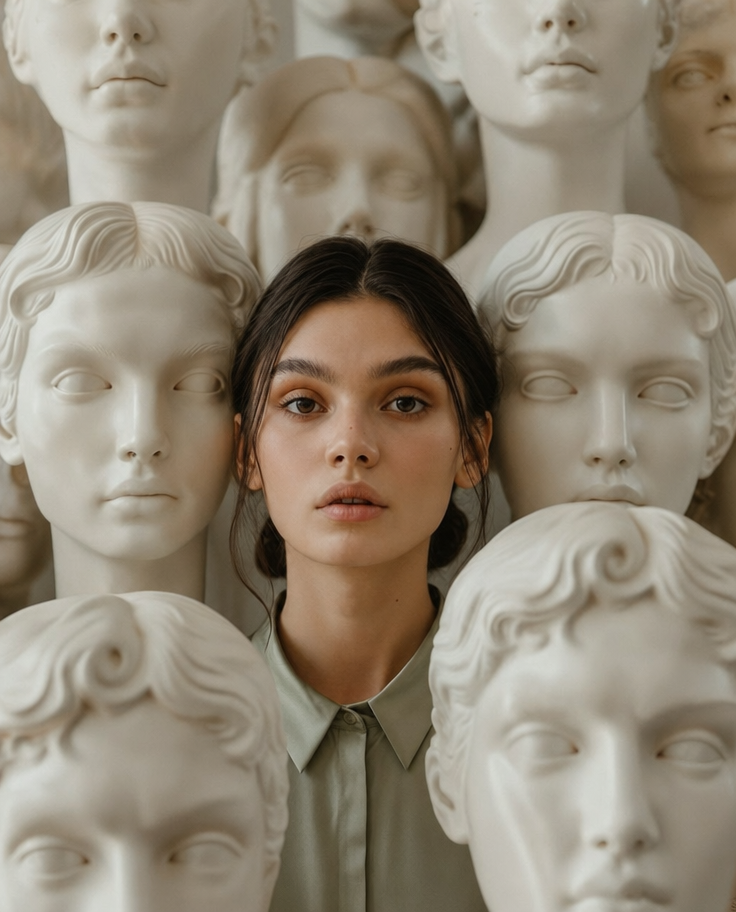
Eerie Elegance Among Marble Busts
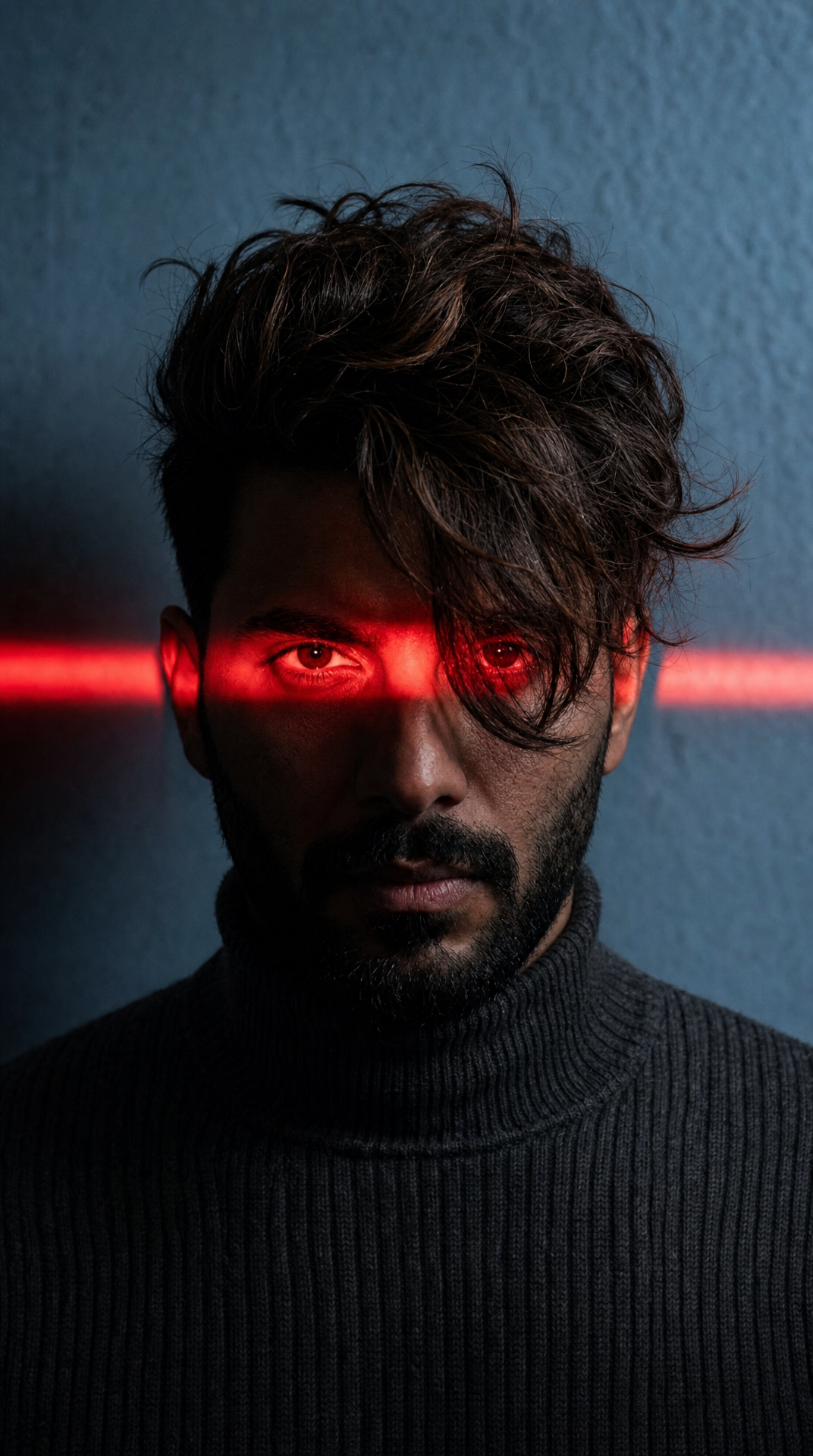
Charcoal turtleneck with red eye-beam
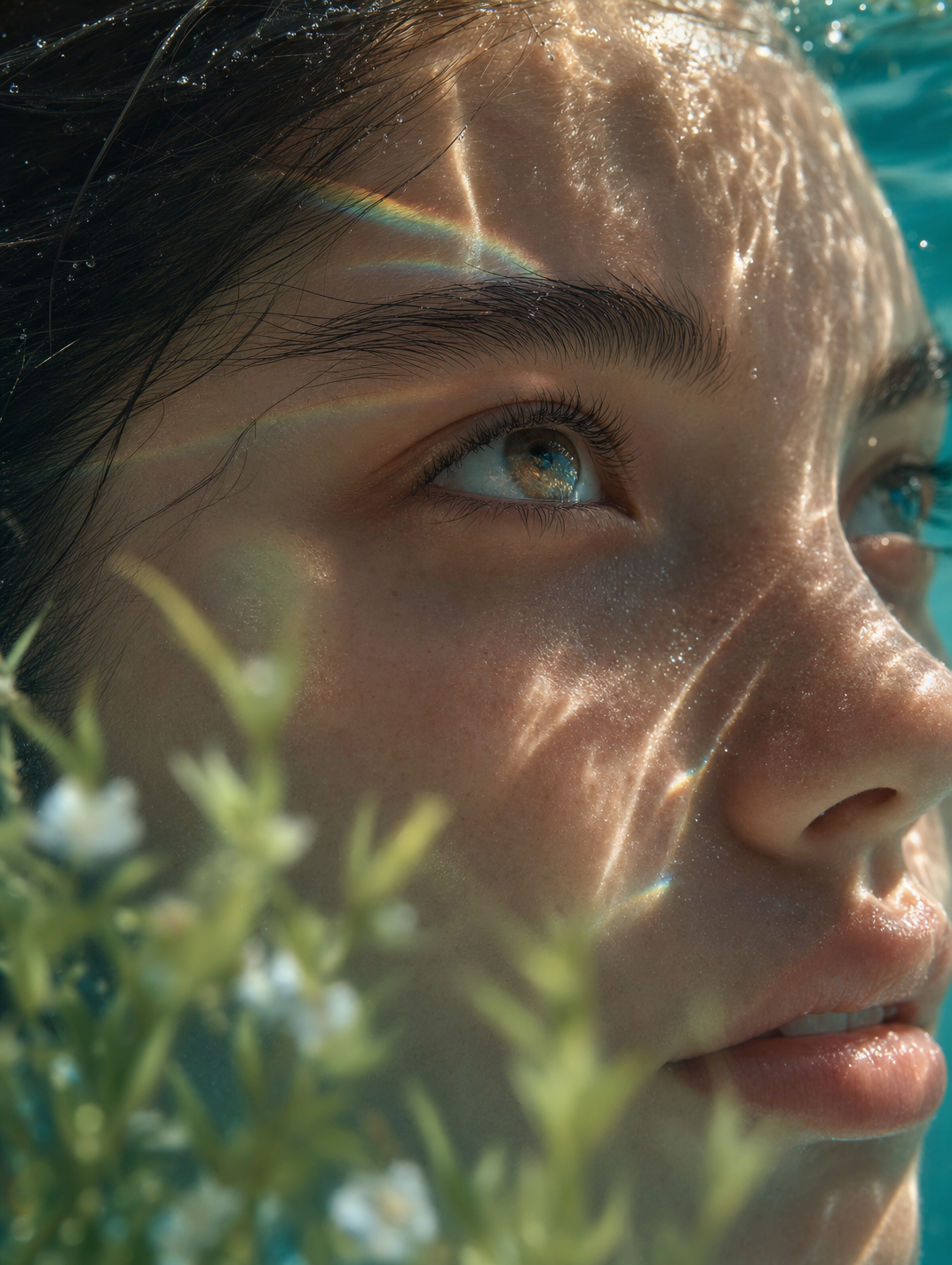
Dreamy Macro Portrait in Cool Water