Why this works
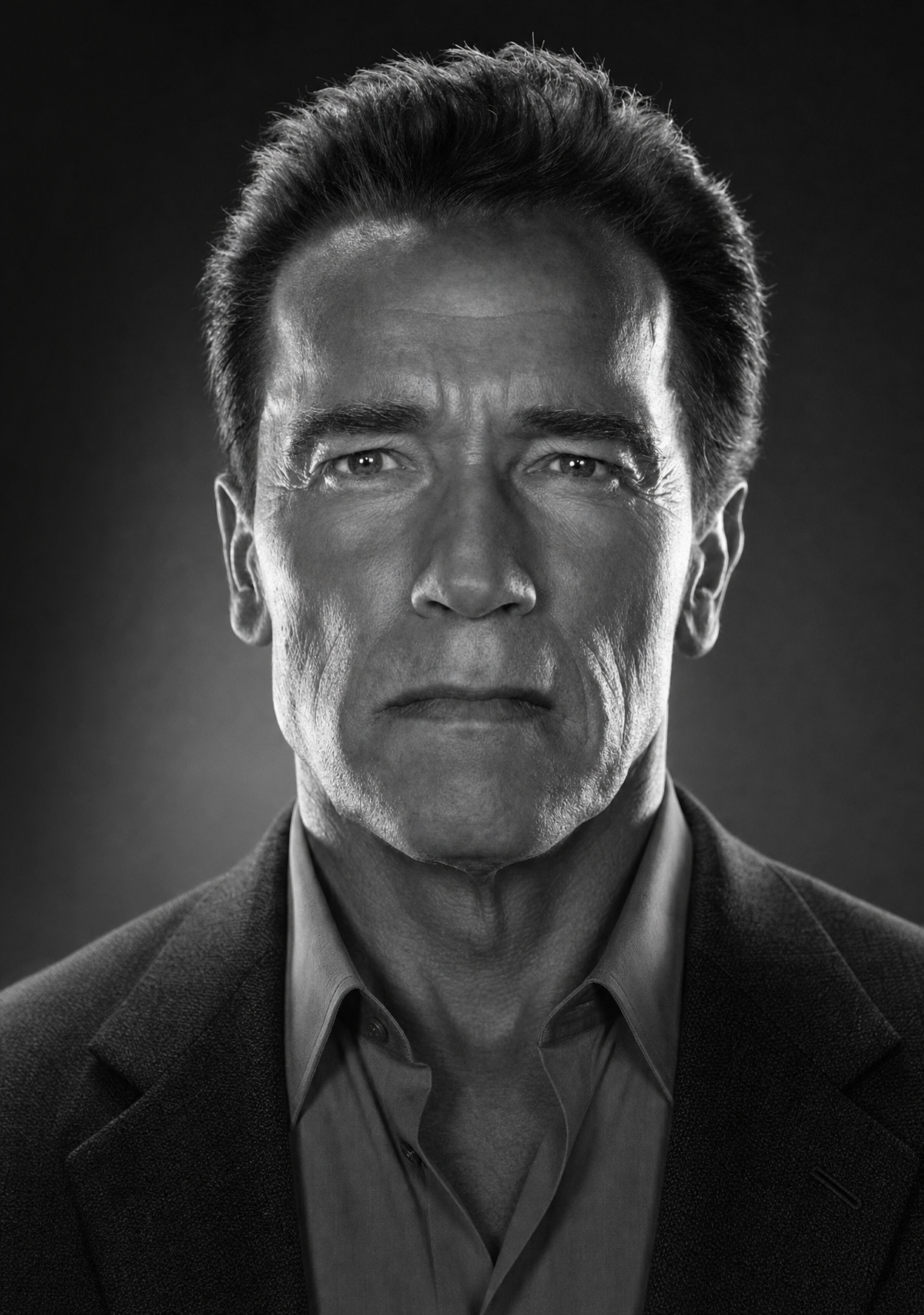
The close-up head-and-shoulders framing and front-facing pose make the stern expression and sharp facial detail the visual center, while “dramatic side lighting from a single softbox” carves the face into bright planes and deeper shadows. “Black-and-white,” “higher contrast with deeper shadows,” and the “smooth dark neutral background” restrict the palette toward black and gray, producing a severe, concentrated mood without distracting color. The charcoal blazer and open-collar shirt preserve a formal portrait structure while the phrase “instead of a dark suit” keeps the subject from reading as overly uniform or ceremonial.
FAQ
→How do I make the expression feel more restrained and authoritative instead of aggressive?
Replace “stern, intense expression” with “calm, controlled, authoritative expression” and change “higher contrast with deeper shadows” to “moderate contrast with controlled shadows.” Keep “front-facing” and “close-up head-and-shoulders framing” so the eyes and facial control remain central.
→How do I make the blazer and open collar more prominent?
Replace “close-up head-and-shoulders framing” with “medium close-up from mid-chest upward” and add “charcoal blazer and open-collar shirt clearly visible.” Keep “no tie,” but change “smooth dark neutral background” to “slightly lighter gray studio background” so the clothing separates from the backdrop.
→How do I build a brighter variation while keeping the same portrait identity?
Replace “black-and-white” and “dark neutral background” with “warm monochrome sepia” and “soft light-gray studio background.” Change “dramatic side lighting from a single softbox” to “large softbox lighting positioned near the camera with gentle fill,” while retaining “middle-aged man,” “front-facing,” and “sharp facial detail.”
Learn the technique behind this
- Why can't AI spell, and how do I get readable text in an image? — Older diffusion models had no character-level representation of text, so they produced letterform-shaped texture instead of words.
- How should a prompt be structured, and does word order matter? — A prompt that behaves predictably names one subject first, then what it is doing, then where, then the light, then the lens or medium, then the style.
- Which aspect ratio should I use, and how does it change the image? — Aspect ratio determines what the model composes, not how it's cropped afterwards.
Related prompts
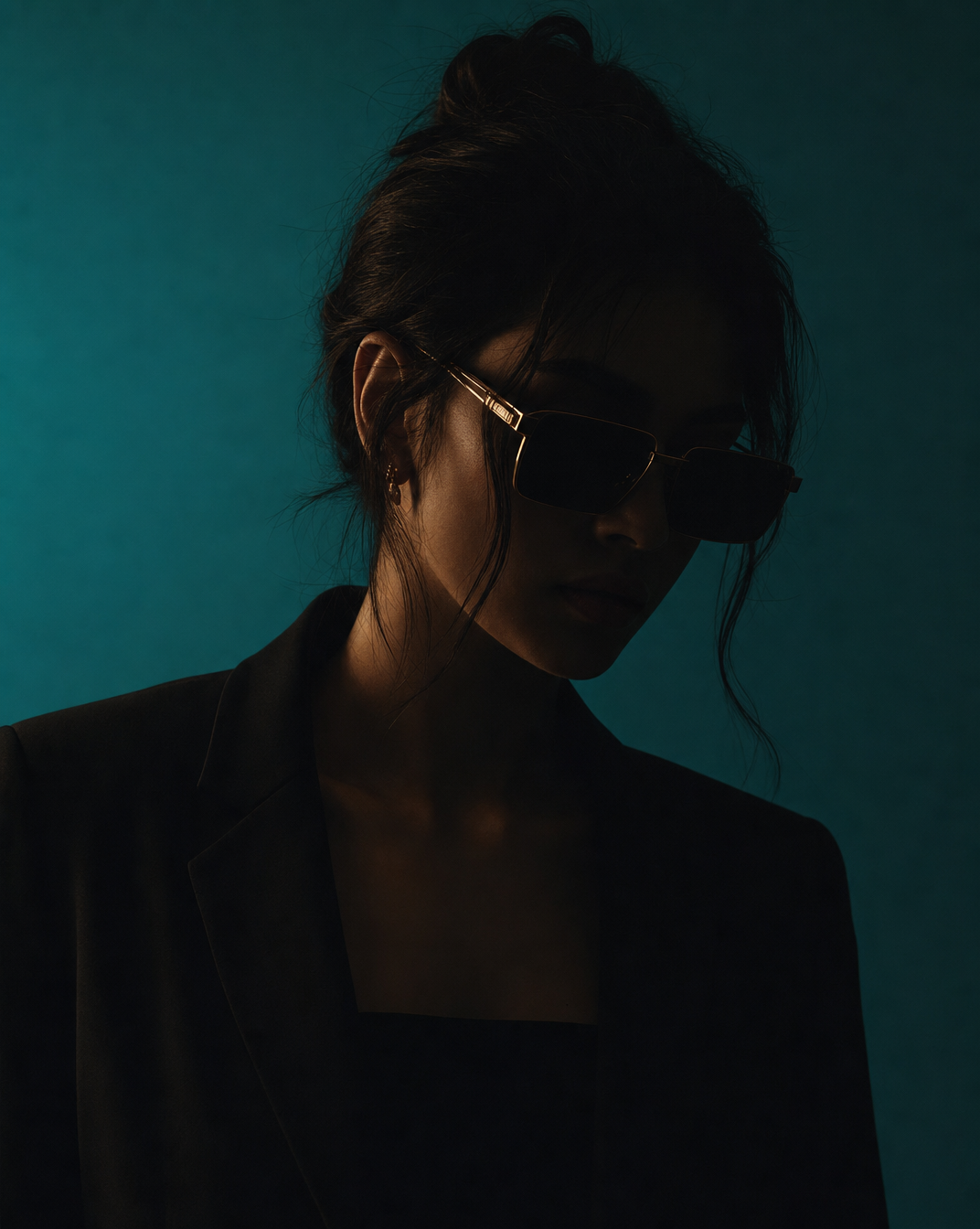
Woman in Teal Light, Shadowed Fashion Portrait
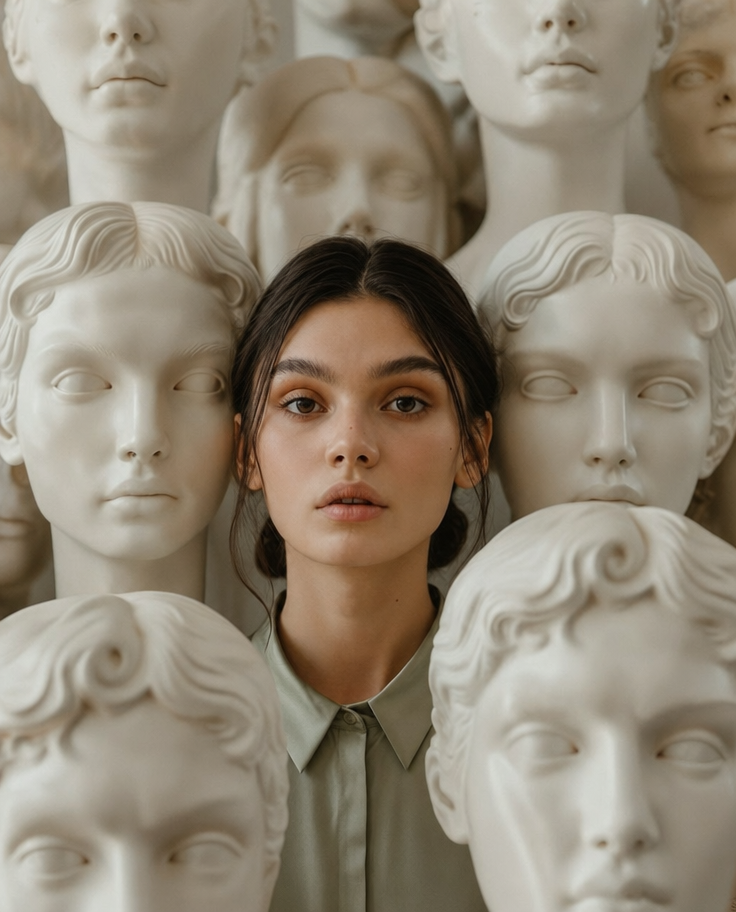
Eerie Elegance Among Marble Busts
Charcoal turtleneck with red eye-beam
Dreamy Macro Portrait in Cool Water