Why this works
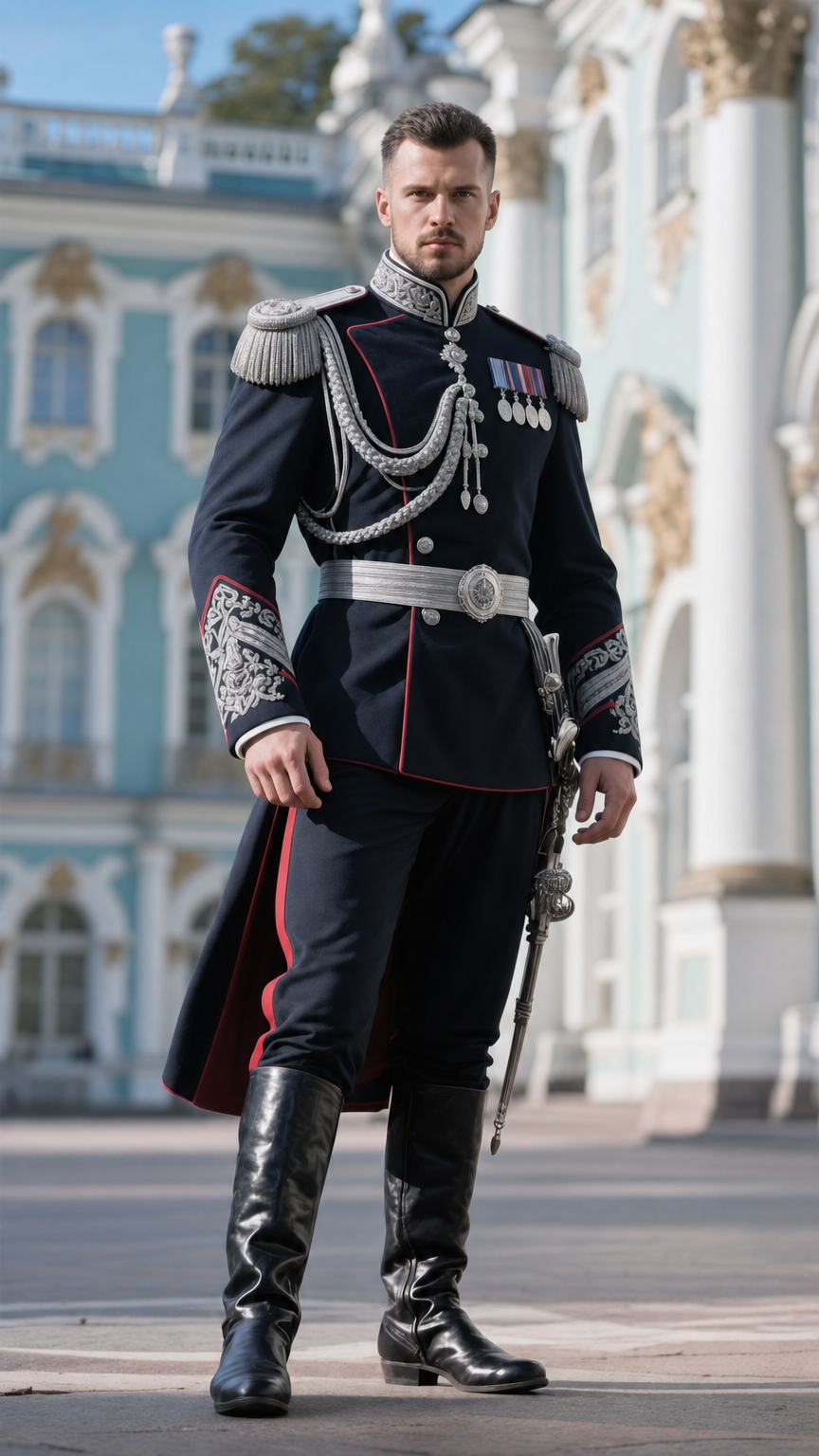
The phrase “full-body photorealistic cinematic portrait” establishes the vertical, formal framing, while “regal composition” gives the centered figure an authoritative presentation. “Ornate dark imperial military uniform with silver epaulettes” concentrates the gray, navy, and white palette on the subject, and “an elegant pastel palace” supplies a restrained lighter background contrast. “Soft morning daylight,” “cooler color palette,” and “natural shadows” produce the controlled formal mood, while “shallow depth of field” keeps the man and his “sharp facial detail and fabric texture” more prominent than the palace.
FAQ
→How do I make the ceremonial sword and medals more visually prominent?
Replace “ribbon-like medals” and “a ceremonial sword” with “large polished medals catching the light and an ornate ceremonial sword held prominently across the body,” then add “medium full-body framing with the sword and medals in the foreground.” This reduces the distance implied by the original full-body portrait while preserving the uniform’s formal authority.
→How do I change the formal imperial mood into a darker, more dramatic tone?
Replace “soft morning daylight” with “dramatic overcast side-lighting,” change “cooler color palette” to “deep charcoal, black, and muted crimson tones,” and replace “natural shadows” with “long, high-contrast shadows.” Keep “stern man” and “regal composition” to retain the authoritative character while making the atmosphere more severe.
→How do I turn this into a consistent series with different rulers or locations?
Keep the fixed structure “full-body photorealistic cinematic portrait,” “regal composition,” and “sharp facial detail and fabric texture,” then swap the subject block and setting block together. For example, replace the uniform description with “stern woman in an ivory naval dress uniform with gold braiding and a ceremonial staff,” and replace “elegant pastel palace” with “misty coastal fortress at dawn,” while preserving “soft morning daylight” and “cooler color palette” for visual continuity.
Learn the technique behind this
- Why can't AI spell, and how do I get readable text in an image? — Older diffusion models had no character-level representation of text, so they produced letterform-shaped texture instead of words.
- How should a prompt be structured, and does word order matter? — A prompt that behaves predictably names one subject first, then what it is doing, then where, then the light, then the lens or medium, then the style.
- Which aspect ratio should I use, and how does it change the image? — Aspect ratio determines what the model composes, not how it's cropped afterwards.
Related prompts
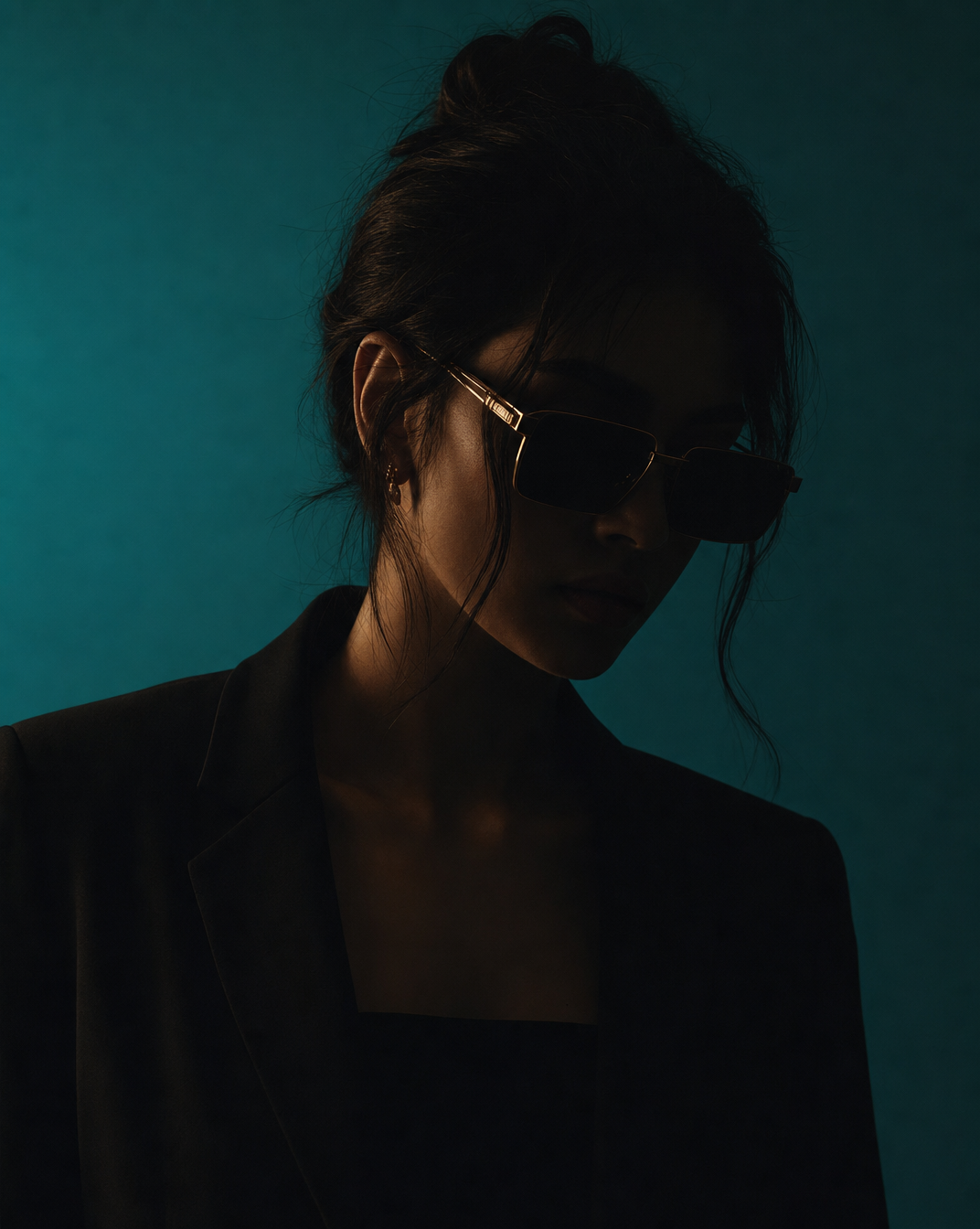
Woman in Teal Light, Shadowed Fashion Portrait
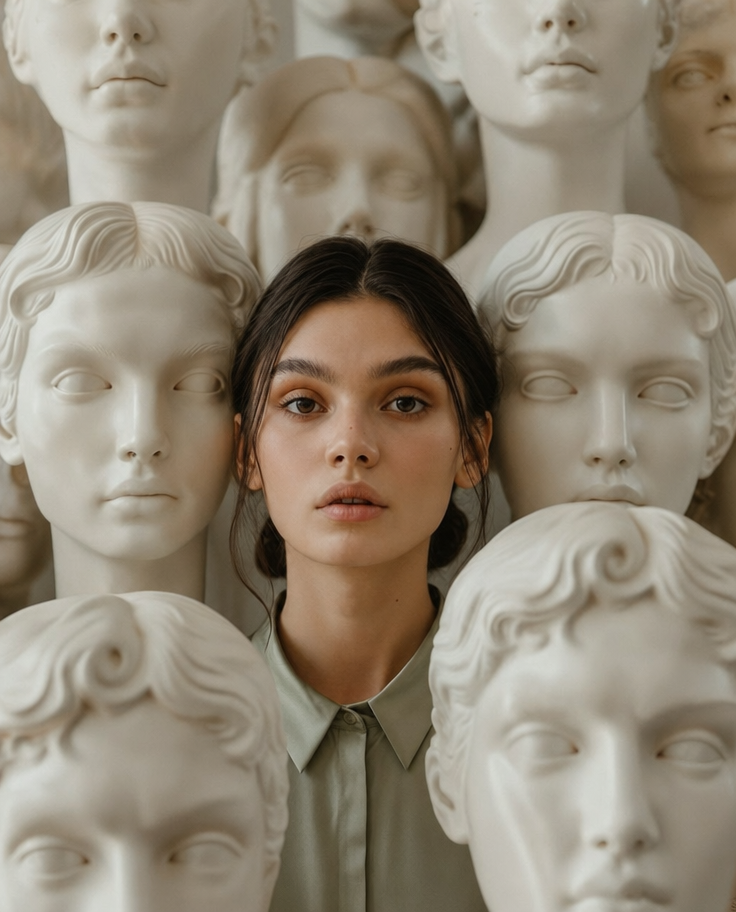
Eerie Elegance Among Marble Busts
Charcoal turtleneck with red eye-beam
Dreamy Macro Portrait in Cool Water