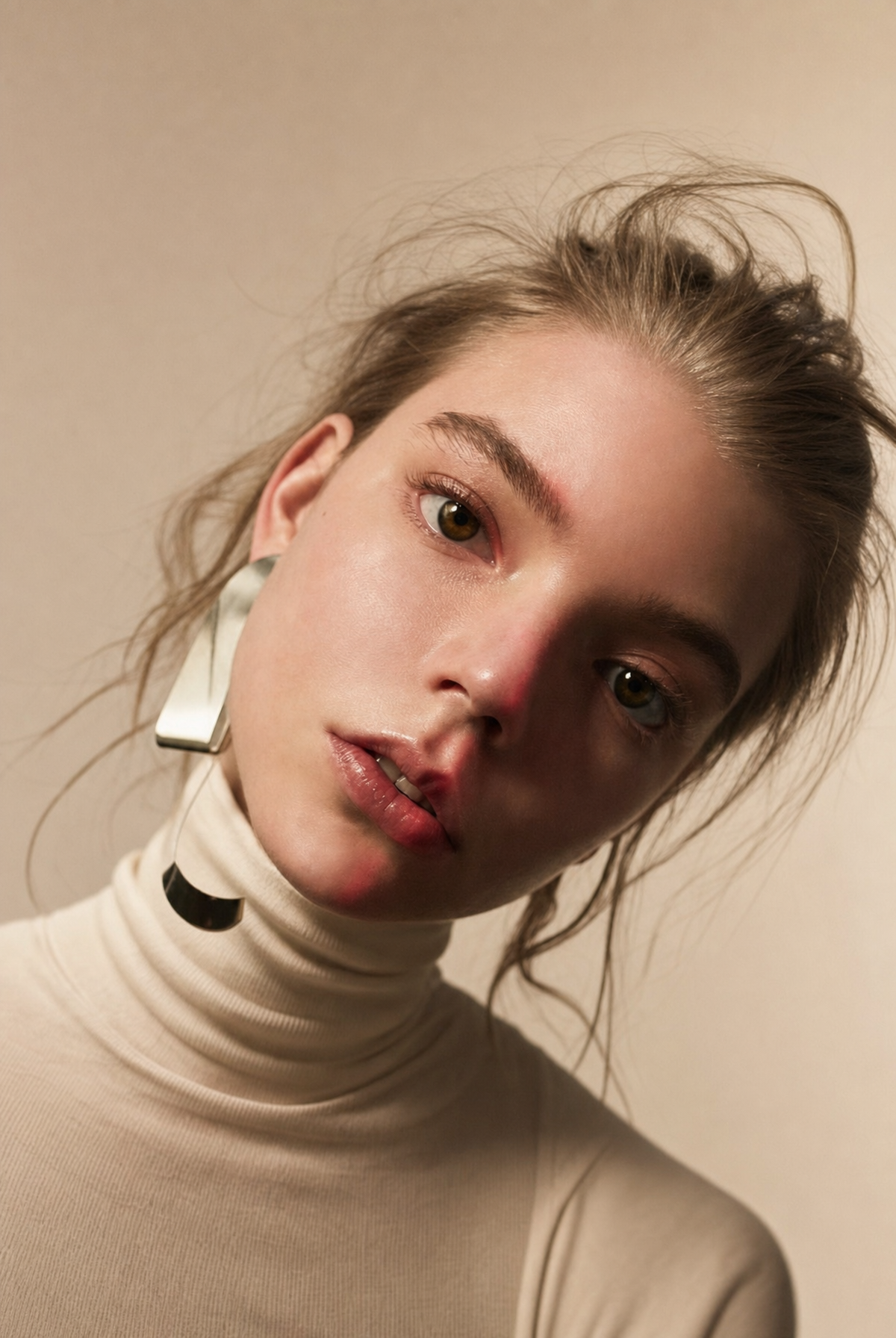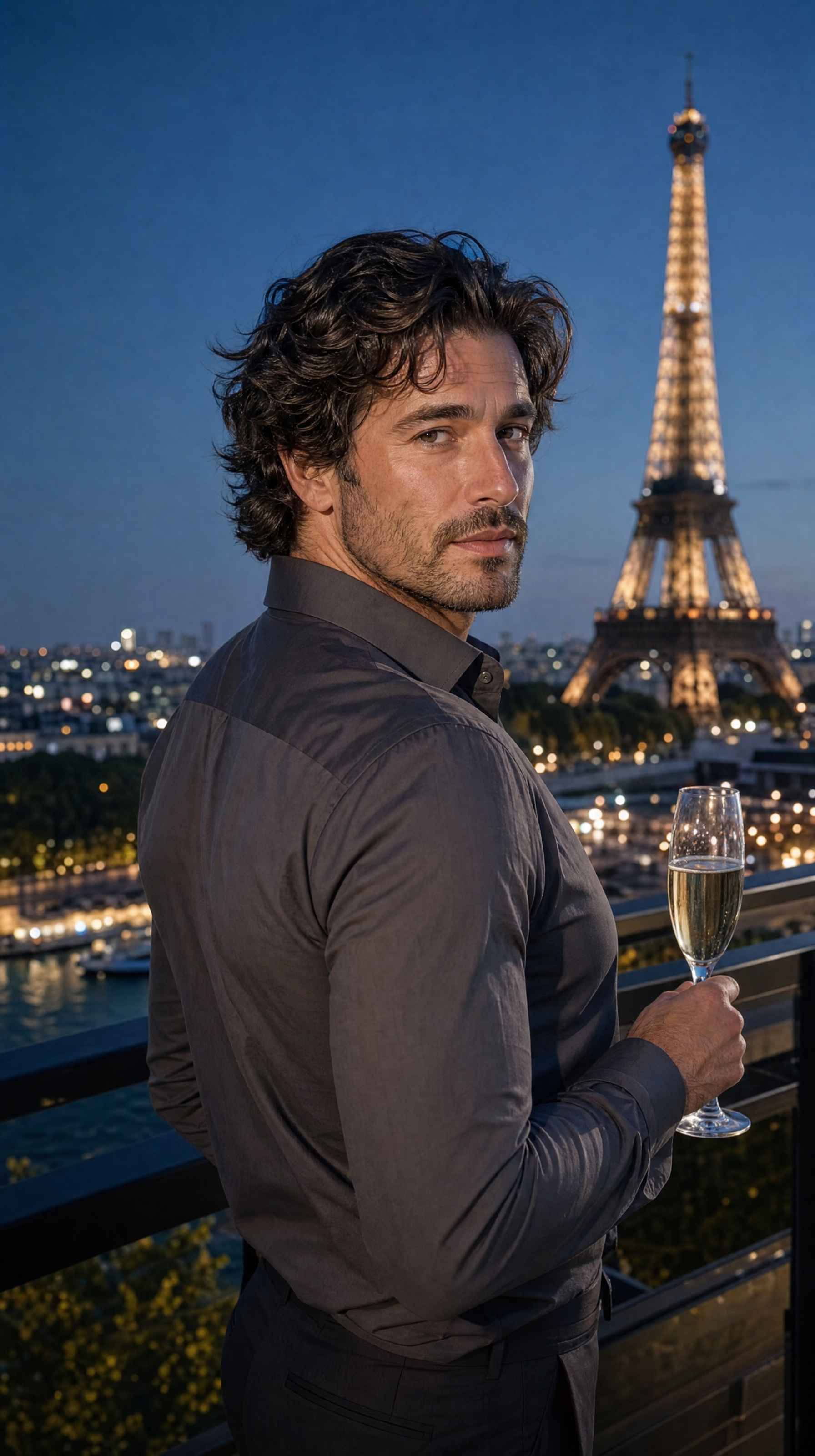
Same prompt, generated with each model separately — click one to see how it holds up.
Why this works
The blue-and-gold color split in the final image comes straight from 'cool-toned shadows mixed with distant city lights' - that phrase is doing double duty, setting both the palette and the light-source logic before chiaroscuro even enters the picture. 'Gaze directed over his shoulder toward the cityscape' is the load-bearing line for composition: it's why the Eiffel Tower reads as a destination for the eye rather than just wallpaper behind the subject. 'Body angled toward the camera' combined with 'waist-up half-body shot' is what keeps the man large in frame despite the sweeping backdrop, so the balcony gets scale without swallowing the subject. And 'sharp focus on skin texture and fabric' next to 'realistic film grain' is the pairing that stops the moody lighting from flattening into a generic silhouette - you still get pores and shirt weave under all that blue hour drama.
FAQ
→How do I make the Eiffel Tower and cityscape more prominent instead of the man dominating the frame?
Swap 'Waist-up half-body shot' for something like 'Wide environmental portrait, man small in frame against the skyline' and change 'Body angled toward the camera' to 'Body turned away, gazing out over the railing.' That shifts weight off the subject and lets the Eiffel Tower and city lights carry the composition.
→How do I push this toward a warmer, golden-hour mood instead of the cool blue-hour tone?
Replace 'blue hour' and 'cool-toned shadows mixed with distant city lights' with 'golden hour, warm amber light spilling across the balcony' and drop 'chiaroscuro lighting' in favor of 'soft warm backlighting.' Keep 'twilight atmosphere' out entirely or it'll fight the warm palette you're going for.
→How do I turn this into a series with different subjects but the same visual DNA?
Keep 'high-floor balcony overlooking Paris and the Eiffel Tower during blue hour' and 'dramatic moody lighting, cool-toned shadows mixed with distant city lights' fixed as your anchor phrases, then just cycle the subject line - swap 'elegant mature man with dark wavy hair and a light beard' for something like 'a young woman in a red silk robe' or 'an older woman in a fur-trimmed coat.' The lighting and setting language is what ties the series together visually.
Learn the technique behind this
- Why can't AI spell, and how do I get readable text in an image? — Older diffusion models had no character-level representation of text, so they produced letterform-shaped texture instead of words.
- Which aspect ratio should I use, and how does it change the image? — Aspect ratio determines what the model composes, not how it's cropped afterwards.
- How should a prompt be structured, and does word order matter? — A prompt that behaves predictably names one subject first, then what it is doing, then where, then the light, then the lens or medium, then the style.
Related prompts
Woman in Teal Light, Shadowed Fashion Portrait
Eerie Elegance Among Marble Busts
Charcoal turtleneck with red eye-beam
Dreamy Macro Portrait in Cool Water