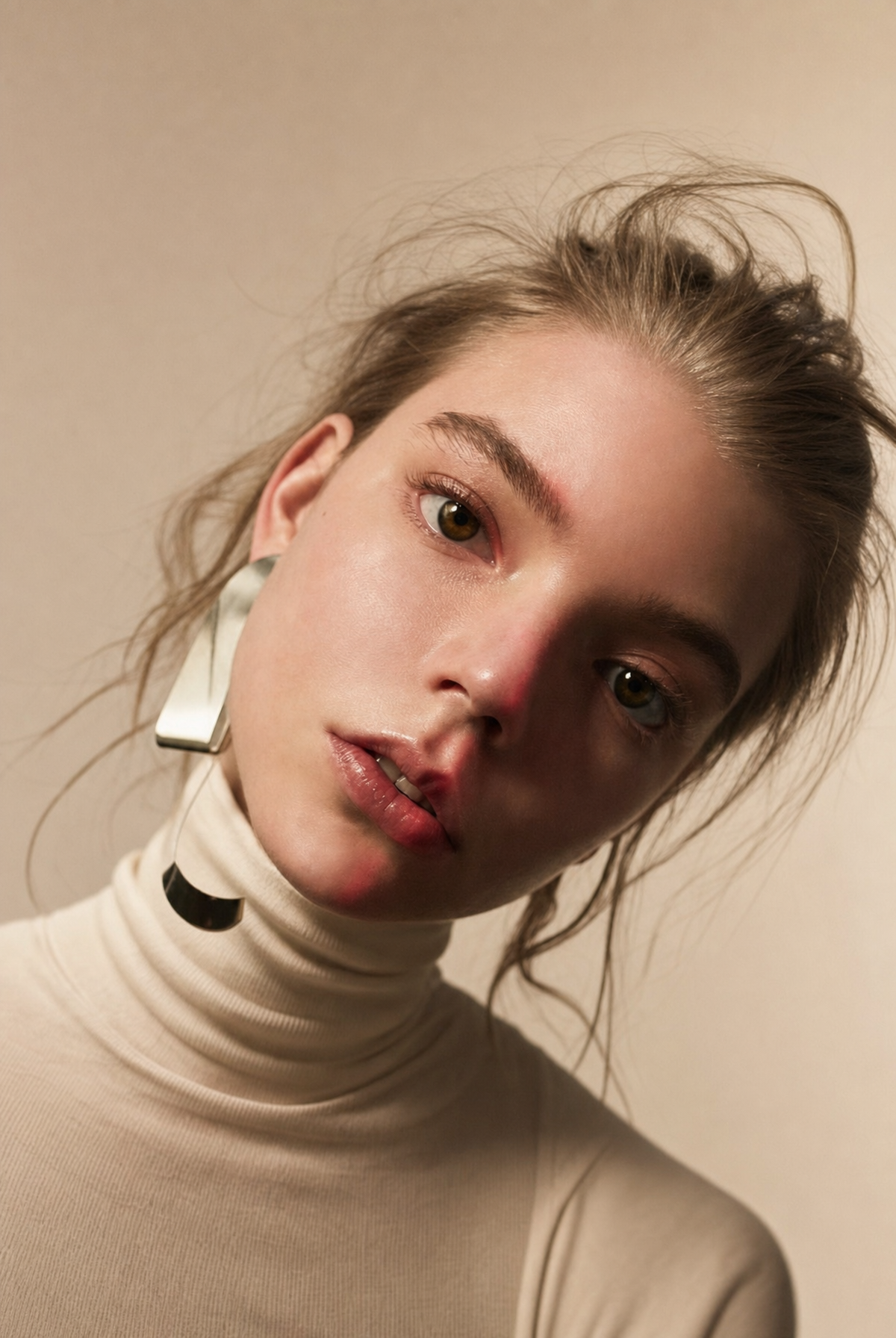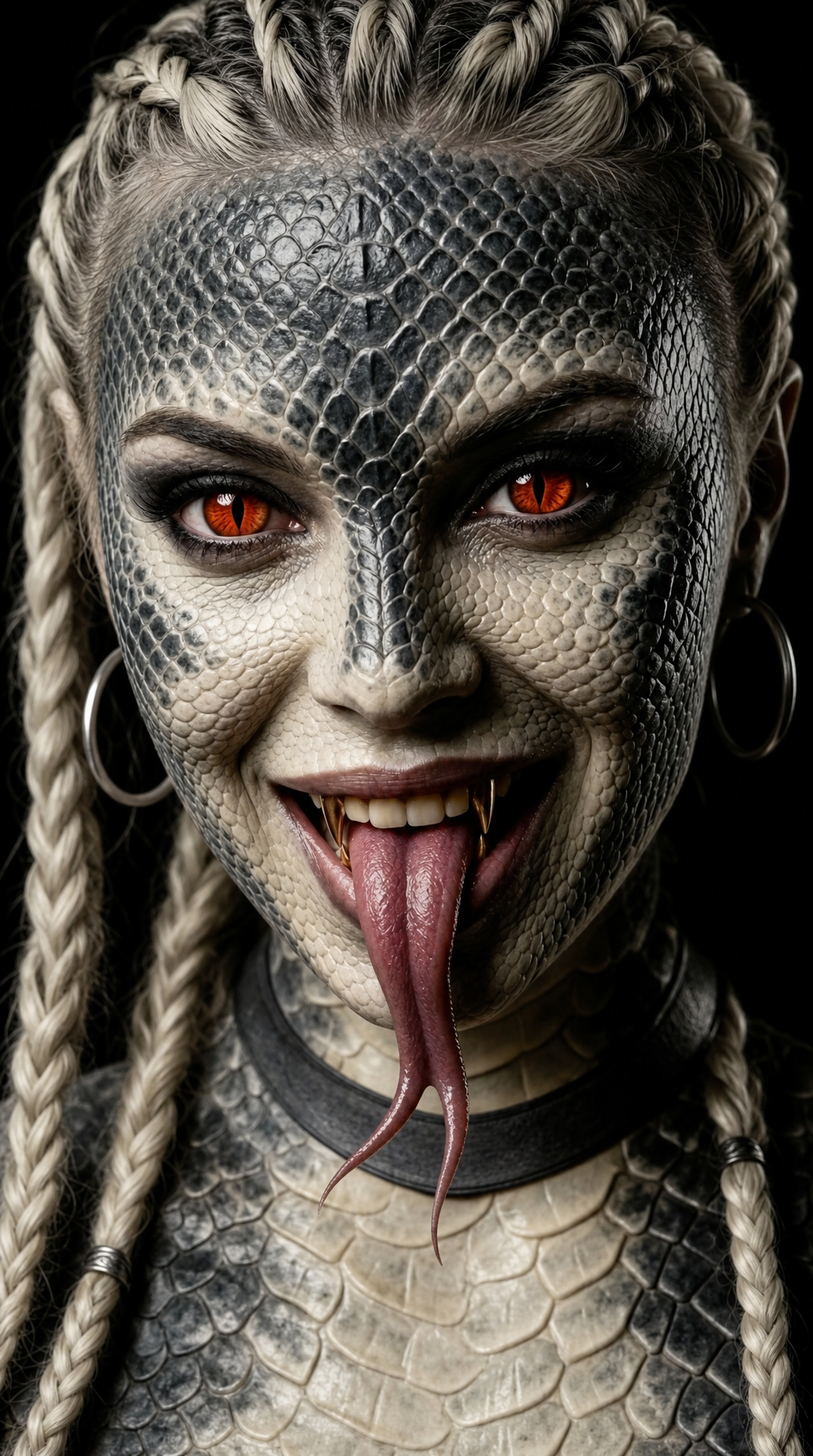
Same prompt, generated with each model separately — click one to see how it holds up.
Why this works
“Dramatic close-up” and “same studio close framing” keep the snake-like woman’s red-orange slit-pupil eyes, forked tongue, and scaled skin dominant in the portrait-closeup composition. “Deep black” background, “cinematic contrast,” and “controlled studio lighting” produce the dark, intimidating mood, while “subtle alluring expression” adds tension without softening the subject. “Long platinum-blonde braids with darker roots,” matte silver hoops, and a dark leather collar create the image’s black, beige, and white color structure against the nearly black studio field; “sharp focus” and “high micro-detail on scales” reserve the clearest detail for her face and skin.
FAQ
→How do I make the portrait feel more threatening and less alluring?
Replace “subtle alluring expression” with “cold hostile expression, tense jaw, narrowed eyes,” and change “controlled studio lighting” to “hard top-side lighting with deep eye sockets and stark shadows.” Keep “dramatic close-up” so the threatening eyes and forked tongue remain central.
→How do I make the braids and jewelry more prominent without losing the face?
Replace “dramatic close-up framing” with “tight head-and-shoulders portrait” and change “long platinum-blonde braids” to “long platinum-blonde braids sweeping prominently over both shoulders.” Add “matte silver hoop earrings and simple dark leather collar clearly visible” while retaining “sharp focus” on the face and jewelry.
→How do I build a variation set with different environments instead of the black studio?
Replace “deep black studio background” with a specific setting such as “misty moonlit swamp with blurred reeds” or “ancient obsidian temple interior with soft smoky haze.” Keep “shallow depth of field,” “photorealistic dark fantasy portrait,” and “cinematic contrast” unchanged so the subject stays consistent across the series.
Learn the technique behind this
- How should a prompt be structured, and does word order matter? — A prompt that behaves predictably names one subject first, then what it is doing, then where, then the light, then the lens or medium, then the style.
- Why can't AI spell, and how do I get readable text in an image? — Older diffusion models had no character-level representation of text, so they produced letterform-shaped texture instead of words.
- How do I keep the same character across multiple images? — Text prompts alone won't hold a face across images — a description defines a type, not a person.
Related prompts
Woman in Teal Light, Shadowed Fashion Portrait
Eerie Elegance Among Marble Busts
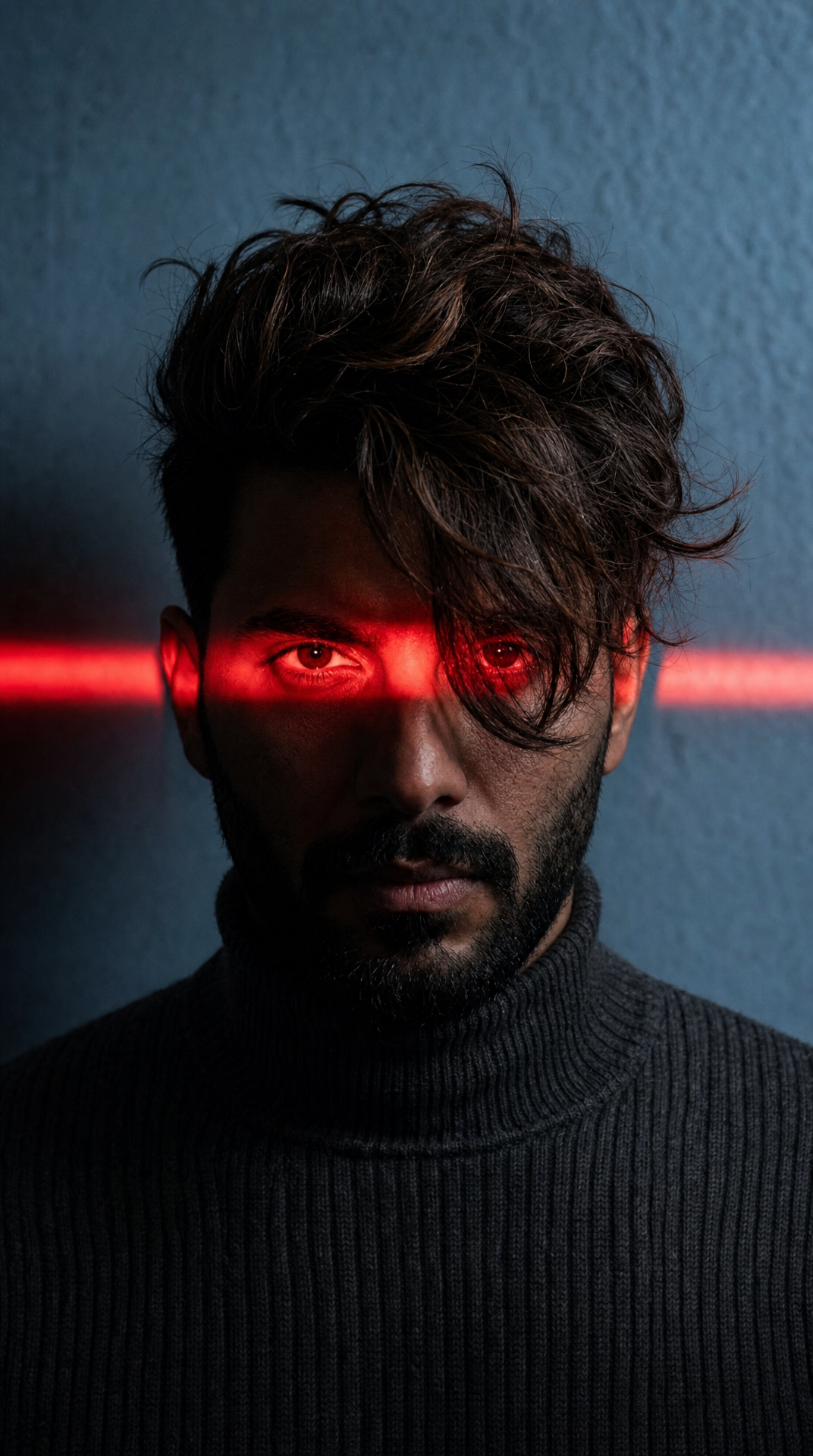
Charcoal turtleneck with red eye-beam
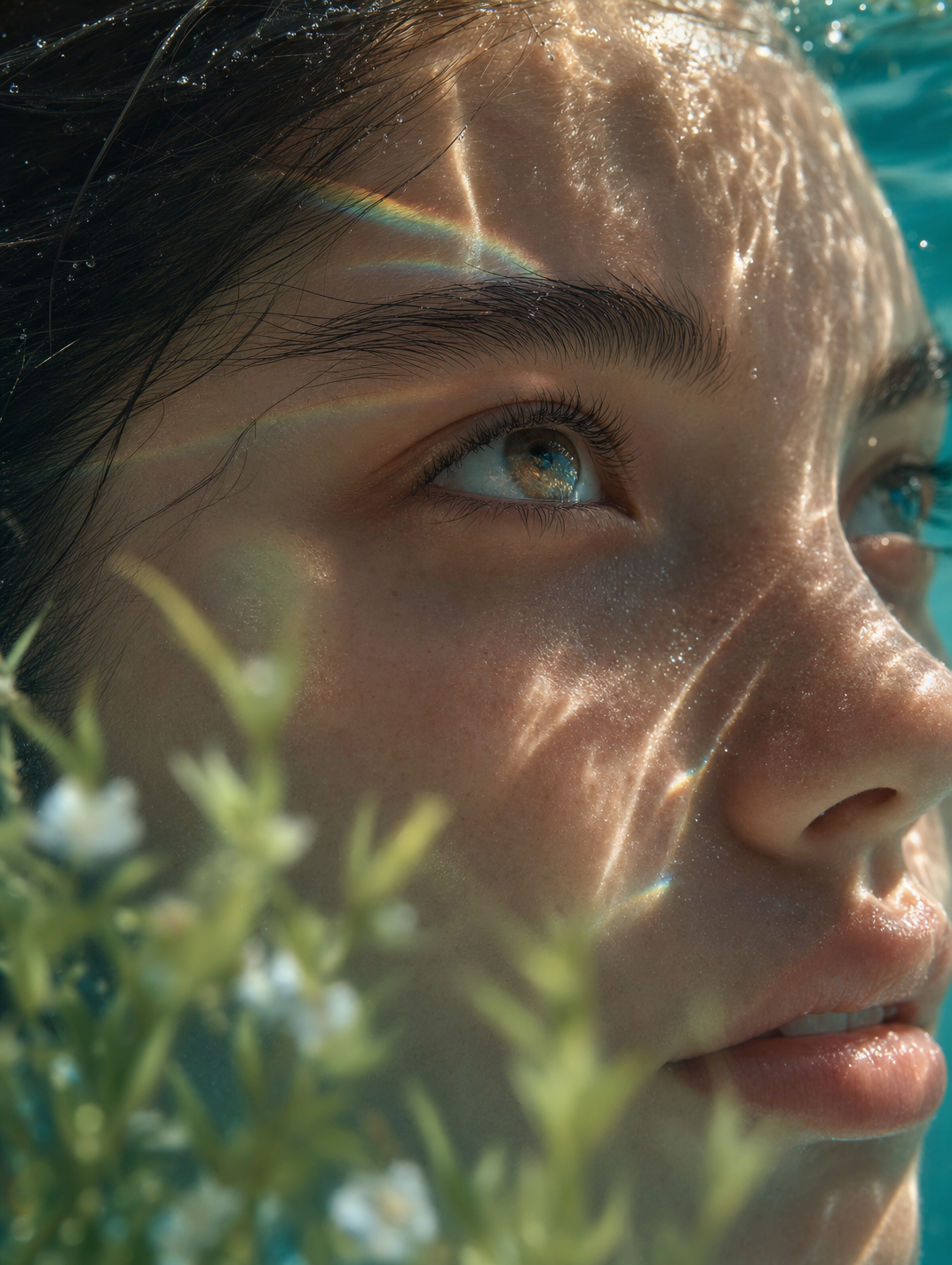
Dreamy Macro Portrait in Cool Water