Why this works
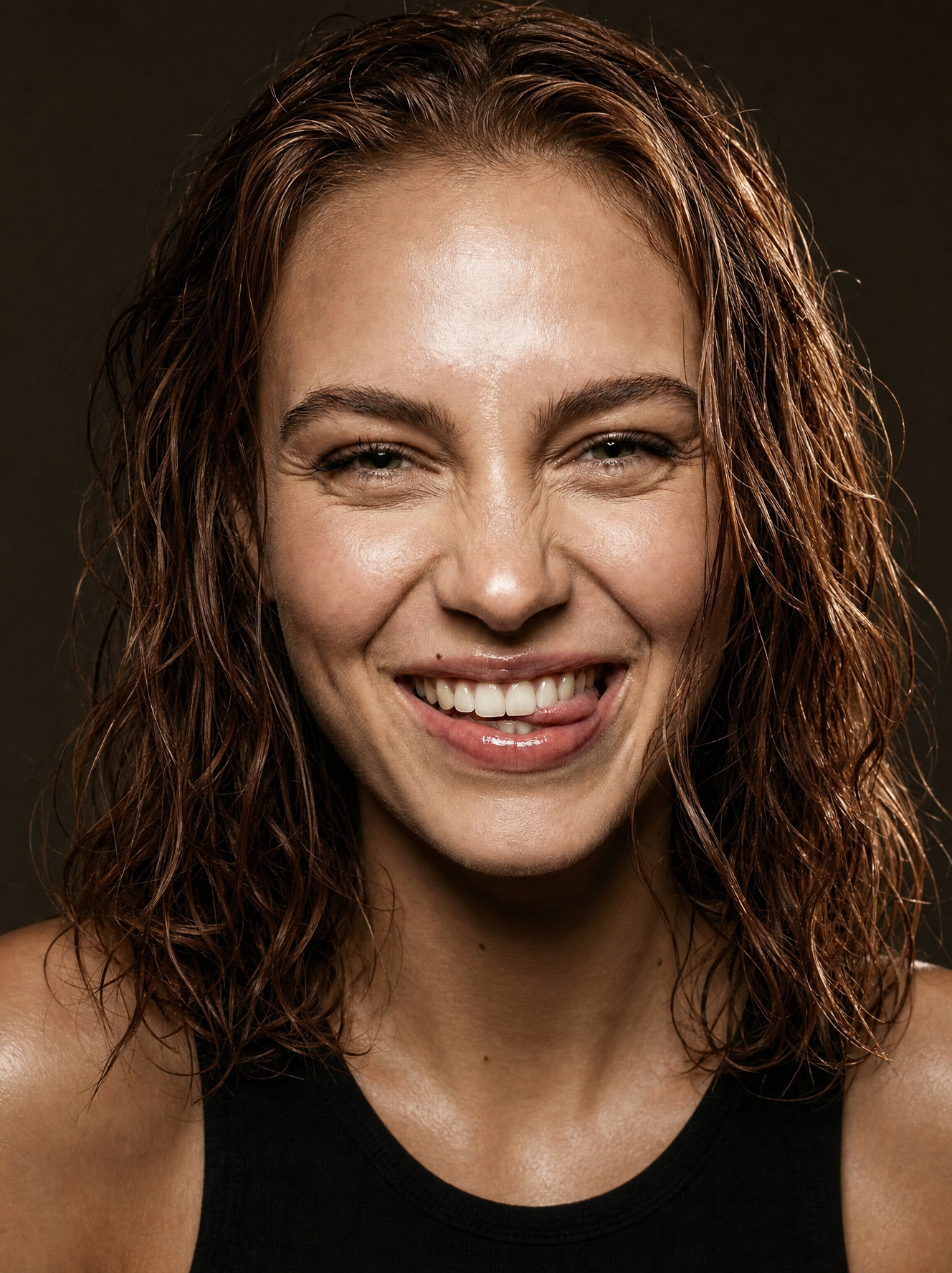
The close-up framing and “crisp facial focus” make the smiling face the immediate focal point, while “shallow depth of field” removes detail from the dark espresso-brown studio background. “Soft, slightly side-lit illumination” gives the warm, confident expression gentle dimensionality, and “gentle specular highlights on the wet hair” makes the still-wet, softly clumped auburn waves a distinct secondary feature. The black-and-tan dominant palette comes from the espresso-brown backdrop, natural skin tones, and auburn hair, while “subtle natural color rendition” keeps the portrait grounded rather than heavily stylized.
FAQ
→How do I make the wet auburn hair more prominent than the face?
Replace “crisp facial focus” with “sharp focus on the wet auburn hair and face,” and change “close-up” to “three-quarter portrait with hair filling the upper frame.” Strengthen “gentle specular highlights” to “bright, clearly defined highlights tracing each wet wave,” while keeping “shallow depth of field” so the background remains subdued.
→How do I shift this from warm and playful to moody and cinematic?
Replace “warm playful expression” with “quiet, introspective expression,” and change “soft, slightly side-lit illumination” to “low-key directional side lighting with deep sculpting shadows.” Replace “subtle natural color rendition” with “muted, desaturated tones with restrained warm highlights,” and make the “dark espresso-brown background” nearly black.
→How do I create a matching series with different expressions and hair colors?
Keep the fixed structure, including “photorealistic studio portrait close-up,” “dark espresso-brown studio background,” “shallow depth of field,” and “crisp facial focus.” For each variation, swap “smiling woman with shoulder-length auburn hair in loose waves” for a controlled subject line such as “same woman, shoulder-length platinum-blonde bob, softly tousled,” then replace “warm playful expression” with “thoughtful gaze,” “laughing expression,” or “calm confident smile.”
Learn the technique behind this
- Why can't AI spell, and how do I get readable text in an image? — Older diffusion models had no character-level representation of text, so they produced letterform-shaped texture instead of words.
- How should a prompt be structured, and does word order matter? — A prompt that behaves predictably names one subject first, then what it is doing, then where, then the light, then the lens or medium, then the style.
- Why does AI get hands and faces wrong, and how do I fix it? — Hands fail because they're small in frame, extremely variable in pose, and self-occluding — the model has less usable signal per pixel than for any other body part.
Related prompts
Woman in Teal Light, Shadowed Fashion Portrait
Eerie Elegance Among Marble Busts
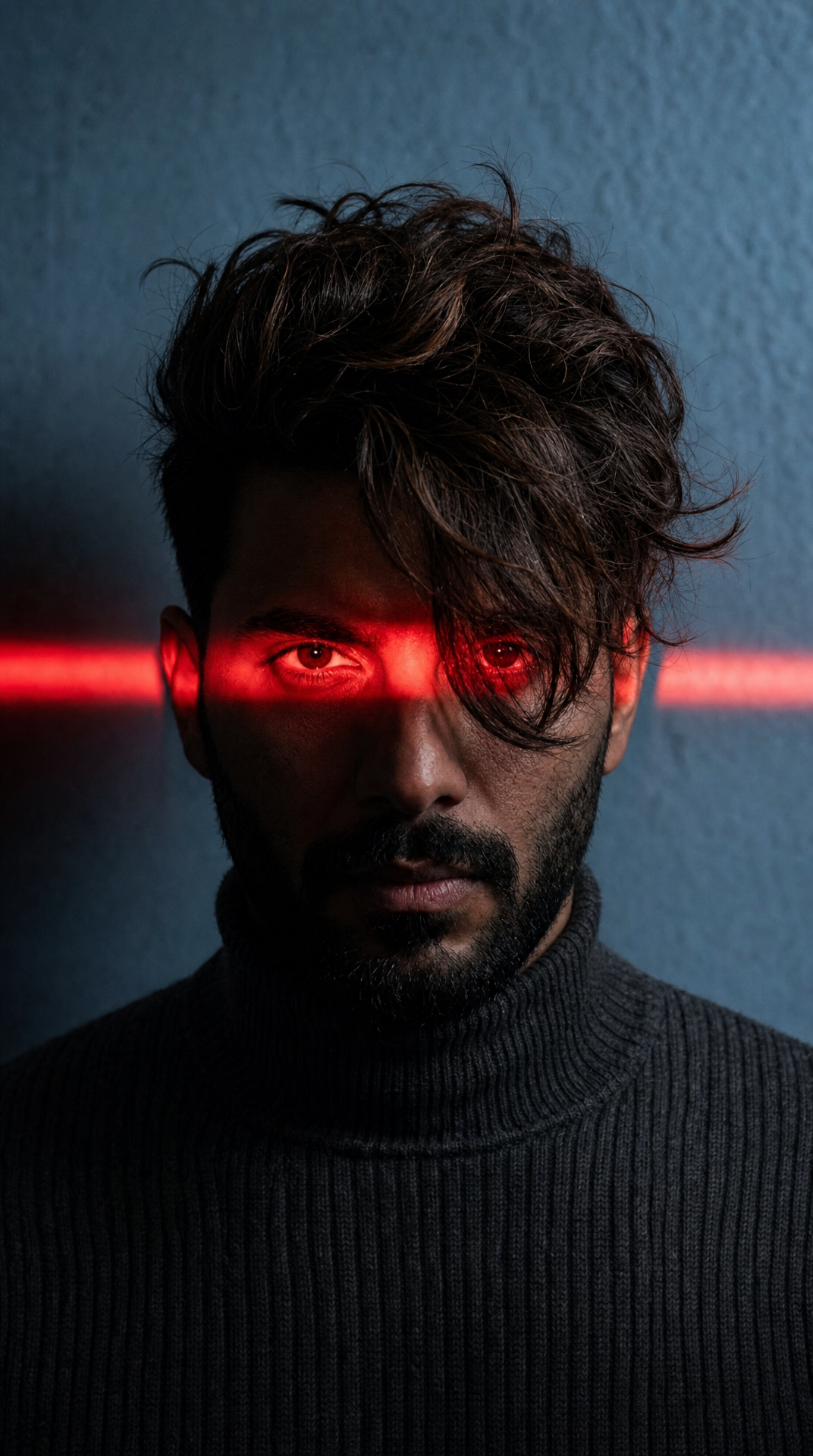
Charcoal turtleneck with red eye-beam
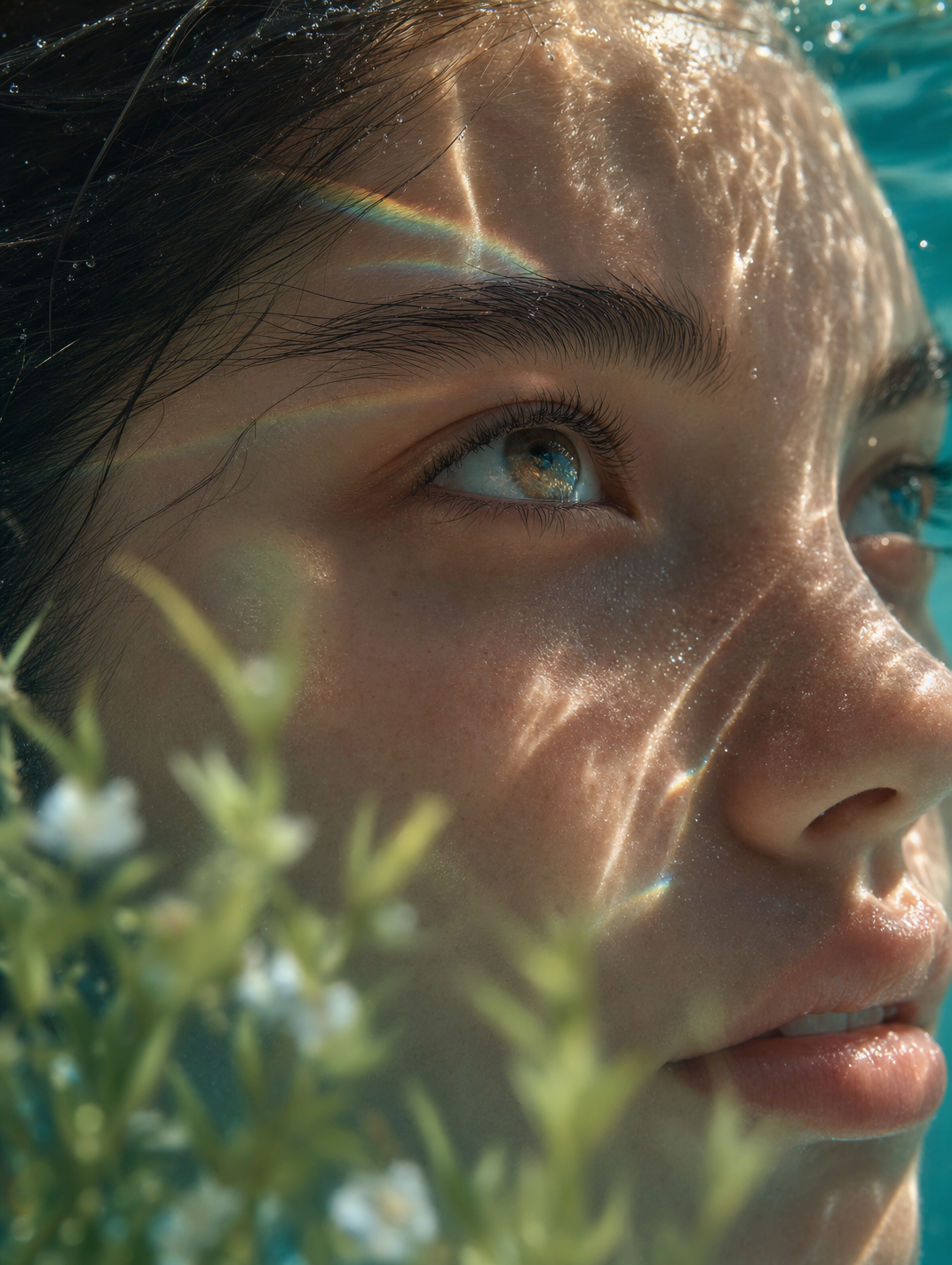
Dreamy Macro Portrait in Cool Water