Why this works
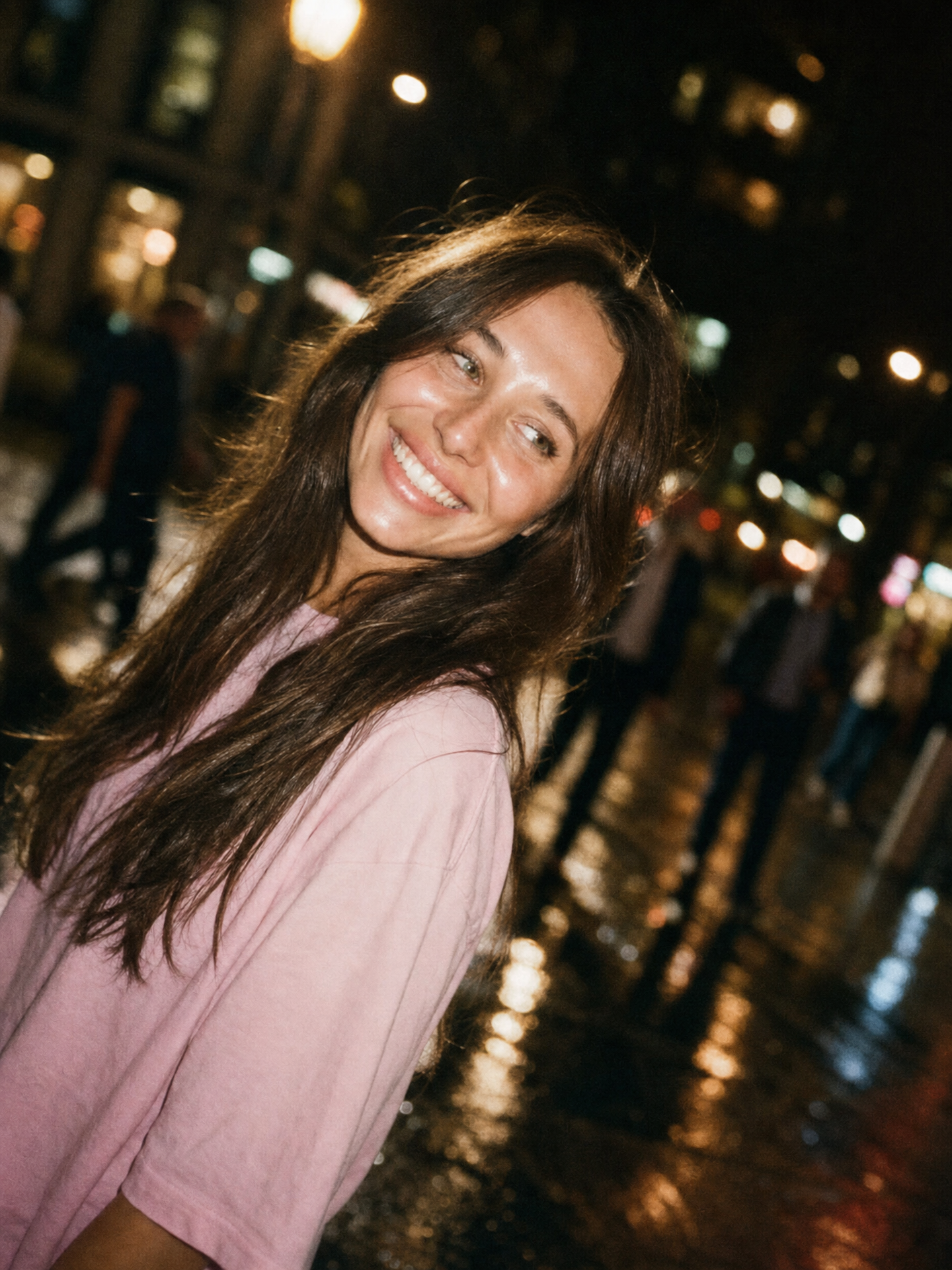
The close portrait framing comes from “portrait-closeup” and “smiling young woman turning over her shoulder,” which keeps her expression and gesture dominant while the “shallow depth of field” pushes the busy sidewalk into soft context. “Softer off-camera lighting,” “bokeh city lights,” and “wet pavement reflections” produce the warm pink-and-gold nighttime glow, while the brown tones and “film grain and natural imperfections” reinforce the disposable-camera feel. “Blurred pedestrians,” “slight motion blur from street ambience,” and “busy city sidewalk at night” supply the spontaneous, energetic urban atmosphere without competing sharply with her face.
FAQ
→How do I make the woman’s face and expression even more central?
Replace “portrait-closeup” with “tight head-and-shoulders close-up” and change “shallow depth of field” to “extremely shallow depth of field, eyes and smile in crisp focus.” Reduce the background language from “blurred pedestrians and wet pavement reflections” to “minimal blurred city lights behind her” so the sidewalk becomes less visually prominent.
→How do I make the scene moodier and less lively?
Replace “smiling” with “quiet, thoughtful expression,” and change “urban nightlife atmosphere” to “moody late-night solitude.” Swap “softer off-camera lighting” for “cool, directional side-lighting with deep shadows,” and replace the dominant warm “pink” and “gold” look with “muted blue and amber tones.”
→How do I create a series of variations while keeping the same identity and pose?
Keep “same pose and identity” and “smiling young woman turning over her shoulder” unchanged, then vary one environmental phrase per image: replace “busy city sidewalk” with “neon-lit diner entrance,” “rainy crosswalk,” or “subway station stairs.” Preserve “disposable camera aesthetic,” “film grain and natural imperfections,” and “slight motion blur” across every version so the locations change while the visual language stays consistent.
Learn the technique behind this
- Why can't AI spell, and how do I get readable text in an image? — Older diffusion models had no character-level representation of text, so they produced letterform-shaped texture instead of words.
- How should a prompt be structured, and does word order matter? — A prompt that behaves predictably names one subject first, then what it is doing, then where, then the light, then the lens or medium, then the style.
- Why does AI get hands and faces wrong, and how do I fix it? — Hands fail because they're small in frame, extremely variable in pose, and self-occluding — the model has less usable signal per pixel than for any other body part.
Related prompts
Woman in Teal Light, Shadowed Fashion Portrait
Eerie Elegance Among Marble Busts
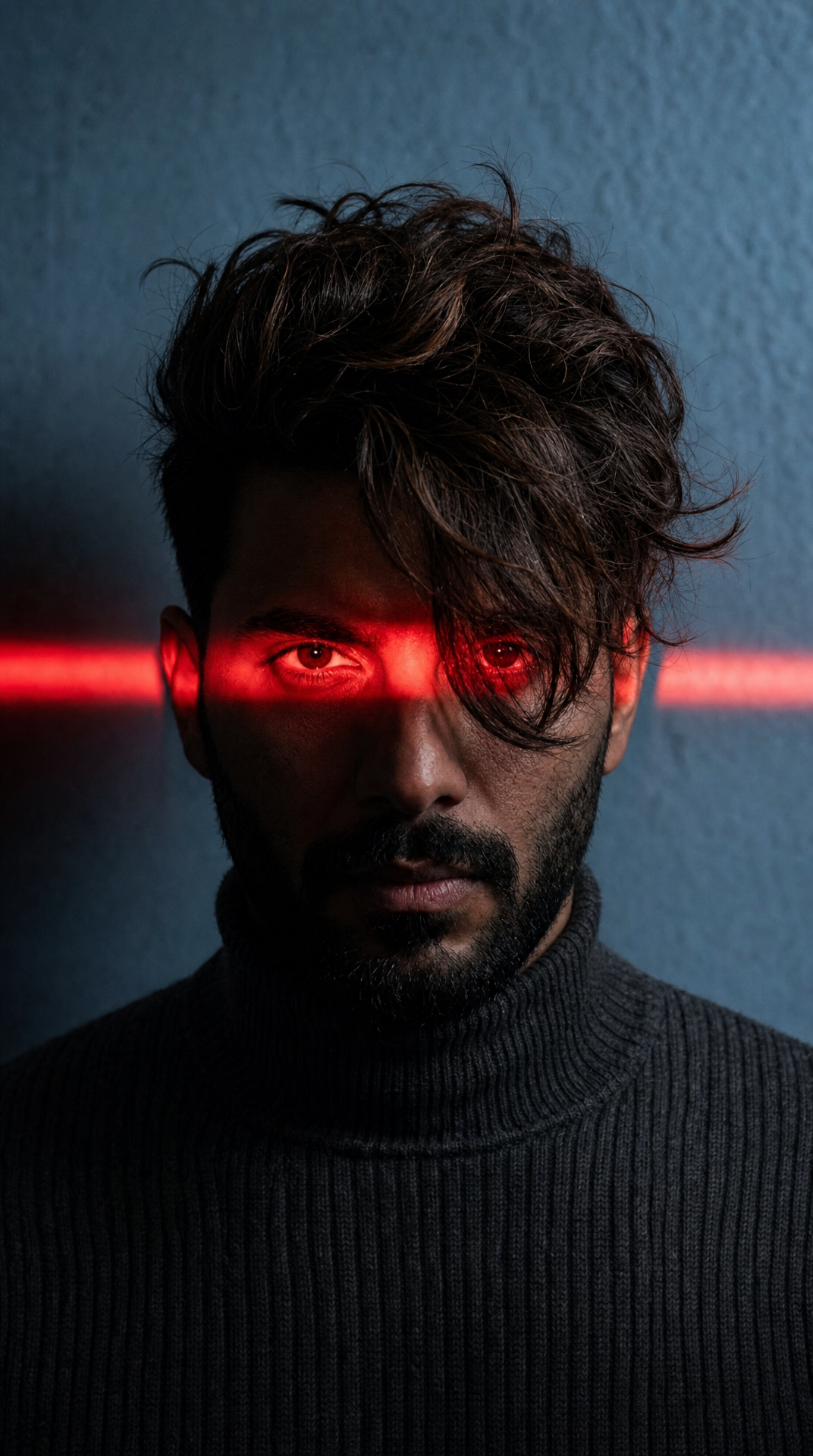
Charcoal turtleneck with red eye-beam
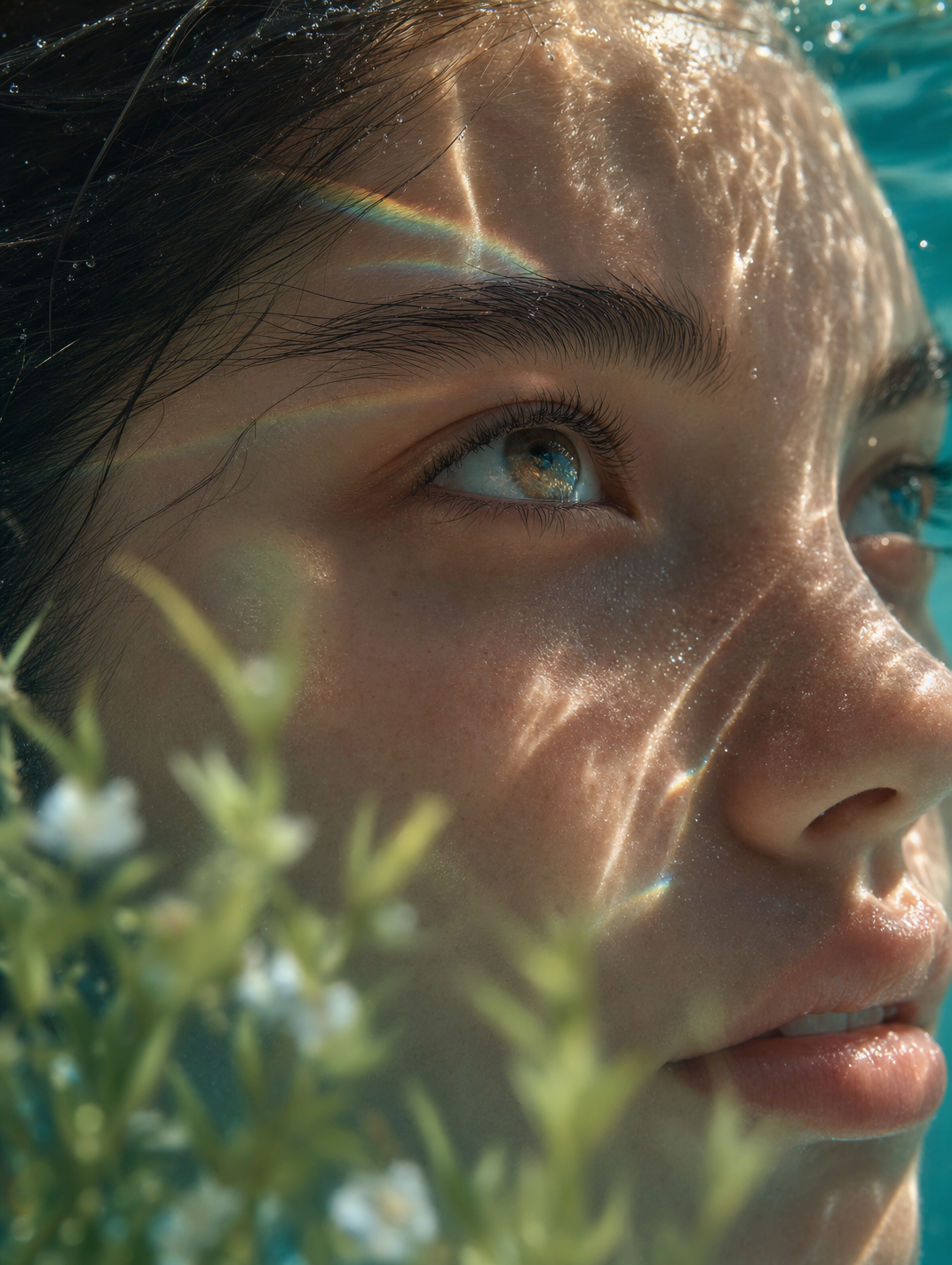
Dreamy Macro Portrait in Cool Water