Why this works
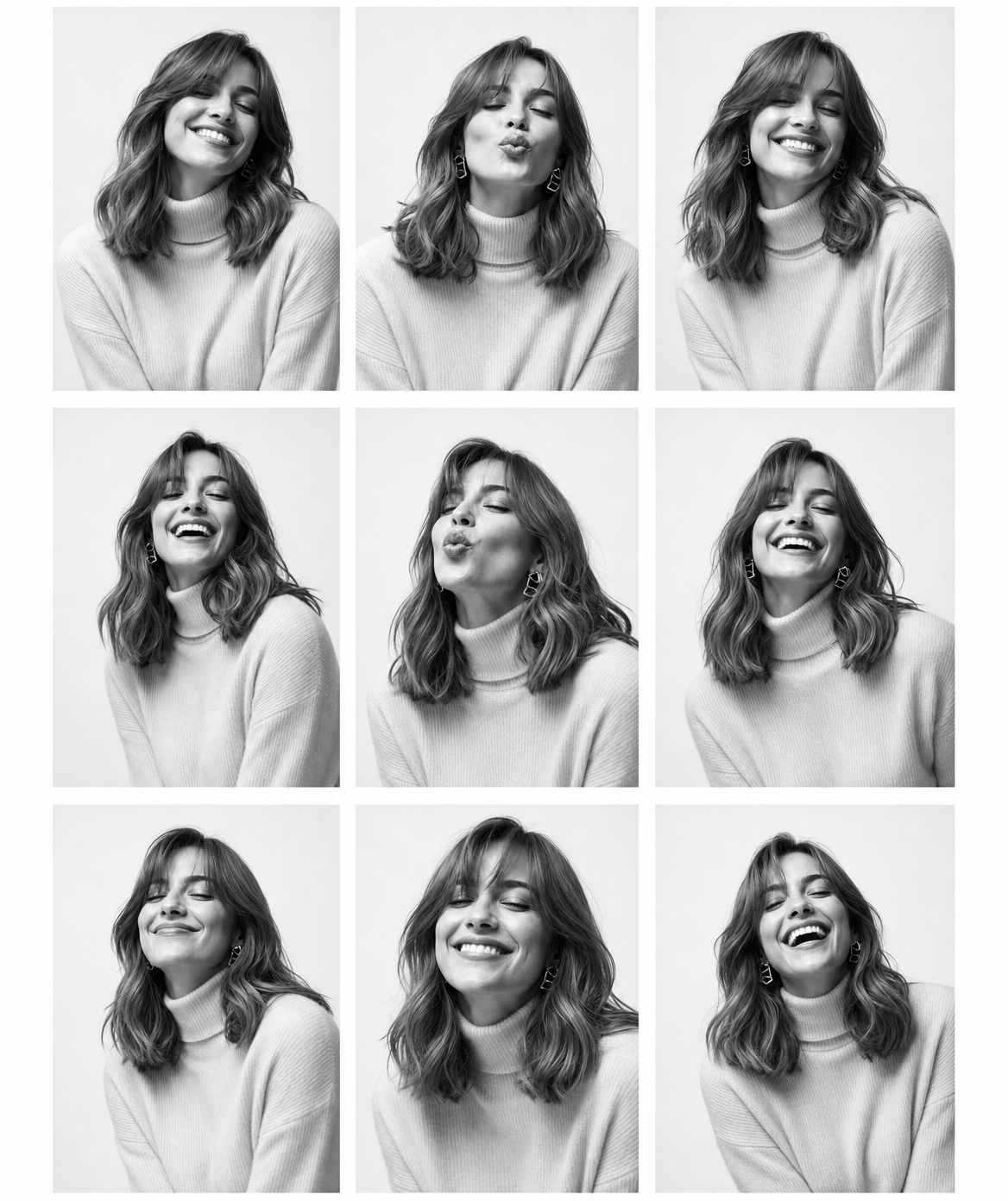
“Multi-panel grid” and “clean editorial framing” establish the symmetrical, orderly composition, while “the same smiling woman” and “playful, cheerful variety of candid facial expressions” preserve visual continuity across panels. “Shoulder-length wavy hair and full side-swept bangs” gives the portrait a defined silhouette, and “a light turtleneck” supplies the restrained styling shift. “Soft diffused studio lighting with gentle shadows” keeps the gray-and-black palette approachable, while “high-contrast monochrome,” “minimal light background,” and “crisp sharp focus” produce the polished fashion-editorial finish.
FAQ
→How do I make the grid feel more dramatic and serious?
Replace “playful, cheerful variety of candid facial expressions” with “controlled, introspective expressions with restrained intensity,” and change “soft diffused studio lighting with gentle shadows” to “hard directional side-lighting with deep sculpted shadows.” Keep “high-contrast monochrome,” but replace “minimal light background” with “dark seamless studio backdrop” for a heavier tonal range.
→How do I make one portrait more prominent than the others?
Replace “symmetrical” and “multi-panel grid” with “asymmetrical editorial grid with one large central portrait and smaller supporting panels.” Change “clean editorial framing across a multi-panel grid” to “dominant close-up hero panel with varied medium and tight portrait crops,” while retaining “crisp sharp focus” so the central image remains the visual anchor.
→How do I build a coordinated variation with a different subject and setting?
Replace “same smiling woman” with a specific new subject such as “a poised older man with silver hair,” and replace “black-and-white studio portrait grid with a minimal light background” with “black-and-white architectural portrait grid set in a quiet modernist interior.” Keep “high-contrast monochrome” and “soft diffused studio lighting,” but change “a light turtleneck” to a wardrobe detail suited to the new subject, such as “a sharply tailored dark suit.”
Learn the technique behind this
- Why can't AI spell, and how do I get readable text in an image? — Older diffusion models had no character-level representation of text, so they produced letterform-shaped texture instead of words.
- How do I keep the same character across multiple images? — Text prompts alone won't hold a face across images — a description defines a type, not a person.
- How should a prompt be structured, and does word order matter? — A prompt that behaves predictably names one subject first, then what it is doing, then where, then the light, then the lens or medium, then the style.
Related prompts
Woman in Teal Light, Shadowed Fashion Portrait
Eerie Elegance Among Marble Busts
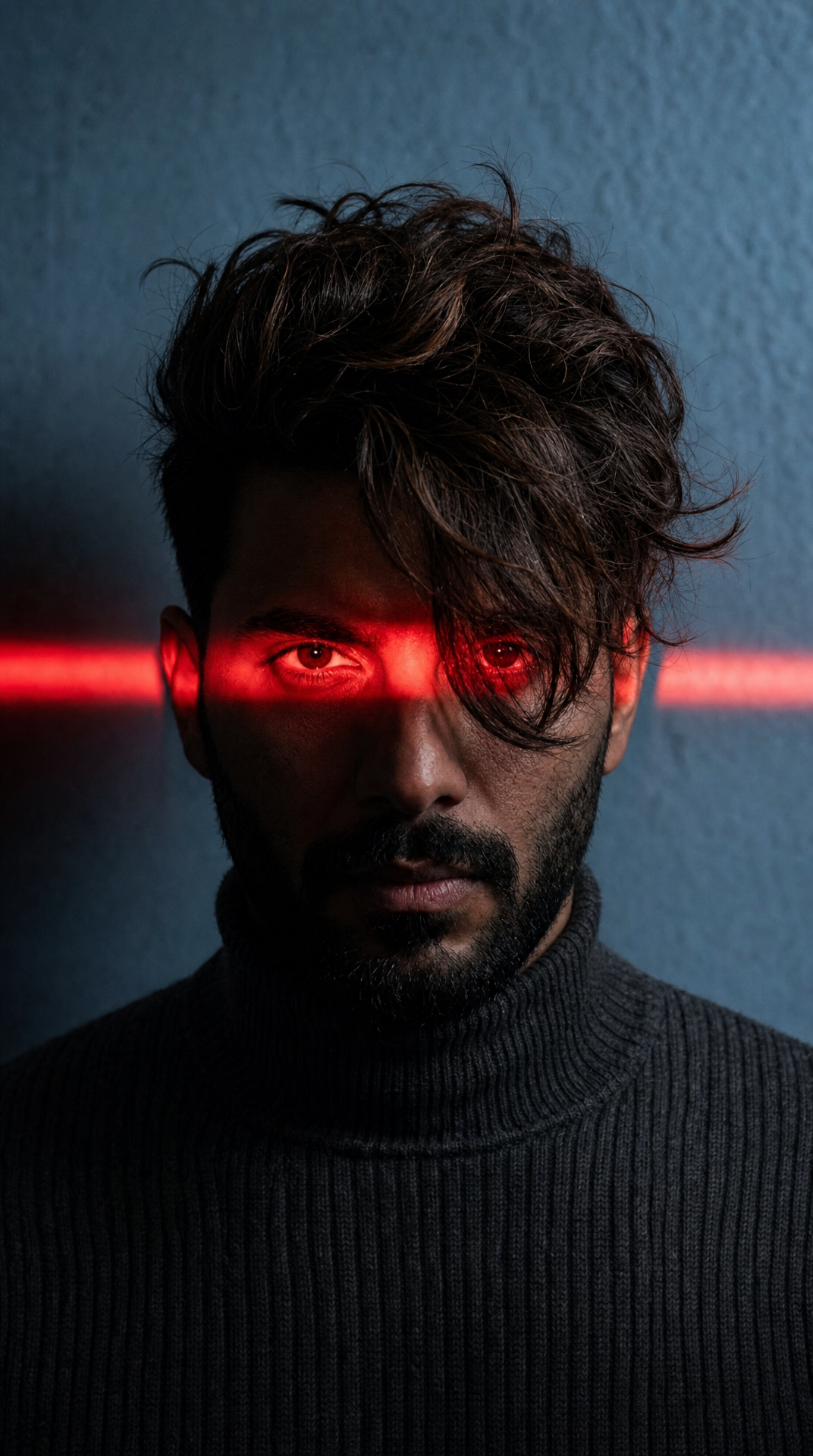
Charcoal turtleneck with red eye-beam
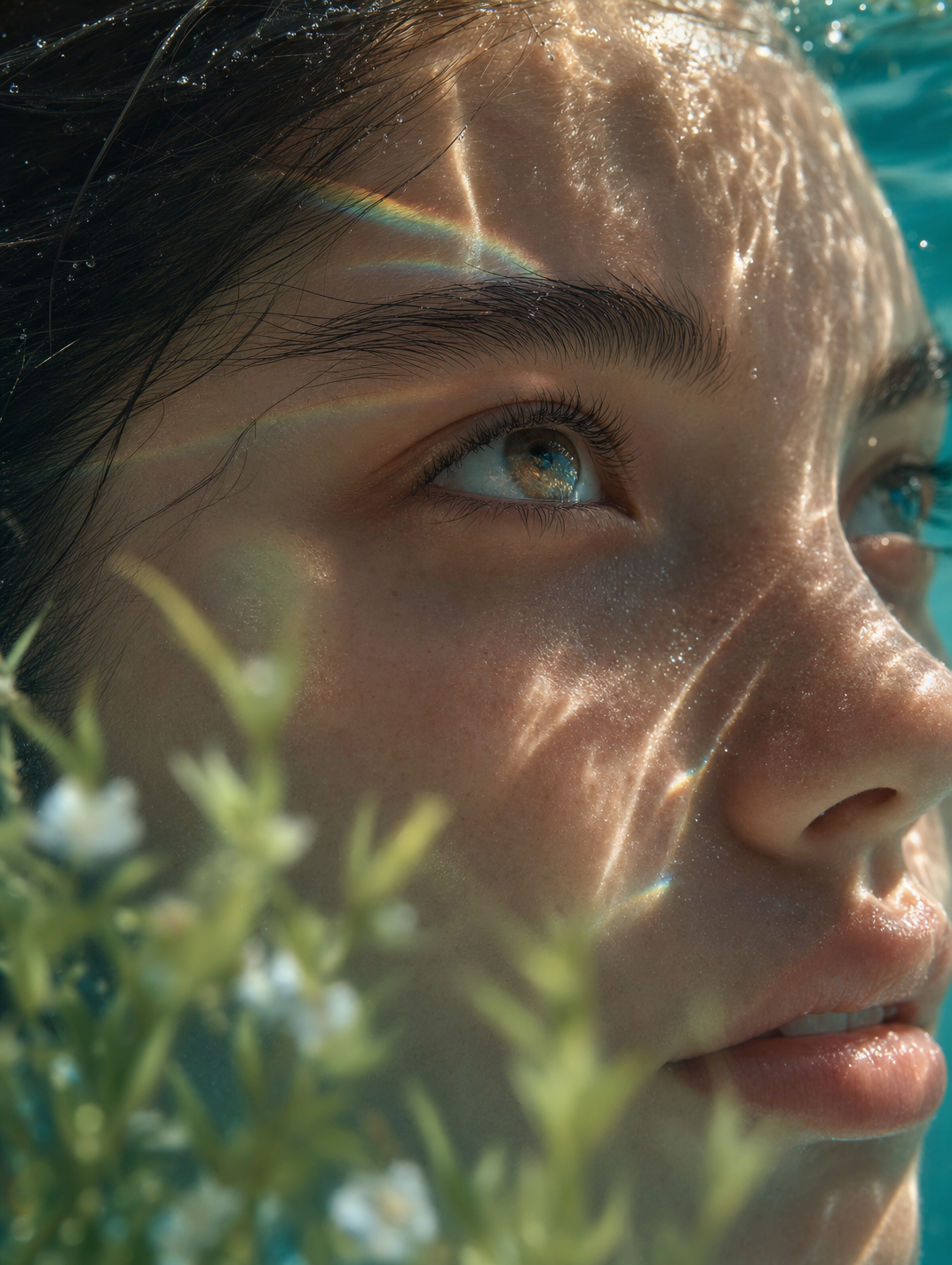
Dreamy Macro Portrait in Cool Water