Why this works
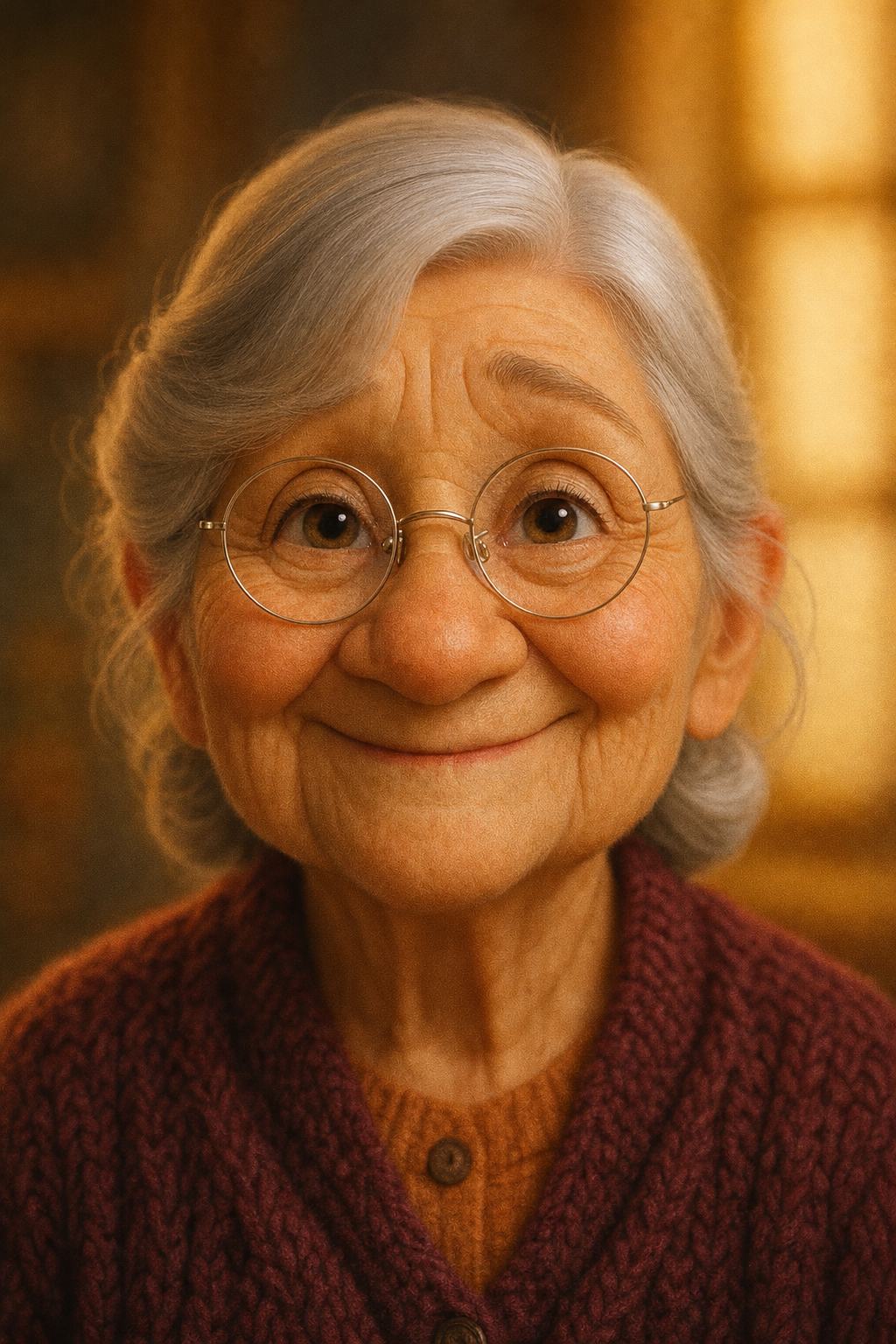
The close-up framing keeps the woman’s expressive face, thin wire-frame glasses, gentle eyes, and naturally soft wrinkles dominant, while “shallow depth of field” and “softly blurred background” remove competing detail. “Golden ambient indoor lighting” and “cinematic warmth” supply the orange glow behind the gray-silver hair, and the “burgundy knit cardigan” adds the controlled red accent that balances the cooler gray tones. “Highly detailed skin texture” preserves the photorealistic character of the portrait without losing the cozy, gentle mood established by her smile and warm indoor setting.
FAQ
→How do I change this prompt to make the portrait feel more intimate and emotionally tender?
Replace “golden ambient indoor lighting” with “soft window light at dusk” and add “quiet, tender expression with a slight smile.” Keep “close-up,” “gentle eyes,” and “shallow depth of field,” since those phrases maintain facial intimacy and visual focus.
→How do I make the burgundy cardigan and silver hair more visually prominent?
Replace “close-up” with “tight head-and-shoulders portrait” and add “cardigan collar and silver low side-parted bun clearly visible.” Change “softly blurred background” to “neutral low-contrast background” so the burgundy and gray details stand out without introducing competing colors.
→How do I build a matching series from this portrait while changing the setting?
Keep “photorealistic,” “highly detailed skin texture,” “thin wire-frame glasses,” and “silver hair styled in a low side-parted bun” unchanged, then replace “cozy indoor background softly blurred” with settings such as “sunlit conservatory with blurred green plants,” “quiet library with warm wood shelves,” or “covered garden porch after rain.” Match each variation with “soft-focus portrait” and “cinematic warmth” to preserve the visual identity.
Learn the technique behind this
- How should a prompt be structured, and does word order matter? — A prompt that behaves predictably names one subject first, then what it is doing, then where, then the light, then the lens or medium, then the style.
- Why can't AI spell, and how do I get readable text in an image? — Older diffusion models had no character-level representation of text, so they produced letterform-shaped texture instead of words.
- Why does AI get hands and faces wrong, and how do I fix it? — Hands fail because they're small in frame, extremely variable in pose, and self-occluding — the model has less usable signal per pixel than for any other body part.
Related prompts
Woman in Teal Light, Shadowed Fashion Portrait
Eerie Elegance Among Marble Busts
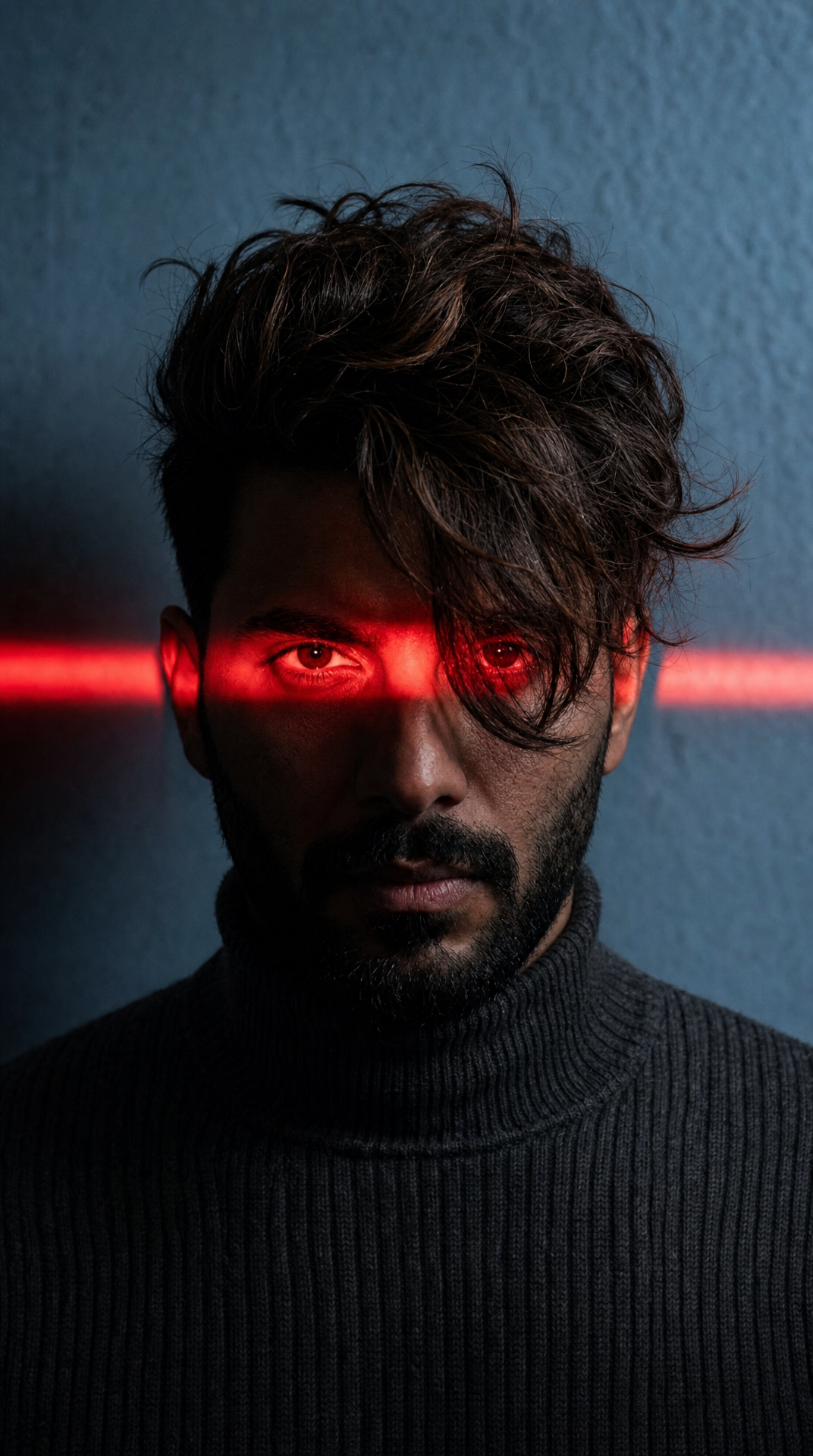
Charcoal turtleneck with red eye-beam
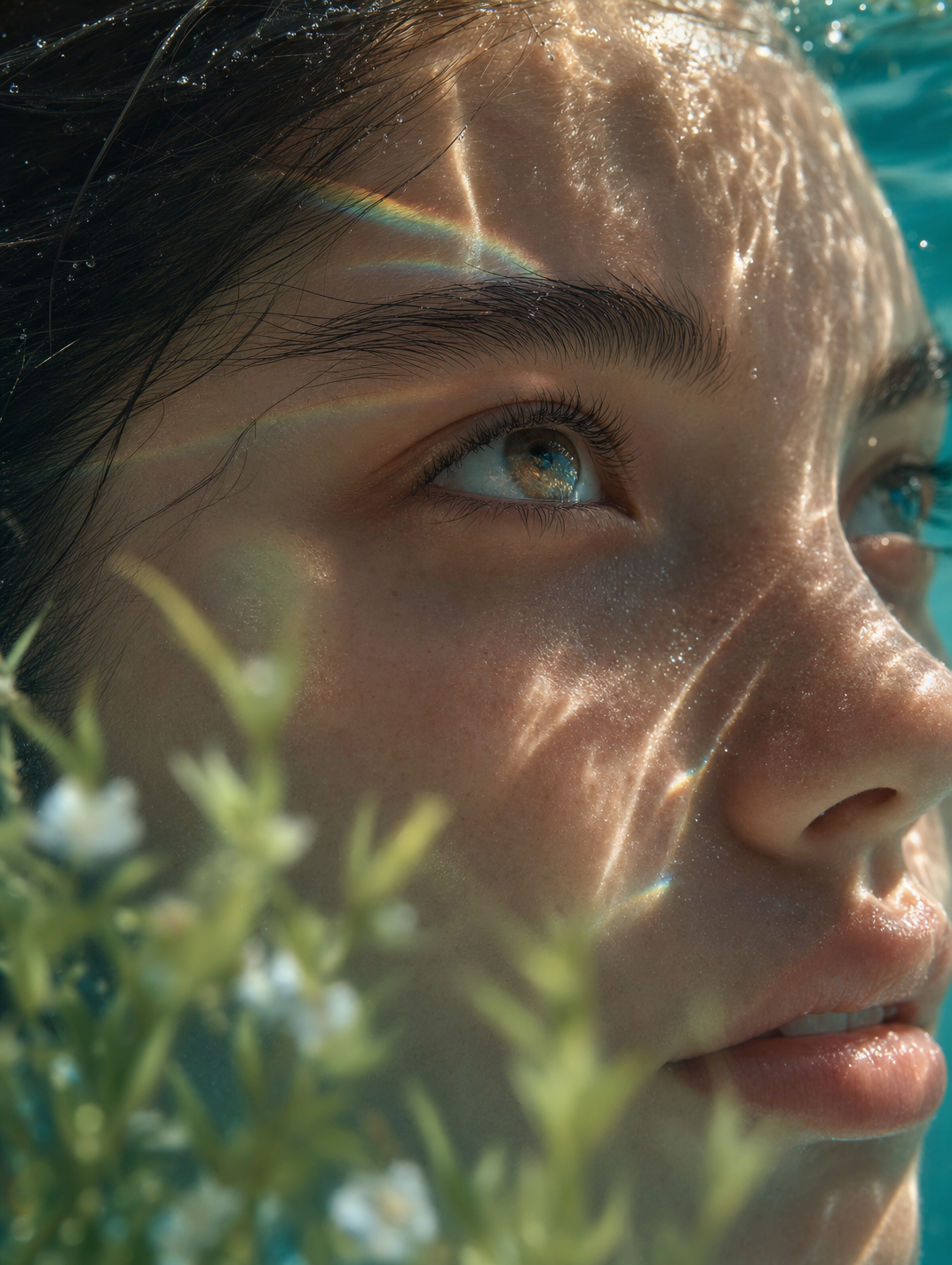
Dreamy Macro Portrait in Cool Water