Why this works
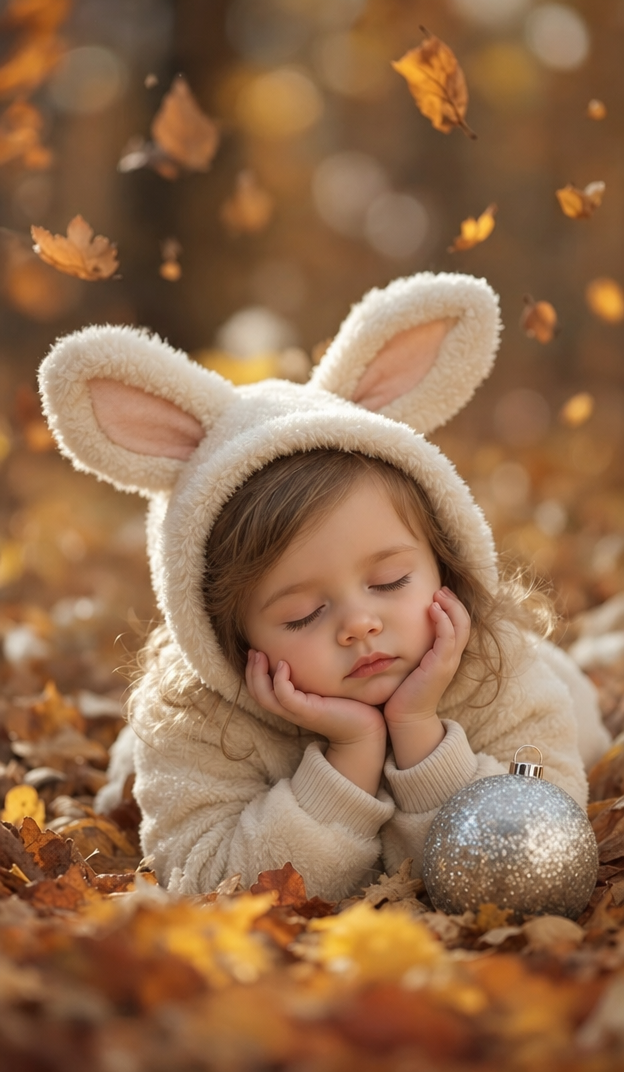
The phrase 'chin resting on folded hands' does the heavy lifting for tenderness, it's the specific pose that reads as childlike comfort rather than just 'sleeping toddler.' 'Warm amber bokeh light' and 'blurred autumnal forest background' are what produce the amber/tan color harmony and the soft depth that keeps the eye locked on the face. 'Dreamy soft-focus photography' is the actual technical instruction generating that hazy edge quality, not the leaves or the ornament, those just supply texture and a glint of contrast. The 'large shiny silver Christmas ornament beside the toddler' is the one discordant detail in the prompt, and it's doing real work: it breaks the monochrome amber field with a cool highlight so the composition doesn't flatten into a single tone.
FAQ
→How do I make the ornament the focal point instead of the toddler?
Move it earlier in the sentence and add size/detail language, something like 'a close-up on a large shiny silver Christmas ornament resting beside a sleeping toddler, softly out of focus in the background.' Swapping the order signals to the model what should be sharp versus blurred, since right now 'close-up portrait' locks focus onto the face.
→How do I shift this from a cozy autumn mood to a winter holiday mood?
Replace 'bed of autumn leaves' with 'bed of soft white snow' and swap 'blurred autumnal forest background with warm amber bokeh light' for 'blurred snowy pine forest with cool blue-white bokeh light.' Keep 'chin resting on folded hands' and 'gentle peaceful expression' untouched since those carry the tenderness regardless of season.
→How do I build a series of variations from this same prompt?
Keep the subject clause ('sleeping toddler... chin resting on folded hands... rosy cheeks') fixed as your anchor, then cycle the outfit descriptor ('bunny-eared hooded outfit' to 'fox-eared' or 'bear-eared') and the setting/lighting pair together, like 'bed of cherry blossoms' with 'soft pink bokeh light' for a spring version. Changing outfit and setting/lighting as a matched pair keeps the color palette coherent instead of clashing.
Learn the technique behind this
- Why can't AI spell, and how do I get readable text in an image? — Older diffusion models had no character-level representation of text, so they produced letterform-shaped texture instead of words.
- How should a prompt be structured, and does word order matter? — A prompt that behaves predictably names one subject first, then what it is doing, then where, then the light, then the lens or medium, then the style.
- Why does AI get hands and faces wrong, and how do I fix it? — Hands fail because they're small in frame, extremely variable in pose, and self-occluding — the model has less usable signal per pixel than for any other body part.
Related prompts
Woman in Teal Light, Shadowed Fashion Portrait
Eerie Elegance Among Marble Busts
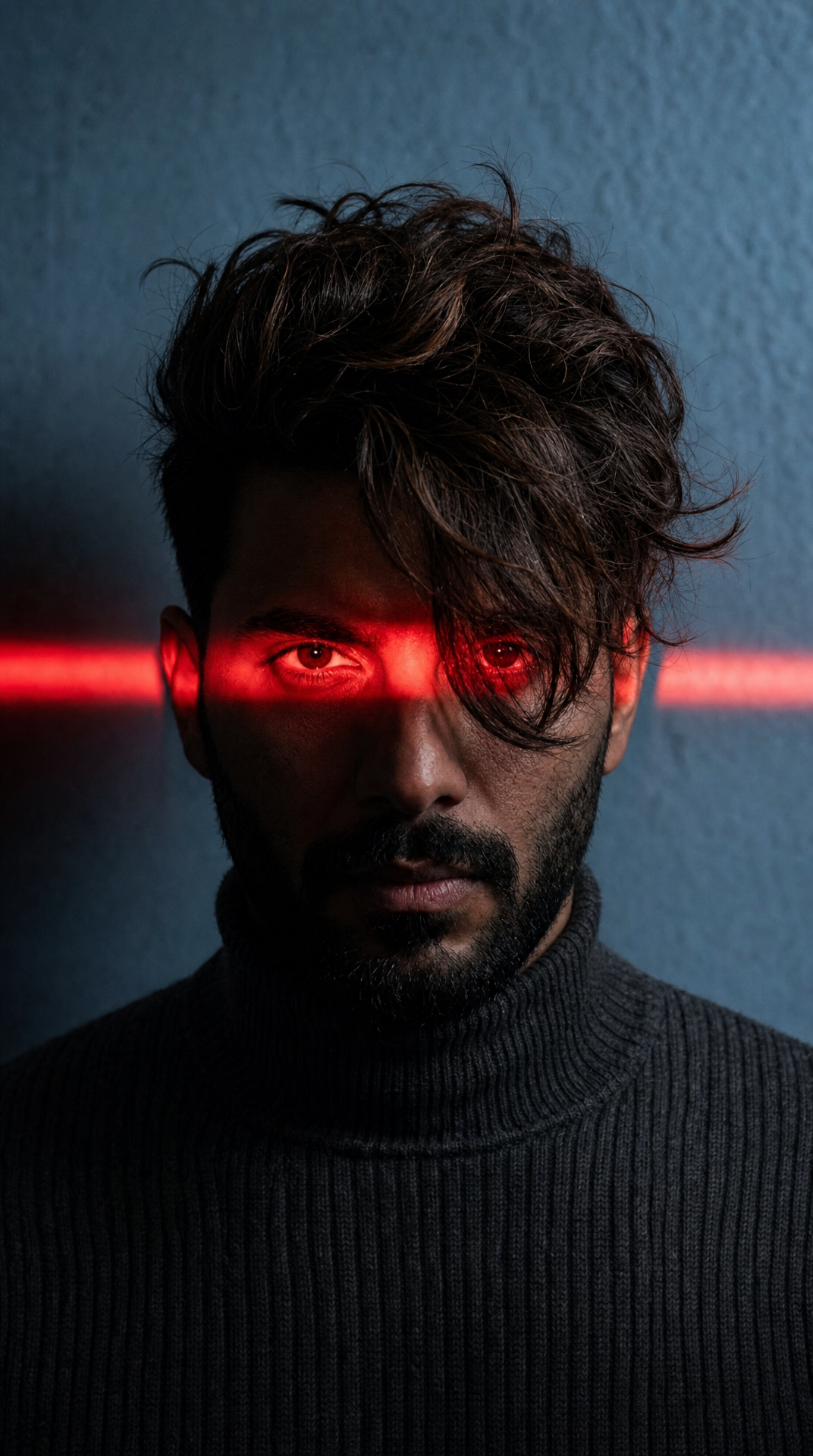
Charcoal turtleneck with red eye-beam
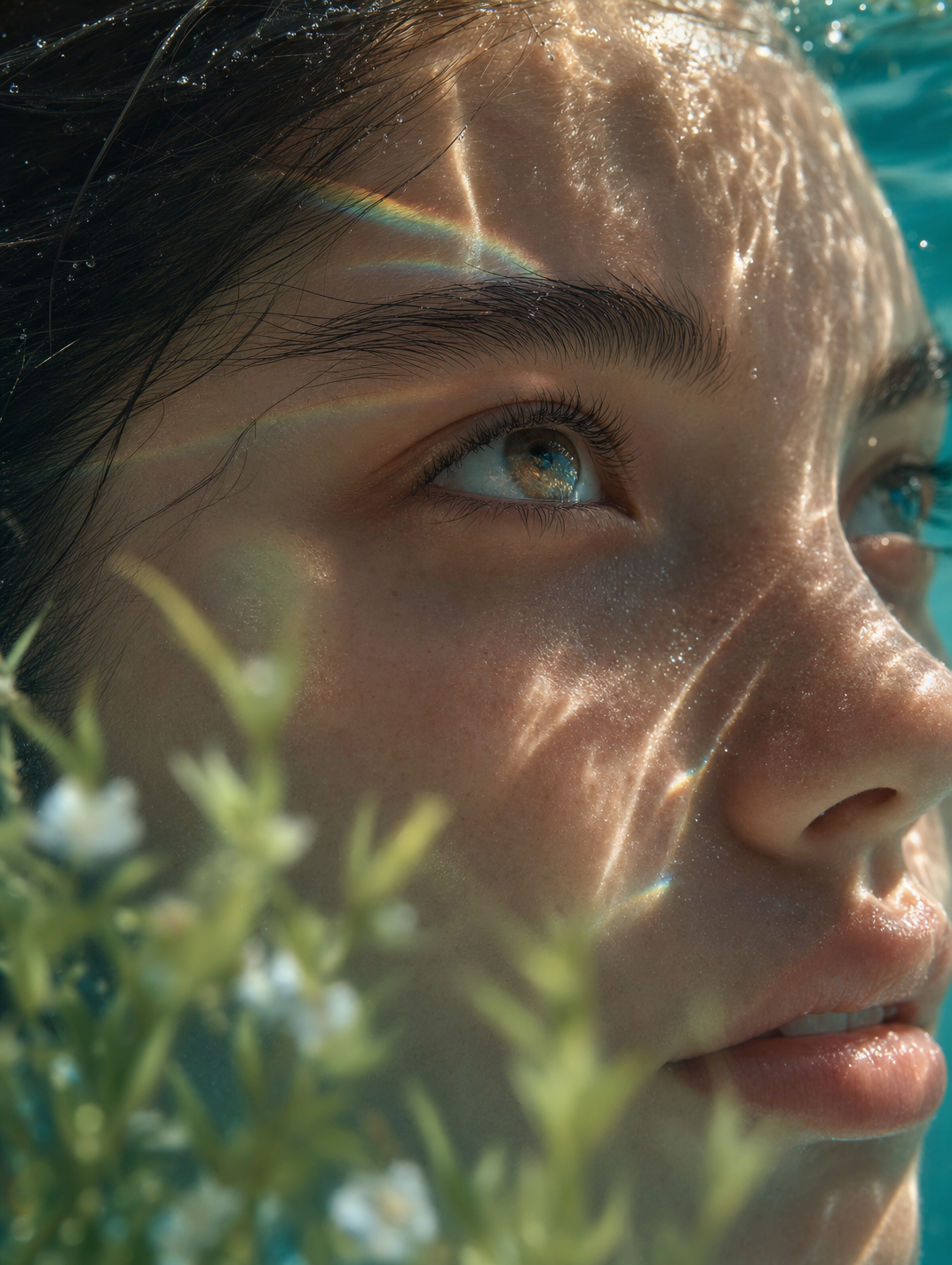
Dreamy Macro Portrait in Cool Water