Why this works
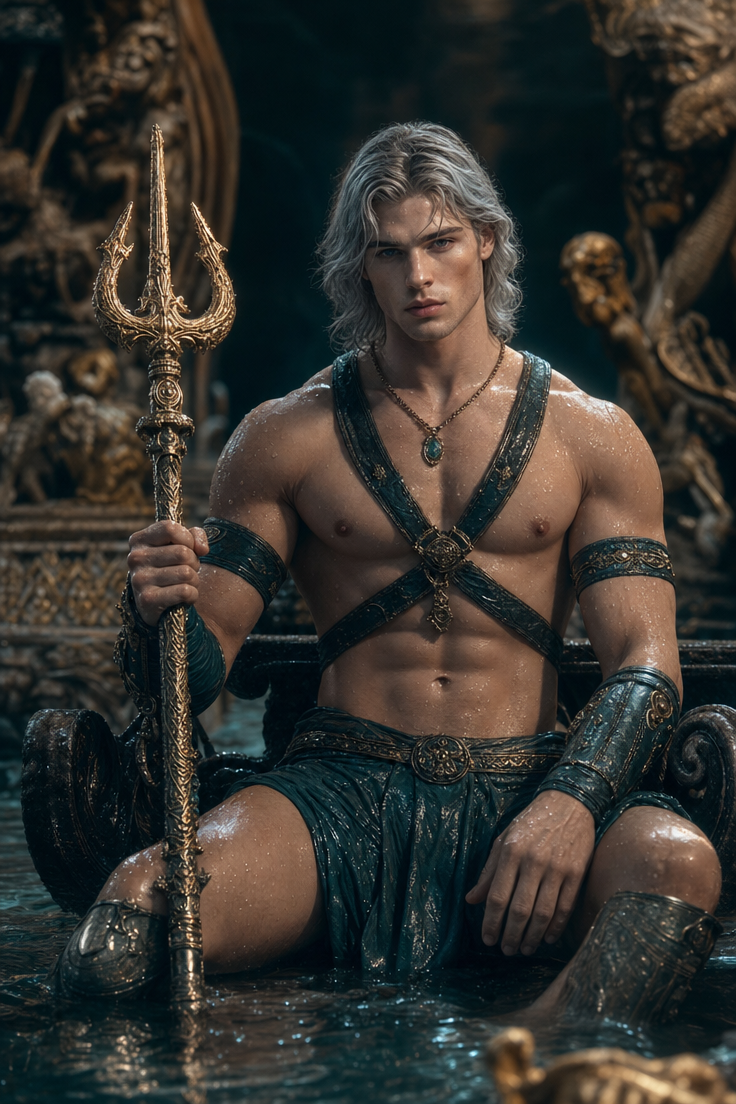
The phrase “shirtless young mythic king seated in shallow water” establishes the full-body portrait’s central, grounded pose, while “gripping an ornate gilded trident with both hands” gives the composition a strong vertical focal anchor. “Warm amber rim light” and “shimmering water caustics” explain the image’s gold-dominant highlights, while the “dark teal, wet leather-and-silk royal harness” supplies the brown-teal shadow structure against the gray underwater palace. “Shallow depth of field” keeps the king and trident sharply prioritized, and “moody, regal mystical atmosphere” sets the restrained, ceremonial tone rather than a bright heroic one.
FAQ
→How do I make the king’s face and expression more prominent?
Replace “photorealistic close framing” with “tight chest-up portrait framing” and add “direct eye contact, sharply resolved eyes, subtle commanding expression.” Change “shallow depth of field” to “focus locked on the eyes and face, trident softly blurred in the foreground” so the face outranks the weapon.
→How do I shift this from a moody mystical portrait to a brighter heroic scene?
Replace “moody, regal mystical atmosphere” with “radiant triumphant heroic atmosphere,” and change “warm amber rim lighting” to “bright golden key light with clean sunbeams filtering through the palace.” Reduce “dark teal, wet leather-and-silk royal harness” to “ivory and gold ceremonial harness” for a lighter, more celebratory palette.
→How do I create a series of variations while keeping this character recognizable?
Keep “shirtless young mythic king,” “shoulder-length straight silver hair,” and “ornate gilded trident” unchanged, then vary only the setting and pose: replace “underwater palace interior” with “storm-battered sea cliff,” “marble temple courtyard,” or “submerged throne room,” and swap “seated in shallow water” for “standing waist-deep in surf,” “kneeling before a flooded throne,” or “raising the trident overhead.”
Learn the technique behind this
- Why can't AI spell, and how do I get readable text in an image? — Older diffusion models had no character-level representation of text, so they produced letterform-shaped texture instead of words.
- How should a prompt be structured, and does word order matter? — A prompt that behaves predictably names one subject first, then what it is doing, then where, then the light, then the lens or medium, then the style.
- Which aspect ratio should I use, and how does it change the image? — Aspect ratio determines what the model composes, not how it's cropped afterwards.
Related prompts
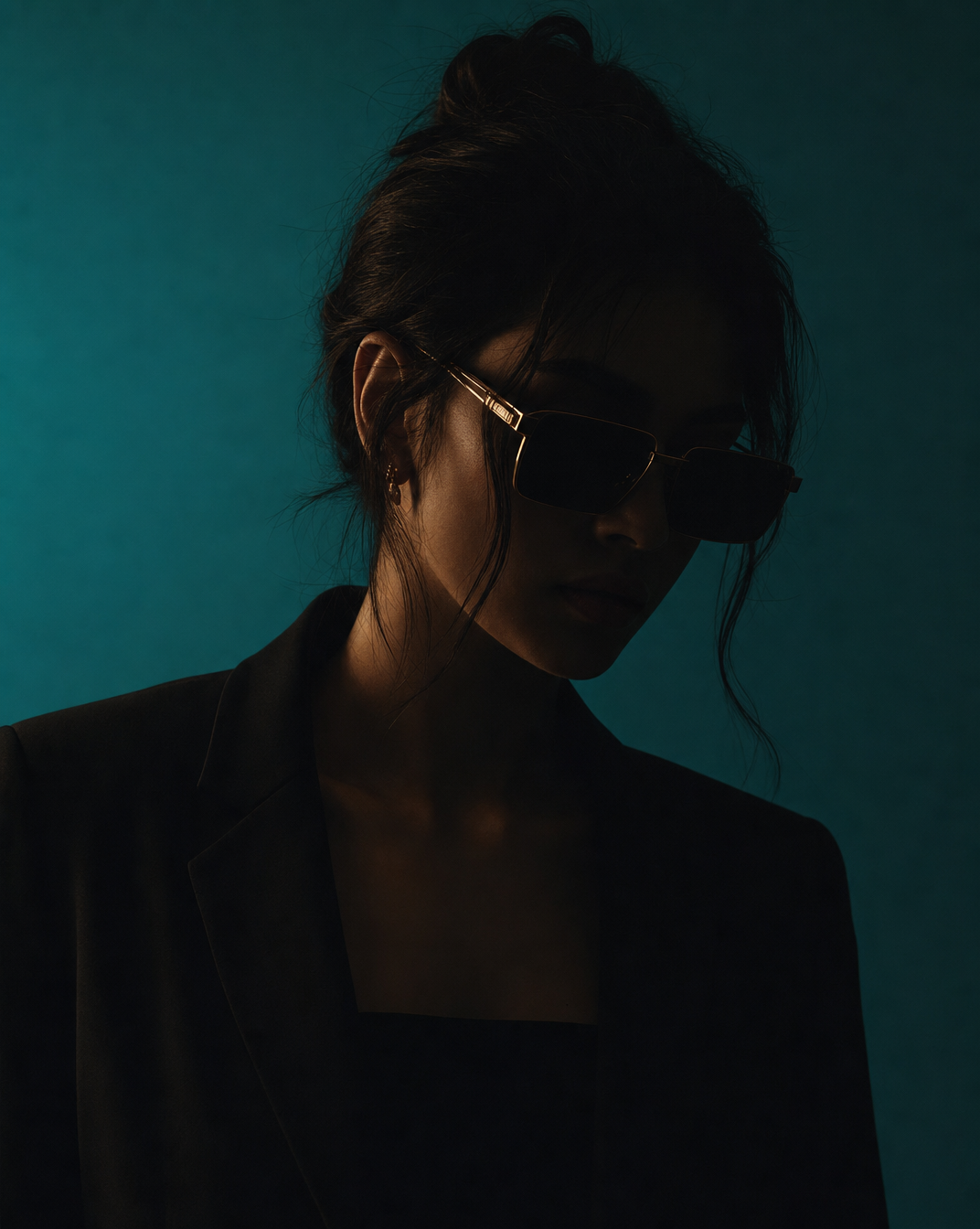
Woman in Teal Light, Shadowed Fashion Portrait
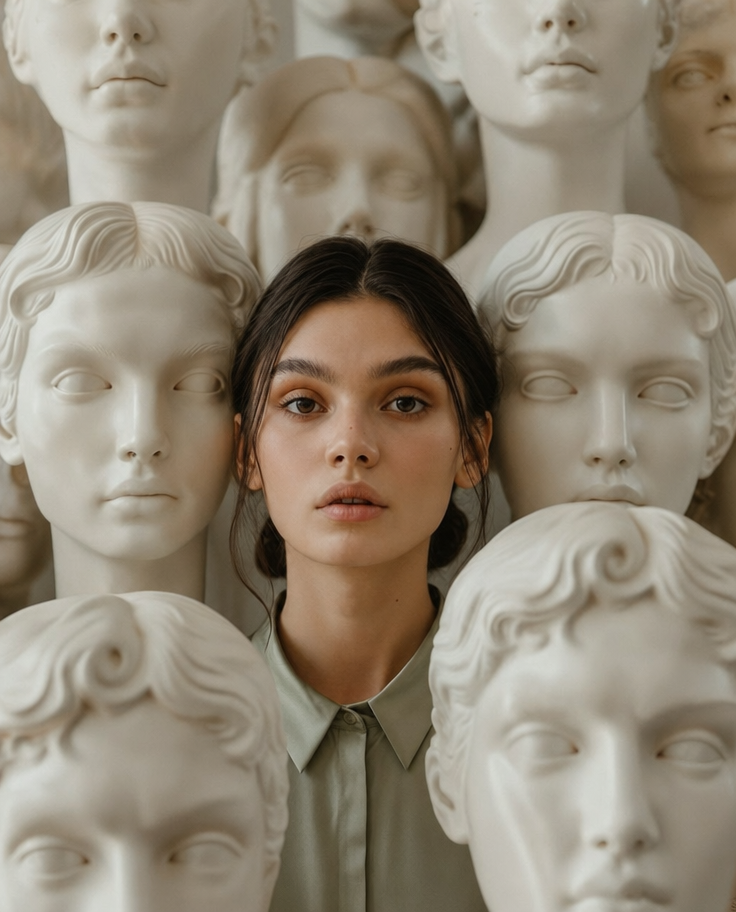
Eerie Elegance Among Marble Busts
Charcoal turtleneck with red eye-beam
Dreamy Macro Portrait in Cool Water