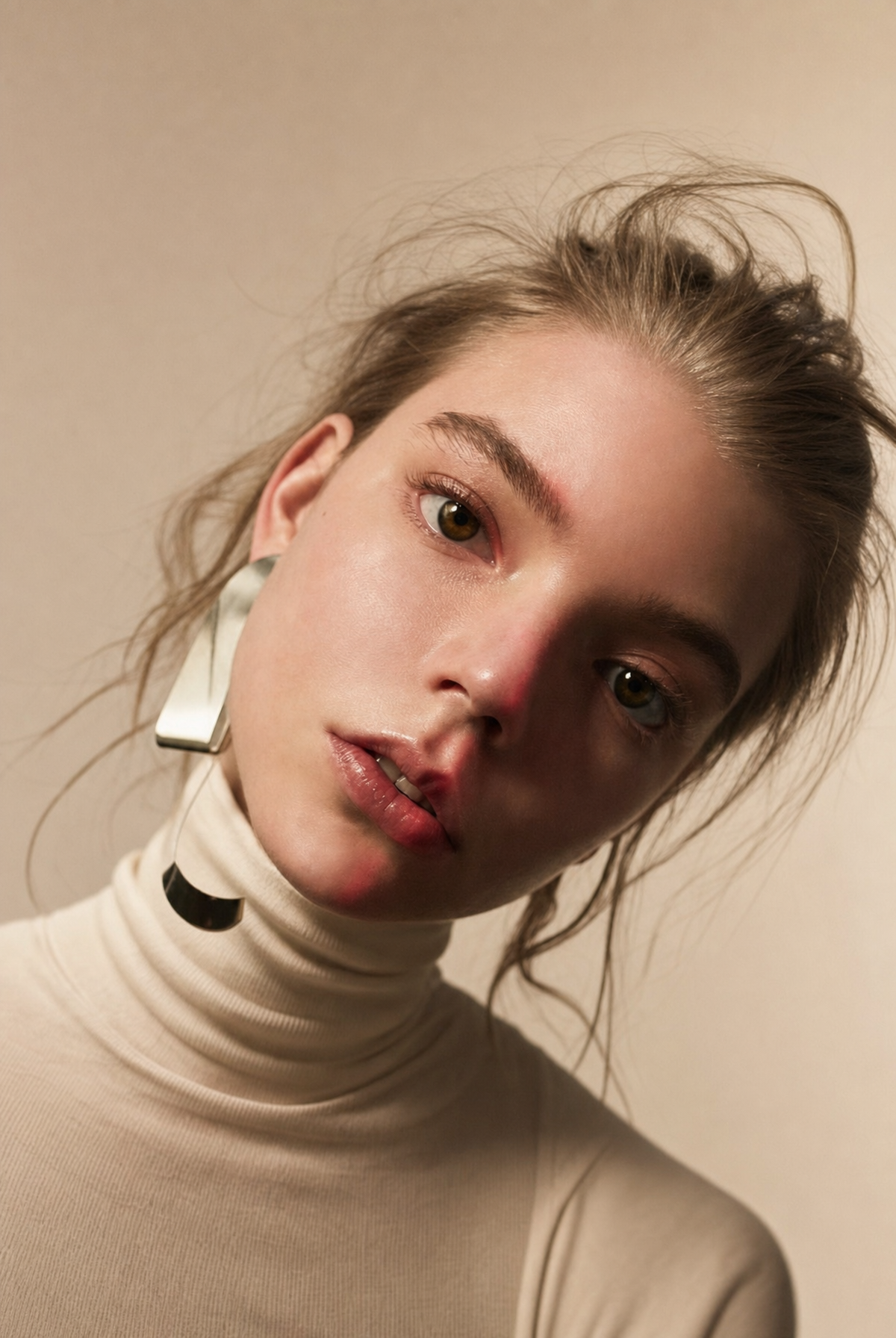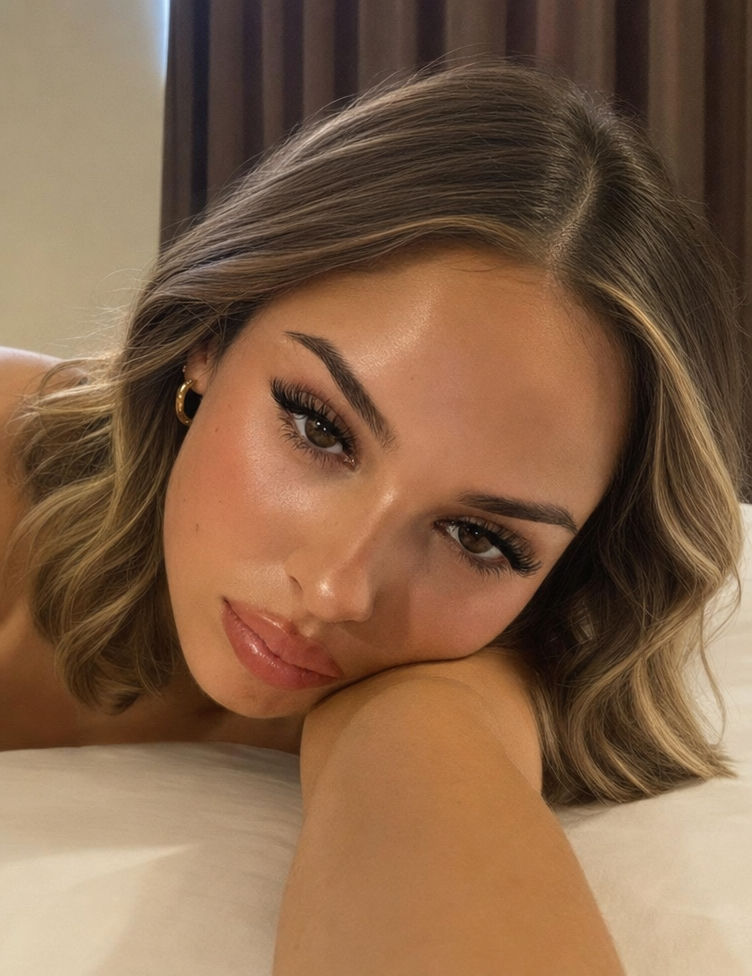
Why this works
“Close-up framing on face and resting arm” and “framed tightly on her face and resting arm” make the pose and expression carry the portrait, while “shallow depth of field” suppresses bedroom detail behind her. The intimate mood comes from “resting her head on her arm on a bed” and “intimate, soft, polished mood,” while “warm indoor lighting” softens the beige-and-white palette and “slightly cooler, rosy highlight palette” keeps the skin from looking overly yellow. “Shoulder-length wavy hair (side-parted)” and “more defined brows and curled lashes” provide controlled editorial detail within the tight crop.
FAQ
→How do I make her eyes and expression more central than the resting arm?
Replace “Close-up framing on face and resting arm” and “framed tightly on her face and resting arm” with “extreme close-up centered on her eyes and upper face, with the arm only a soft foreground edge.” Keep “shallow depth of field” so the gaze stays sharper than the bed and arm.
→How do I shift this from warm, intimate beauty editorial to a cooler, moodier portrait?
Replace “Warm indoor lighting with soft, flattering illumination” and “Warm indoor lighting” with “cool window light from one side, gentle shadow falloff, and low-key contrast.” Change “intimate, soft, polished mood” to “quiet, cinematic, introspective mood,” while retaining “slightly cooler, rosy highlight palette” to preserve the skin’s pink tonal direction.
→How do I build a matching series with different poses and bedroom compositions?
Keep “photorealistic beauty editorial portrait,” “dewy glowing skin,” “shoulder-length wavy hair (side-parted),” “neutral makeup with more defined brows and curled lashes,” and “beige and white” consistent. Swap “resting her head on her arm on a bed” for variations such as “sitting upright against linen pillows,” “lying on her side with one hand beneath her cheek,” or “standing beside the bed in a loose silk robe,” and replace “framed tightly on her face and resting arm” with “medium close-up including shoulders and upper torso” when the pose needs more context.
Learn the technique behind this
- Why can't AI spell, and how do I get readable text in an image? — Older diffusion models had no character-level representation of text, so they produced letterform-shaped texture instead of words.
- How should a prompt be structured, and does word order matter? — A prompt that behaves predictably names one subject first, then what it is doing, then where, then the light, then the lens or medium, then the style.
- Why does AI get hands and faces wrong, and how do I fix it? — Hands fail because they're small in frame, extremely variable in pose, and self-occluding — the model has less usable signal per pixel than for any other body part.
Related prompts
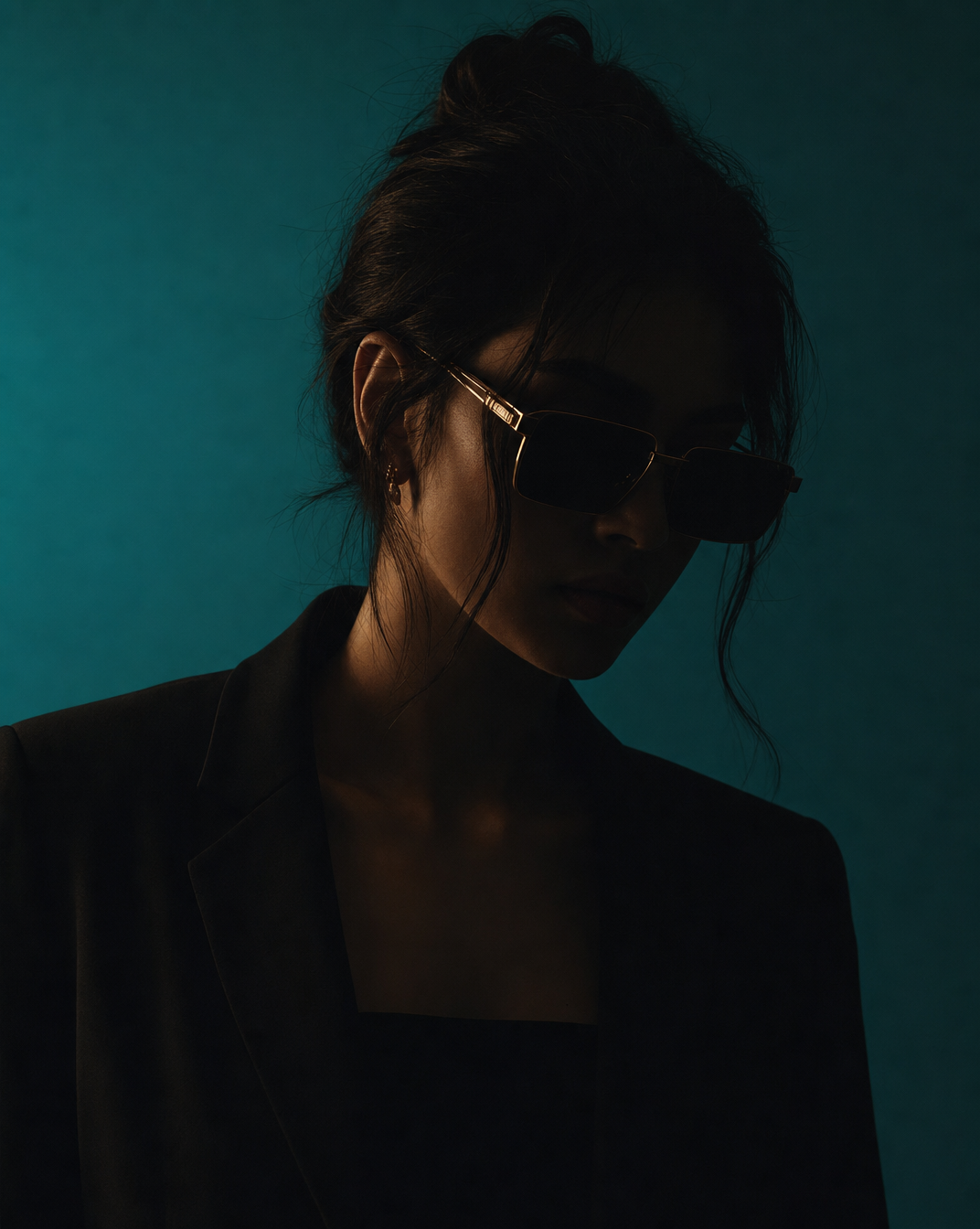
Woman in Teal Light, Shadowed Fashion Portrait
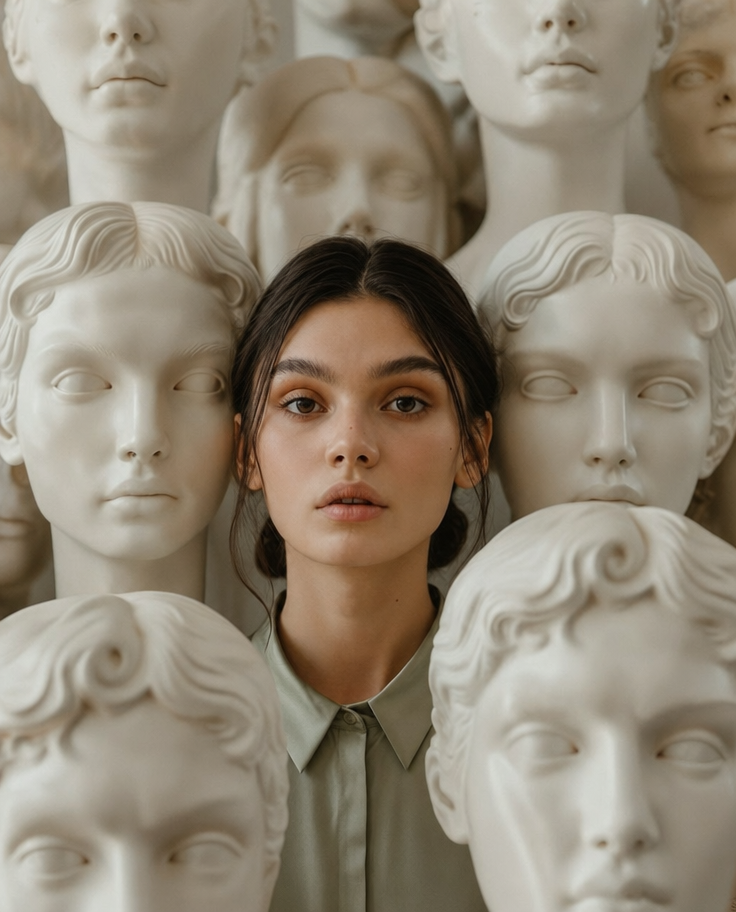
Eerie Elegance Among Marble Busts
Charcoal turtleneck with red eye-beam
Dreamy Macro Portrait in Cool Water