Same prompt, generated with each model separately — click one to see how it holds up.
Why this works
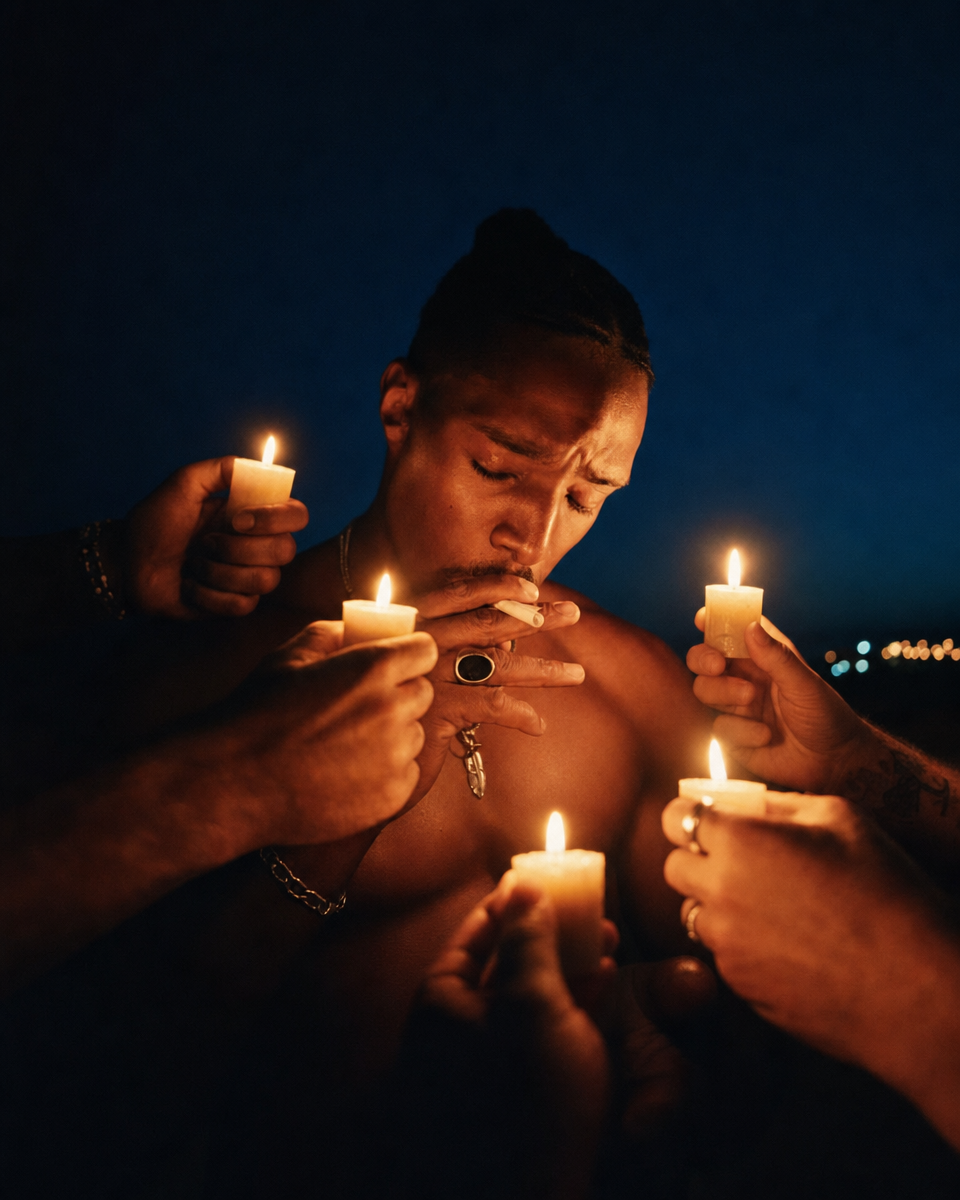
“Shirtless man in the center of the frame” establishes the portrait-close-up hierarchy, keeping his face and upper chest as the visual anchor while the surrounding hands form a tight enclosure. The phrase “warm amber-orange glow across his skin” supplies the dominant orange, and “deep blue shadowed background” pushes the surrounding space toward near-black, creating the image’s strong warm-versus-cool contrast. “Shallow depth of field that blurs the hands and flames at the edges” keeps the candles legible as a threatening frame without competing with the man’s realistic skin texture and central focus.
FAQ
→How do I make the candles and hands more prominent than the man’s face?
Replace “shirtless man in the center of the frame” with “shirtless man partially obscured in the background,” and change “blurs the hands and flames at the edges” to “sharp focus on multiple hands and candle flames in the foreground, face slightly softened behind them.” Keep “near his cheeks and upper chest” to preserve the enclosing gesture.
→How do I shift this from tense and threatening to calm and devotional?
Replace “intimate high-contrast lighting” and “tense, dramatic atmosphere” with “soft, low-contrast candlelight and serene devotional atmosphere.” Change “deep blue shadow” to “muted violet-black ambient shadow” and replace “several hands lifting” with “gentle hands presenting small candles,” which removes the sense of pressure without losing the close-up composition.
→How do I create a consistent series with different candle colors and moods?
Keep the fixed structure “close-up framing,” “man in the center of the frame,” and “shallow depth of field,” then swap “warm amber-orange glow” for controlled variants such as “pale gold glow,” “crimson candlelight,” or “cool white flame glow.” Pair each with a matching shadow phrase such as “deep indigo shadows,” “burgundy-black shadows,” or “steel-blue shadows,” while retaining “realistic skin texture” for visual continuity.
Learn the technique behind this
- Why can't AI spell, and how do I get readable text in an image? — Older diffusion models had no character-level representation of text, so they produced letterform-shaped texture instead of words.
- How should a prompt be structured, and does word order matter? — A prompt that behaves predictably names one subject first, then what it is doing, then where, then the light, then the lens or medium, then the style.
- Why does AI get hands and faces wrong, and how do I fix it? — Hands fail because they're small in frame, extremely variable in pose, and self-occluding — the model has less usable signal per pixel than for any other body part.
Related prompts
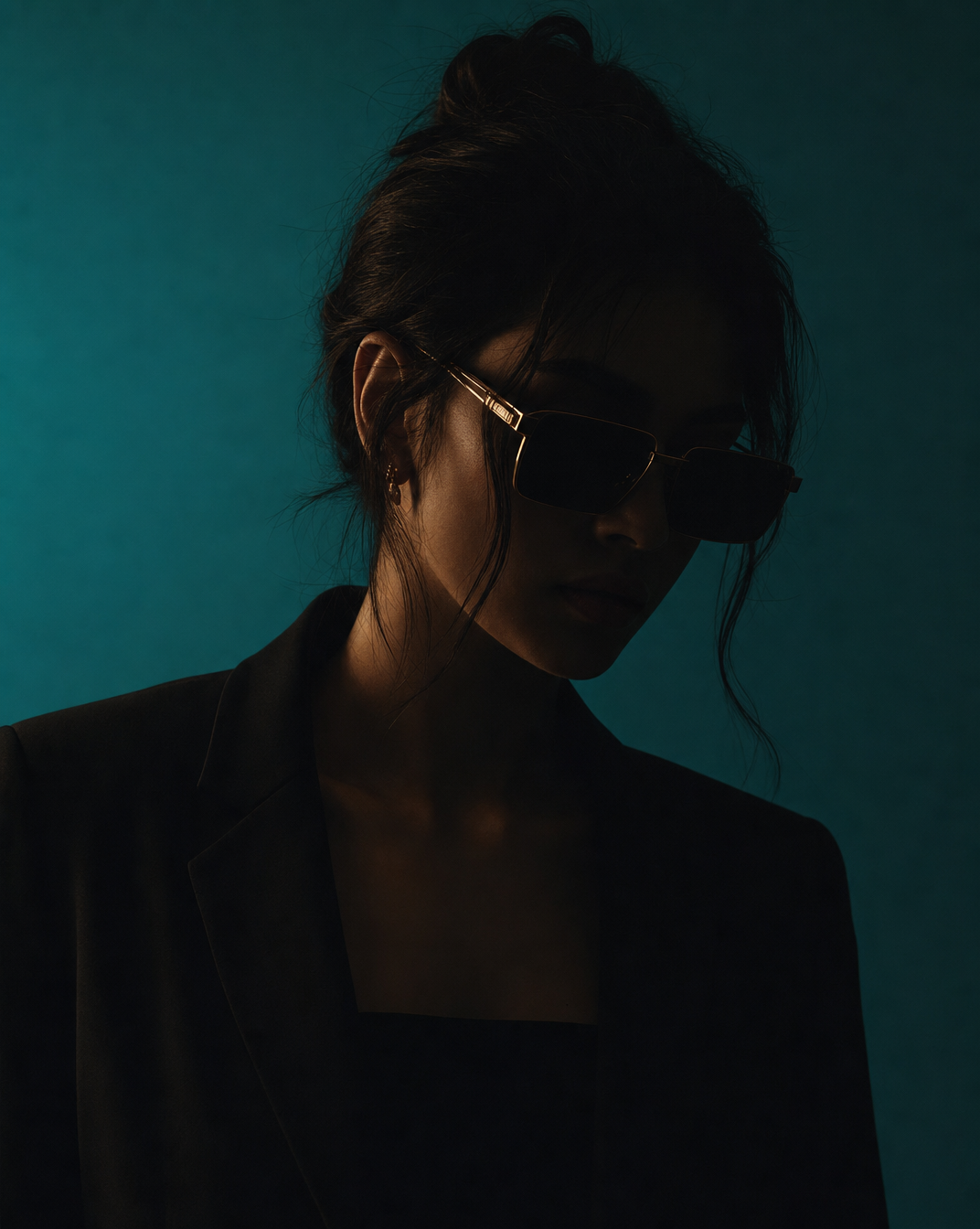
Woman in Teal Light, Shadowed Fashion Portrait
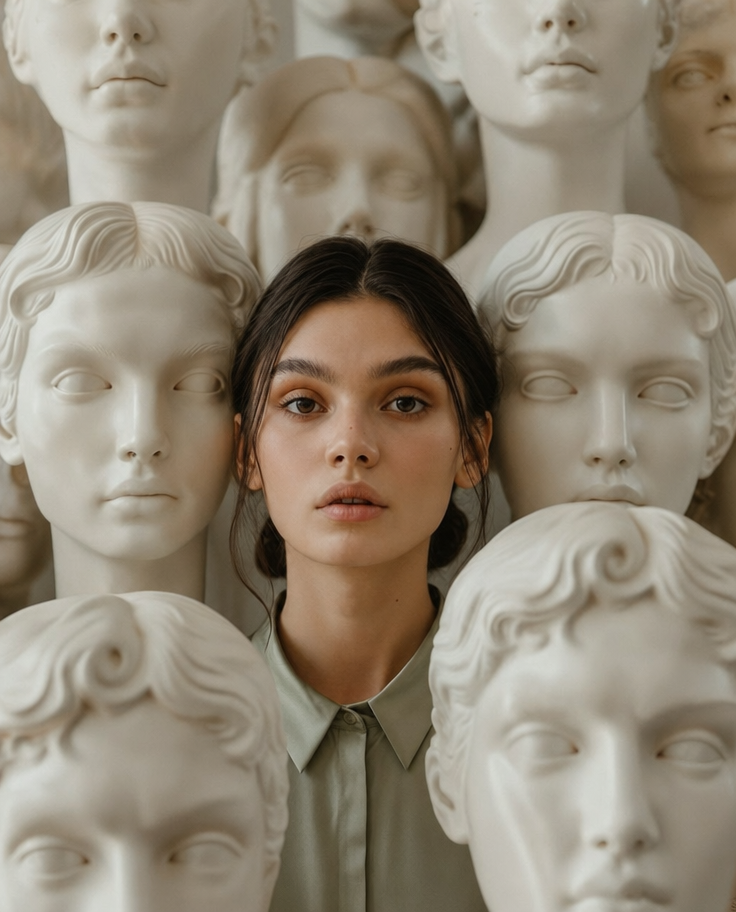
Eerie Elegance Among Marble Busts
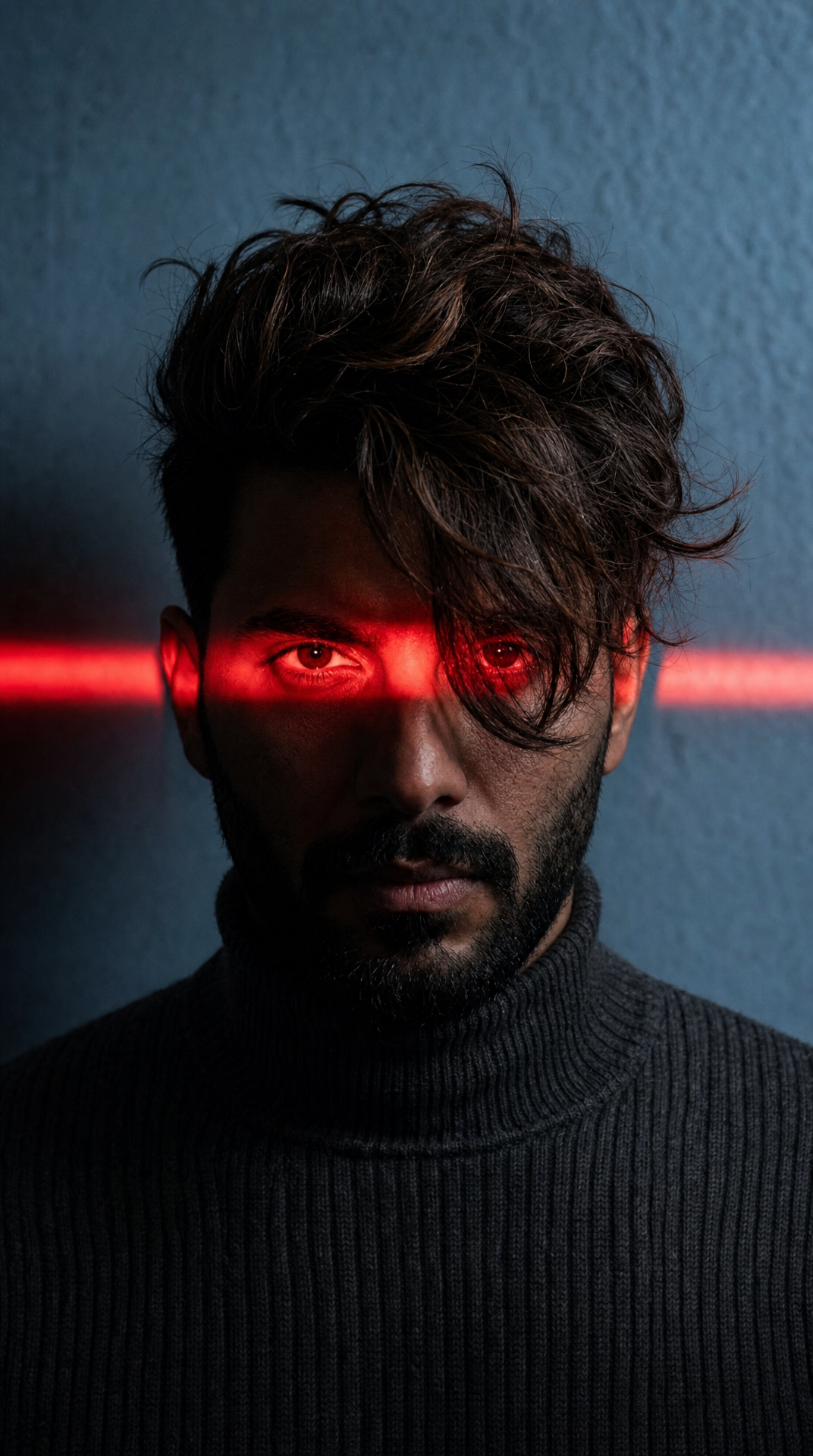
Charcoal turtleneck with red eye-beam

Dreamy Macro Portrait in Cool Water