Why this works
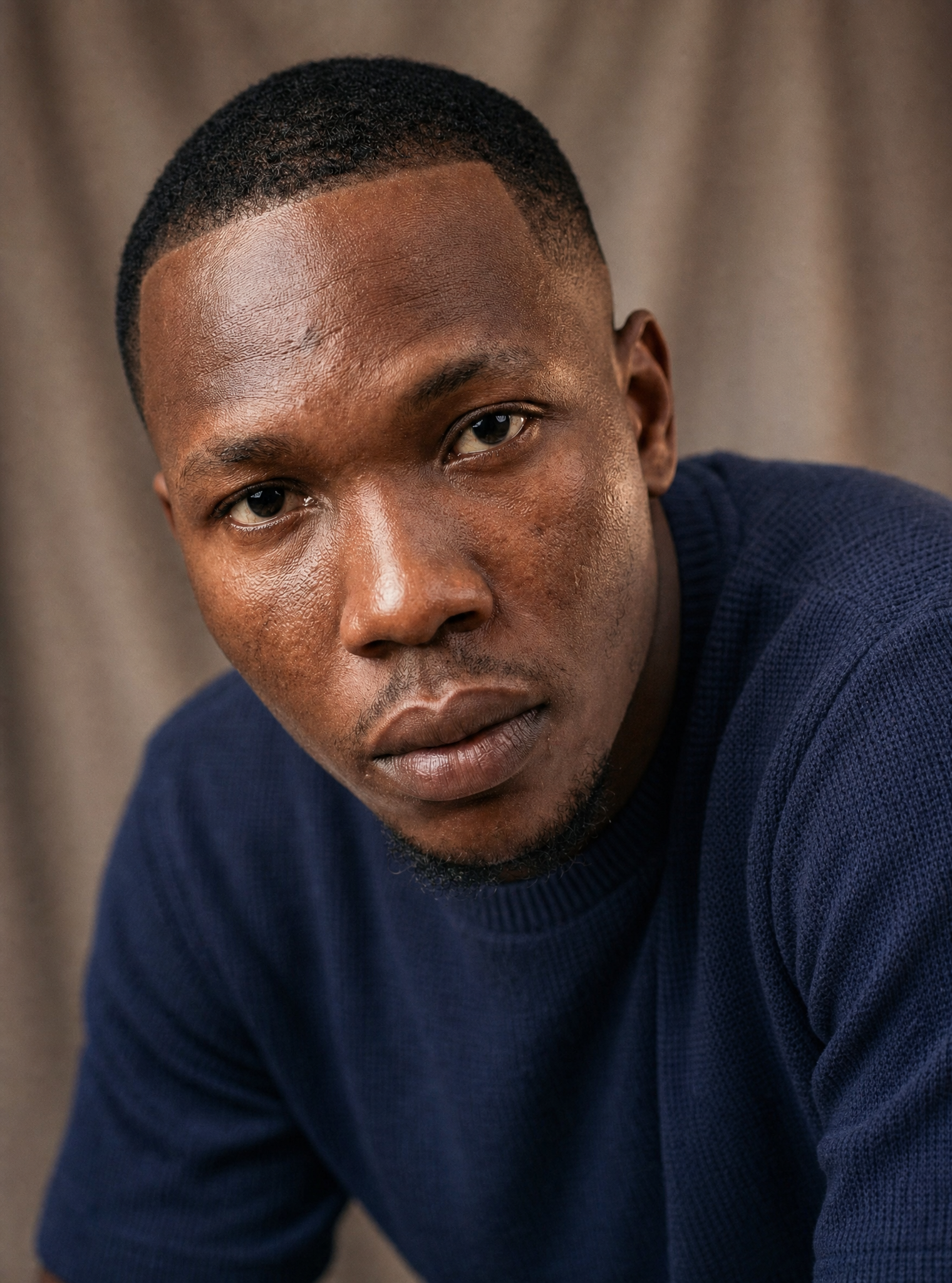
“Close-up portrait” and “crisp facial micro-details” make the face the unmistakable focal point, while “shallow depth of field” separates it from the softly receding draped background. The serious, calm intimacy comes from the exact pairing of “calm and intimate expression” with “soft natural window light from the side with gentle falloff,” avoiding the harder contrast of studio flash. “Deep navy textured knit sweater,” warm taupe fabric, and “muted tones” create a restrained blue-led palette, with the navy providing the image’s dominant color and the taupe preventing the portrait from feeling cold.
FAQ
→How do I change this prompt for a warmer, more approachable mood?
Replace “serious young Black man, calm and intimate expression” with “warmly smiling young Black man with an open, approachable expression,” and change “soft natural window light from the side with gentle falloff” to “warm golden-hour window light with a gentle amber glow.” Replace “cinematic yet natural color grading in muted tones” with “natural color grading in warm, softly saturated tones.”
→How do I make the sweater more visually central?
Change “close-up portrait” to “tight chest-up portrait,” and replace “crisp facial micro-details” with “crisp facial and sweater-fiber details.” Keep “deep navy textured knit sweater,” but add “prominent textured knit occupying the lower third of the frame,” so the garment receives more compositional weight without losing the face as the main subject.
→How do I build a matching series with different clothing colors?
Keep “photorealistic close-up portrait,” “warm taupe draped background,” “soft natural window light from the side with gentle falloff,” and “cinematic yet natural color grading in muted tones” unchanged. Swap only “deep navy textured knit sweater” for controlled variants such as “muted forest-green textured knit sweater,” “burnt-rust textured knit sweater,” or “charcoal-gray textured knit sweater,” preserving the same close-up framing, lighting, and background across the set.
Learn the technique behind this
- How should a prompt be structured, and does word order matter? — A prompt that behaves predictably names one subject first, then what it is doing, then where, then the light, then the lens or medium, then the style.
- Why can't AI spell, and how do I get readable text in an image? — Older diffusion models had no character-level representation of text, so they produced letterform-shaped texture instead of words.
- How do I keep one consistent style across a whole set of images? — Style consistency is more achievable than character consistency because style lives in describable attributes.
Related prompts
Woman in Teal Light, Shadowed Fashion Portrait
Eerie Elegance Among Marble Busts
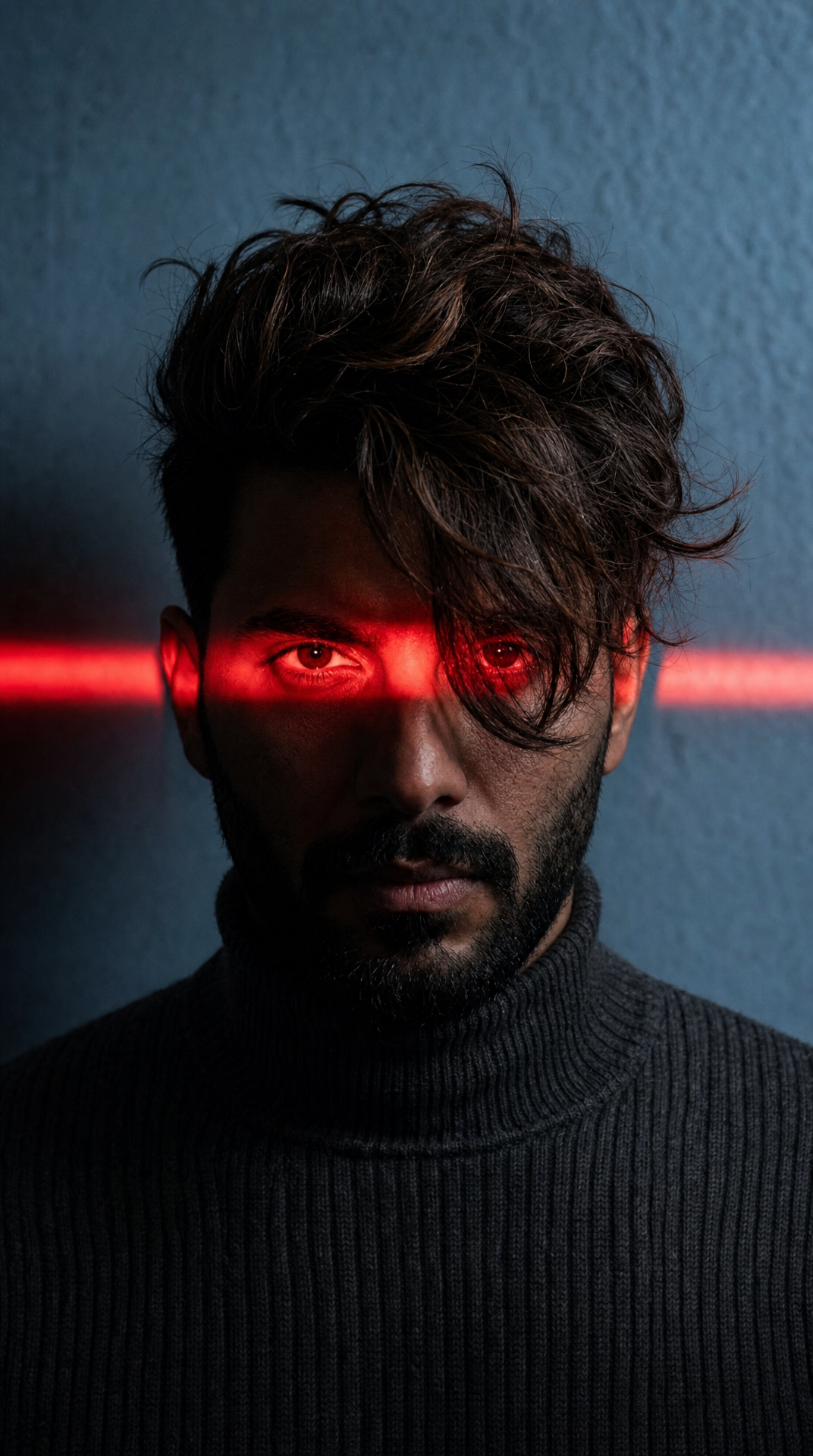
Charcoal turtleneck with red eye-beam
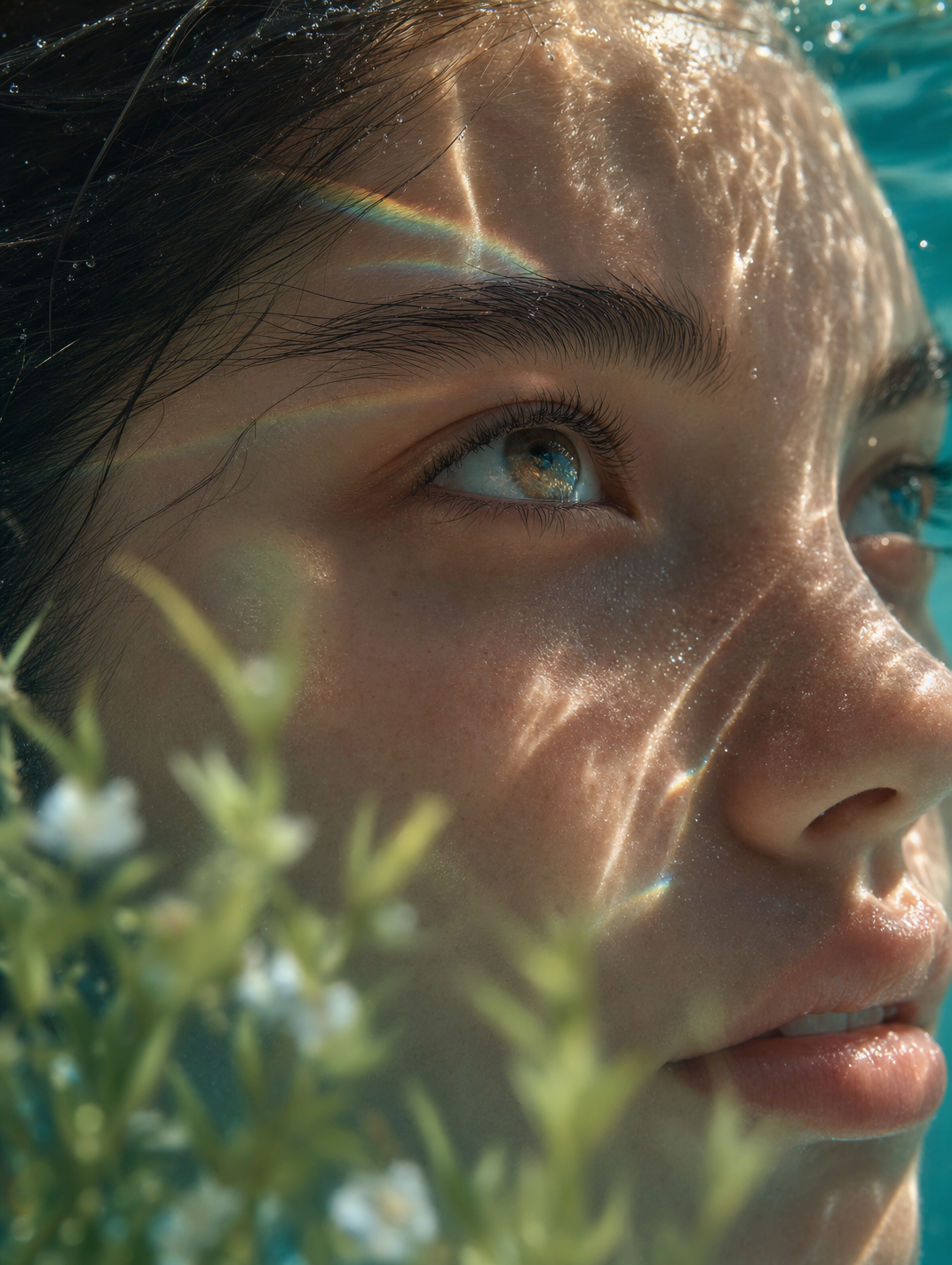
Dreamy Macro Portrait in Cool Water