Why this works
The portrait feels surreal because “prism-like cyan, violet, and magenta light streaks crossing the face and body” turns the seated figure into the main graphic structure while preserving recognizable identity through “preserving natural facial features, pose, and outfit.” “Cinematic portrait framing” and “portrait-full-body” keep the composition focused on the complete pose, while the “plain softly lit background” prevents the purple, pink, and blue streaks from competing with the subject. The moody, filmic finish comes from the specific combination of “cool surreal film-like tones,” “soft grain,” “subtle lens flare,” and “slight haze,” with “realistic” and “cinematic photorealistic fashion photography” keeping the effect grounded.
FAQ
→How do I make the face more central and readable while keeping the prismatic effect?
Replace “light streaks crossing the face and body” with “light streaks framing the face and grazing one cheek and shoulder,” and replace “portrait-full-body” with “tight head-and-shoulders portrait framing.” Keep “preserving natural facial features” so the increased facial emphasis does not turn the portrait into an abstract color study.
→How do I change the mood from moody and surreal to bright, editorial, and energetic?
Replace “cool surreal film-like tones” with “bright high-key editorial tones,” “moody artistic lighting” with “clean luminous studio lighting,” and “slight haze” with “crisp clear air.” Change the streak colors from “cyan, violet, and magenta” to “electric cyan, hot pink, and warm gold” for a more energetic palette while retaining “subtle lens flare.”
→How do I create a series of variations using different subjects or settings?
Keep the structural phrases “cinematic high-fashion portrait,” “preserving natural facial features, pose, and outfit,” and “prism-like ... light streaks,” then replace “a seated person” with a consistent subject set such as “standing dancer,” “tailored model,” or “musician holding a violin.” Swap “plain softly lit background” for controlled locations such as “brutalist concrete studio,” “dark velvet theater,” or “misty rooftop at night,” while keeping the same cyan, violet, and magenta color order for visual continuity.
Learn the technique behind this
- Why can't AI spell, and how do I get readable text in an image? — Older diffusion models had no character-level representation of text, so they produced letterform-shaped texture instead of words.
- How should a prompt be structured, and does word order matter? — A prompt that behaves predictably names one subject first, then what it is doing, then where, then the light, then the lens or medium, then the style.
- Why does AI get hands and faces wrong, and how do I fix it? — Hands fail because they're small in frame, extremely variable in pose, and self-occluding — the model has less usable signal per pixel than for any other body part.
Related prompts
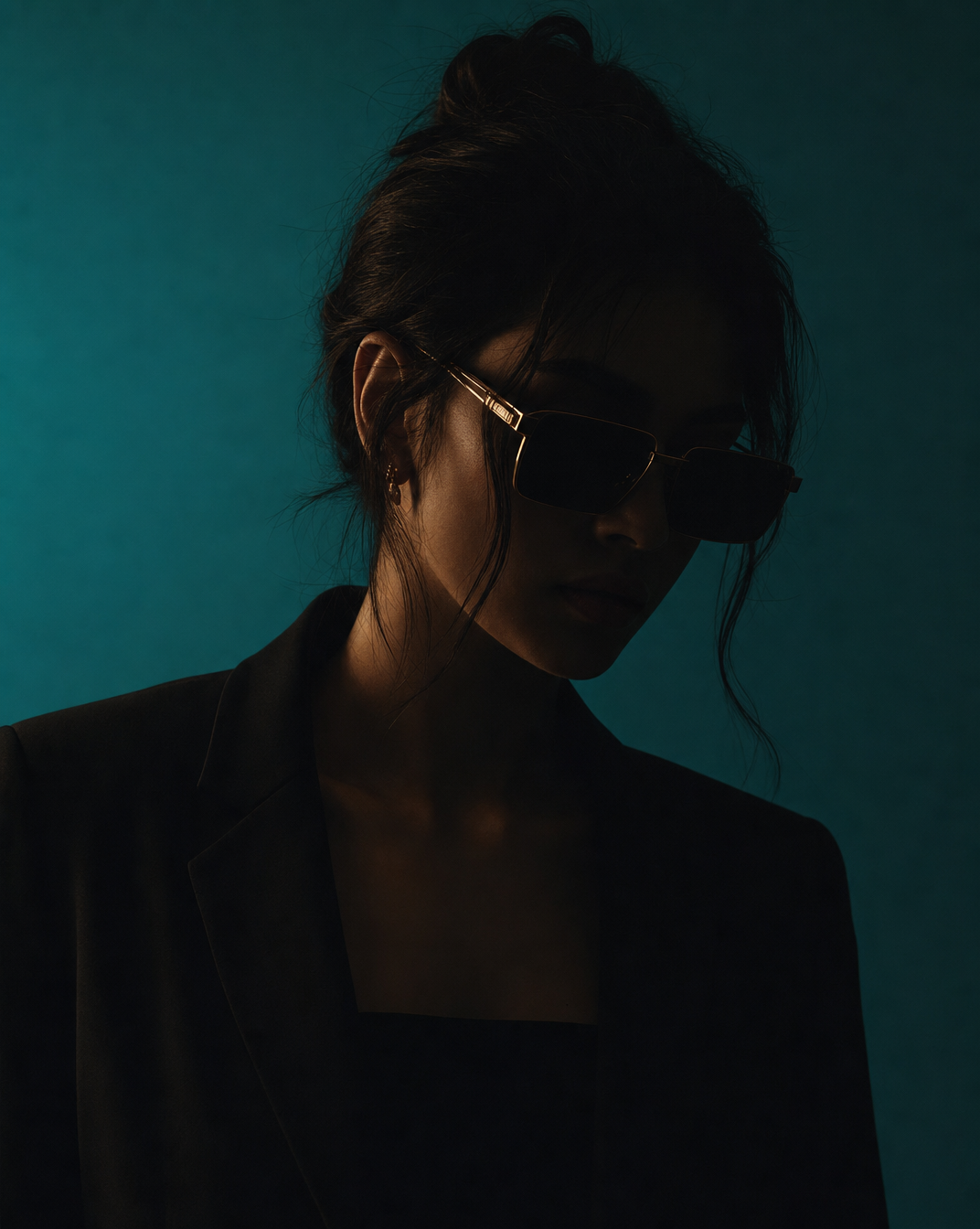
Woman in Teal Light, Shadowed Fashion Portrait
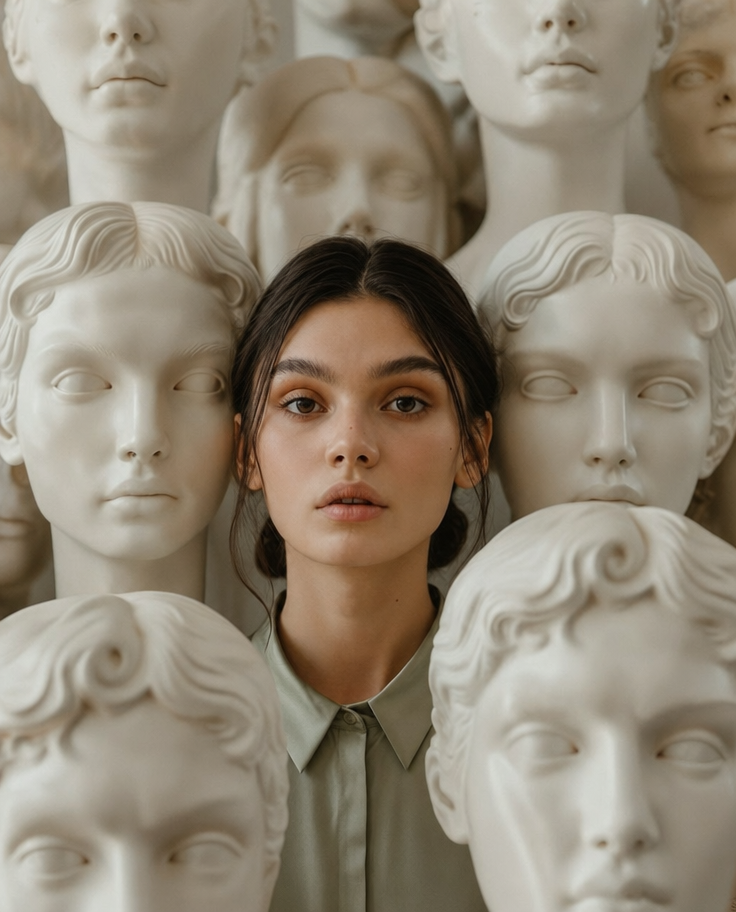
Eerie Elegance Among Marble Busts
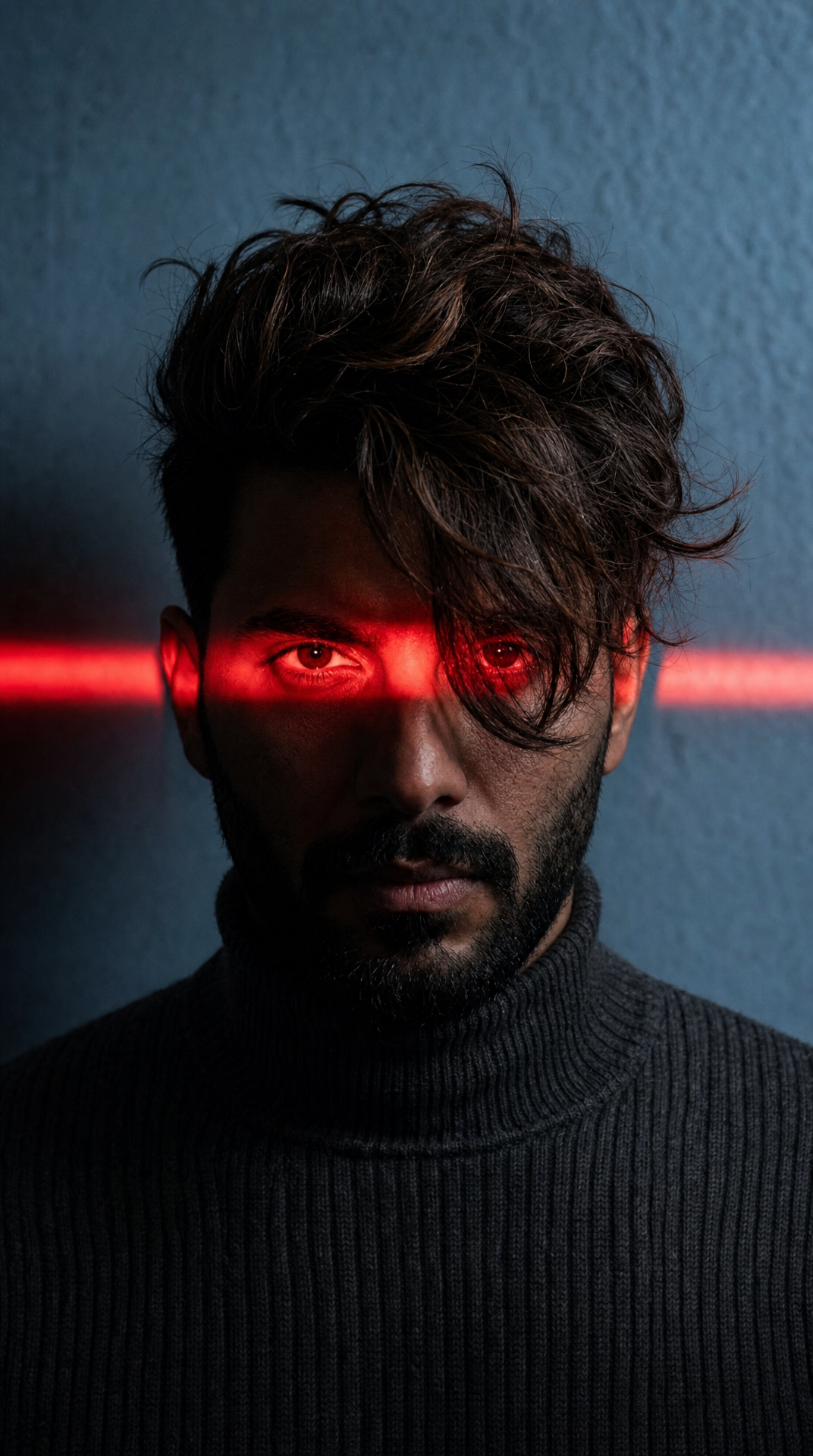
Charcoal turtleneck with red eye-beam
Dreamy Macro Portrait in Cool Water