Why this works
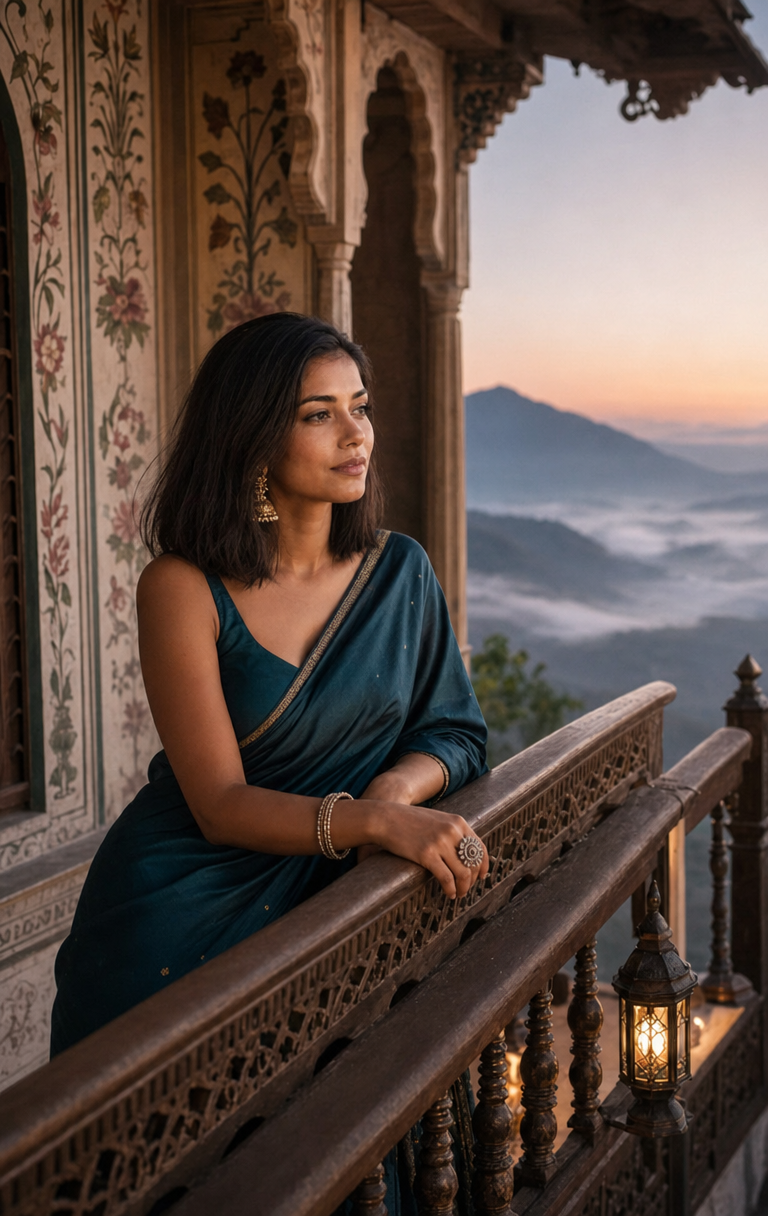
The teal saree against the 'soft golden-pink first-light illumination' is what generates the cool-to-warm color tension the prompt explicitly names, and that contrast is doing more work than either color alone would. 'Intricately carved wooden balustrade in the foreground' plus 'shallow depth of field' is the specific pairing that gives the shot its depth cue, blurring the balustrade so the eye lands on the woman while the carved stone palace still registers as texture. 'Gazing thoughtfully into the distance' combined with the 'misty valley landscape with distant mountains fading into the horizon' is what turns a simple standing pose into a narrative moment, since the mist gives her gaze somewhere to travel toward. Without 'realistic skin texture' called out directly, the cinematic lighting would likely flatten her face into something more painterly than photographic.
Learn the technique behind this
- Why can't AI spell, and how do I get readable text in an image? — Older diffusion models had no character-level representation of text, so they produced letterform-shaped texture instead of words.
- Why does AI get hands and faces wrong, and how do I fix it? — Hands fail because they're small in frame, extremely variable in pose, and self-occluding — the model has less usable signal per pixel than for any other body part.
- How do I keep the same character across multiple images? — Text prompts alone won't hold a face across images — a description defines a type, not a person.
Related prompts
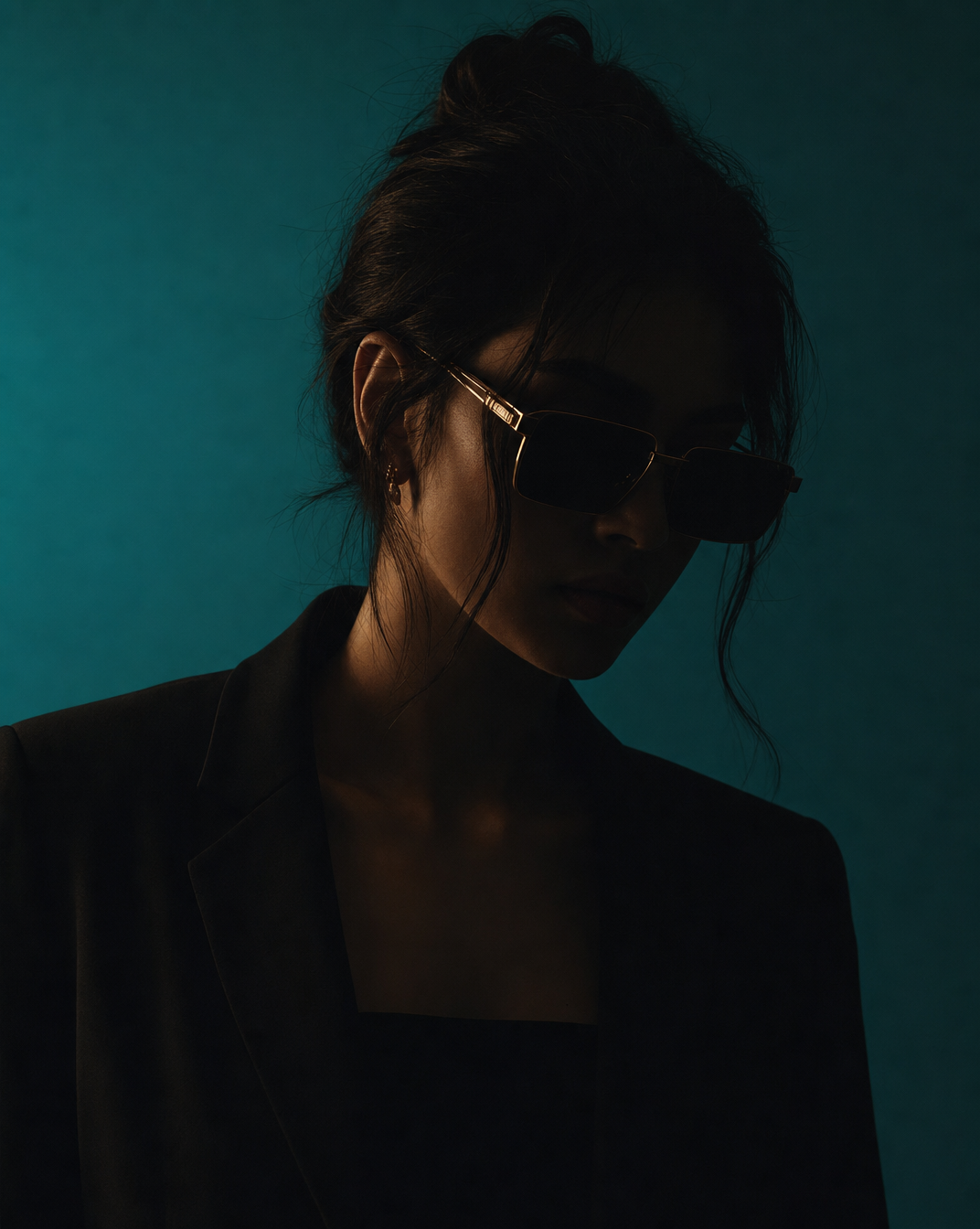
Woman in Teal Light, Shadowed Fashion Portrait
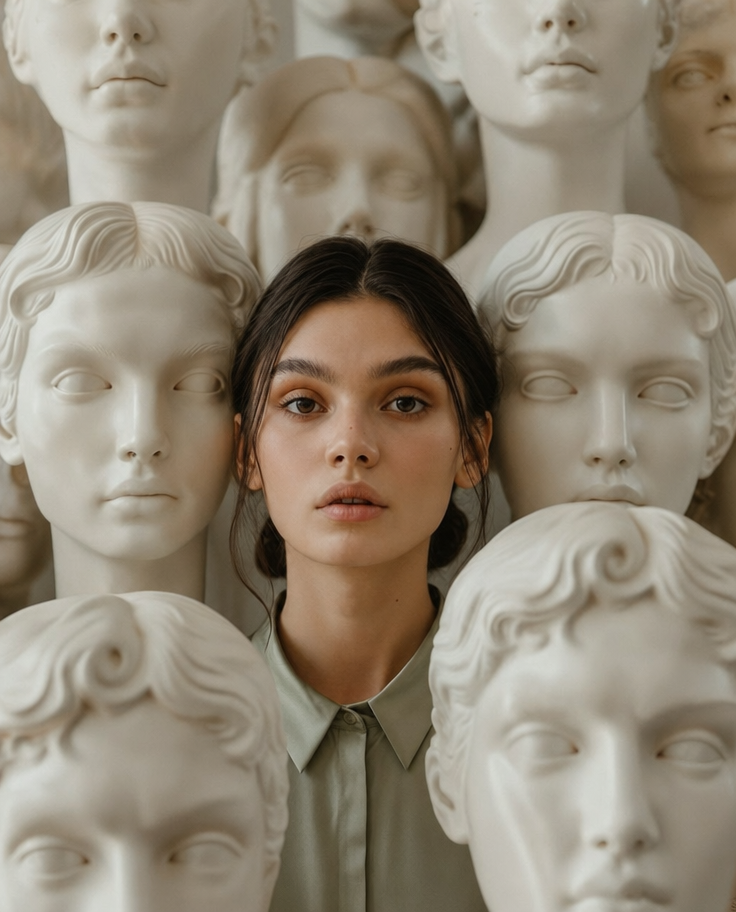
Eerie Elegance Among Marble Busts
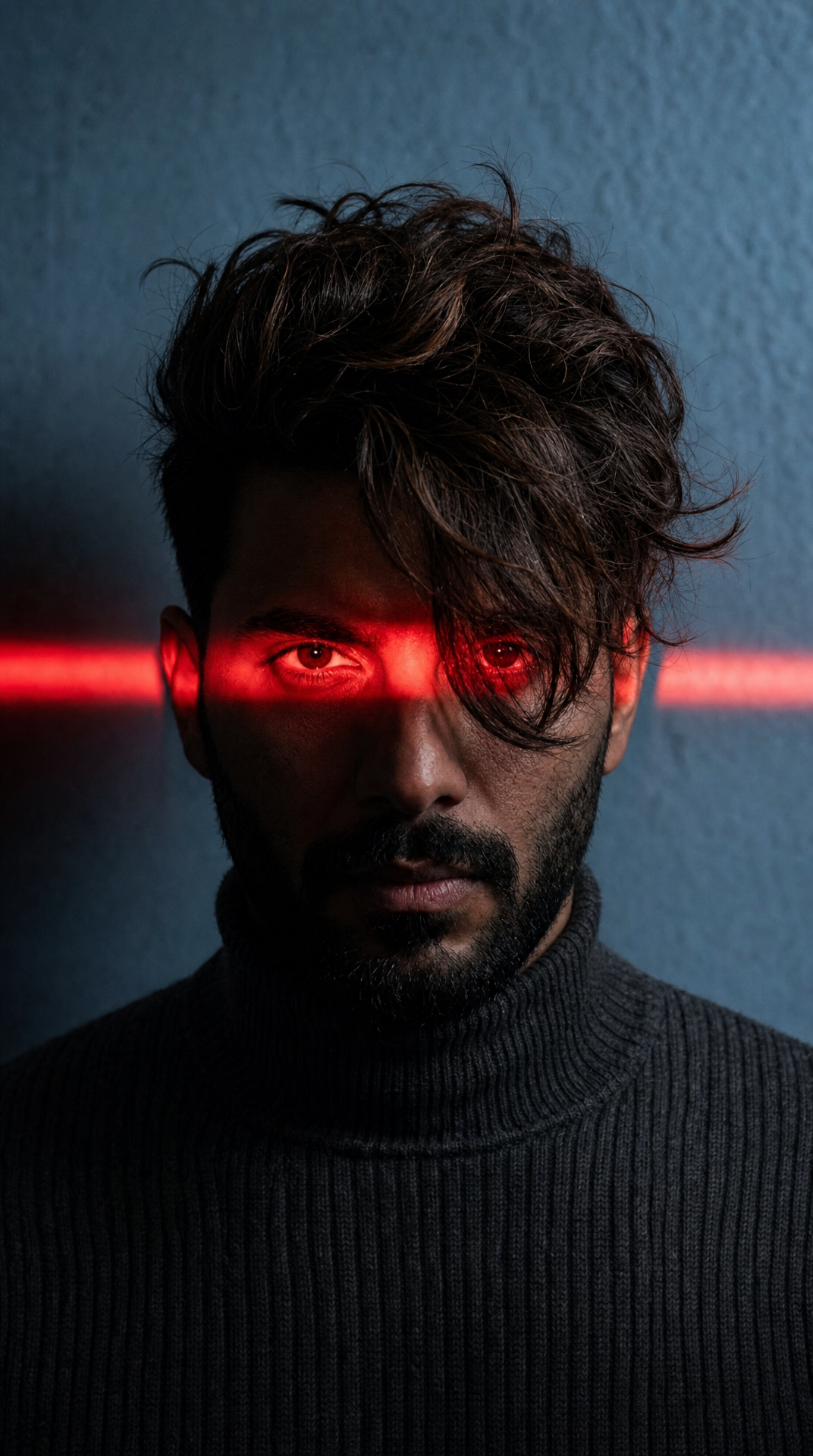
Charcoal turtleneck with red eye-beam
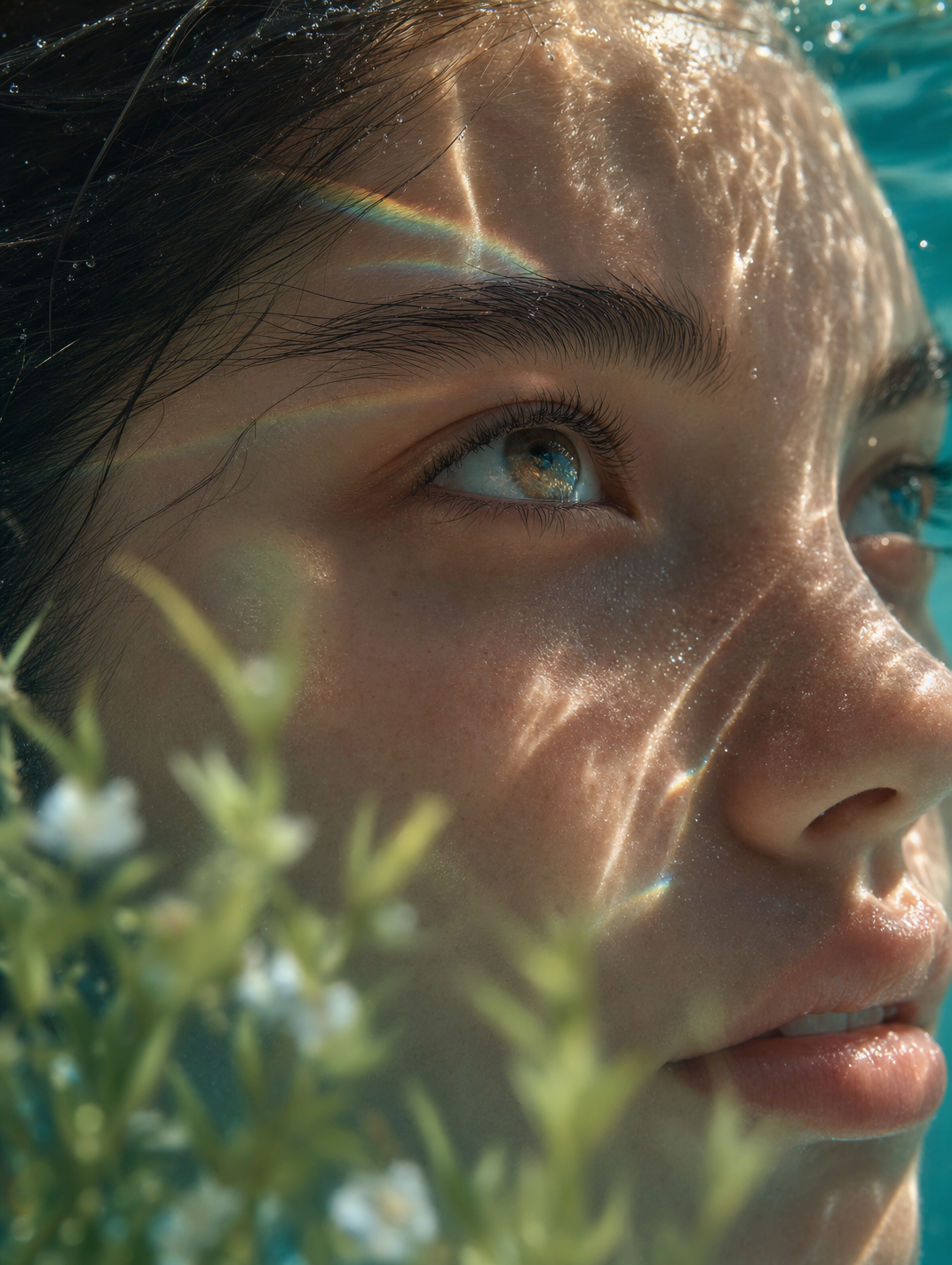
Dreamy Macro Portrait in Cool Water