Why this works
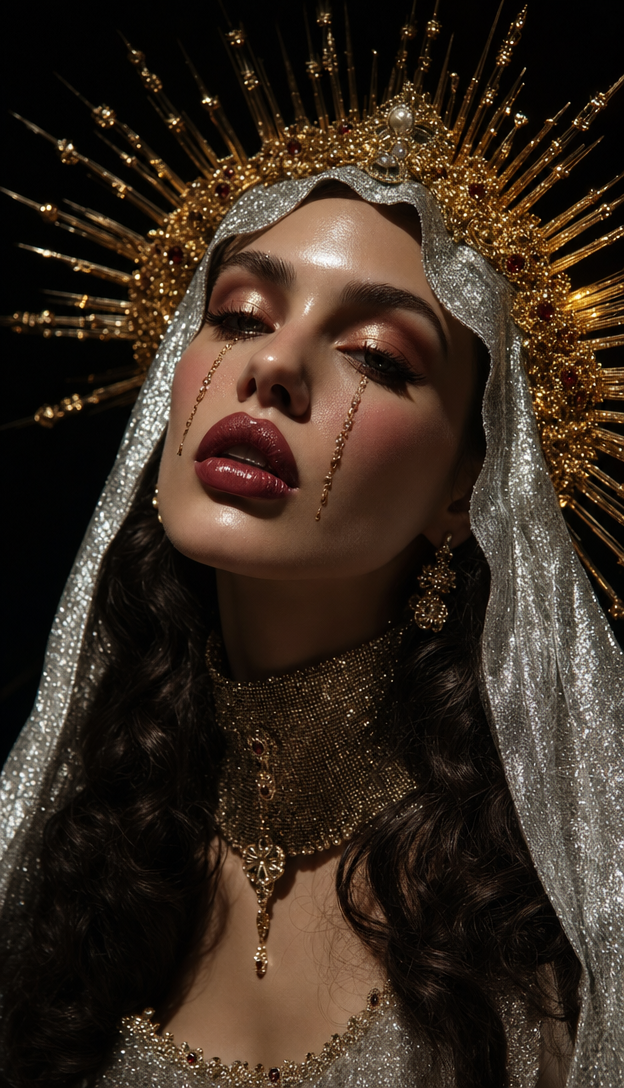
The direct frontal composition and “cinematic close-up portrait” make the woman’s face, crown, and veil fill the frame, while “dark, velvety background with no visible environment details” removes distractions. The opulent mood comes from “sacred-inspired baroque regalia,” the “radiant golden crown with sunburst rays,” and “luxurious metallic textures and jewel sparkle,” with gold dominating against the gray-silver veil. “High-end studio lighting with dramatic shadows and a subtle mystical glow” supplies the sculpted contrast and mystical tone, while “ultra-detailed skin and fabric realism” keeps the surreal styling physically convincing.
FAQ
→How do I make the crown and regalia more prominent than the face?
Replace “cinematic close-up portrait” with “tight half-body fashion portrait” and change “framing her face” to “crown and upper regalia fully visible.” Keep “radiant golden crown with sunburst rays,” but add “oversized crown extending prominently across the upper frame” and “ornate corset as a major focal point.”
→How do I shift this from mystical and dramatic to softer, romantic glamour?
Replace “dramatic shadows and a subtle mystical glow” with “soft diffused beauty lighting and a warm pearlescent glow,” and replace “dark, velvety background” with “pale blush-gray satin background.” Change “deep rose tones and glossy red-burgundy lips” to “soft rose makeup and sheer berry gloss” for a gentler color treatment.
→How do I create a series of variations while preserving the same editorial identity?
Keep “photorealistic cinematic high-fashion editorial,” “direct frontal composition,” and “ultra-detailed skin and fabric realism” fixed, then swap one anchor at a time. Replace “radiant golden crown with sunburst rays” with “silver lunar halo,” “jeweled diadem,” or “black obsidian crown,” and change “flowing silver veil” to “translucent gold chiffon,” “pearl-trimmed lace,” or “smoky graphite silk.”
Learn the technique behind this
- How should a prompt be structured, and does word order matter? — A prompt that behaves predictably names one subject first, then what it is doing, then where, then the light, then the lens or medium, then the style.
- Why can't AI spell, and how do I get readable text in an image? — Older diffusion models had no character-level representation of text, so they produced letterform-shaped texture instead of words.
- Why does AI get hands and faces wrong, and how do I fix it? — Hands fail because they're small in frame, extremely variable in pose, and self-occluding — the model has less usable signal per pixel than for any other body part.
Related prompts
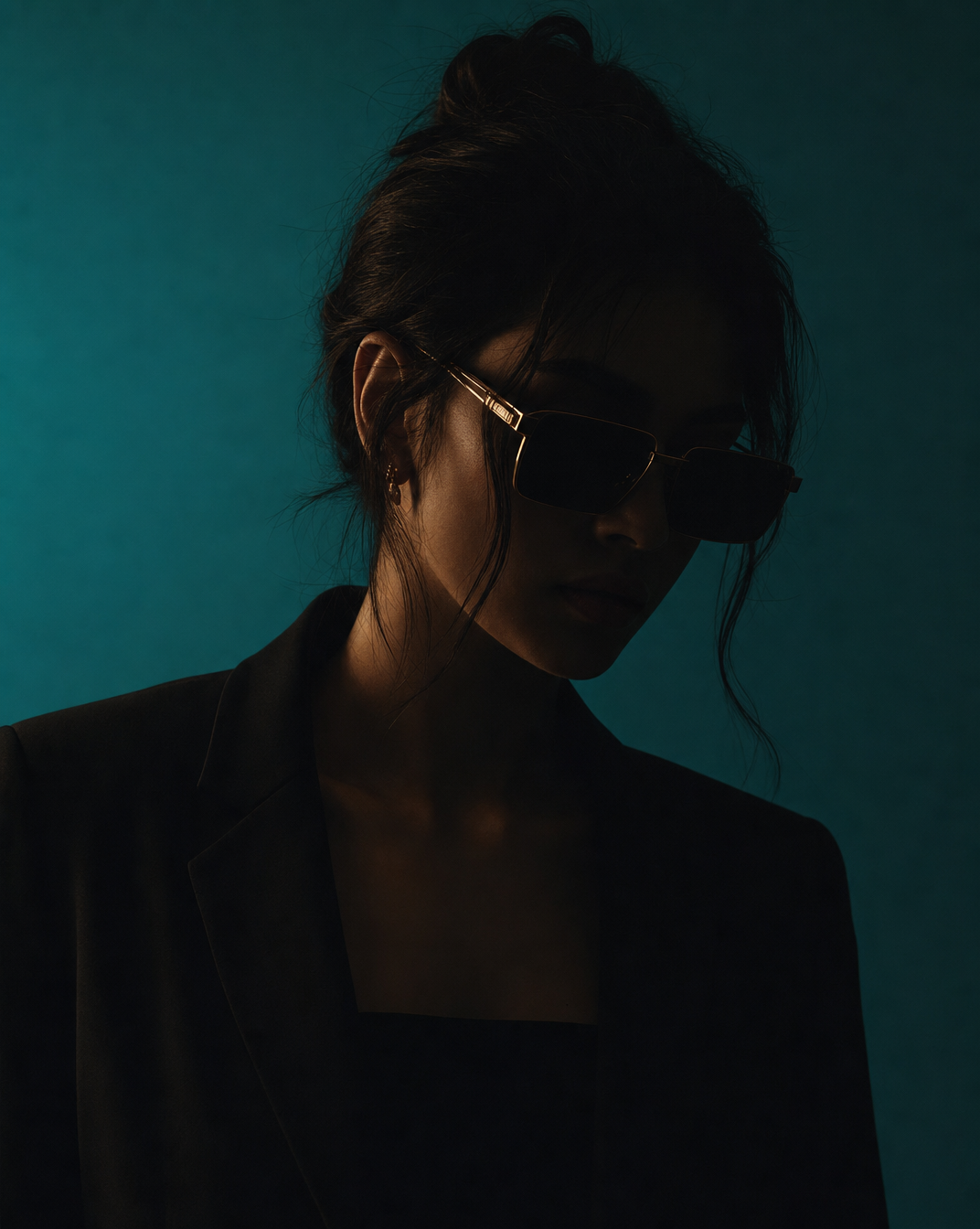
Woman in Teal Light, Shadowed Fashion Portrait
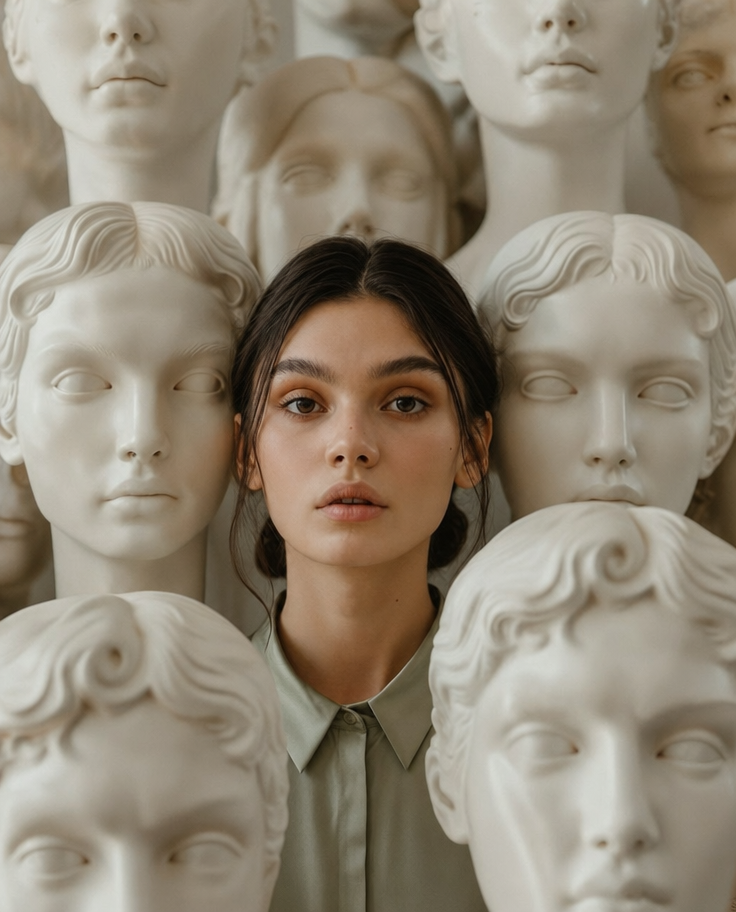
Eerie Elegance Among Marble Busts
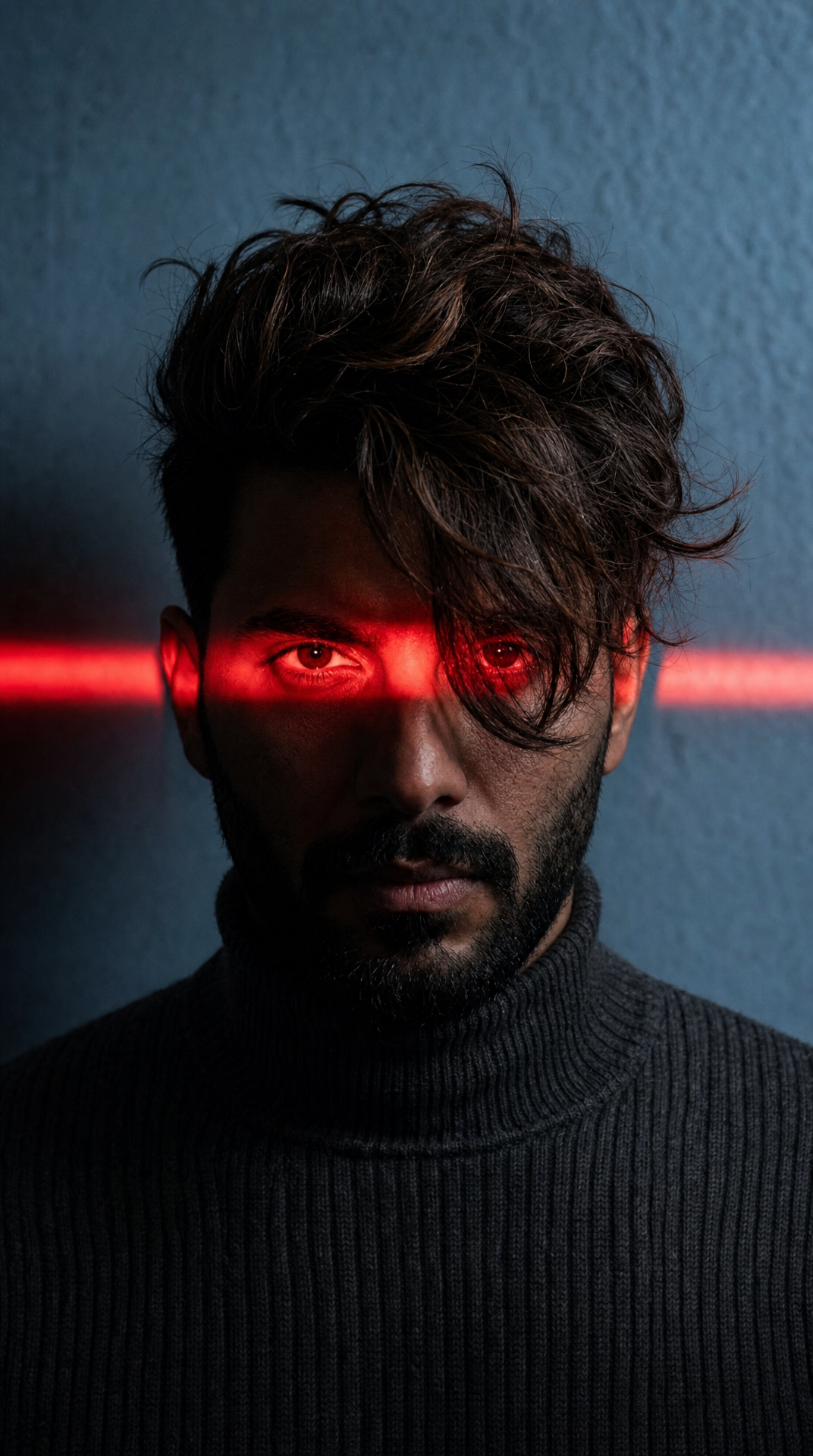
Charcoal turtleneck with red eye-beam
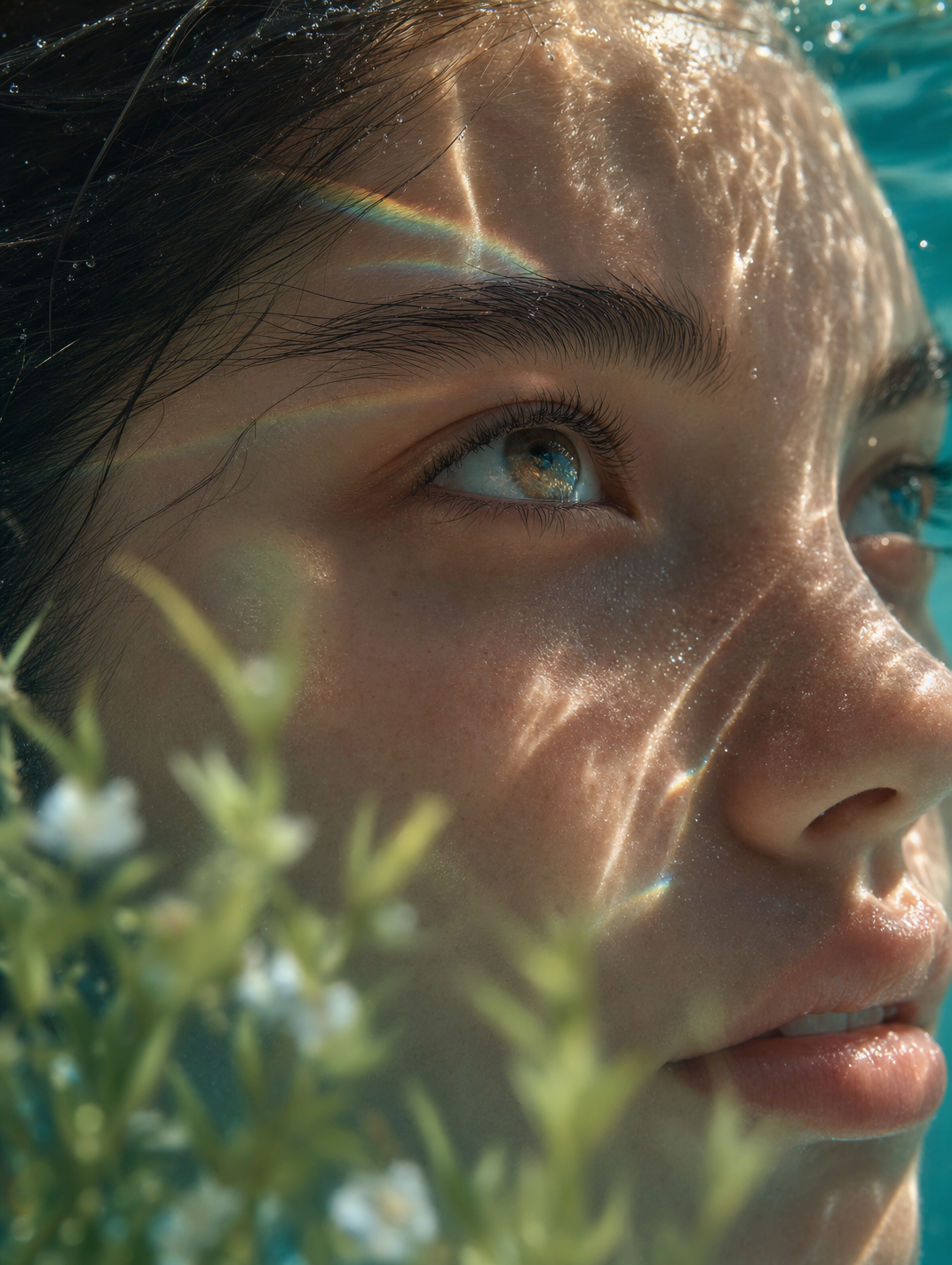
Dreamy Macro Portrait in Cool Water