Why this works
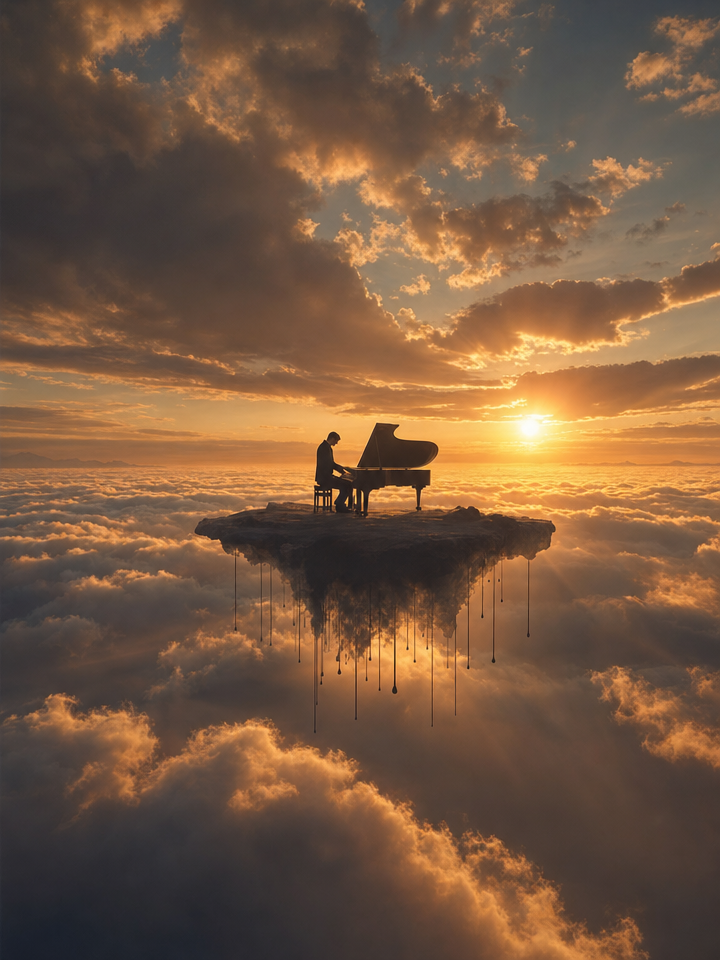
“A lone pianist” and “a small floating rocky island” establish an isolated focal subject against the “vast sea of clouds,” giving the wide-angle composition a strong sense of scale. “Warm side-light from a low sun,” “long golden-orange rays,” and the “copper-tinted sky” supply the late-afternoon mood, while “soft atmospheric haze” separates the brown-gray rocks and piano from the cloud-filled distance. “Surreal photorealistic and cinematic,” “ultra-detailed textures,” and “high dynamic range” balance the impossible setting with tactile rock and piano surfaces.
FAQ
→How do I make the pianist and piano more visually central?
Replace “wide-angle composition” and “wide-shot” with “medium-wide composition, piano and pianist centered in the foreground, clearly readable silhouette,” and change “a small floating rocky island” to “a rocky island platform with the grand piano occupying the central foreground.” Keep “vast sea of clouds” as the background so the scale remains visible.
→How do I shift the scene from majestic and warm to lonely and ominous?
Replace “warm side-light from a low sun,” “long golden-orange rays,” and “copper-tinted sky” with “cold blue-gray moonlight, narrow beams through dense storm clouds, and a desaturated steel-colored sky.” Change “dreamlike, majestic atmosphere” to “孤孤寂, foreboding atmosphere” or, in English, “bleak, ominous atmosphere,” while retaining “soft atmospheric haze” for depth.
→How do I create a series of variations without losing the core concept?
Keep “a lone pianist playing a grand piano above a vast sea of clouds” fixed, then swap only the setting and lighting clauses: use “floating basalt island above a sunset cloud sea,” “snow-covered island above polar fog,” or “mossy island above a moonlit cloud ocean.” Pair each with matching replacements such as “violet twilight” or “cold silver moonlight,” while preserving “surreal photorealistic cinematic” and “wide-angle composition” for visual continuity.
Learn the technique behind this
- Why can't AI spell, and how do I get readable text in an image? — Older diffusion models had no character-level representation of text, so they produced letterform-shaped texture instead of words.
- How should a prompt be structured, and does word order matter? — A prompt that behaves predictably names one subject first, then what it is doing, then where, then the light, then the lens or medium, then the style.
- Which aspect ratio should I use, and how does it change the image? — Aspect ratio determines what the model composes, not how it's cropped afterwards.
Related prompts
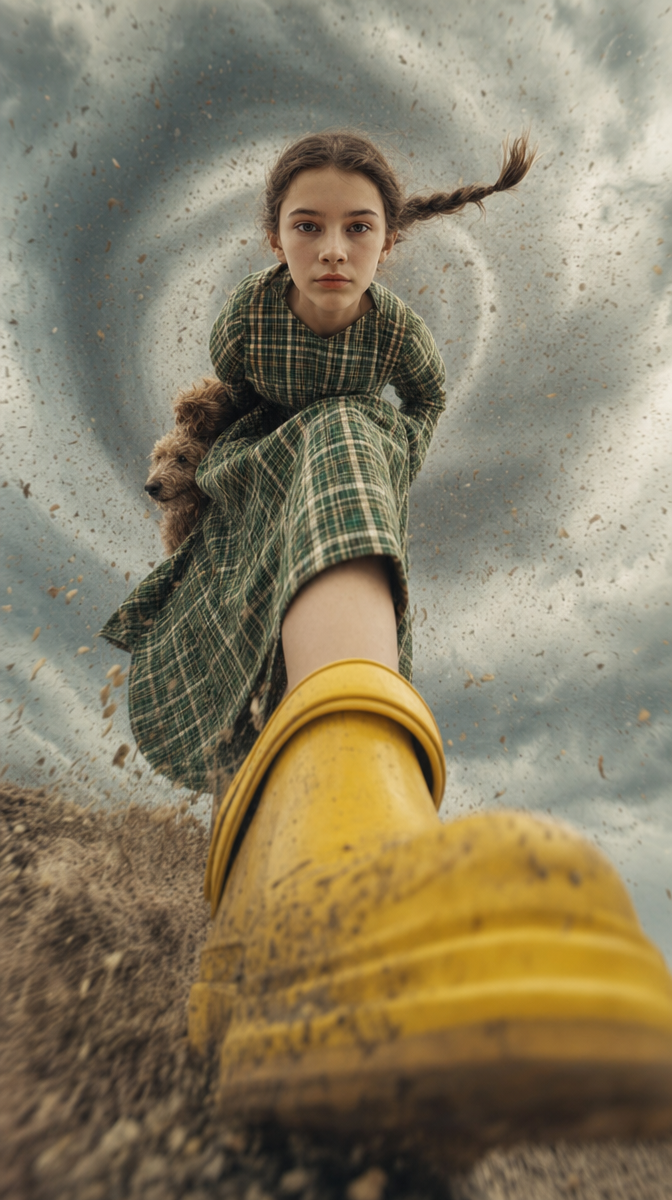
Young girl with dog in tornado
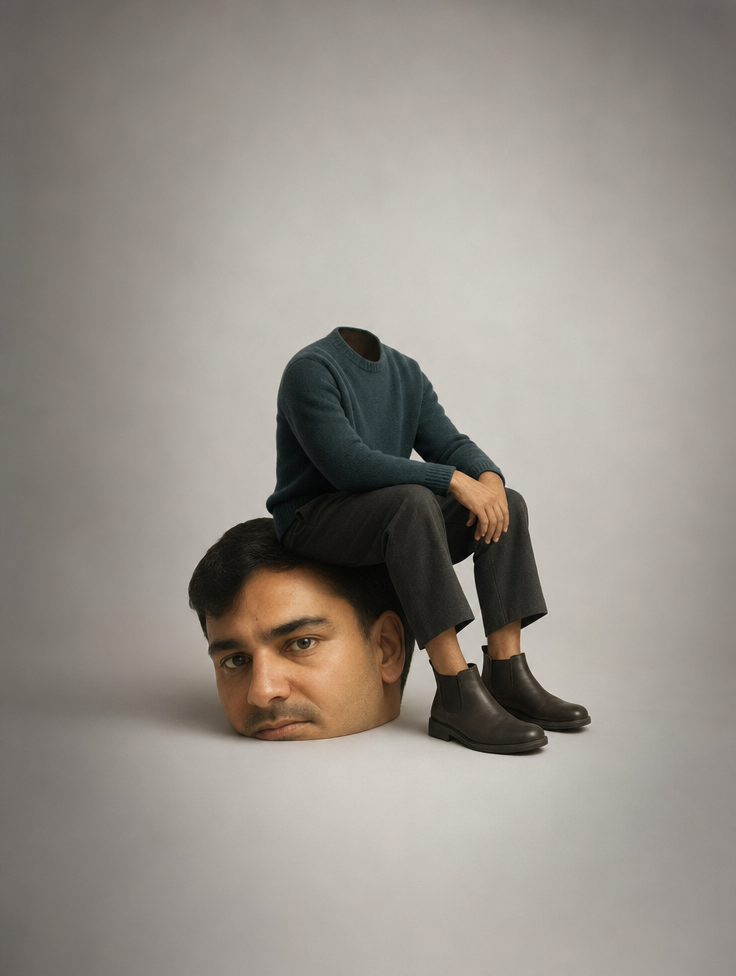
Headless sitter atop a giant head
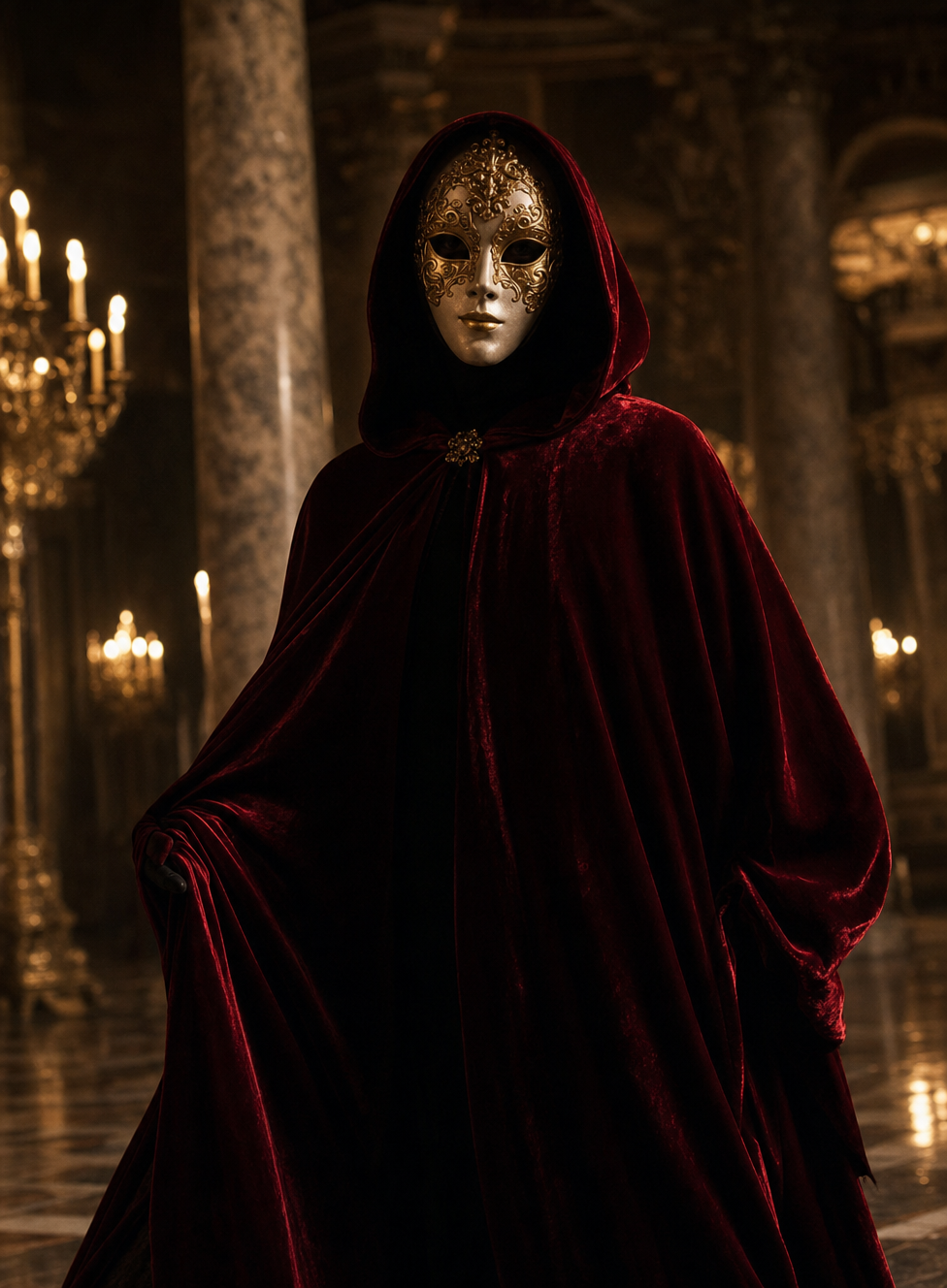
Crimson-Cloaked Specter in Candlelit Ballroom

Violet Holographic Hands Almost Touching