Why this works
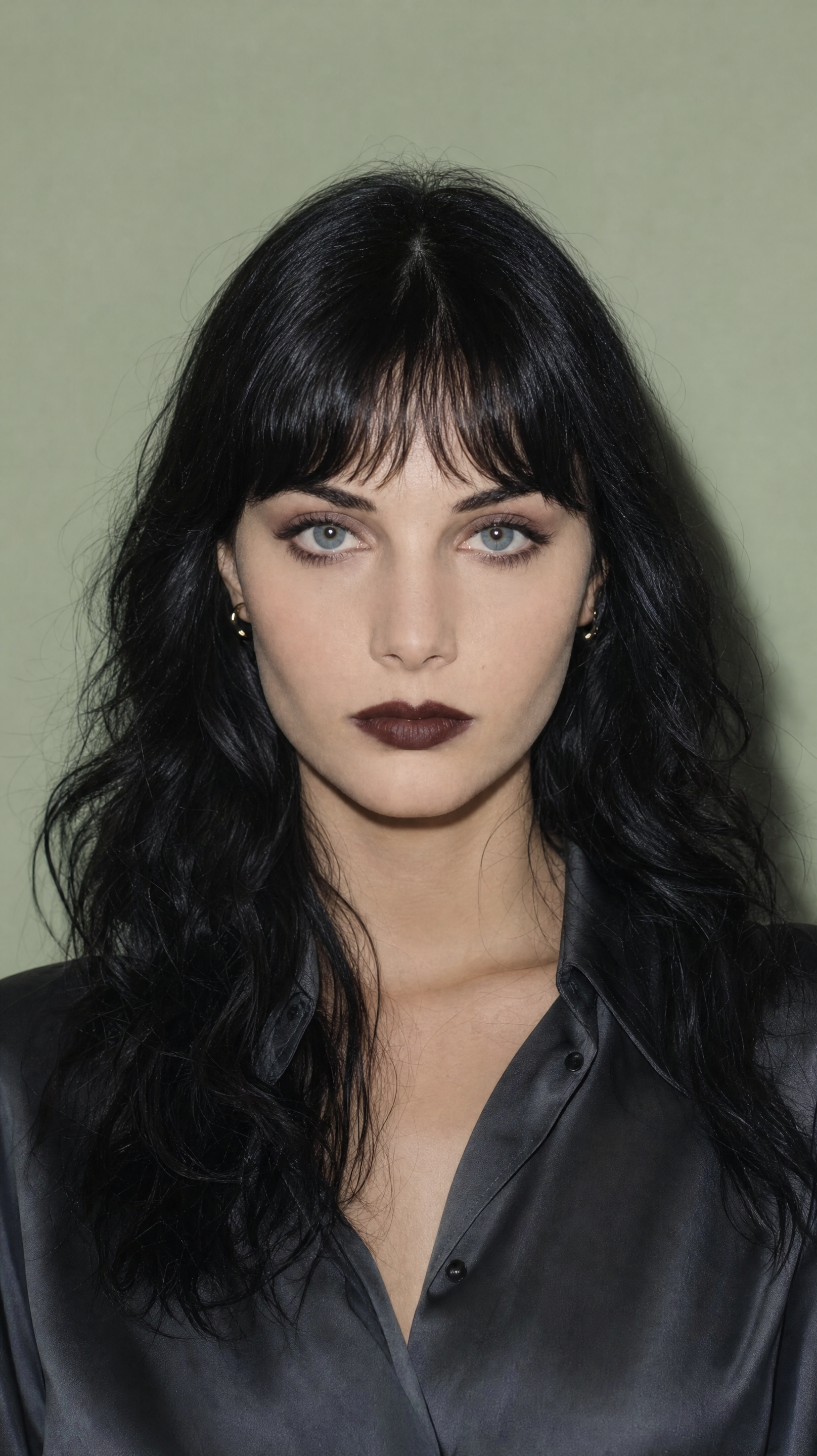
“Centered composition” and the close portrait framing keep the woman’s calm neutral gaze and wispy bangs as the visual anchor, while “long wavy black hair” supplies a strong dark shape around her pale, realistically textured skin. The restrained beige-and-gray appearance comes from the “charcoal-grey satin blouse” and “dusty sage-green backdrop,” with the sage adding a muted cool counterpoint rather than competing with the face. “Soft side flash lighting,” “gentle film grain,” and a “slightly faded 35mm analog color cast” establish the moody, elegant, eerie tone; “subtle edge wear” reinforces the archival vintage effect without obscuring the crisp skin detail.
FAQ
→How do I make the portrait feel warmer and less eerie?
Replace “moody, elegant, eerie mood” with “warm, intimate, nostalgic mood,” change “dusty sage-green backdrop” to “muted terracotta studio backdrop,” and replace “slightly faded 35mm analog color cast” with “warm amber film color cast.” Keep “soft side flash lighting” for controlled facial modeling.
→How do I make the eyes and expression more prominent?
Replace “portrait-closeup” and “centered composition” with “tight head-and-shoulders close-up, eyes positioned on the upper third,” and change “calm neutral gaze” to “direct, intense gaze with sharply defined catchlights.” Keep “crisp realistic skin detail,” but reduce “gentle film grain” to “very fine film grain” so the eyes remain clean.
→How do I build a matching series with different subjects?
Keep the fixed treatment phrases “vintage 35mm analog portrait look,” “soft side flash lighting,” “slightly faded film color cast,” and “subtle edge wear,” then replace “a pale woman with long wavy black hair and wispy bangs” with another subject such as “an older man with silver hair and a linen jacket.” Swap “charcoal-grey satin blouse” for a similarly muted garment and retain “dusty sage-green backdrop” to preserve the beige-gray palette and centered studio format.
Learn the technique behind this
- Why can't AI spell, and how do I get readable text in an image? — Older diffusion models had no character-level representation of text, so they produced letterform-shaped texture instead of words.
- How do I keep one consistent style across a whole set of images? — Style consistency is more achievable than character consistency because style lives in describable attributes.
- How should a prompt be structured, and does word order matter? — A prompt that behaves predictably names one subject first, then what it is doing, then where, then the light, then the lens or medium, then the style.
Related prompts
Woman in Teal Light, Shadowed Fashion Portrait
Eerie Elegance Among Marble Busts
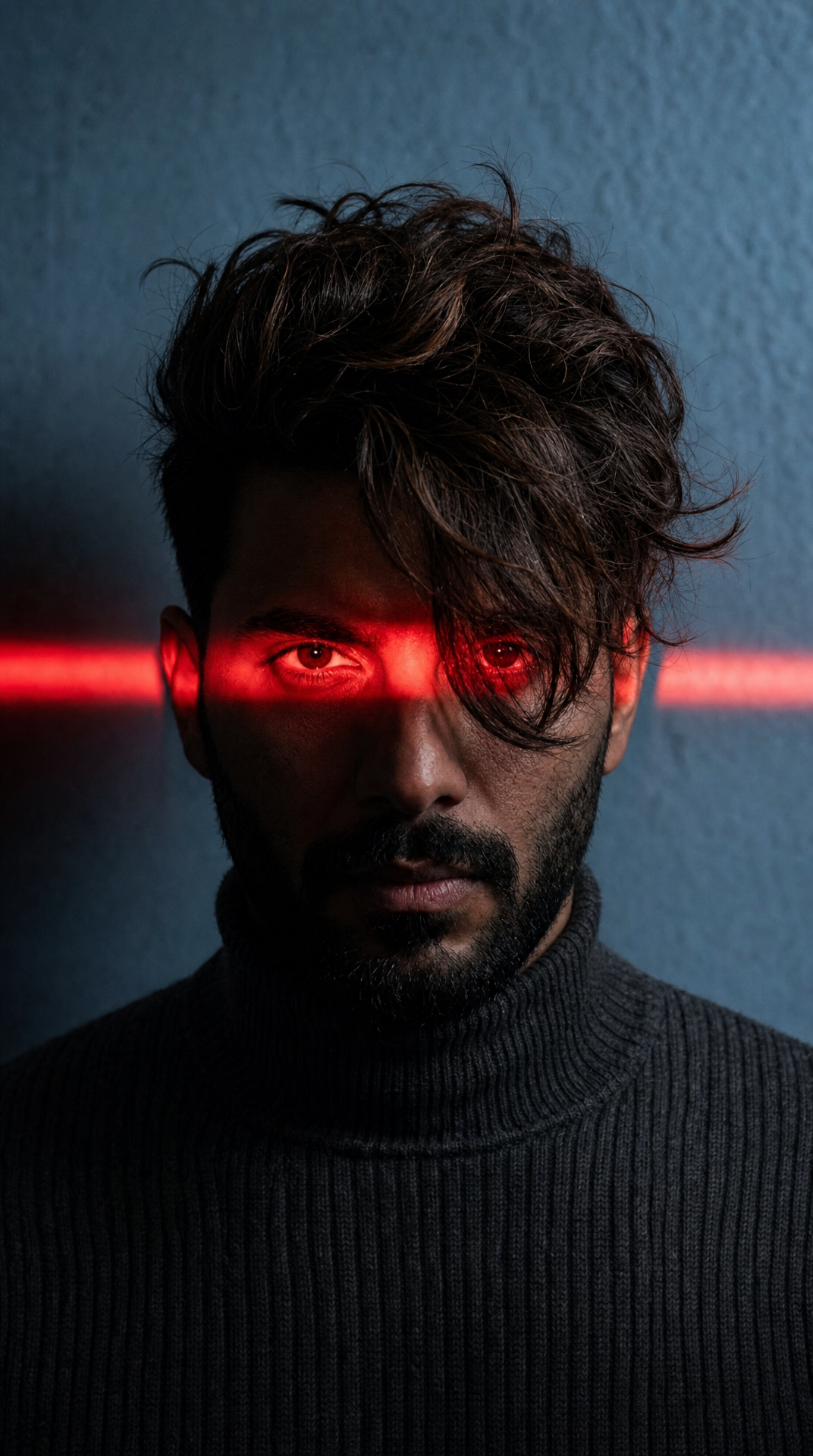
Charcoal turtleneck with red eye-beam

Dreamy Macro Portrait in Cool Water